
News
Rivian backtracks price increase on all R1T, R1S preorders before March 1

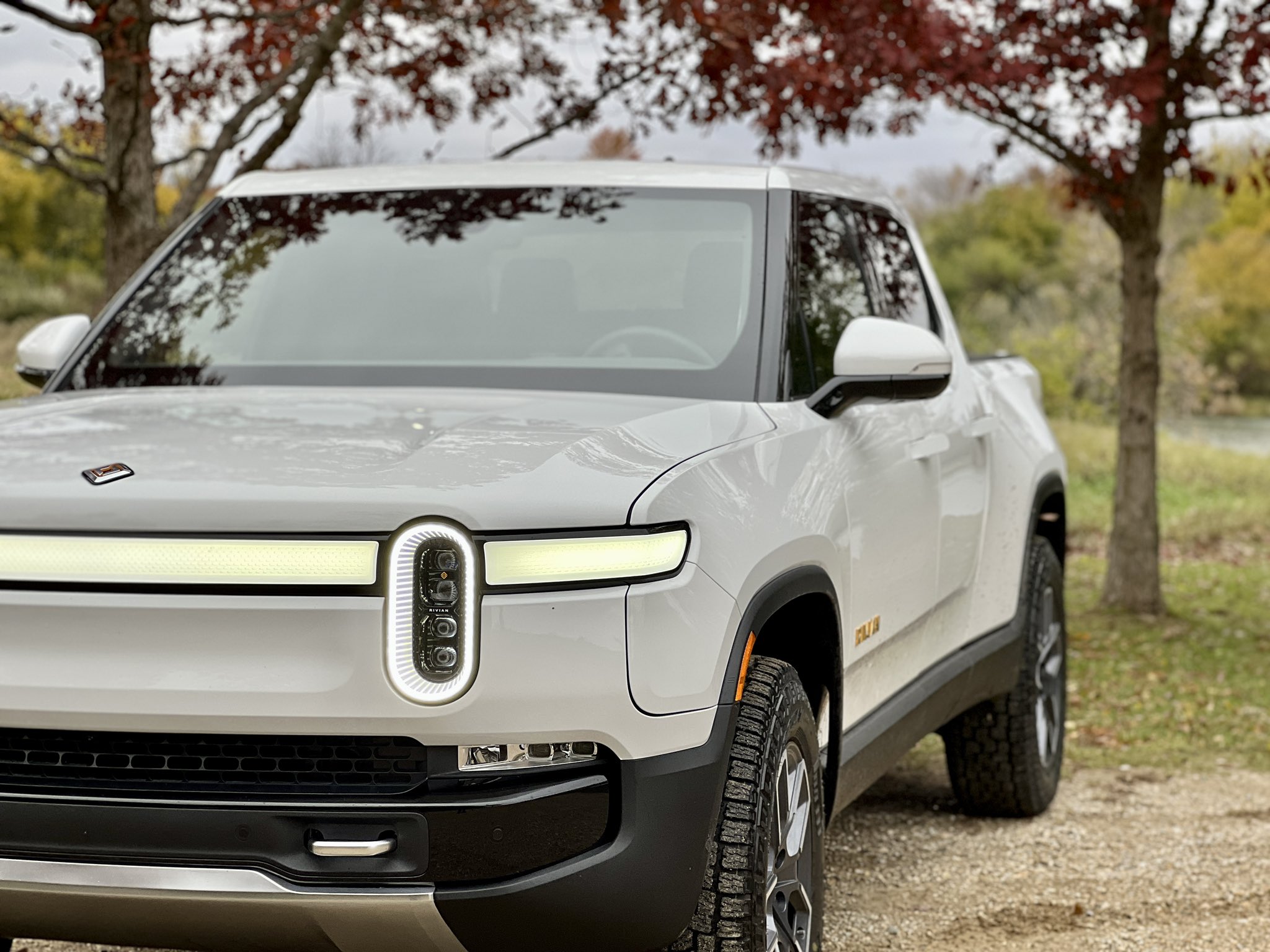
Rivian said on Thursday morning that it would honor all preorder pricing on orders for its R1T and R1S all-electric vehicles placed on or before March 1. The decision comes just two days after Rivian placed a series of hefty price increases to its vehicles. The increases also affected those who had preordered but not finalized an order for one of Rivian’s vehicles, causing many to cancel their reservations for the all-electric R1T pickup or R1S SUV.
Earlier this week, Rivian announced it would increase the prices of the R1T and R1S by at least 17 percent. Rivian clarified that those in the “final steps of the transaction” would not be affected by the price increases.
UPDATE: Rivian launches new Dual Motor options for R1T and R1S, increases Quad Motor pricing
“You may have heard that Rivian’s vehicle and option pricing have increased as a result of price inflation of supplier components and raw materials across the world. Since you are in the final steps of completing your transaction, your Rivian preorder will not be affected by these adjustments,” Rivian wrote to one preorder holder, who shared the message with Teslarati.
Those who had placed an order but had not finalized their trim and interior options, or accessories, were subjected to the price increases as well. Some notable EV influencers spoke out about the price increases.
Price of my @Rivian Truck just went up $10k. As a day one preorder holder this feels suuuuper bait and switchy. Not a fan.
The tone of my video would have changed if I had known it was a $100,000 dollar truck. Extra zeros matter.
— JerryRigEverything (@ZacksJerryRig) March 2, 2022
This morning, Rivian is revising the price increases, reverting anyone with a preorder as of March 1 to their original pricing.
CEO RJ Scaringe penned a letter that clarified any confusion regarding the price increases. Scaringe said:
“For anyone with a Rivian preorder as of the March 1 pricing announcement, your original configured price will be honored. If you canceled your preorder on or after March 1 and would like to reinstate it, we will restore your original configuration, pricing and delivery timing. Our team will be sending an email in the next few days with more details.”
Rivian announced the price increases late Tuesday, citing supply chain issues and inflation for the rise in costs. However, the company realizes it was a bad decision to place price increases on already-placed orders. Many Rivian pre-orderers contemplated whether the increase in price was justifiable, especially as their orders were already confirmed, just not finalized.
Scaringe said Rivian could have communicated to its customers better. “We didn’t give you enough insight into what was driving these decisions,” he said in the letter. “The most important aspect of what we are building is our relationship with all of you. As we demonstrated earlier this week, trust is hard to build and easy to break. In speaking with many of you over the last two days, I fully realize and acknowledge how upset many of you felt. I have made a lot of mistakes since starting Rivian more than 12 years ago, but this one has been the most painful. I am truly sorry and committed to rebuilding your trust.”
Rivian also announced that it would offer a new Dual-Motor powertrain for both vehicles, along with a Standard Battery Pack option that can help alleviate costs for customers. “Regarding our updated pricing for future preorders, the introduction of our Dual-Motor configuration and Standard battery pack has been designed to enable us to maintain lower starting prices while adjusting the pricing of the Quad-Motor and larger battery packs to reflect rising costs.”
I’d love to hear from you! If you have any comments, concerns, or questions, please email me at joey@teslarati.com. You can also reach me on Twitter @KlenderJoey, or if you have news tips, you can email us at tips@teslarati.com.
Scaringe’s full letter is available below:
“Hello Everyone,
Earlier this week, we announced pricing increases that broke the trust we have worked to build with you. Since originally setting our pricing structure, and most especially in recent months, a lot has changed. The costs of the components and materials that go into building our vehicles have risen considerably. Everything from semiconductors to sheet metal to seats has become more expensive and with this we have seen average new vehicle pricing across the U.S. rise more than 30% since 2018. Given our build lead up times, we need to plan production costs not only for today, but also for the future.
As we worked to update pricing to reflect these cost increases, we wrongly decided to make these changes apply to all future deliveries, including pre-existing configured preorders. We failed to appreciate how you viewed your configuration as price locked, and we wrongly assumed the announced Dual-Motor and Standard battery pack would provide configurations that would deliver price points similar to your original configuration. While this was the logic, it was wrong and we broke your trust in Rivian.
We also didn’t manage communications well. We didn’t give you enough insight into what was driving these decisions. The most important aspect of what we are building is our relationship with all of you. As we demonstrated earlier this week, trust is hard to build and easy to break. In speaking with many of you over the last two days, I fully realize and acknowledge how upset many of you felt. I have made a lot of mistakes since starting Rivian more than 12 years ago, but this one has been the most painful. I am truly sorry and committed to rebuilding your trust.
One of the things we talk about a lot internally is that we will make mistakes – it’s part of building something complex. The key is to learn from them and address them when they are made. It is how we grow. We made a mistake in how we approached our pricing changes, and what is important now is that we fix it.
For anyone with a Rivian preorder as of the March 1 pricing announcement, your original configured price will be honored. If you canceled your preorder on or after March 1 and would like to reinstate it, we will restore your original configuration, pricing and delivery timing. Our team will be sending an email in the next few days with more details.
Regarding our updated pricing for future preorders, the introduction of our Dual-Motor configuration and Standard battery pack has been designed to enable us to maintain lower starting prices while adjusting the pricing of the Quad-Motor and larger battery packs to reflect rising costs. Building a durable business is core to the continued impact we can deliver as a company. We are focused on building a brand and products that will continue to scale to different vehicle sizes, use cases, price points and markets – this growth will only be possible with your support and continued feedback.
Thank you for the personal notes and discussions I had with so many of you. Your feedback makes us better.
RJ”







Elon Musk
Tesla investors will be shocked by Jim Cramer’s latest assessment
Jim Cramer is now speaking positively about Tesla, especially in terms of its Robotaxi performance and its perception as a company.
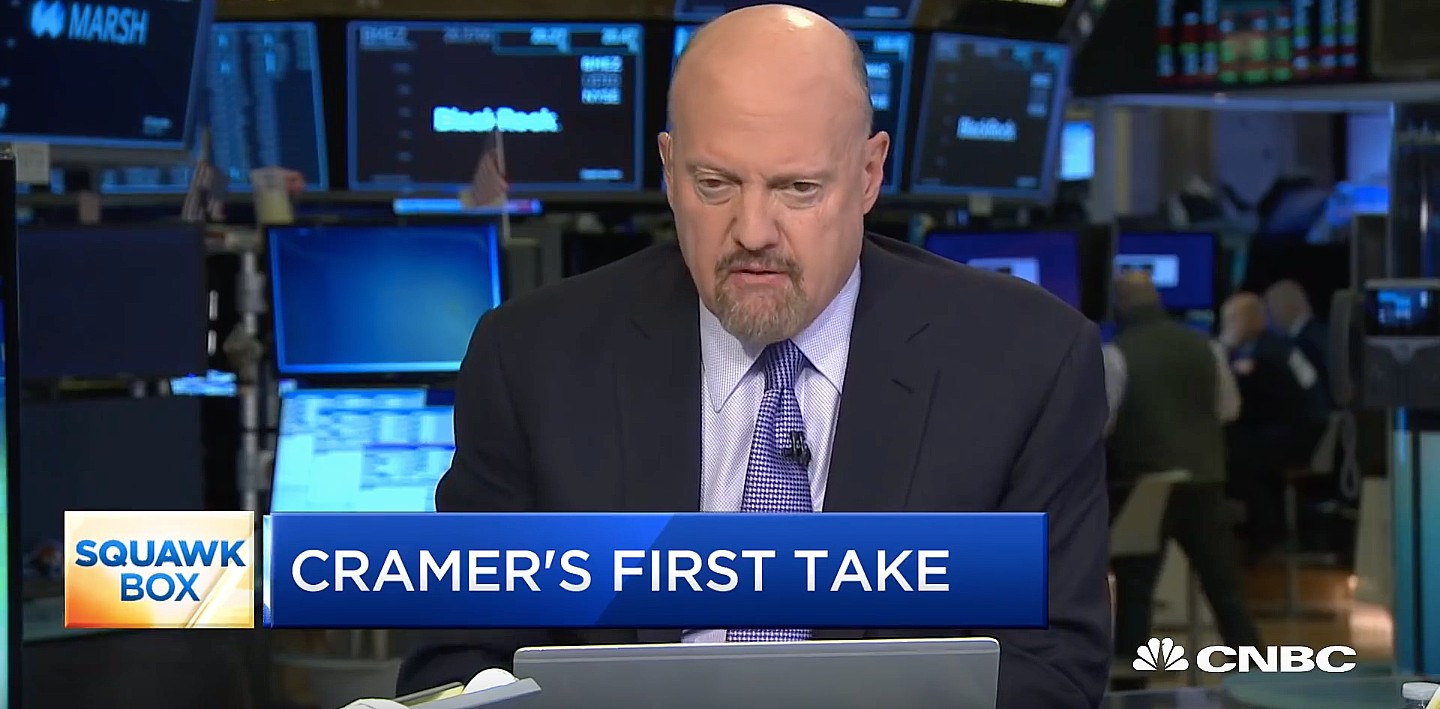
Tesla investors will be shocked by analyst Jim Cramer’s latest assessment of the company.
When it comes to Tesla analysts, many of them are consistent. The bulls usually stay the bulls, and the bears usually stay the bears. The notable analysts on each side are Dan Ives and Adam Jonas for the bulls, and Gordon Johnson for the bears.
Jim Cramer is one analyst who does not necessarily fit this mold. Cramer, who hosts CNBC’s Mad Money, has switched his opinion on Tesla stock (NASDAQ: TSLA) many times.
He has been bullish, like he was when he said the stock was a “sleeping giant” two years ago, and he has been bearish, like he was when he said there was “nothing magnificent” about the company just a few months ago.
Now, he is back to being a bull.
Cramer’s comments were related to two key points: how NVIDIA CEO Jensen Huang describes Tesla after working closely with the Company through their transactions, and how it is not a car company, as well as the recent launch of the Robotaxi fleet.
Jensen Huang’s Tesla Narrative
Cramer says that the narrative on quarterly and annual deliveries is overblown, and those who continue to worry about Tesla’s performance on that metric are misled.
“It’s not a car company,” he said.
He went on to say that people like Huang speak highly of Tesla, and that should be enough to deter any true skepticism:
“I believe what Musk says cause Musk is working with Jensen and Jensen’s telling me what’s happening on the other side is pretty amazing.”
Tesla self-driving development gets huge compliment from NVIDIA CEO
Robotaxi Launch
Many media outlets are being extremely negative regarding the early rollout of Tesla’s Robotaxi platform in Austin, Texas.
There have been a handful of small issues, but nothing significant. Cramer says that humans make mistakes in vehicles too, yet, when Tesla’s test phase of the Robotaxi does it, it’s front page news and needs to be magnified.
He said:
“Look, I mean, drivers make mistakes all the time. Why should we hold Tesla to a standard where there can be no mistakes?”
It’s refreshing to hear Cramer speak logically about the Robotaxi fleet, as Tesla has taken every measure to ensure there are no mishaps. There are safety monitors in the passenger seat, and the area of travel is limited, confined to a small number of people.
Tesla is still improving and hopes to remove teleoperators and safety monitors slowly, as CEO Elon Musk said more freedom could be granted within one or two months.
News
Tesla launches ultra-fast V4 Superchargers in China for the first time
Tesla has V4 Superchargers rolling out in China for the first time.
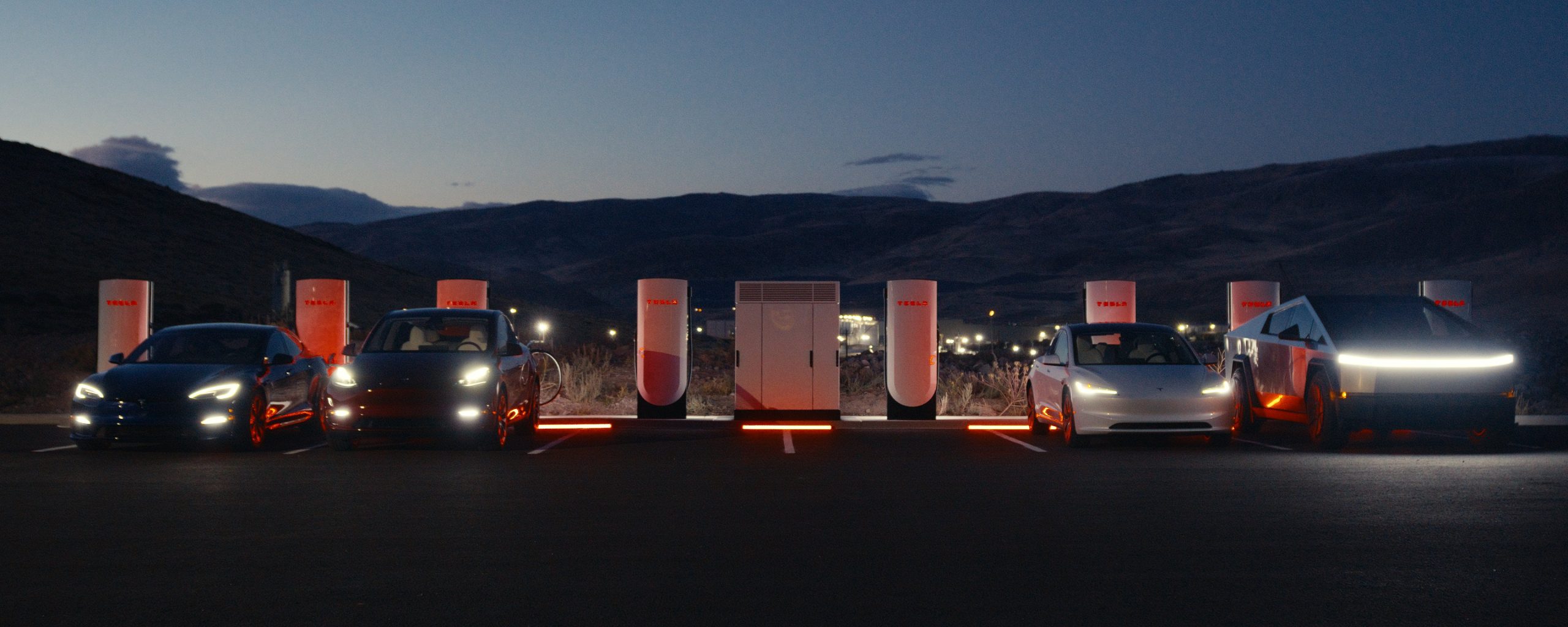
Tesla already has nearly 12,000 Supercharger piles across mainland China. However, the company just initiated the rollout of the ultra-fast V4 Superchargers in China for the first time, bringing its quick-charging piles to the country for the first time since their launch last year.
The first batch of V4 Superchargers is now officially up and running in China, the company announced in a post on Chinese social media outlet Weibo today.
The company said in the post:
“The first batch of Tesla V4 Superchargers are online. Covering more service areas, high-speed charging is more convenient, and six-layer powerful protection such as rain and waterproof makes charging very safe. Simultaneously open to non-Tesla vehicles, and other brands of vehicles can also be charged. There are more than 70,000 Tesla Superchargers worldwide. The charging network layout covers 100% of the provincial capitals and municipalities in mainland China. More V4 Superchargers will be put into use across the country. Optimize the charging experience and improve energy replenishment efficiency. Tesla will accompany you to the mountains, rivers, lakes, and seas with pure electricity!”
The first V4 Superchargers Tesla installed in China are available in four cities across the country: Shanghai, Zhejiang, Gansu, and Chongqing.
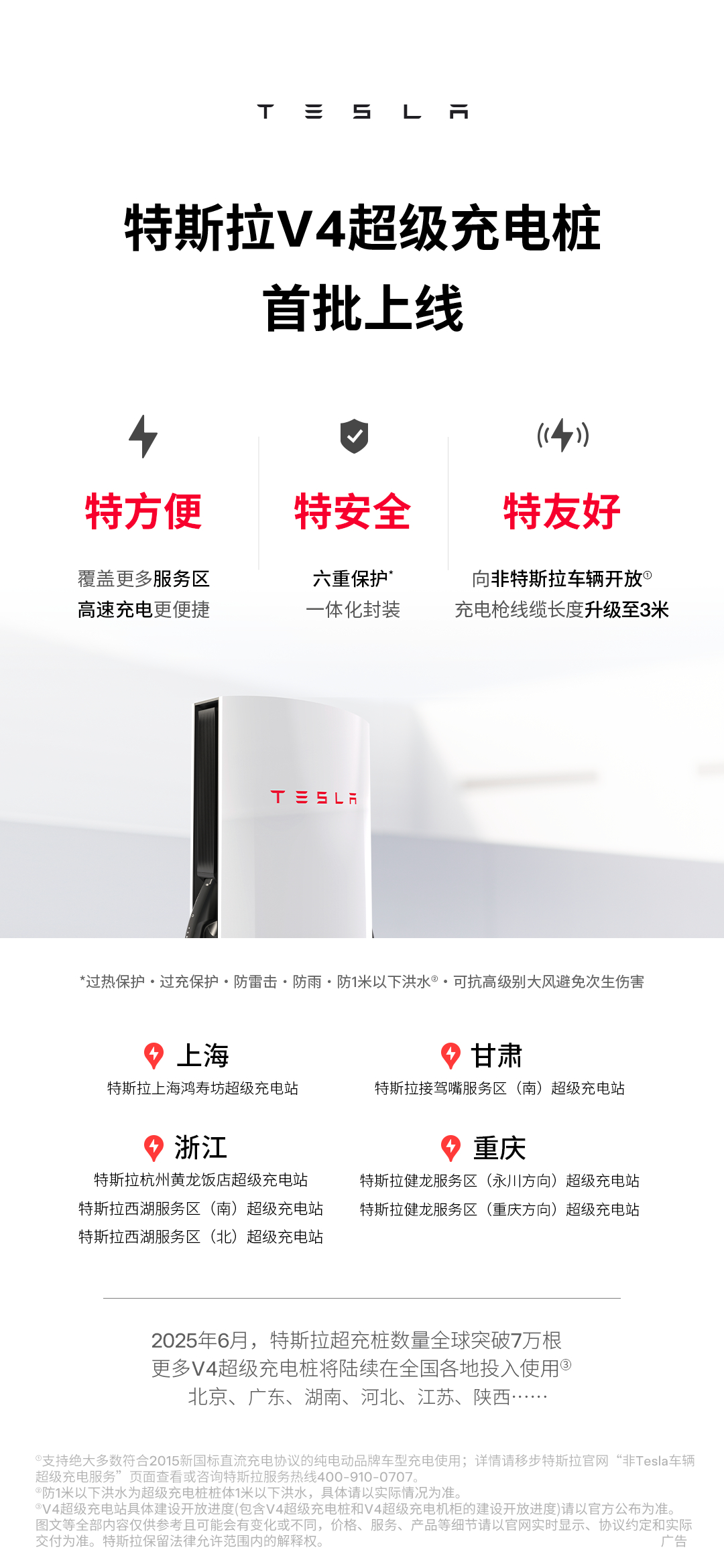
Credit: Tesla China
Tesla has over 70,000 Superchargers worldwide. It is the most expansive and robust EV charging network in the world. It’s the main reason why so many companies have chosen to adopt Tesla’s charging connector in North America and Europe.
In China, some EVs can use Tesla Superchargers as well.
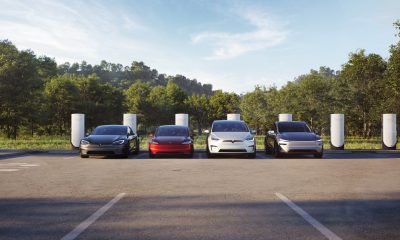
The V4 Supercharger is capable of charging vehicles at speeds of up to 325kW for vehicles in North America. This equates to over 1,000 miles per hour of charging.
Elon Musk
Elon Musk hints at when Tesla could reduce Safety Monitors from Robotaxi
Tesla could be reducing Safety Monitors from Robotaxi within ‘a month or two,’ CEO Elon Musk says.
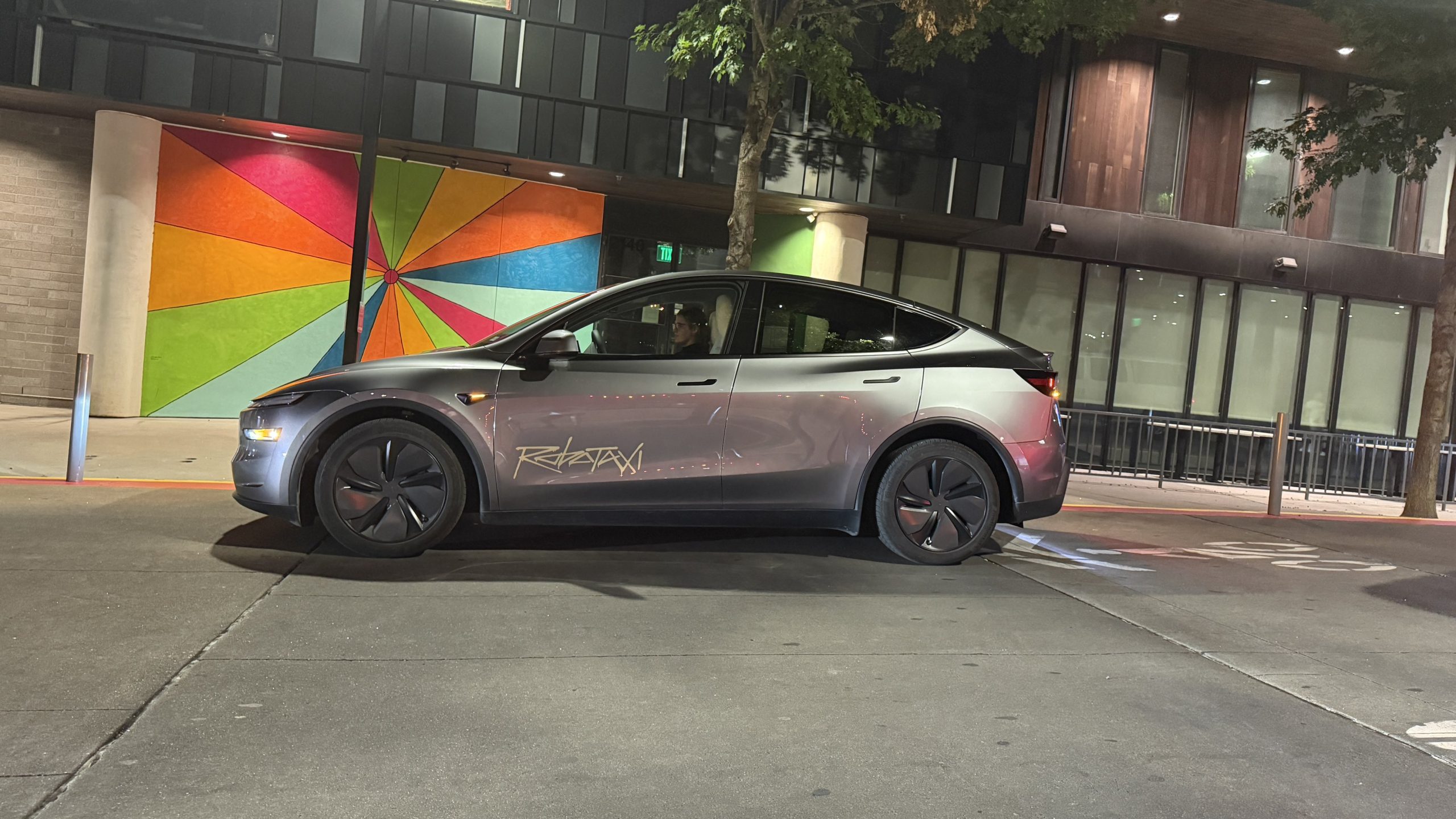
Elon Musk hinted at when Tesla could begin reducing Safety Monitors from its Robotaxis. Safety Monitors are Tesla employees who sit in the front passenger seat during the driverless rides, and are there to ensure safety for occupants during the earliest rides.
Tesla launched its Robotaxi fleet in Austin last Sunday, and after eight days, videos and reviews from those who have ridden in the driverless vehicles have shown that the suite is safe, accurate, and well coordinated. However, there have been a few hiccups, but nothing that has put anyone’s safety in danger.
A vast majority — close to all of the rides — at least according to those who have ridden in the Robotaxi, have been performed without any real need for human intervention. We reported on what was the first intervention last week, as a Safety Monitor had to step in and stop the vehicle in a strange interaction with a UPS truck.
Watch the first true Tesla Robotaxi intervention by safety monitor
The Tesla and UPS delivery truck were going for the same street parking space, and the Tesla began to turn into it. The UPS driver parallel parked into the spot, which was much smaller than his truck. It seemed to be more of an instance of human error instead of the Robotaxi making the wrong move. This is something that the driverless cars will have to deal with because humans are aggressive and sometimes make moves they should not.
The Safety Monitors have not been too active in the vehicles. After all, we’ve only seen that single instance of an intervention. There was also an issue with the sun, when the Tesla braked abnormally due to the glare, but this was an instance where the car handled the scenario and proceeded normally.
With the Robotaxi fleet operating impressively, some are wondering when Tesla will begin scaling back both the Safety Monitors and Teleoperators that it is using to ensure safety with these early rides.
CEO Elon Musk answered the inquiry by stating, “As soon as we feel it is safe to do so. Probably within a month or two.”
As soon as we feel it is safe to do so.
Probably within a month or two. We continue to improve the Tesla AI with each mile driven.
— Elon Musk (@elonmusk) June 30, 2025
Musk’s response seems to confirm that there will be fewer Teleoperators and Safety Monitors in the coming months, but there will still be some within the fleet to ensure safety. Eventually, that number will get to zero.
Reaching a point where Tesla’s Robotaxi is driverless will be another significant milestone for the company and its path to fully autonomous ride-sharing.
Eventually, Tesla will roll out these capabilities to consumer-owned vehicles, offering them a path to generate revenue as their car operates autonomously and completes rides.
For now, Tesla is focusing on perfecting the area of Austin where it is currently offering driverless rides for just $4.20 to a small group of people.

Tesla investors will be shocked by Jim Cramer’s latest assessment

Tesla launches ultra-fast V4 Superchargers in China for the first time

Elon Musk hints at when Tesla could reduce Safety Monitors from Robotaxi


-
 News5 days ago
Tesla Robotaxi’s biggest challenge seems to be this one thing
-
 News2 weeks ago
Tesla confirms massive hardware change for autonomy improvement
-
 Elon Musk2 weeks ago
Elon Musk slams Bloomberg’s shocking xAI cash burn claims
-
 News2 weeks ago
Tesla China roars back with highest vehicle registrations this Q2 so far
-
 News2 weeks ago
Tesla features used to flunk 16-year-old’s driver license test
-
 News2 weeks ago
Texas lawmakers urge Tesla to delay Austin robotaxi launch to September
-
 News2 weeks ago
Tesla dominates Cars.com’s Made in America Index with clean sweep
-

 News2 weeks ago
Tesla’s Grok integration will be more realistic with this cool feature