Investor's Corner
Tesla CEO Elon Musk sued by SEC for alleged false and misleading TSLA statements

Tesla shares (NASDAQ:TSLA) plunged 10% on Thursday’s after-hours trading after the Securities and Exchange Commission filed charges against CEO Elon Musk over his now-infamous tweets last August 9, when he announced on Twitter that he was thinking of taking the company private at $420 per share, and that he had “funding secured.”
The SEC’s filing, which lists Musk as the Defendant, alleges that the CEO issued multiple statements on August 7 that were misleading and inaccurate. Apart from his “funding secured” tweet, the SEC also pointed out that Musk’s posts about all investors being able to stay with the company if it goes private, as well as investor support being confirmed, were equally inaccurate and misleading.
Following is a section of the SEC’s complaint surrounding Musk’s tweets.
“Musk knew or was reckless in not knowing that each of these statements was false and/or misleading because he did not have an adequate basis in fact for his assertions. When he made these statements, Musk knew that he had never discussed a going-private transaction at $420 per share with any potential funding source, had done nothing to investigate whether it would be possible for all current investors to remain with Tesla as a private company via a “special purpose fund,” and had not confirmed support of Tesla’s investors for a potential going-private transaction.
“He also knew that he had not satisfied numerous additional contingencies, the resolution of which was highly uncertain, when he unequivocally declared, “Only reason why this is not certain is that it’s contingent on a shareholder vote.” Musk’s public statements and omissions created the misleading impression that taking Tesla private was subject only to Musk choosing to do so and a shareholder vote.”
By posting these announcements on Twitter, and considering the reaction of the market immediately following his updates, the SEC alleges that Elon Musk violated “and unless restrained and enjoined will violate again, Section 10(b) of the Securities Exchange Act of 1934.” The SEC ultimately requests the court to issue the following sanctions against Elon Musk.
- Permanently restraining and enjoining Defendant from, directly or indirectly, engaging in conduct in violation of Section 10(b) of the Exchange Act;
- Ordering Defendant to disgorge, with prejudgment interest, any ill-gotten gains received as a result of the violations alleged herein;
- Ordering Defendant to pay civil penalties pursuant to Section 21(d)(3) of the Exchange Act;
- Ordering that Defendant be prohibited from acting as an officer or director of any issuer that has a class of securities registered pursuant to Section 12 of the Exchange Act or that is required to file reports pursuant to Section 15(d) of the Exchange Act.
Tesla is yet to issue a statement about the SEC’s case against Elon Musk.
The SEC’s full complaint against the Tesla CEO can be read in full below.


Elon Musk
Google wants more of SpaceX, reveals Elon Musk
Elon Musk says Google wants to rent more SpaceX compute as Anthropic renewal questions mount.

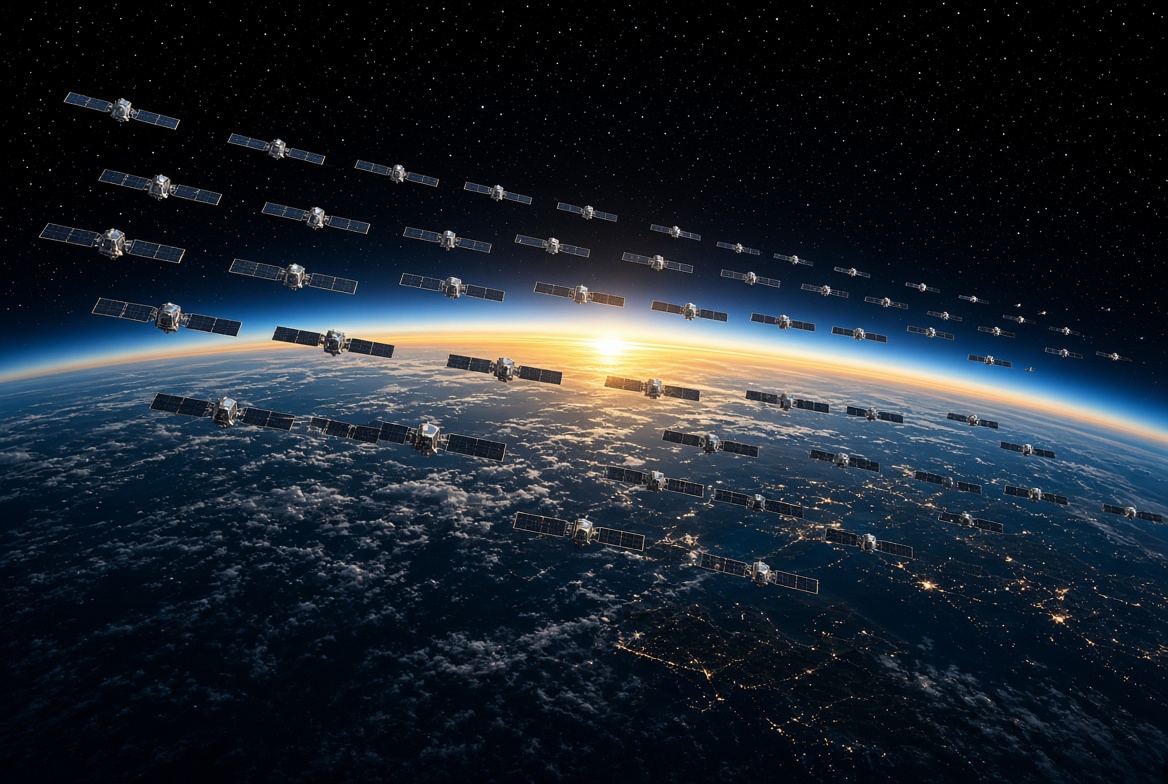
Elon Musk says Google wants more of SpaceX’s compute, a claim that comes just days after reports suggested the company’s biggest AI customer could be preparing to scale back.
“Not sure who will buy more, but Google has expressed interest in renting more compute from us,” Musk wrote on X late Friday night, replying to a post arguing that Google could eventually rent more capacity from SpaceX than Anthropic does. Musk did not say how much additional capacity Google wants or when an expanded deal might be signed.
Google already pays SpaceX $920 million a month for roughly 110,000 Nvidia GPUs and supporting hardware under an agreement that runs from October through June 2029, according to Reuters. Anthropic’s arrangement is larger. It started in May with all of Colossus 1 at $1.25 billion a month, as Teslarati reported, and is set to reach about $3.1 billion a month once all contracted capacity is delivered in December.
That Anthropic revenue is where the pressure has been building. Anthropic executives reportedly told analysts earlier this month that the deal would not be extended beyond the second quarter of 2027, and a SemiAnalysis note this week said the AI lab may not renew its contract for a cluster of about 50,000 H200 GPUs. Anthropic accounted for nearly a third of SpaceX’s revenue in the third quarter. Musk has countered that Anthropic told him it is “extremely likely” to keep renting and wants “significantly more.”
Musk also addressed reports that SpaceX has been cutting prices. The same SemiAnalysis note said SpaceX lowered its Blackwell spot quote for small clusters from about $15 per GPU hour to between $10 and $12. Musk said that is only part of the picture.
“The rental price for large, coherent blocks of compute configured for high-bandwidth training is increasing, sometimes very significantly, but the price for small amounts of compute (below ~5k GPUs) is decreasing,” he wrote. “Overall, the average rental price per GPU for SpaceX compute is rising.”
He followed with a jab at the traditional cloud providers: “People have no idea what happens when a super capable hardware company enters an arena of slowpokes. Hyposcalers would be a more accurate description.”
Speed is the argument Musk keeps returning to. Earlier this month, he said SpaceX can bring a data center online in eight or nine months, compared with about two and a half years for competitors, while acknowledging that the 90 day termination clauses in its compute contracts cut both ways. SpaceX is now pursuing a $50 billion supercompute campus in Cochise County, Arizona and a $24 billion gas plant and supercompute facility at Starbase, and both projects face public hearings on December 9.
Most of the capacity a larger Google deal would draw on has not been built yet. SpaceX ended the third quarter with 1.7 GW of nameplate compute and expects to finish 2026 at 2.5 to 3 GW, with roughly 10 GW more planned for 2027.
Elon Musk
Elon Musk will give every American kid a SpaceX share every year
Elon Musk’s SpaceX stock giveaway to American kids just became something that repeats every year.
Elon Musk says the SpaceX shares headed to American children will not be a one time gift.
“I will be donating another share of SpaceX to all kids in America every year,” Musk wrote on X on Thanksgiving. He later quoted Sawyer Merritt’s estimate that the pledge covers about 70 million children, adding, “Vital that children have a stake in the future.”
At Wednesday’s closing price of $127.44, one share for 70 million children works out to roughly $9 billion a year, a figure that would rise or fall with SpaceX’s stock. Musk did not say how the annual shares would be distributed or whether they would also flow through Trump Accounts.
Vital that children have a stake in the future — Elon Musk (@elonmusk) November 27, 2026
The yearly pledge builds on an announcement made a day earlier. SpaceX said Wednesday it will donate one newly issued class A share to every currently active Trump Account, with Musk personally matching the gift. “Every child in America will receive two SpaceX shares, one from the company and one from me personally,” Musk wrote.
Combined with President and COO Gwynne Shotwell’s pledge of more than 2 million shares, that first round totals about 142 million shares worth roughly $18.1 billion. Musk said SpaceX’s share will be transferred next month, while “the share directly from me will be transferred when my lockup expires in June next year.”
Musk also offered the new shareholders some advice. “If SpaceX succeeds in making life multiplanetary and harnessing even a millionth of the Sun’s energy, it will be worth about a million times the current global economy,” he wrote, calling the goals “absurdly difficult” before adding, “I recommend holding on to your shares.”
The giveaway has grown quickly since October, when Musk first promised a SpaceX share to “every kid in America” in 2027. Shotwell had already committed her own stock to Trump Accounts, with those shares due to reach eligible children in December.
Trump Accounts, also known as 530A accounts, are tax advantaged investment accounts open to any U.S. child under 18 with a Social Security number. The White House said in October that nearly 70 million had been opened, more than 60 million of them through automatic enrollment, though it is unclear how many count as active.
The first gift was announced hours after the FCC authorized SpaceX to deploy up to 1 million Starmind data center satellites. It also arrives as Tesla and SpaceX special committees negotiate a possible all stock merger, which would make every child holding SpaceX stock an owner of the combined company if a deal closes.
Elon Musk
Elon Musk reveals Tesla’s next vehicle without a steering wheel
Elon Musk says Tesla plans a driverless Model Y for families too big for Cybercab.
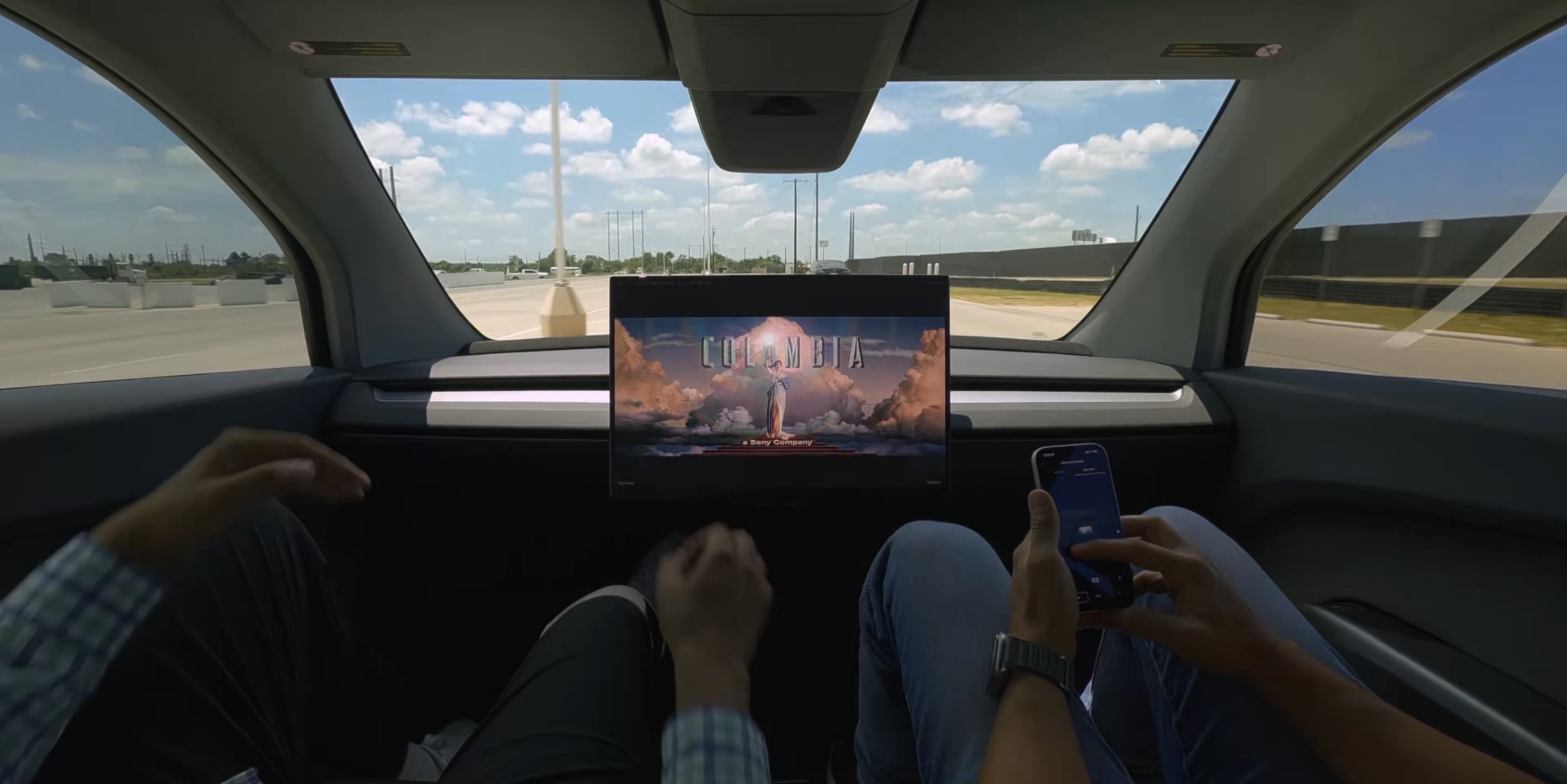
Tesla is planning a driverless version of the Model Y with room for six or seven people, Elon Musk said this week, giving families and groups an alternative to the two-seat Cybercab. Speaking remotely from China at the New York Times DealBook Summit on Wednesday, Musk said the vehicle would have no steering wheel or pedals. He did not give a launch date, price or production location.
The idea came up when Andrew Ross Sorkin asked whether Tesla would eventually stop selling conventional cars as it shifts Cybertruck capacity toward the Cybercab. Musk defended the two-seat design, saying average occupancy is about 1.2 people per car and that a two-seater covers roughly 90 percent of passenger miles. Bigger groups, he said, would be served by the larger autonomous Model Y.
Sorkin also mentioned he had ordered a Model Y L for his family and was still waiting on it. Musk called the six-seat, long-wheelbase SUV Tesla’s most popular car and suggested all Model Y production might need to move to the longer version. “It’s what most people seem to want,” Musk said, though he did not announce any change to Tesla’s production lines.
A driverless Model Y would add a third vehicle to Tesla’s autonomous lineup. Model Y Robotaxis already run 24 hours a day in eight cities, and Cybercab rides expanded to Dallas on Thursday after launching in Austin in September, as Teslarati reported. Tesla also began inviting select customers to buy a Cybercab for personal use last week at $29,990, with deliveries targeted for December.
Musk also addressed whether a Tesla and SpaceX merger should pay out under his compensation plan. Under the change in control terms of his 2025 CEO award, a deal could accelerate vesting, Electrek has noted. Musk said it should not. “I don’t think I should be compensated with any kind of award just for doing a merger. That would be unreasonable and not right,” he said. “You should keep your deals and stay true to your word.”
On the merger itself, Musk said the companies would “probably” be better together because of growing overlap in AI, chips and robotics, but stressed the decision rests with independent committees and shareholders, and that a Tesla vote “may or may not succeed.” Tesla holds its annual shareholder meeting on December 3, with merger talks reportedly progressing toward a possible announcement as soon as December.

Google wants more of SpaceX, reveals Elon Musk

Tesla aims to bolster Optimus with newest company acquisition


