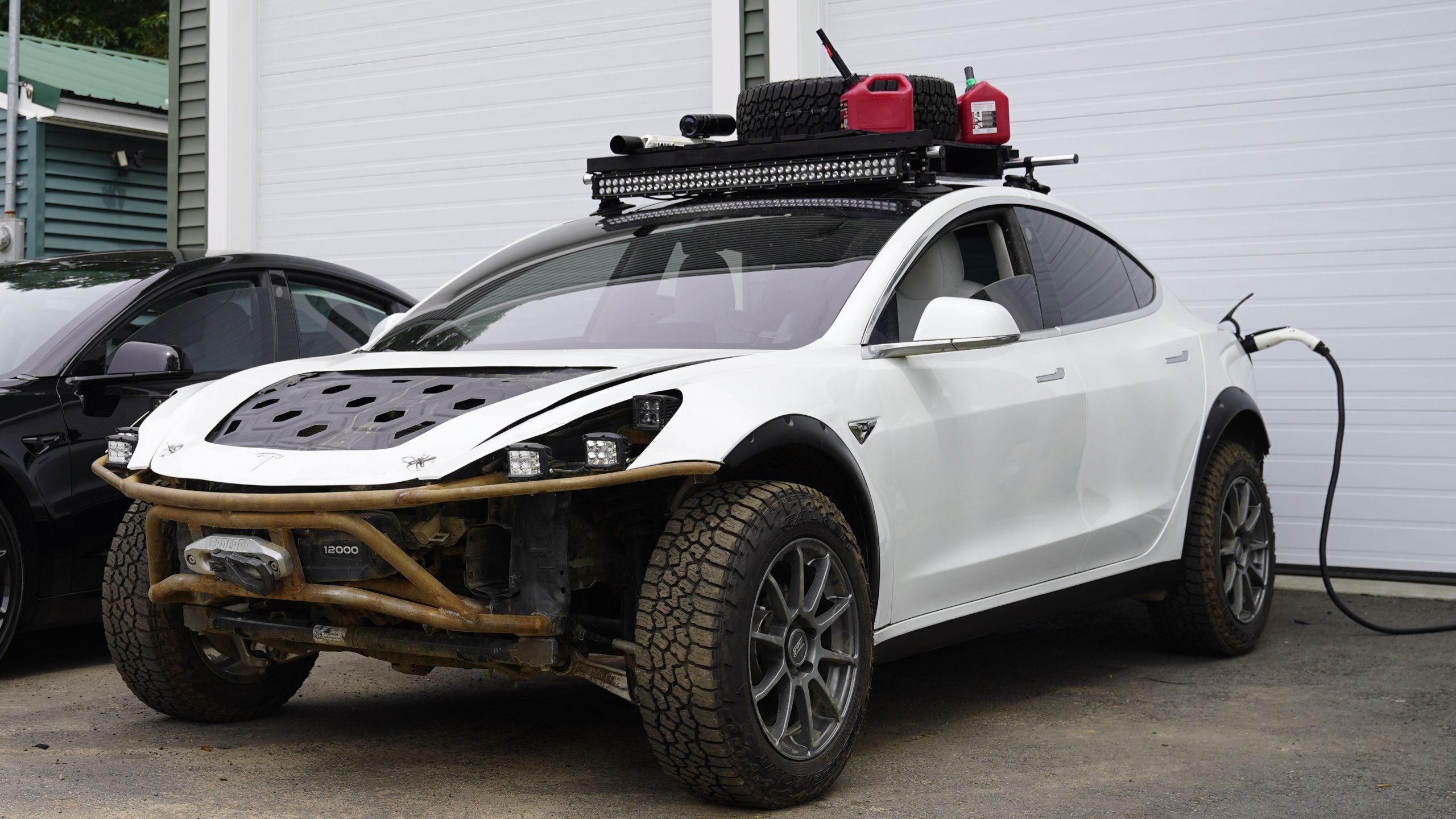
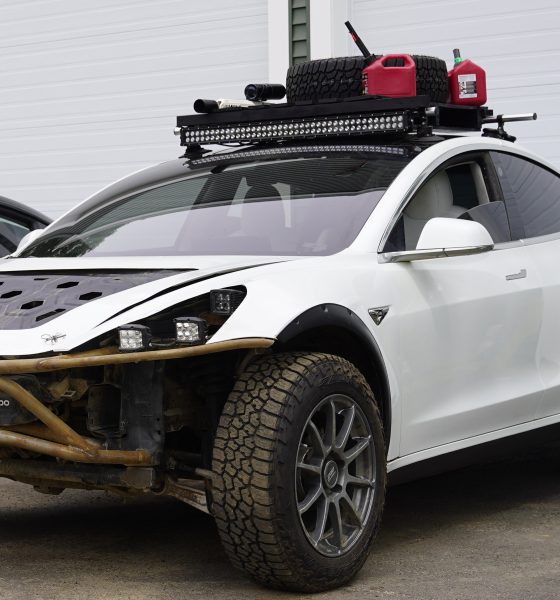

The words “Mad Max” and “Tesla Model 3” don’t typically mix. A reference to the iconic dystopian film franchise invokes images of large, brutally designed off-road machines traversing a barren wasteland. The Model 3, on the other hand, invokes images of a pristine urban landscape powered by clean energy. Needless to say, the two images are about as far away from each other as oil and water.
But when one adds a rogue Tesla mechanic into the mix, even the most unlikely concepts can start making sense. This was certainly the case when Rich Benoit of the Rich Rebuilds YouTube channel was tapped for help in creating a legitimate “Mad Max” build on a Tesla Model 3. This is not just a Model 3 with a lift kit. No, the project would involve a serious rebuild of the all-electric sedan to make it as capable — or perhaps even more capable — than legitimate off-road vehicles.
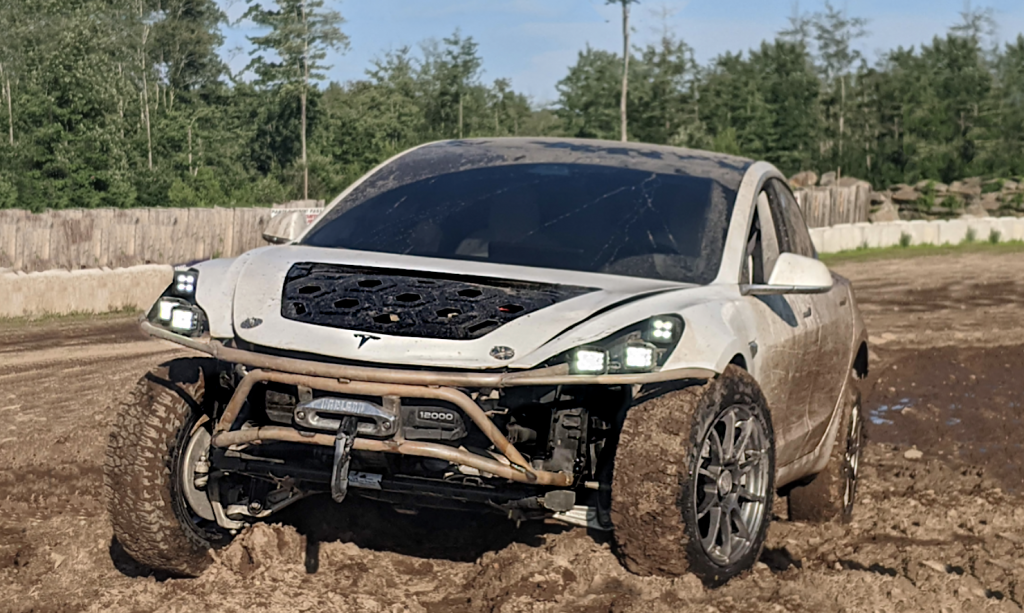
In true Rich Rebuilds style, the groups involved in the project, Grind Hard Plumbing Co and the Electrified Garage, bought a salvaged dual-motor Model 3. The Model 3 is fairly new, having only about 17k miles on the odometer before it was declared a salvage car. This meant that a good number of parts from the vehicle, especially its interior, were still in mint condition. And with a Tesla acquired, the Grind Hard and Electrified Garage team went to work in creating a true “Mad Max” Model 3.
A ton of work was performed on the Model 3, particularly on the car’s front end. Custom bumpers were installed on the vehicle, together with a 12k-pound winch and some extremely bright headlights. The front sway bar was removed to give the vehicle a better approach angle as well. Part of the hood was cut out and large off-road wheels were installed, providing the “Mad Max” Model 3 a truly intimidating presence.
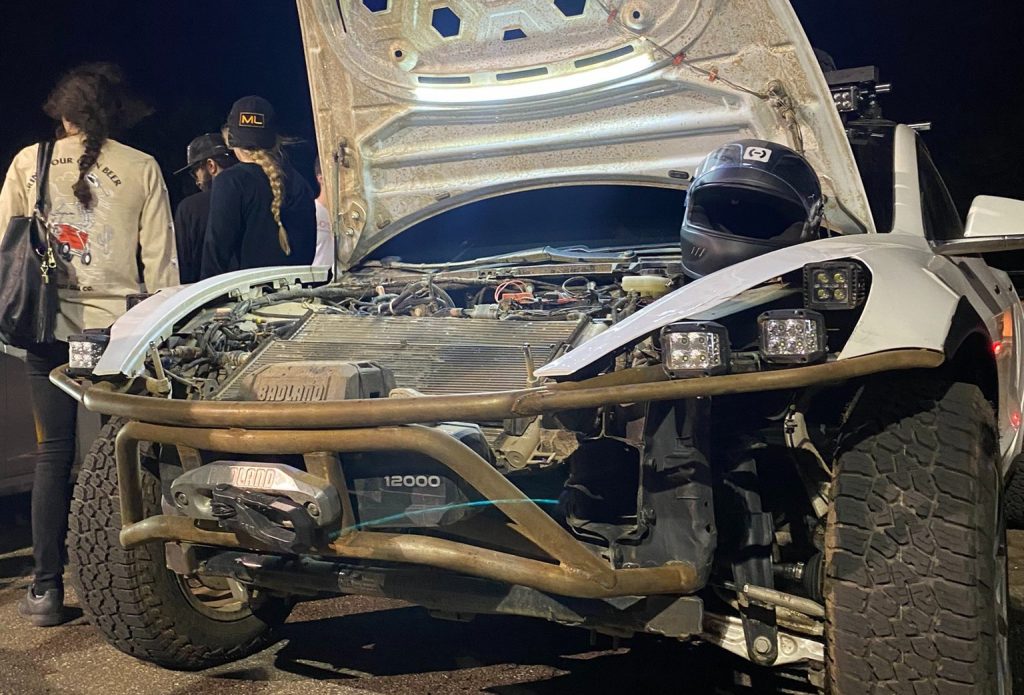
A test drive of the vehicle in an off-road course showed that the “Mad Max” Model 3 was just about as capable as any other serious 4×4 out there. Driving the vehicle, the YouTube hosts remarked that the Model 3’s all-electric motors actually gave the vehicle an edge against combustion engines when off-roading since the torque is immediately accessible anytime. The Rich Rebuilds host even brought over his trusty Sherp — an amphibious vehicle that puts regular off-roaders to shame — just in case the Model 3 needed help, but the opportunity never presented itself.
The market for all-electric cars that could do serious off-roading is still emerging, but carmakers are already preparing for it. Rivian’s first two vehicles are promoted as luxury all-electric trucks that could go anywhere, and GM’s Hummer EV is equipped with special features like Crab Walk that would allow it to navigate extremely rocky trails. The Cybertruck is also designed to be tough enough to handle the most difficult of roads. None of these vehicles are in consumers’ hands today, but if the “Mad Max” Model 3 is any indication, it appears that EVs definitely have some potential in the off-road segment.
Watch Rich Rebuilds‘ “Mad Max” Model 3 project in the video below.
Don’t hesitate to contact us with news tips. Just send a message to tips@teslarati.com to give us a heads up.


Lifestyle
Tesla FSD changed its mind mid-intersection, and it may have saved a life
Tesla shares dashcam footage of FSD Supervised stopping mid intersection to avoid a T-bone crash.

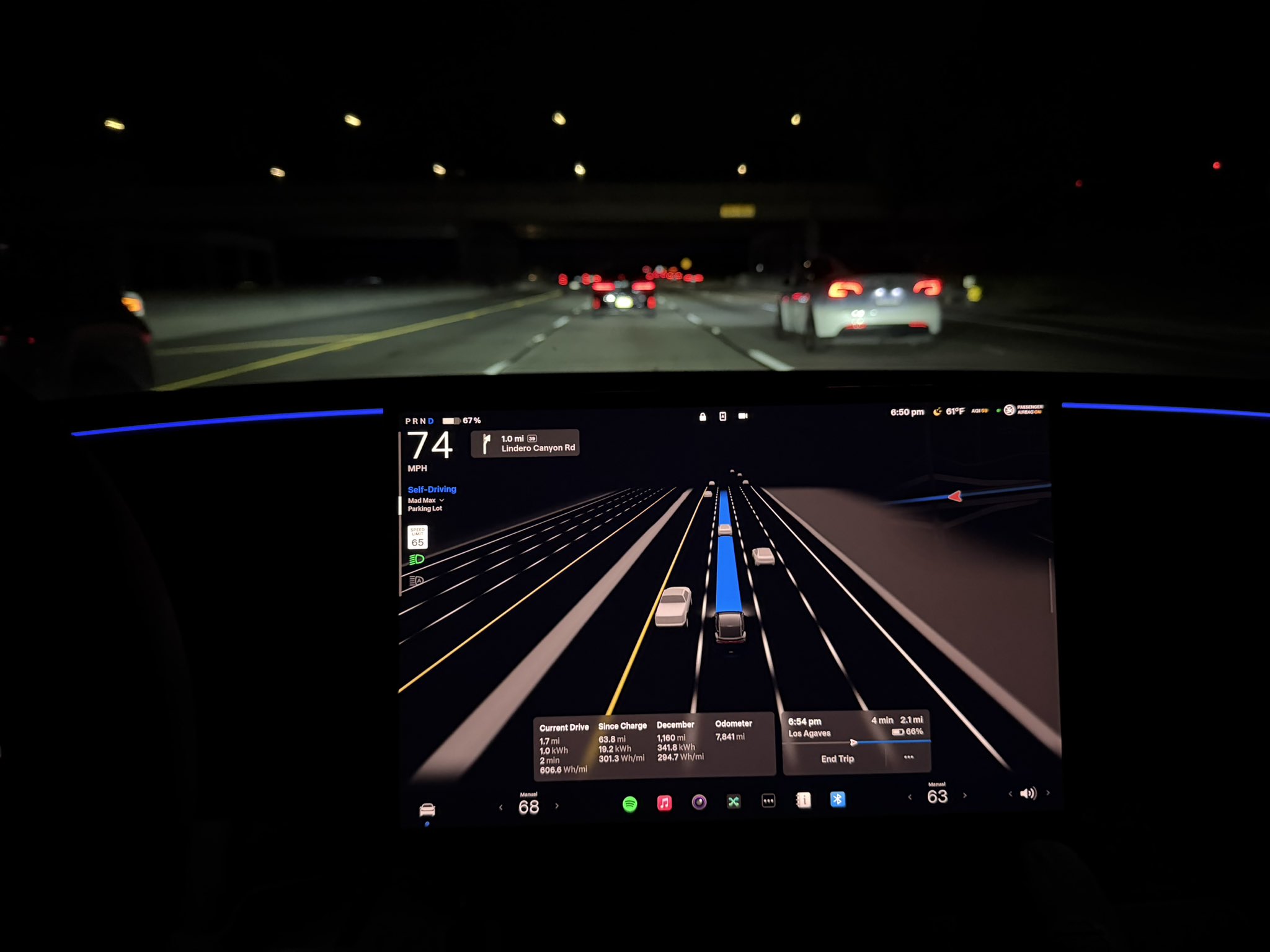
Tesla is putting another Full Self-Driving save in front of its 24.8 million followers on X.
On Tuesday morning, Tesla’s main account shared a dashcam clip with the caption “FSD Supervised preventing T-bone crash.” The footage came from an owner posting as TheNewGrid, who described what happened at a stop sign: “I looked at the car coming to the stop sign figured they would stop, my car went, then came to a stop mid intersection as they flew by. Had I been manually driving this would have resulted in a crash.”
The sequence is the notable part. FSD had already started crossing when the other driver ran the stop sign. Instead of pressing on, the car braked hard in the middle of the intersection and let the crossing vehicle pass in front of it. By the owner’s own account, they had made the same assumption the software initially made, that the other car would stop, and would not have corrected in time.
FSD Supervised preventing T-bone crash
— Tesla (@Tesla) October 6, 2026
The clip is the latest in a run of safety posts Tesla has amplified over the past several days. On Saturday, the company shared a video from Selling Sunset star Jason Oppenheim, who sold his Bentley for a Model Y and said he was buying Teslas with FSD for 10 of his employees. Ashok Elluswamy, who leads Tesla AI, followed up by writing that Tesla self-driving “reacts to other people cutting into your path with super-human response times.” On Monday, a Cybertruck owner posted footage of FSD moving across three lanes from a red light to clear a path for an ambulance approaching from behind.
This recent clip also lands a few weeks after Tesla began shipping Automatic Collision Evasion with FSD v14.3.9, a feature that can activate FSD on the driver’s behalf when a frontal collision is imminent or the driver appears distracted. Elluswamy said in September that “even earlier prediction of hazards, even faster reaction time and overall significantly better safety and collision avoidance” are coming with v15, the release Tesla has tied to round the clock Robotaxi operation.
The safety messaging matters beyond social media. Tesla has said FSD Supervised was 4.1 times less likely to crash than manual driving across 100 million kilometers on European roads, and it has been putting those figures in front of regulators. Eight EU countries have now approved FSD Supervised, with Croatia the most recent, but the EU’s bloc-wide vote originally set for October 6 has been pushed to December at the earliest.
FSD Supervised is still a Level 2 system, and the driver remains responsible at all times. Even heavy users find reasons to step in. Teslarati’s Joey Klender, who uses FSD for about 76 percent of his driving, laid out five recurring issues on Tuesday that still prompt him to intervene. Clips like this one show the other column of that ledger: moments where the software caught a mistake a human was about to make.
Lifestyle
Tesla wins over Netflix’s Selling Sunset star, who’s now ditching his Bentley
Selling Sunset’s Jason Oppenheim swapped his Bentley for a Tesla and promised ten for employees.
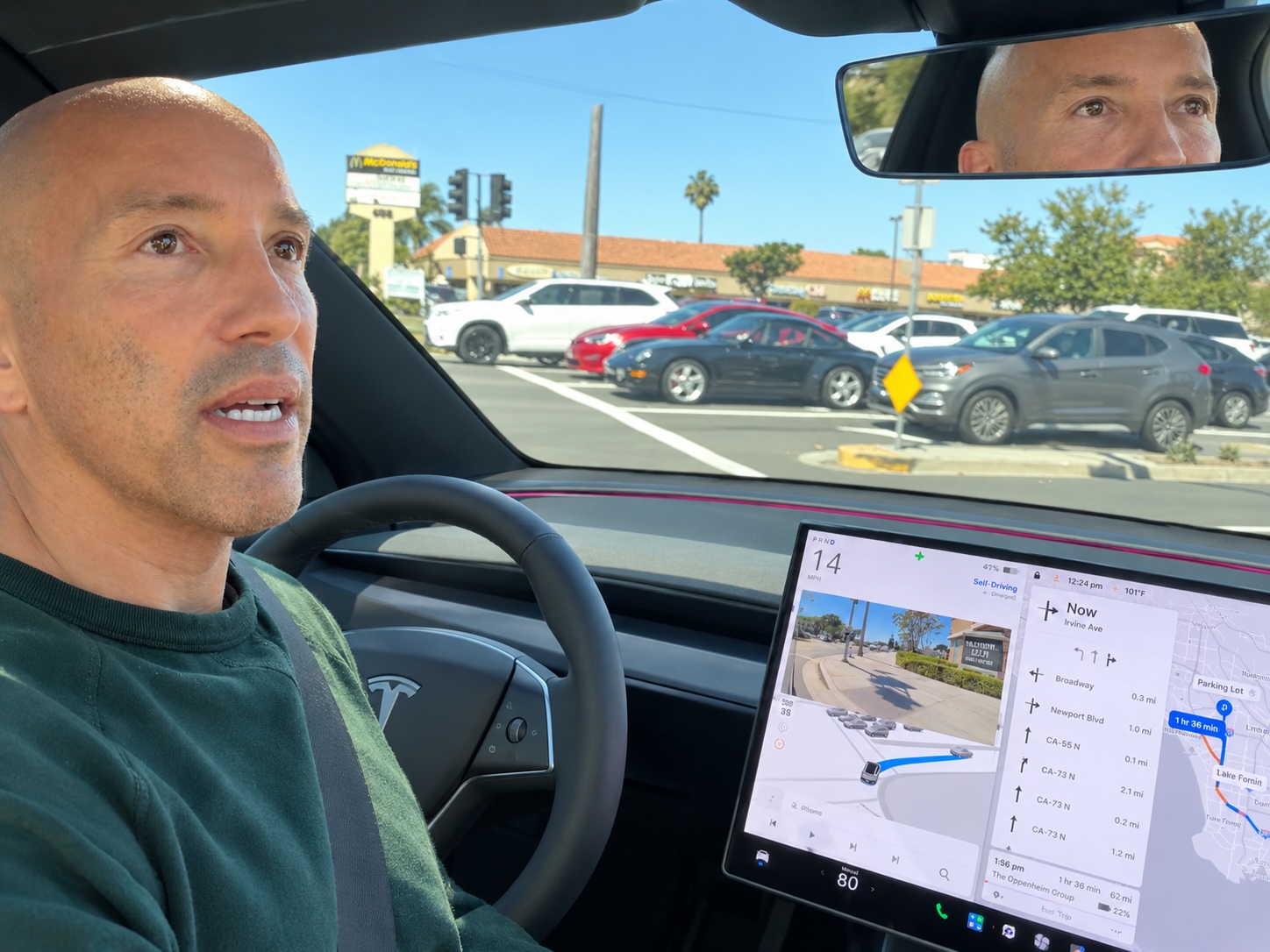
Jason Oppenheim, the luxury real estate broker best known as the star of Netflix’s Selling Sunset, has parked his Bentley for good and moved into a Tesla Model Y, and he says Full Self-Driving (Supervised) is the reason.
Oppenheim, who founded The Oppenheim Group, the Los Angeles brokerage at the center of the show, posted a video to X on Saturday evening that he called “the most important video I’ve ever posted.” In it, he rides from Newport Beach to his firm’s Los Angeles office, a trip he put at roughly an hour and 15 minutes, while FSD handles the drive and parks the car without him touching the wheel or the accelerator. He said he handed the Bentley to his father because he no longer has any use for it.
Tesla shared the clip from its main account on X about two hours later, pulling out the quote that has since spread well beyond the Tesla community:
“[FSD Supervised] is life-changing. I was on the phone with my brother last night, and I made him buy one. He literally bought one while we were talking. I’m buying 10 of my employees a Tesla with FSD. It’s 8x safer than the average driver. There’s nothing more important than the safety of you and your loved ones.”
Oppenheim was candid about why the safety pitch landed with him. He admitted in the video that he is a distracted driver who answers emails and texts behind the wheel, and framed the employee purchases as a way to keep his team off their phones while driving. Elon Musk posted “Tesla FSD feels like magic” less than half an hour after the video went live.
The endorsement lands at a convenient moment for Tesla. The company delivered 486,532 vehicles in Q3, beating Wall Street’s estimates and marking its best quarter ever without the $7,500 federal EV tax credit.
A public service announcement. https://t.co/NYa1IpKwBX
— Jason Oppenheim (@OppenheimJason) October 4, 2026
Tesla FSD has been subscription only in the U.S. since February at $99 per month, and Tesla said in its Q2 update that active subscriptions hit 1.48 million, up 56 percent year over year, with more than 55 percent of new North American deliveries leaving with FSD attached. That attach rate is the figure Ron Baron cited last month when he told CNBC “the time to buy the stock is now.” At current pricing, Oppenheim’s 10 employee cars alone would add $990 a month, or about $11,880 a year, in FSD revenue.
Tesla AI head Ashok Elluswamy said in July that FSD had logged more than 12 billion miles while going roughly twice as far between collisions as manual driving. FSD also remains a supervised system, so Oppenheim and his employees are still required to watch the road, even as Tesla rolls out v14.3.10 with Automatic Collision Evasion, which can steer or brake on its own to avoid a frontal crash.
Lifestyle
Tesla teases “Halloween Mode” update with Optimus rising from a graveyard
Tesla’s Halloween teaser hides a covered vehicle and an Optimus hand rising from the ground.
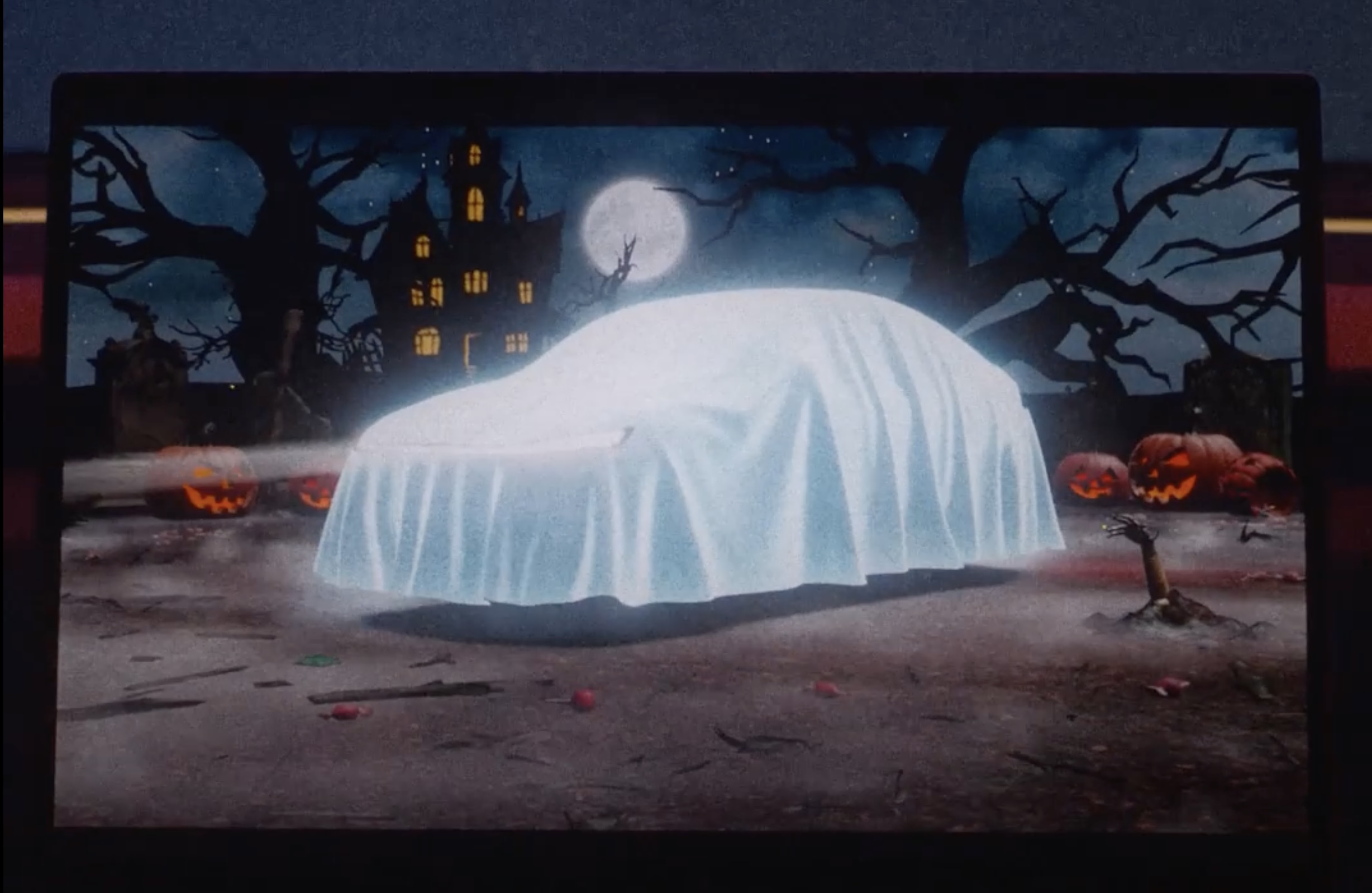
Tesla has started teasing a Halloween software update for its vehicles, with a short clip on X that reads, “Halloween is coming.” The clip opens on a glowing pumpkin before pulling back to the car’s center touchscreen, where the usual parked visualization has been replaced by a graveyard scene, and the vehicle draped with a white sheet so it reads as a cartoon ghost.
Halloween is coming pic.twitter.com/lM3ASUeOqX
— Tesla (@Tesla) October 1, 2026
The second detail is a robotic hand clawing its way out of the dirt like a zombie, which looks to be the hand of Tesla’s latest Optimus V3 humanoid robot. While Tesla still has not formally shown Optimus Gen 3 walking around in service, renders pulled from Tesla’s Android app last month gave the clearest look yet, including far more refined hands that Tesla has said carry 22 degrees of freedom. The hand has been the hardest part of the program. Musk has called it the majority of the robot’s engineering difficulty, and Tesla’s patents describe a design driven by tendons with the actuators moved into the forearm.
Tesla Optimus V3 hand and arm details revealed in new patents
Optimus also has a Halloween track record. Last October the robot handed out candy in Times Square, and a costumed “zombie” Optimus shuffled around the Tesla Diner in Los Angeles on Halloween night.
On the software side, Tesla’s 2025 Holiday Update expanded Santa Mode with a Santa sleigh, snowmen, snow effects, and a festive lock chime, so it wouldn’t be too far fetched if we saw something similar but themed for a Halloween Mode.

Elon Musk shuts down talk of TSMC taking over Terafab

Trump to hand Elon Musk a top honor that traces back to JFK

Tesla FSD changed its mind mid-intersection, and it may have saved a life

The Pentagon taps Elon Musk to design the battlefield of the future

Tesla Roadster’s new patent preps white-knuckle speeds, keeping it grounded


