Investor's Corner
Notable Tesla bull to run for Board, receives support from major investor

Ross Gerber, a significant shareholder and notable Tesla bull, will be running for a seat on the Tesla Board of Directors at an upcoming meeting in May.
The end of last year was a tumultuous time for Tesla stock and hence, a period of high pressure for the Tesla Board of Directors. Following the company’s stock collapse, many investors were hopeful that the Board would introduce change to regain control of the company’s share price. While the Board chose not to act, Tesla’s continuing stock value rebuild has inspired a new class of investors to join the Board, including Ross Gerber, who told Reuters he plans to run.
Gerber controls respectable 440,000 shares, roughly. Thanks to his experience as CEO of a California-based wealth-management fund, Gerber believes he is qualified and can be a voice for change on the Board. He told Reuters he hopes to be a “friendly activist” on a mission to fix three main issues; public relations, customer service, and succession planning.
Two of Gerber’s concerns are relatively widespread within the realm of Tesla investors. For years, Tesla CEO Elon Musk’s decision to have no communication or public relations office has split opinions, leading some to praise the company’s innovative cost-cutting strategy and others to criticize its lack of openness.
The biggest issue at tesla is NOT demand or quality or competition. ITS OPTICS. $TSLA
— Ross Gerber (@GerberKawasaki) January 14, 2023
The same long-lasting concern can be said for customer service. Despite the growing number of service stations, the continuous expansion of mobile repair, and a series of promises to improve, many customers and investors remain unsatisfied with the operation.
Perhaps Gerber’s most fresh idea is succession planning, though he is not alone in the concern either. Tesla is inexplicably linked to the name and persona of Elon Musk, and with that comes inherent risk as it remains unclear how the company or market would react were he to depart for any reason.
This brings us to why Gerber is not alone in his concerns. Tesla’s third-largest investor, KoGuan Leo, expressed his support for Gerber’s Board membership on Twitter just after he announced his candidacy.
Ross and I shared love of Tesla and humongous respect for what Elon has achieved for Tesla. Tesla will be the most consequential company of our era. https://t.co/cqKsJOq1Ib
— KoGuan Leo (@KoguanLeo) February 1, 2023
Becoming a Tesla Board member is fairly straightforward, though Gerber has somewhat circumvented the typical system. Typically, upcoming board members are nominated by Tesla’s Nomination and Corporate Governance Committee. They will then have the chance to be included on a ballot for a Board seat at the annual Board meeting. At that time, Tesla investors can vote for each open board seat. The eight Board members hold their positions for three years and are subject to no term limits.
With the upcoming Board meeting in May, Gerber will, in essence, put his ideas to the test. If enough Tesla investors, much like Leo, find his concerns with Tesla to resonate with them, Gerber has a good shot at getting his seat. However, with such entrenched Board leadership that has consistently faced limited challenges, this may be easier said than done.
What do you think of the article? Do you have any comments, questions, or concerns? Shoot me an email at william@teslarati.com. You can also reach me on Twitter @WilliamWritin. If you have news tips, email us at tips@teslarati.com!



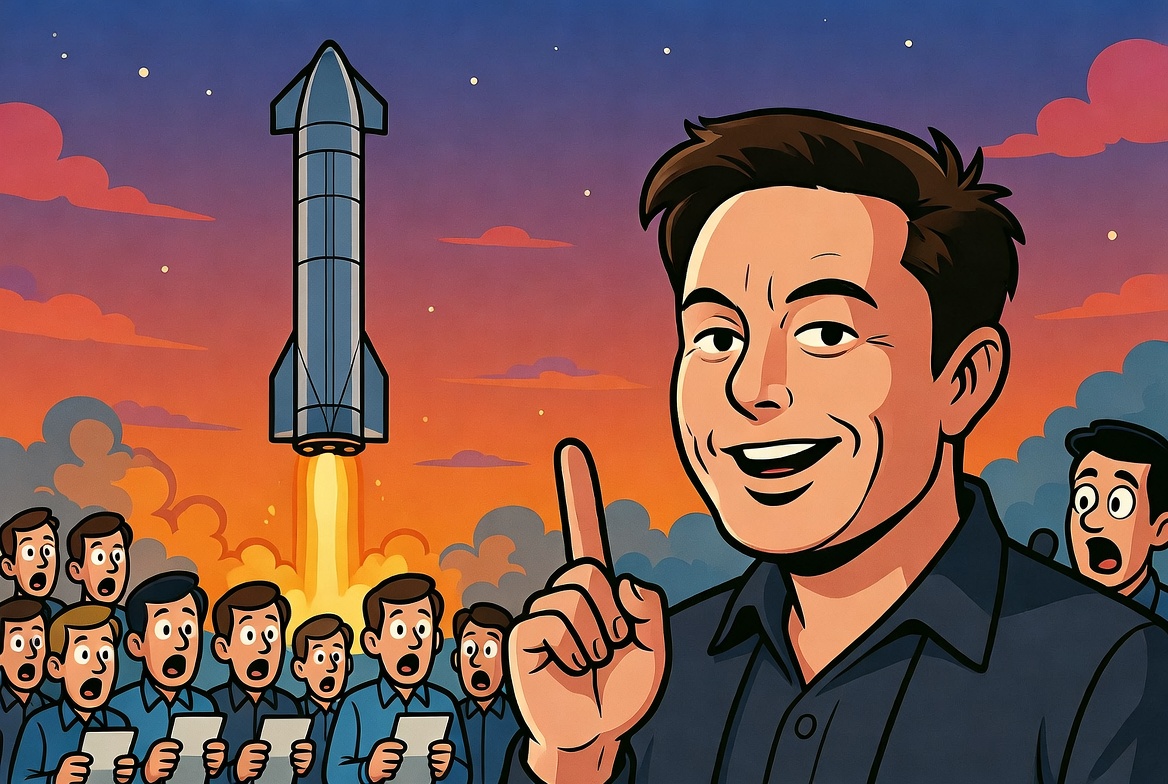
Elon Musk has firmly denied recent media reports suggesting that SpaceX has reduced its target valuation for an upcoming initial public offering.
The denial came directly from the SpaceX and Tesla frontman on his social media platform X, where he responded with a single word, “False,” to a post from ZeroHedge that cited Bloomberg sources.
This swift rebuttal underscores Musk’s ongoing effort to manage speculation surrounding one of the most anticipated market debuts in recent history.
False
— Elon Musk (@elonmusk) May 29, 2026
According to the disputed reports, SpaceX had lowered its IPO valuation goal to at least $1.8 trillion from previous ambitions exceeding $2 trillion.
The claims emerged amid growing anticipation for the company’s confidential S-1 filing, which positions it for a potential public listing as early as June.
Some had pointed to strong revenue growth, particularly from the Starlink satellite internet service, which contributed heavily to the firm’s 2025 figures of $18.7 billion. Yet challenges persist in other areas, including substantial investments and losses tied to ambitious projects like Starship development and artificial intelligence initiatives, which plan to make life multiplanetary eventually.
Musk’s response highlights a pattern in which he actively counters what he views as inaccurate portrayals of his companies’ trajectories.
SpaceX, already valued privately at extraordinary levels, stands as a cornerstone of Musk’s empire alongside Tesla and xAI. The entrepreneur has long emphasized the transformative potential of reusable rockets and global broadband access, factors that fuel investor enthusiasm despite operational hurdles.
By rejecting the valuation downgrade narrative, Musk signals confidence in SpaceX’s fundamentals and its readiness for public markets on terms favorable to its long-term vision. People have been waiting a very long time to invest in SpaceX, and the valuation, as well as the introductory share price, is not going to need adjusting.
They’ll have plenty of suitors.
This episode reflects broader dynamics in the technology sector, where rumors often swirl around high-profile entities. Musk’s direct engagement with media narratives serves to maintain transparency and control the narrative around his ventures.
As SpaceX prepares for greater scrutiny in public markets, the founder’s denial reinforces optimism about its prospects. Supporters argue that the company’s innovative edge positions it for enduring success, far beyond short-term valuation debates. With the denial now public, attention turns to forthcoming regulatory filings that could provide clearer insights into SpaceX’s strategy and financial health.
The coming weeks promise to reveal more about how SpaceX will transition into a publicly traded powerhouse.
Elon Musk
The Tesla and SpaceX merger everyone is talking about is quietly building
Tesla and SpaceX may be closer to merging than Wall Street or either company is admitting.

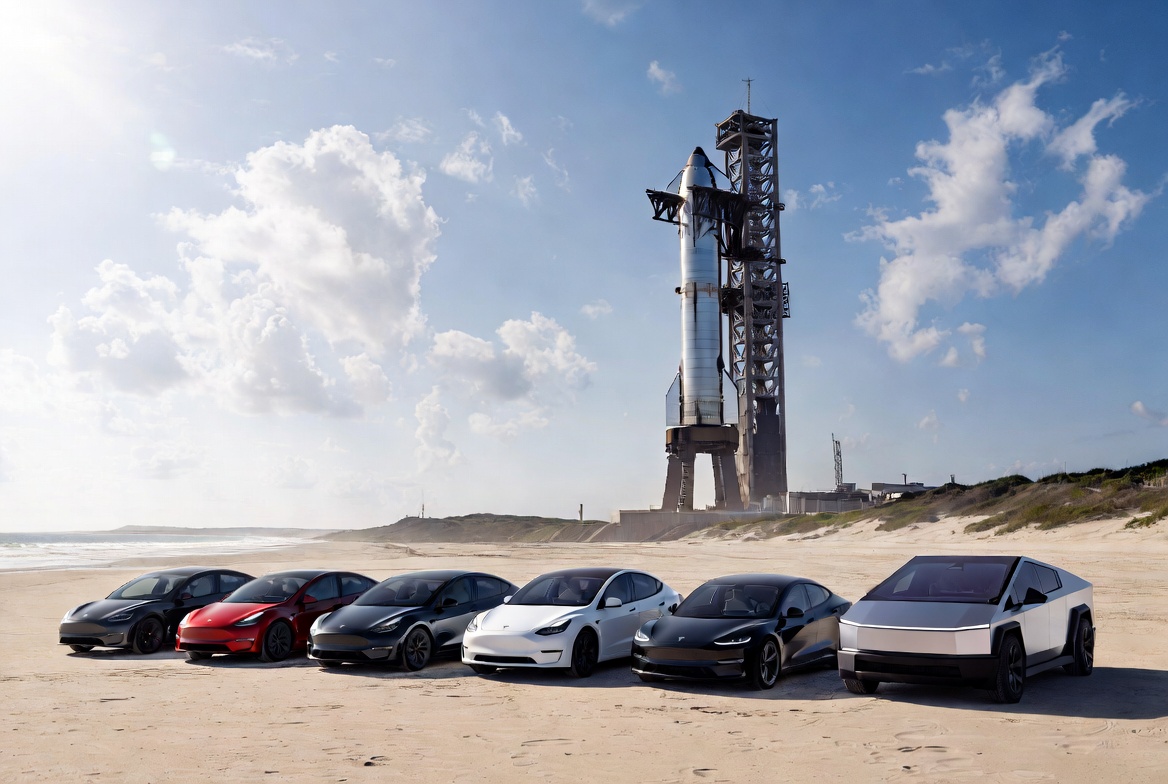
Elon Musk has reportedly discussed merging Tesla and SpaceX with people close to him, according to CNBC, which cited sources familiar with the conversation. Tesla employees have long expected such a transaction and the topic is openly discussed internally, according to internal sources. With SpaceX is days away from kicking off its Wall Street roadshow for what could be the largest IPO in market history, this would be the first time the company will have public market currency to execute a stock-for-stock deal with Tesla.
The financial logic for a merger would make sense. A combined SpaceX and Tesla would create a conglomerate spanning rockets, satellites, electric vehicles, AI infrastructure, and energy storage valued at roughly $3.35 trillion to $3.6 trillion based on SpaceX’s IPO target range and Tesla’s current market capitalization. The two companies are already more intertwined than most people realize. SpaceX bought $697 million worth of Tesla Megapack systems for xAI data centers and $131 million worth of Cybertrucks. Tesla invested $2 billion in xAI, which subsequently merged with SpaceX. Past transactions also include Tesla selling solar equipment and parts to SpaceX, and SpaceX helping with Cybertruck materials.
Will Tesla join the fold? Predicting a triple merger with SpaceX and xAI
Musk himself signaled where this was heading in November 2025 when he posted on X, “My companies are, surprisingly in some ways, trending towards convergence.” Tesla and SpaceX announced a joint semiconductor fabrication facility in Austin called Terafab on the Gigafactory Texas campus, covering two advanced chip factories, with one serving Tesla’s AI needs for vehicles and Optimus robots, the other targeting space-based data centers under SpaceX’s infrastructure vision.
Wedbush analyst Dan Ives places the probability of a merger at 80% to 90% with a target completion in the first half of 2027. The mechanics of a deal became possible the moment SpaceX filed its S-1. Legal experts said a merger likely would not spark antitrust issues but would raise concerns among shareholders in each company, with questions around which company would be the parent, how a stock swap would take place, and who determines the appropriate price. Musk holds about 20% of Tesla’s equity but controls 85.1% of SpaceX’s voting power through a super-voting share class, meaning he would largely be negotiating the terms with himself.
Not everyone is convinced the timing is imminent. Traders on Kalshi place only 33% odds that a merger will happen before May 2027. The more immediate concern for Tesla shareholders is whether the SpaceX IPO pulls capital and Musk’s attention away from Tesla before any merger consolidates the upside for both.
What is clear is that the structural groundwork is already being laid. The Terafab announcement, the xAI merger, the shared supply chain, the cross-company balance sheet transactions, and now the IPO all point in the same direction. Whether the merger follows in 2027 or later, the two companies are already operating more like divisions of a single entity than independent competitors.
Elon Musk
SpaceX just filed for the IPO everyone was waiting for
SpaceX filed its public S-1, revealing $18.7 billion in revenue and billions in losses.
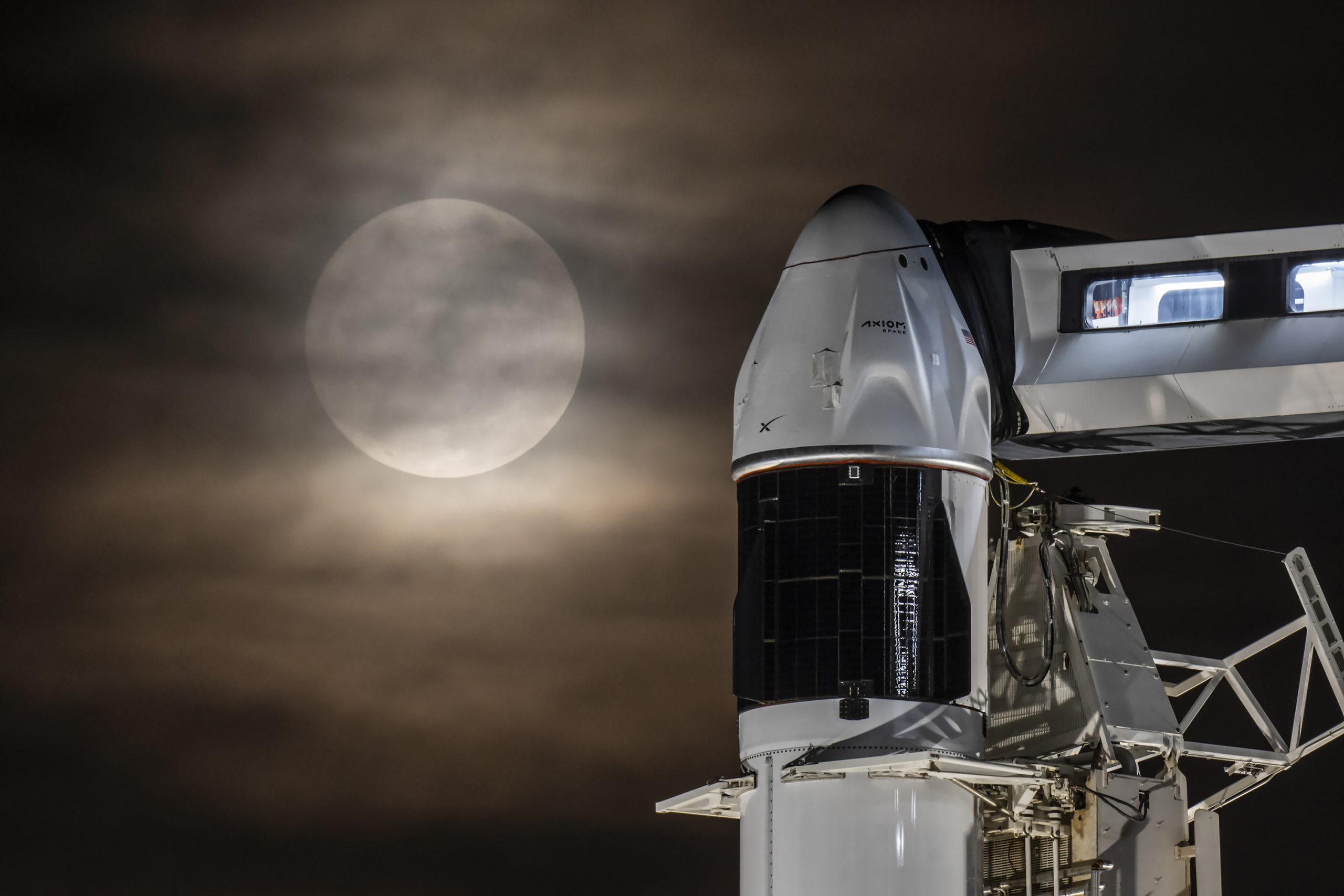
SpaceX publicly filed its S-1 registration statement with the Securities and Exchange Commission on May 20, 2026, making its financial details available to the public for the first time ahead of what could be the largest IPO in history.
An S-1 is the formal document a company must submit to the SEC before going public. It includes audited financials, risk factors, business descriptions, and how the company plans to use the money it raises. Companies are required to file one before selling shares to the public, and it must be published at least 15 days before the investor roadshow begins. SpaceX had already submitted a confidential draft to the SEC in April, which allowed regulators to review the filing privately before it went public.
The S-1 reveals that SpaceX generated $18.7 billion in consolidated revenue in 2025, driven largely by its Starlink satellite internet division, which posted $11.4 billion in revenue, growing nearly 50% year over year. Despite that growth, the company lost about $4.9 billion in 2025 and has burned through more than $37 billion since its founding.
SpaceX just forced Verizon, AT&T and T-Mobile to team up for the first time in history
A significant portion of those losses trace back to xAI, Elon Musk’s artificial intelligence company, which was recently merged into SpaceX. SpaceX directed roughly 60% of its capital spending in 2025 to its AI division, totaling around $20 billion, yet that division lost billions and grew revenue by only about 22%.
SpaceX plans to list its Class A common stock on Nasdaq under the ticker SPCX, with Goldman Sachs, Morgan Stanley, and Bank of America leading the offering. The dual-class share structure means going public will not meaningfully reduce Musk’s control, as Class B shares he holds carry 10 votes per share compared to one vote for public Class A shares.
The company is targeting a raise of around $75 billion at a valuation of roughly $1.75 trillion, which would make it the largest IPO ever. The investor roadshow is reportedly planned for June 5.

Elon Musk strikes down reports on SpaceX IPO rumors

Tesla’s Robotaxi dreams just took a massive step toward reality


