Investor's Corner
Tesla (TSLA) 2019 Annual Shareholder Meeting: Live blog

Tesla’s (NASDAQ:TSLA) 2019 annual shareholder meeting comes at a rather historic time for the electric car maker. The past year has proven to be a roller coaster of sorts for Tesla’s investors, with TSLA stock rising as high as $387.46 per share and falling to as low as $176.99 per share. At the center of these wild swings is the Tesla Model 3, which is currently in its international rollout.
The past month was a challenging time for Tesla’s investors. Following the company’s lower-than-expected delivery and production figures in the first quarter, Tesla was hit by a perfect storm that included multiple negative analyst forecasts, pessimistic narratives from the media, and allegations that the demand for the company’s vehicles is waning. These concerns have largely been dispelled in recent weeks, as signs have emerged that Tesla, and particularly the Model 3, might be poised to pleasantly surprise this second quarter.
For the annual shareholder meeting, Elon Musk and Tesla’s executives are expected to address questions from retail investors that could range from the company’s current projects such as the Model 3 ramp to its future endeavors such as the Tesla Pickup Truck. Questions aggregated by investor communication platform Say also point to inquiries about Tesla’s rationale behind the Maxwell acquisition, as well as the company’s plans for its insurance service, among others.
Related articles:
- Tesla pickup truck will have better performance than a Porsche 911, says Elon Musk
- Tesla to host Investor Battery and Drivetrain Day in Q3 2019
- Tesla Model Y joins stunning red Roadster at annual shareholder meeting
The following are live updates from Tesla’s 2019 annual shareholder meeting. Fellow Teslarati reporter Dacia Ferris and I will be updating this article in real-time, so please keep refreshing the page to view the latest updates on this story.
Dacia 16:15 PT: That’s a wrap! We need a post-Elon presentation meme team. Who’s game? 😉
Simon 16:15 PT: And that’s the 2019 Annual Shareholder Meeting! Elon, JB, and Drew get a standing ovation from the audience. How often does that happen in a shareholder meeting?
Dacia 16:14 PT: Will Tesla build an aquatic car? a shareholder asks. “It’s funny you mention that…,” Elon begins, citing a submarine car design he has. “I think the market for this will be small.”
Dacia 16:12 PT: Elon debates the merits and deficiencies of advertising and educational campaigns…would it draw more attention to issues than is merited? He likes the idea of film challenges.
Simon 16:10 PT: On a question about advertising, Elon notes that such strategies are not necessary right now, especially since Tesla sells all the cars that it can produce. Elon also expresses his reservations about advertising, particularly the level of trickery that goes with it. “We could have advertising for information to refute the misinformation,” Elon says.
Simon 16:09 PT: Responding to a question from PETA about leather being used for the steering wheels of Tesla’s electric cars, Elon notes that the Model Y, and the Model 3 will be vegan.
Simon 16:06 PT: Elon, JB, the board, and the company get a vote of support for Tesla from an investor in India. Elon raises his fist in a show of appreciation. Epic.
Dacia 16:05 PT: “What do you ask a team that has put a Roadster in freaking space?” a shareholder and fan of Elon exclaims in lieu of a question. He also laments Nikola Tesla’s lack of funding to pursue his experiments.
Dacia 15:59 PT: “I love horses,” Elon clarifies, ducking on a question about the specific Tesla truck towing capacity. “If the F-150 can tow it, the Tesla truck can do it.”
Simon 15:58 PT: Elon also recognizes the shift of other companies to renewable transportation. This relates to carmakers such as Porsche, which as abandoned diesel in favor of electric and electrified vehicles.
Dacia 15:57 PT: Awww… JB and Elon are reminiscing about the veeery early days of the company. Elon reminds us that he totally thought they’d fail. (10% chance of success)
Simon 15:54 PT: JB notes that while electric cars are prevalent now, there is still a lot of work to be done. “We can’t pat ourselves in the back yet,” JB notes.
Dacia 15:52 PT: “Incredibly, there have been a lot of negative articles (about Tesla) in Bloomberg,” Elon observes in response to a shareholder’s concern about the myths and disinformation spread about Tesla. Elon seems to consider a mythbusting site to battle all the negativity.
Simon 15:51 PT: A shareholder suggests connecting with media titans to curb the negative narrative and misinformation surrounding Tesla. Elon takes this point very well.
Dacia 15:49 PT: “Customer testimony and referrals are the key to our sales,” Elon says about the company’s success.
Dacia 15:48 PT: “If it was possible to have a 6th star, we’d have a 6th star,” Elon touts Tesla’s super high safety ratings. Huzzah!
Simon 15:47 PT: Shareholder question on what Tesla plans to do with the misinformation surrounding the company. Elon notes that the misconceptions are distressing, but even if Tesla provides explanations to mainstream media, these get buried in articles. Musk admits that he is at a little bit of a loss when it comes to changing the negative narrative about the company. Elon, Drew, and JB thank shareholders for being Tesla’s line of defense against the misinformation campaign.
Dacia 15:46 PT: On Tesla fires…Elon points out how rare Tesla incidents are, especially compared to gasoline-powered cars. “Internal…combustion…engine…it’s in the name,” he jokes. “Would you rather have a gasoline powered phone or a battery powered phone?” He also points out how ridiculous the disinformation campaign has been about Tesla fires.
Dacia 15:40 PT: Shareholder question on China’s EV growth – 500,000 units per year from Gigafactory 3 seems a little low? Why was the target set at that? Elon says he thinks that long-term G3 will do more, that’s more of an interim goal. He sees more factories in other parts of China.
Dacia 15:32 PT: “This might make sense…we will probably do something like this,” Elon agrees that a mobile ride sharing service should be make available prior to the Tesla Network/robo taxi release.
Simon 15:32 PT: Supervised “Robotaxis” are a go, says Elon.
Simon 15:30 PT: As for Starlink tech being used for Tesla’s electric cars, Elon states that the company will need to design an updated antenna for the vehicles. Musk also notes that Starlink is not really for high-density areas as much. Instead, it’s designed to provide connectivity to the poorly served areas of the globe.
Dacia 15:28 PT: Elon says the Starlink antennae will be about the size of a small pizza. Like, are we talking Brooklyn style? What about pepperoni?
Simon 15:26 PT: Tesla insurance is coming soon, after a “small acquisition” is completed. Some software also needs to be written for the service.
Dacia 15:26 PT: “I’m often too optimistic about time frames,” Elon admits, referring to a submitted question about Enhanced Summon. It was predicted to be coming ‘soon’ a few times already. “There’s a lot of complexity in parking lots, turns out.”
Simon 15:23 PT: As for Maxwell tech, Elon says Tesla will save that for a “battery and powertrain investor day.” Sign us up!
Dacia 15:24 PT: “We’re not sitting idly by…we’re making all the moves to be the masters of our own destinies,” Drew adds to the battery/scaling challenges.
Dacia 15:23 PT: “We might get into the mining busines…maybe a little bit,” Elon teases, referring to battery scaling – Tesla’s biggest challenge right now. “Battery cells and full self-driving. Those are the two things that are most important,” Elon summarizes.
Simon 15:20 PT: Elon discusses Tesla’s “Cyberpunk” pickup truck. He notes that it is arguably the coolest vehicle he has seen so far. Seems like it is certain at this point that the Tesla Truck will not look like a conventional pickup.
Dacia 15:19 PT: “We’re removing a lot of repair in house,” Elon details, also citing service requests via the Tesla app.
Dacia 15:18 PT: “When you buy a car, you’re buying freedom. Freedom to travel,” Elon remarks, referring to all the inputs that go into Tesla ownership.
Simon 15:15 PT: Elon discusses the expansion of the Supercharger V3 network. “Superchargers and Service Centers are the key to sales,” says Elon, also mentioning Tesla’s financing offers.
Dacia 15:13 PT: It’s all love for this Tesla leadership crew… nevermind Drew wasn’t introduced for a bit there. 🙂
Simon 15:11 PT: Can’t help but notice how relaxed Elon is today. Same thing with JB. They do, if any, exude confidence in today’s meeting.
Simon 15:08 PT: Elon shares the idea of having a Gigafactory on every continent. He also notes that the Solar Roof is now on “version 3.”
Dacia 15:08 PT: Version 3 of the Solar Roof…Elon predicts cost being equal to a shingle roof plus electric utility bill. Cheaper roof, better economics… Elon has “banged the table” over making this happen. “It can be done!” Drew chimes in.
Dacia 15:07 PT: Musk jokes that Gigafactory 3 needs air traffic control due to all the drones flying over and taking update pics. (we are guilty of indulging)
Simon 15:05 PT: JB and Elon express their thanks to everyone who helped create Gigafactory 1.
Dacia 15:04 PT: Elon explains why Powerpoint presentations still win. 5 slides = Funding for Gigafactories to make more batteries than what’s in the world combined.
Simon 15:03 PT: Well look who we have here. JB Straubel’s in the house. There goes another bear thesis, I guess. JB also discusses the conceptualization and creation of Gigafactory 1.
Simon 15:02 PT: Model Y could have a lower drag coefficient than the Model 3. That is pretty darn impressive.
Simon 15:01 PT: “Clearly we’re headed towards electrification. Clearly, we’re heading towards autonomy,” Musk said, highlighting how Tesla’s vehicles are preferable purchases over gas cars.
Dacia 15:00 PT: Buying any car besides a Tesla is like…”riding a horse and using a flip phone,” Elon says. Um, OK. Let’s roll with that visual. Memes…..go!
Dacia 14:58 PT: I can’t decide whether to refer to him as “Elon” or “Musk”…it really depends on what he says, no? Fart App = Elon, Tesla Network = Musk. ¯\_(ツ)_/¯
Simon 14:58 PT: Musk reiterates his point about Tesla’s full self-driving technology. “It’s just mad to buy a fossil fuel car at this point,” he says.
Dacia 14:56 PT: Musk speaks to all the factors lowering the cost of ownership of a Tesla over gas-powered competitors. Also…it’s designed to have the most fun with gems like the fart app. (er, he means emissions testing)
Simon 14:55 PT: Elon also highlights the cheaper maintenance costs of electric cars. It’s kinda like an Accord, he says, only better. It also has “gems” like the Fart App, “which is my personal favorite,” Elon added.
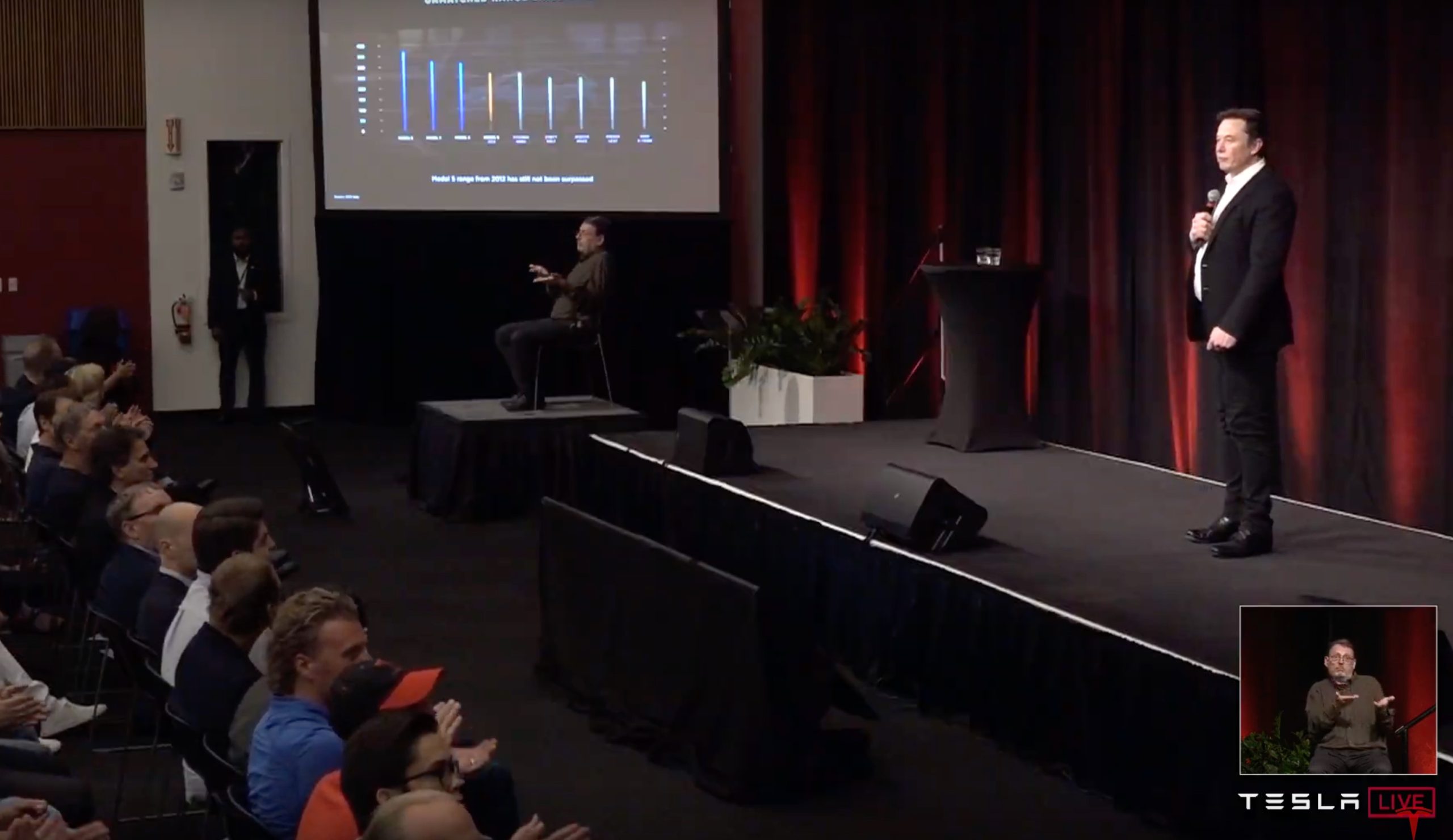
Dacia 14:53 PT: “No electric car has exceeded the range that we came out with on the first Model S in 2012,” Musk says smiling…still struggling not to tease competitors.
Simon 14:53 PT: Elon also notes that there is no “demand problem.” There goes the death throes of that bear thesis.
Dacia 14:52 PT: “E-tron…there’s room for improvement,” Musk says. He also is trying(?) not to pick on the brand who’s had some troubles lately.
Simon 14:51 PT: Elon touts Tesla’s lead in efficiency. “I don’t want to pick on the (Audi) e-tron, but…” The audience, of course, gets it.
Dacia 14:50 PT: “It’s remarkable that an electric car is the highest revenue car in the country,” Elon touts, and rightly so.
Simon 14:49 PT: Elon states that while the past year has been challenging, there are a lot of good news about Tesla. Starting off, the “Model 3 is outselling all of its competitors in the US,” says Elon Musk. He also thanks the hard work of the Tesla team.
Simon 14:48 PT: Elon Musk takes the stage.
Dacia 14:46 PT: I’m allll about the fun part!
Simon 14:40 PT: And now the votation starts. For background on this, please refer to our article on the agenda for today’s meeting.
Dacia 14:37 PT: “You need to have a certain amount of intestinal fortitude as an investor…and you have that in spades,” Denholm says. That’s for darn sure.
Simon 14:35 PT: Tesla Chair Robyn Denholm takes the stage to address investors in her welcoming remarks. Teases Elon’s upcoming presentation.
Dacia 14:33 PT: Selfie time FTW!
Dacia 14:31 PT: Where’s the music video? Totally bumming.
Simon 14:30 PT: Should be starting anytime now.
Simon 14:24 PT: Now all we need to know is if the red Model Y is separate from the blue one. Pretty cool if Tesla has two working prototypes right now.
Dacia 14:20 PT: Twitterverse is saying that red Model Y is a functioning prototype. (h/t Ryan McCaffrey)
Simon 14:13 PT: It’s full house (courtesy of Tesla owner-investor Dennis Pascual). Just a bit over 15 minutes before it’s set to begin.
Simon 14:10 PT: Kinda wondering if that red Y is just a wrapped version of the blue prototype from the unveiling. Sure looks like a working model imo. But that OEM chrome delete though.
Simon 14:09 PT: Some sweet cars outside the meeting’s venue. Red Model Y is fire.
Dacia 14:05 PT: Woo! Tesla live blog time again! Red cars at the shareholder meeting for passion…or panic?? (dun dun dun! just pre-empting the FUD)



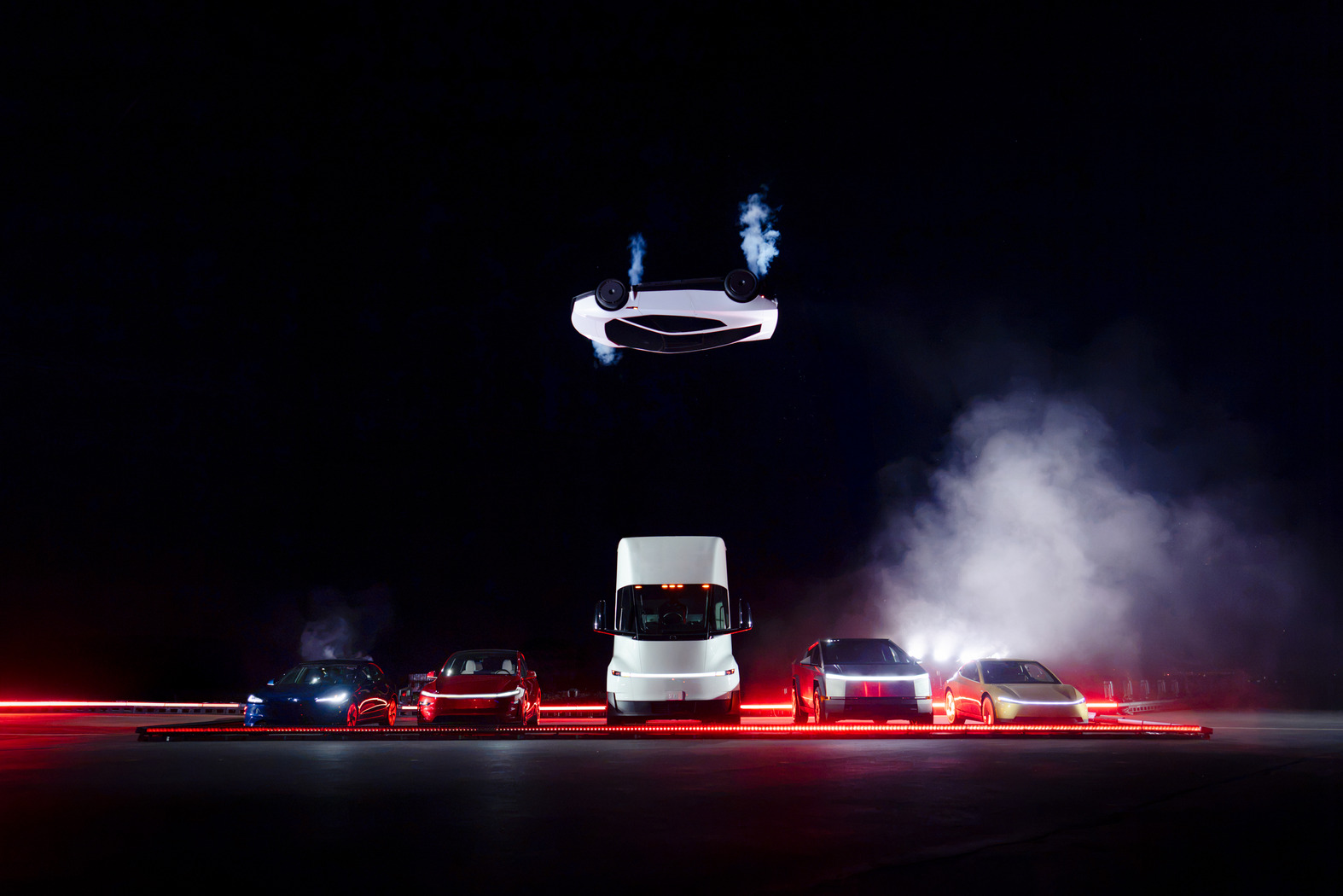
Tesla (NASDAQ: TSLA) reported its earnings for the third quarter of 2026, marking a reasonable performance on the various financial metrics. Tesla still plans to hold a call that will field investor questions at 5:30 p.m. ET, 4:30 p.m. CT.
Here’s where Earnings came in:
- Total Revenues: $28.046 reported vs. $28.34B expected
- Non-GAAP EPS: $0.48 reported vs. $0.45 expected
- Operating Margin: 2.6 % reported vs. 2.5% expected
- Operating Income: $718M reported vs. $721M expected
- Free Cash Flow: $1.531B reported vs. ~-$4.51B expected
Tesla $TSLA Earnings Results:
Revenues: $28.046B
Non-GAAP EPS: $0.48
Operating Margin: 2.6%
Operating Income: $718M
FCF: $1.531B— TESLARATI (@Teslarati) October 21, 2026
Major Takeaways
Full Self-Driving (Supervised)
“FSD (Supervised)⁴ attach rate continued to grow, reaching over 75% of new vehicle deliveries in North America – our most mature market – a nearly twenty percentage point sequential increase. We believe that FSD is driving demand in markets where it is available, and we continue to work with regulators to get it approved in other markets.”
Tesla Semi
“We began volume production of Tesla Semi, our Class 8 heavy-duty truck. The top variant can go 500 miles at full 82,000 lbs gross combination weight while achieving an efficiency of 1.7 kWh/mile. That efficiency allows the Tesla Semi to use a third of the energy used by a comparable diesel truck to haul the same payload. In a transportation market where energy is one of the largest components of total cost per mile, this will provide a meaningful advantage to Tesla Semi operators.”
SI Compute
“We plan to reach 400 MW of SI training compute by the end of the year, supporting the development of both vehicle and humanoid robot autonomy software. Additionally, we continued construction for the Austin Fab, where we plan to start commissioning equipment in 2027.”
Robotaxi
“We began deployment of Cybercab into our Robotaxi fleet in Austin. We reached nearly two million cumulative unsupervised miles for our Robotaxi service as of the end of the quarter. Operating hours in Austin are now 6am to midnight, and we expect to reduce wait times via increased fleet supply and improvement of Robotaxi orchestration algorithms. Grok is available in Cybercab with access to Grok Bot and Connectors, which allows users to manage their inbox, calendars, files, chats and tasks – all hands free via voice command – making Cybercab a mode of transport, a productivity space and, with our entertainment options, a second living room.”
Interested in ordering a Tesla? Use my referral code for three free months of Full Self-Driving (Supervised) here.
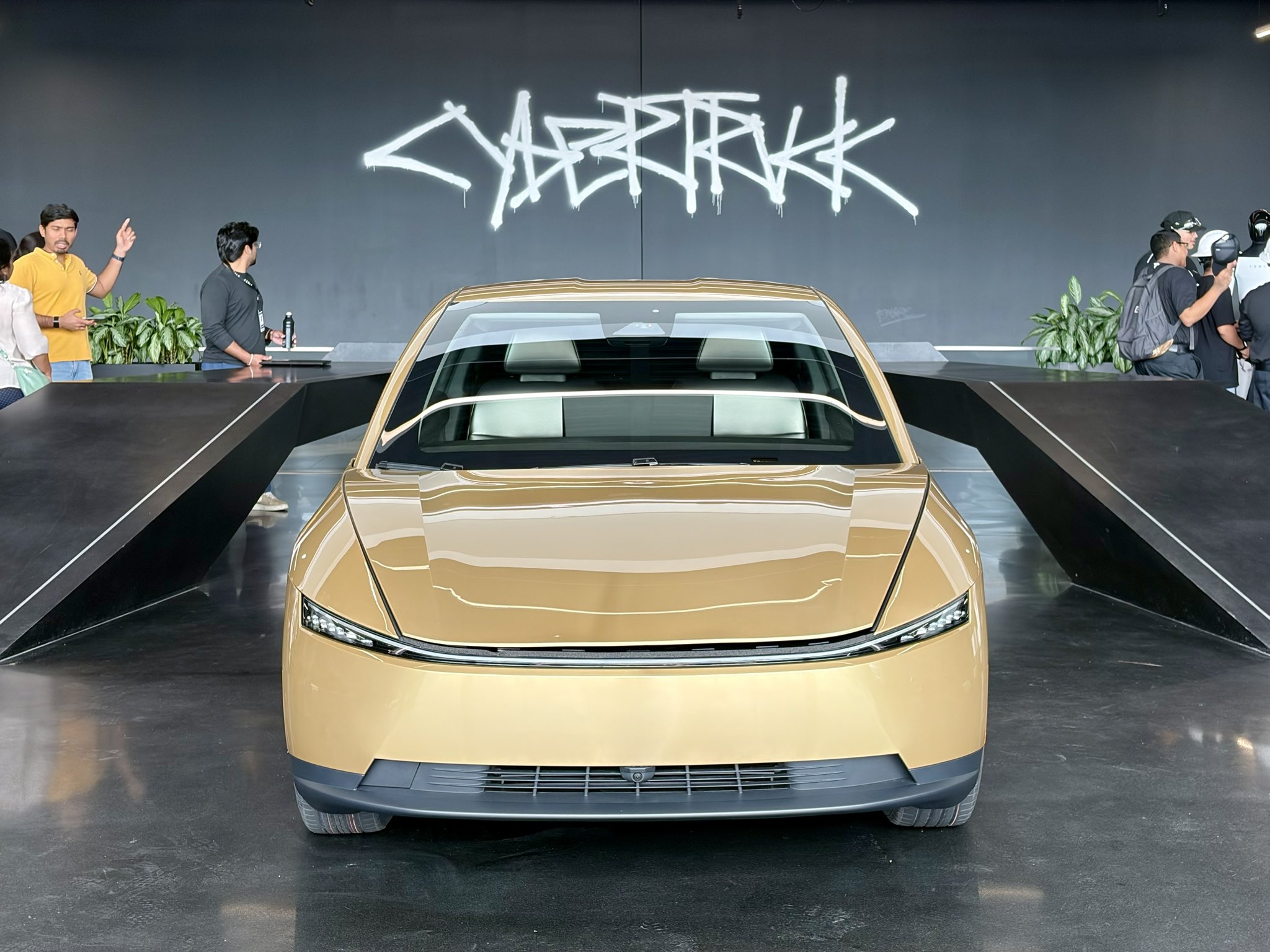
Tesla (NASDAQ: TSLA) reports its earnings for Q3 today. Here’s what to expect, as the company will reveal its balance sheet after the market closes on Wednesday.
Tesla already reported deliveries just after Q3 ended, and it demolished Wall Street consensus estimates of roughly 462,000 vehicles. Tesla delivered 486,532 cars in the third quarter, which was a big beat, but was down 2.1 percent from the same quarter last year. Energy storage deployments were 13.7 GWh, up year-over-year.
Tesla showrooms picked clean ahead of Q3 end as demand looks strong
For the quarter, analysts have already compiled their predictions for what Tesla will report this afternoon:
- Total Revenues: $28.34B
- Non-GAAP EPS: $0.43
- Operating Margin: 2.5%
- Operating Income: $721M
- Free Cash Flow: ~-$4.51B
Here are a few things we are looking forward to hearing about on the call:
Automotive Gross Margin and Overall Profitability
This was 16.3 percent in Q2, down from 19.2 percent in Q1, and was impacted by warranty charges and some fading regulatory credits. Consensus implies overall gross margin near 18 percent, but a miss here would potentially reinforce concerns about pricing pressure on its vehicles.
Pay attention to energy storage margins as well, especially since Tesla missed GWh expectations, although it was still a strong quarter.
Robotaxi/Cybercab, Unsupervised FSD, and Optimus Progress
The Say questions from retail investors usually focus on these types of projects, and this quarter is no different. Scaling the Cybercab fleet beyond Austin amid the open NHTSA safety review, timeline for Unsupervised FSD in customer cars, Robotaxi unit economics, and Optimus cost per unit plus when it could start generating revenue, are all things to be looking for.
Any concrete timelines or regulatory path details will likely move the stock more than the near-term numbers. SpaceX merger speculation, which was detailed during SpaceX’s earnings call last night, may also surface, although the key details were shared last night.
Elon Musk just confirmed the Tesla and SpaceX merger step everyone was waiting for
Say Investor Questions
- How does the Cybercab fleet scale past Austin, and what’s the regulatory path outside Texas given NHTSA’s open safety review?
- When can we anticipate FSD unsupervised in customer cars?
- When will the CyberCab be available for customer purchase/ownership?
- What’s the unit economics per paid robotaxi mile, and how does it compare to the thirty-cent target?
- Tesla has acknowledged that HW3 vehicles cannot support unsupervised FSD. When will owners know whether they can upgrade their hardware for free, and when will Tesla provide a clear plan?
The full Earnings Call will be streamed this evening after market close around 5 p.m. this evening.
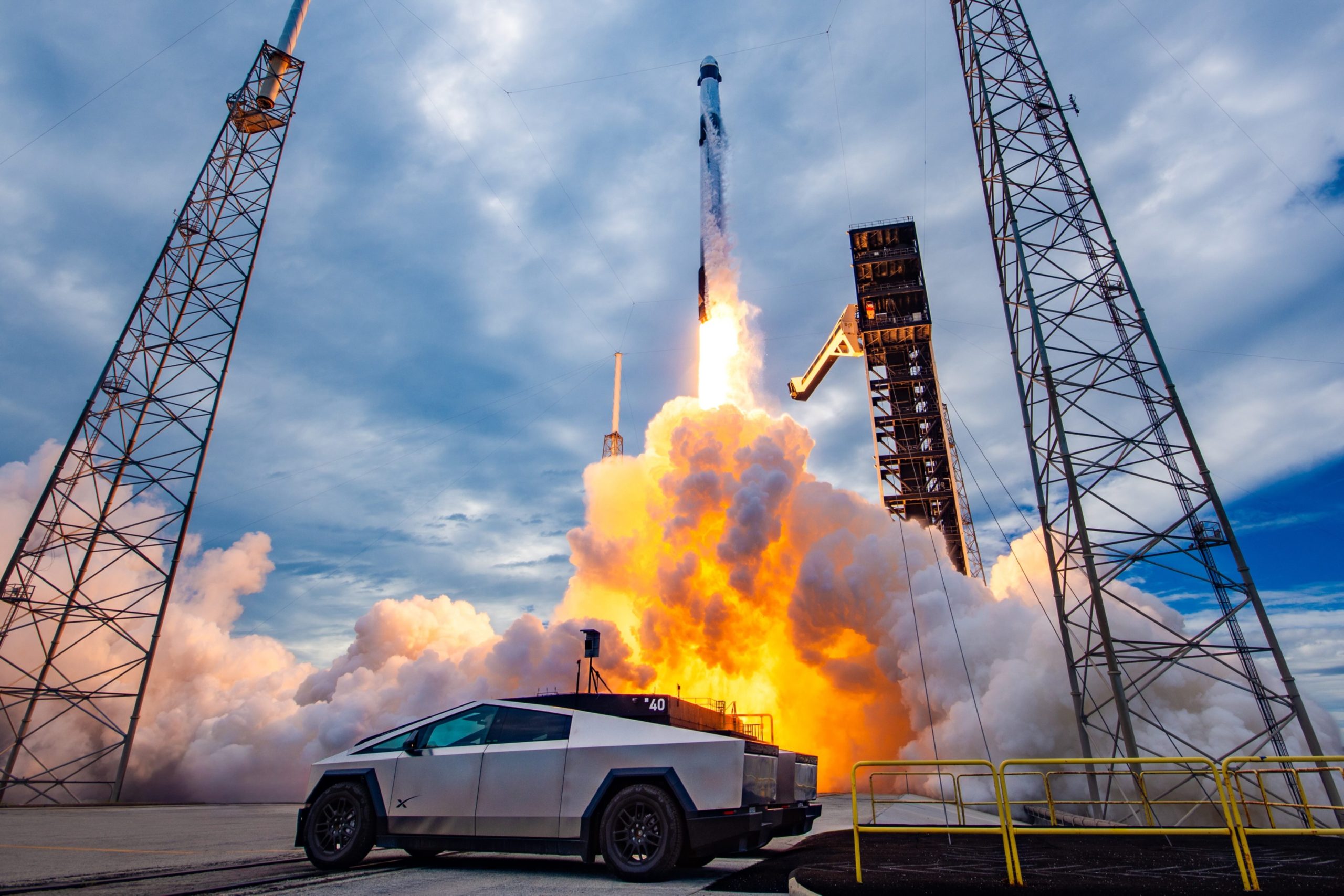
Wall Street analysts rapidly raised price targets on SpaceX (NASDAQ: SPCX) after the company reported a bullish third quarter for 2026 following the market close on October 20. Shares were sent sharply higher in after-hours and premarket trading.
SpaceX posted revenue of $14.6 billion, a 161 percent year-over-year increase that comfortably topped consensus estimates, which fell near $12.7 billion. The company also posted a net profit of $4.4 billion from a prior-year loss, with adjusted EBITDA reaching $8.8 billion.
More price target movement:
🚀 Cantor Fitzgerald lifted its target to $345 from $246 (Overweight).
🚀 Barclays raised its target to $300 from $254 (Overweight).
🚀 Citi increased its target to $240 from $200 (Buy),
🚀 UBS moved to $230 from $210 (Buy)
🚀TD Cowen raised its target to $224 from $200 (Buy).
🚀Morgan Stanley held an Overweight rating with a $300 target.
🚀Other firms also adjusted higher, including Wells Fargo (to $274 from $214) and Clear Street (to $248 from $217). Analysts broadly cited the strong quarterly print, accelerating AI compute expansion, Starlink progress, and Starship milestones as drivers of higher long-term growth and earnings power.— TESLARATI (@Teslarati) October 21, 2026
Its Super Intelligence (AI) division generated roughly $7.6 billion and became the largest revenue contributor, growing nearly 830 percent year-over-year, while the Connectivity segment delivered $5.2 billion on strong subscriber additions that lifted the consumer base to 13.6 million for Starlink.
The Earnings Call proved especially catalytic, as CEO Elon Musk and CFO Bret Johnsen outlined Q1 2027 revenue guidance of $33 billion to $37 billion, which was far above the roughly $22 billion analysts had modeled, alongside fourth-quarter capital-expenditure plans of $35 billion to $40 billion focused on AI compute infrastructure at sites including Memphis and Southaven.
SpaceX delivers blockbuster Q3 results as Super Intelligence segment booms
Management targets 2.5 to 3 gigawatts of nameplate compute capacity by year-end and discussed pathways to 13 gigawatts or more by the end of 2027. Musk described relentless demand from hyperscalers and other customers, with compute pricing supporting payback periods of less than a year and potentially as short as six months.
Additional highlights included Starship’s recent orbital success and V3 satellite deployment, Starlink pricing and enterprise momentum, rapid Grok Bot adoption, spectrum expansion plans, and the formation of special committees to explore a possible combination with Tesla.
These elements prompted a wave of price-target increases:
- JPMorgan more than doubled its target to $500 from $240 while maintaining an Overweight rating.
- Cantor Fitzgerald lifted its target to $345 from $246 (Overweight).
- Barclays raised its target to $300 from $254 (Overweight).
- Citi increased its target to $240 from $200 (Buy),
- UBS moved to $230 from $210 (Buy), and
- TD Cowen raised its target to $224 from $200 (Buy).
- Morgan Stanley held an Overweight rating with a $300 target.
- Other firms also adjusted higher, including Wells Fargo (to $274 from $214) and Clear Street (to $248 from $217). Analysts broadly cited the strong quarterly print, accelerating AI compute expansion, Starlink progress, and Starship milestones as drivers of higher long-term growth and earnings power.
Shares, which closed at $147.79 on October 20, jumped roughly 8 percent in early premarket trading on October 21 as investors digested the results and the newly elevated Street targets.
The average analyst price target has moved higher, which reflects greater conviction in SpaceX’s trajectory across launch, connectivity, and the Super Intelligence business, even as elevated spending remains a point of focus.

Tesla shows what Roadster drivers will see on screen before thruster activation

Tesla reveals Optimus Academy, where robots teach themselves


