Lifestyle
Integrating Portable Solar Panel Technology into the Tesla Model S

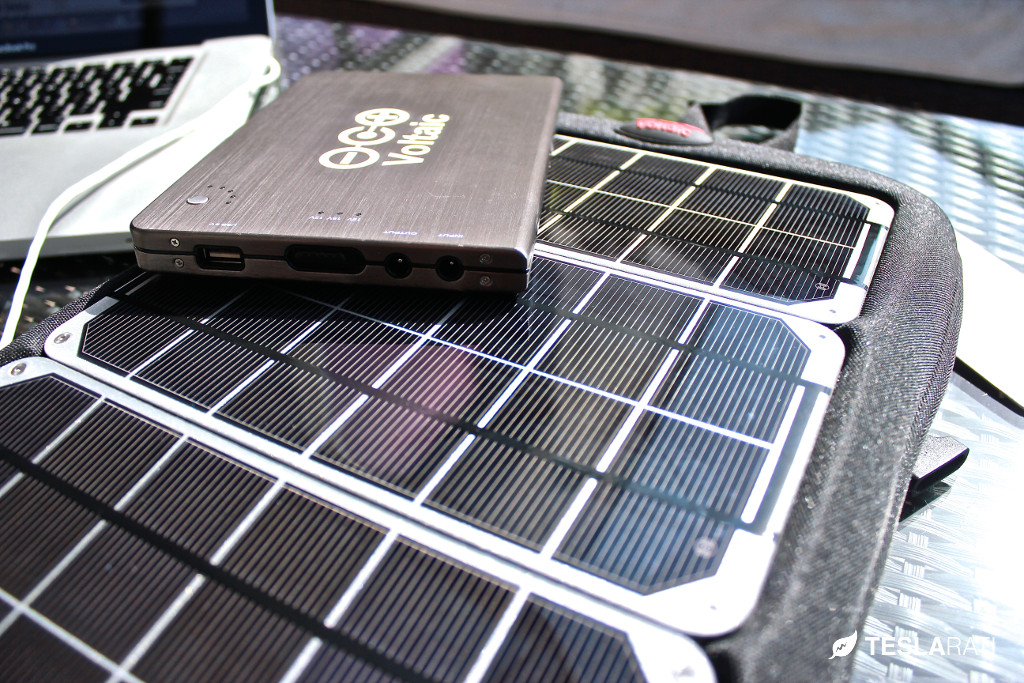
******************
UPDATE: 8/19/14 – After three months of continuous everyday use, both in-car and outdoors (predominantly left on the patio), the Voltaic 10W portable solar system has managed to power a household of two iPhones and one iPad purely on solar energy, and become a welcomed new member of the family.
It took some getting used to at first considering the entire assembly is as tall as a high schoolers backpack and more cumbersome to lug around than some of the smaller portable solar devices that I had a chance to test (Solar Joos, Anker). But despite the larger size, the Voltaic solar panel was hands down the best performing, most reliable and had superior quality over the others. In fact, it’s changed my entire perspective on how useful solar energy can actually be to the point I felt dirty just plugging anything into a wall (as ironic as that may sound from an EV family).
The Voltaic System portable solar panel device is certainly not the cheapest and some will argue that the cost for portability far exceeds what you would be paying if using a standard wall outlet, and they are right.
But for some it goes beyond just a cost benefit analysis. If you’re that type, then this device is for you. All in all, it’s a superb device in every sense and has made me become quite reliant on it. It’s hard to imagine adjusting back to using outlets for my mobile and tablet devices when each day brings free energy from the sun.
Read the original review below.
******************
Elon Musk has long touted that solar energy will be the future of electric vehicles so why wasn’t it incorporated into the Tesla Model S?
A part of me still wonders why this never happened. Perhaps it was a way to offset the large costs associated with having an automotive-grade lithium ion battery pack capable of 260+ miles of range. Or was it due to the fact that roof-integrated solar cells à la now defunct Fisker is nothing more than a cool factor with no real cost benefit?
Either way, it got me thinking – how can I store some of the sun’s energy while embarking on a long distance Tesla road trip? Or better yet, store solar energy while the Model S is at rest during the work week? The energy recouped through the sun need not be channeled back into the car itself, but could still provide usable power for a mobile device or laptop.
This exact thought led us to find three leading makers of portable solar charging technology with the goal of being able to store solar energy implicitly through our Tesla Model S. We’ll be conducting a review of each product in a three part series. The first being Voltaic System‘s Fuse 10W Solar Laptop Charger.
Initial Impressions
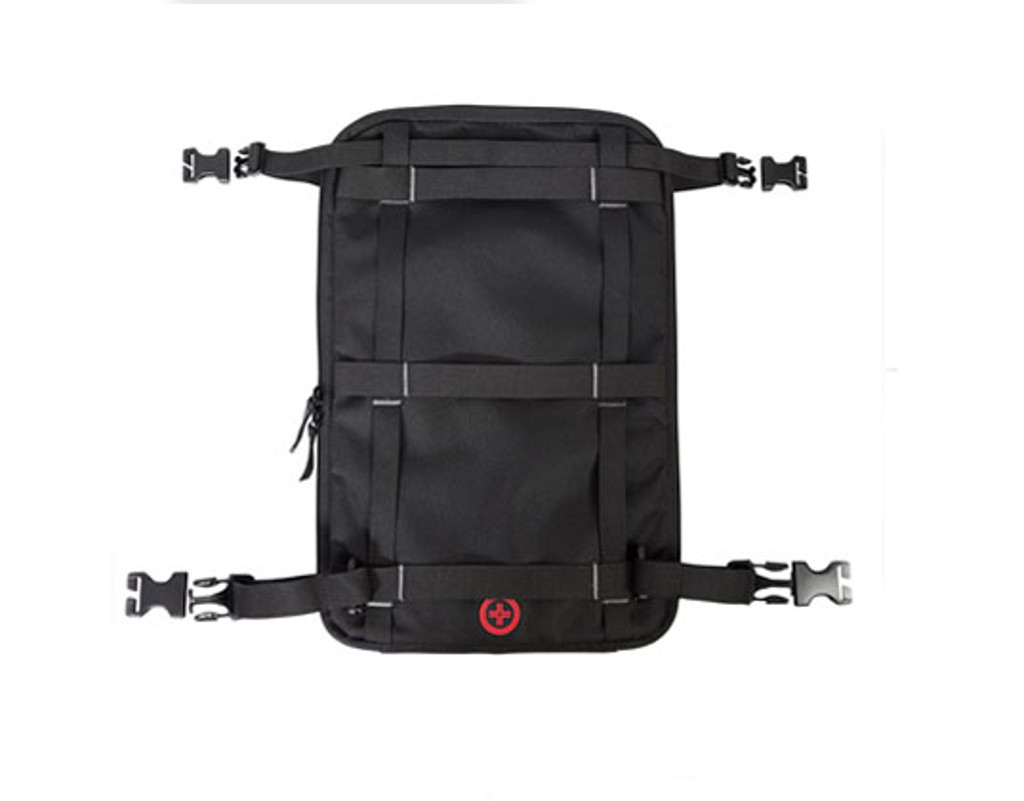 Voltaic’s 10W Fuse Solar Charger dominates in its presence. The three large solar panels encased within a beautiful gloss coated metal frame is a tell-tale indicator that this device can pack some serious charging capabilities. At first I was surprised to feel how heavy the entire unit was (3.6 lbs), only to later find out that the bulk of the weight was from the detachable high capacity lithium polymer battery that was stowed inside the zippered clam-shell casing.
Attached to the back of the Fuse Solar Charger unit was a set of straps and clips which, frankly, I had no idea how to use but was eager to learn.
Technical Specifications
The Fuse is capable of generating 10 Watts of power through its three 3.4 Watt solar panels. Configurable voltage settings provide the flexibility to power your most basic low voltage mobile device and tablets, to laptops and digital cameras that can demand up to 18V.
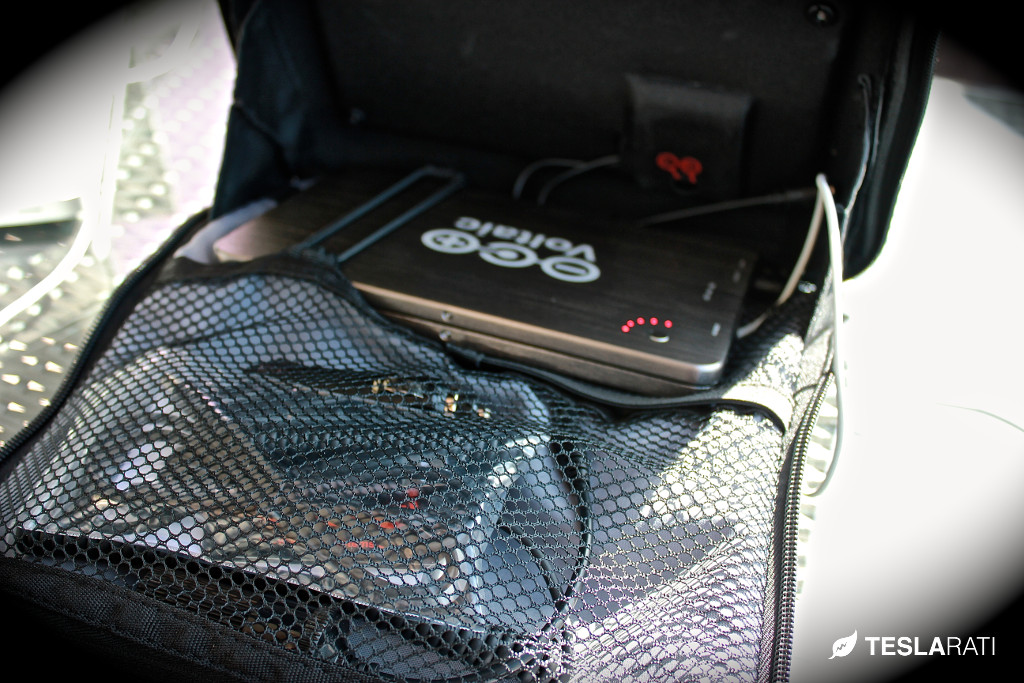
Aside from the obvious good of using renewable solar energy, Voltaic Systems took it to a whole new level of being eco-conscious by mounting the solar panels to a durable and lightweight shell made from recycled plastic soda bottles, otherwise known as PET. The clam shell design allows it to be used as a storage container for the detachable 20,000 mAh, 72 Wh lithium polymer battery and a plethora of device adapters.
NOTE: Amazon’s description shows a 16,000 mAh although the one we received directly from Voltaic Systems contained a 20,000 mAh battery
Tablets and small notebooks can easily fit within the casing.
LEDs on the battery indicate the level of charge. Five lit LEDs represents a full 100% state of charge. The battery has a USB out as well as an attachment set that allows you to connect to virtually any type of device.
Solar Panels
- Solar panels are waterproof and abrasion resistant
- Power: 10 Watts total peak output at 6 or 18 Volts
V72 Universal Laptop Battery
- 20,000 mAh, 72 Wh battery capacity is one of the larger portable batteries I’ve seen. Capable of replenishing an iPhone ten times and an iPad twice on a single charge.
- When not in the sun, the battery can also be charged through the included DC car or AC chargers, making it just as useful on the grid as off.
- Charge Time: In direct sun, V72 battery fully charges in 14.5 hours from 10 Watts and in 9 hours from 16.8 Watts of solar panels.
- Protection: Short Circuit, Over Charge, Over Discharge, Over Current, Over Temperature
- Charge Display: LEDs light sequentially when charging.
- Capacity Display: 1 light < 20%, 2 lights < 40%, 3 lights < 60%, 4 lights < 80% full, 5 lights > 95%
Solar Charging Tesla Center Console
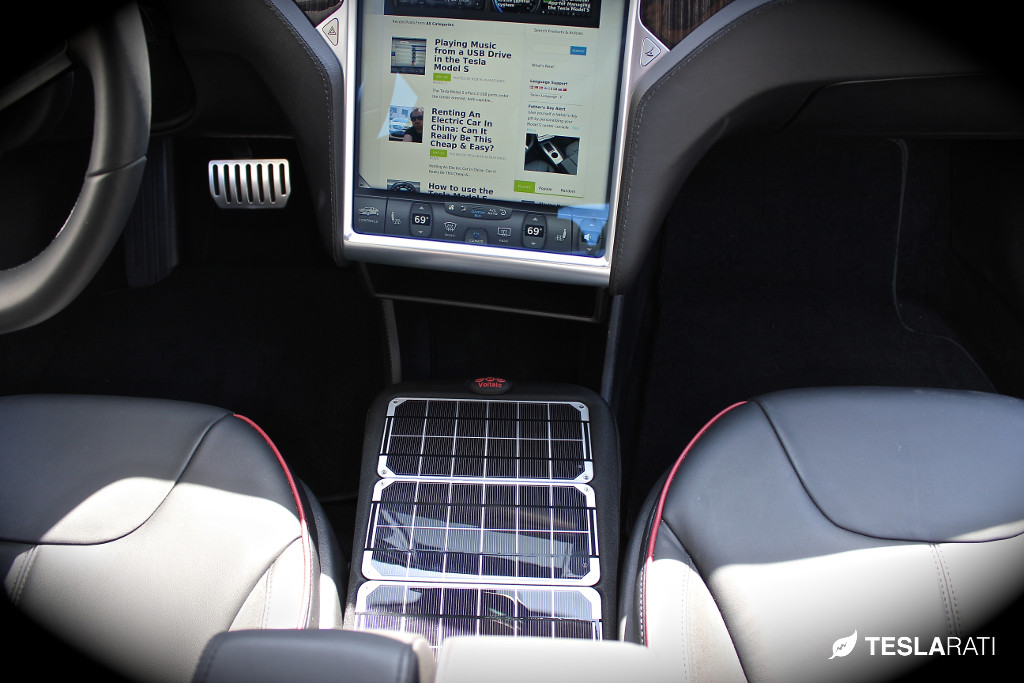
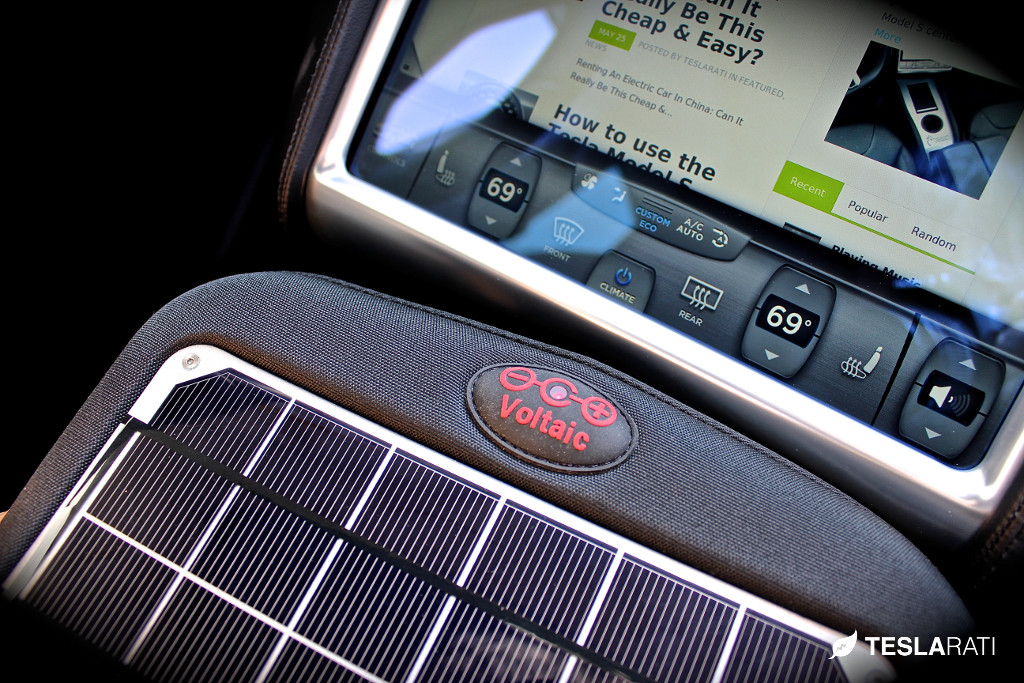
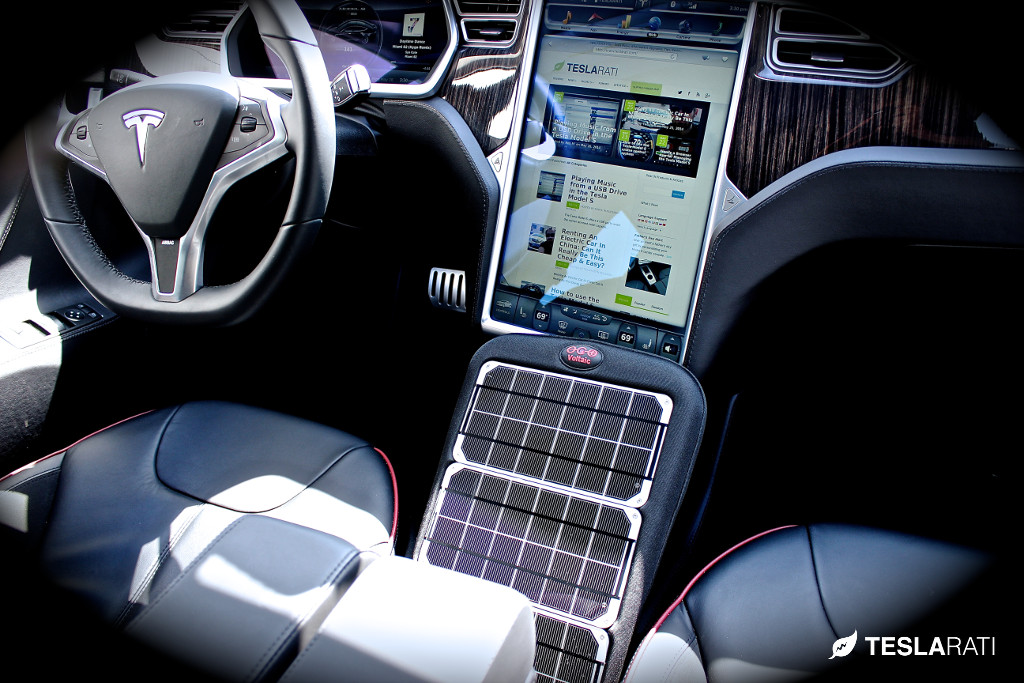
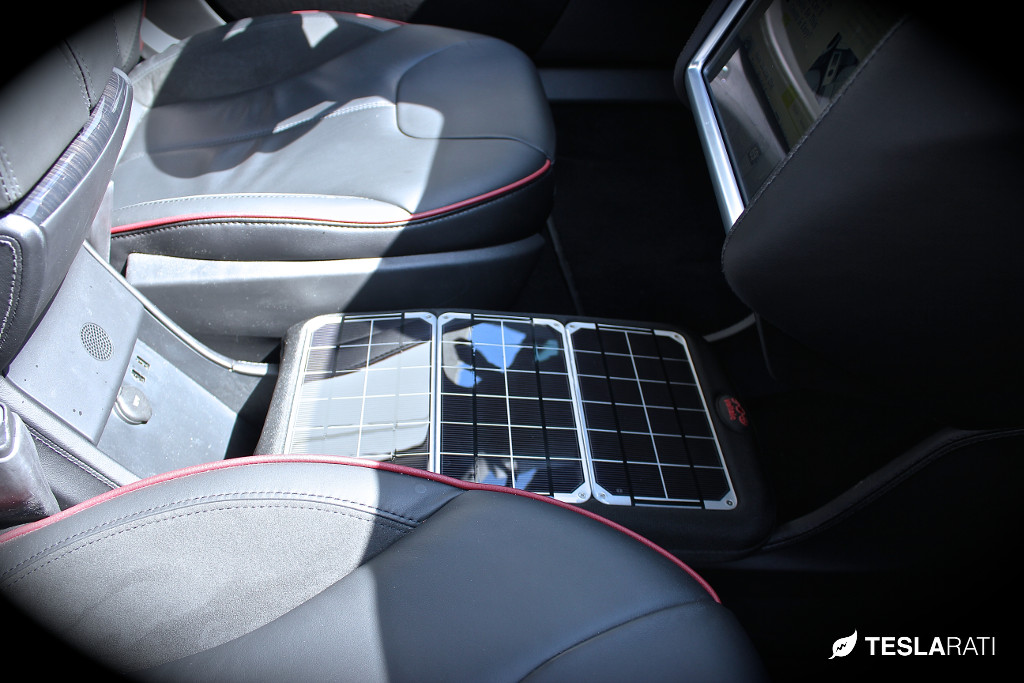
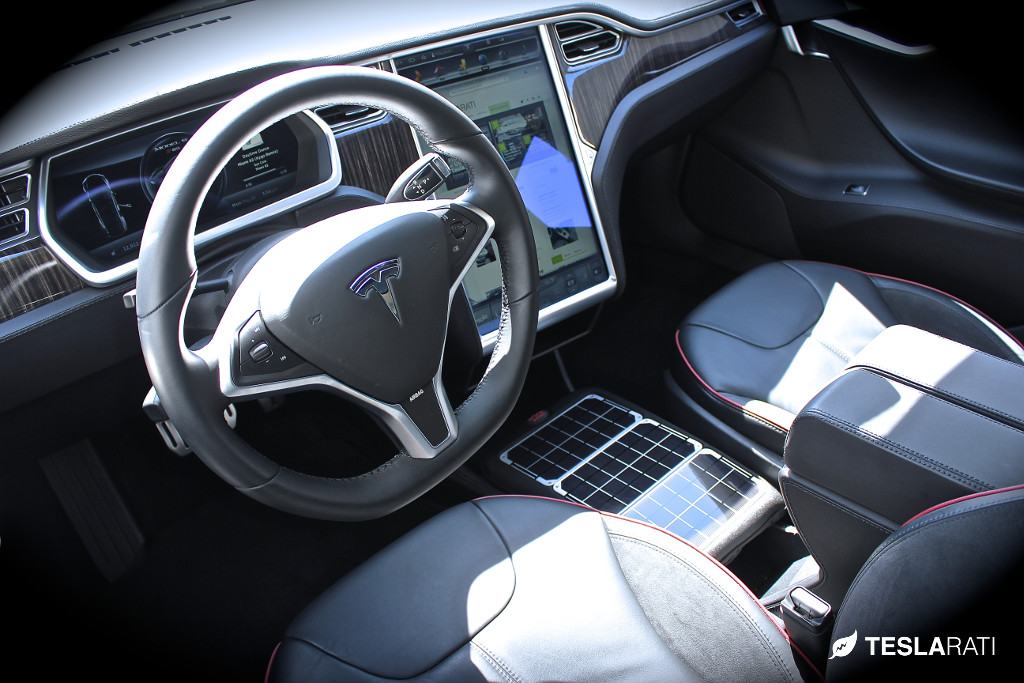
Instead I found a perfect home for the Fuse in the Tesla Model S center channel. Not only does it fit great within that location, it helped conceal any miscellaneous belongings that would normally be left out in the open without a Tesla Center Console unit.
Charging in direct sunlight will clearly achieve the best charging results, but nevertheless I wanted to see how much solar energy I can gather behind the UV protected glass of the Model S.
A red LED towards the top of the “Voltaic” insignia lights up as soon I placed the Fuse solar charger between the two front seats to indicate that solar energy is being collected. Bingo.
Placing the Fuse 10W Portable Solar Charger on the Model S center channel allows it to harnesses the power of the sun and store it for later use.
Even behind glass I was able to capture enough solar energy to charge a mobile phone. However, the most common use case for me was to leave the Fuse in the center channel of the Model S each day while I was at work. It’s always an exhilarating feeling to be able to come back to some additional energy at the end of each work day. The energy is stored within the detachable battery making it a useful battery extender for my notebook when I’m on the go or just as a battery backup.
Summary
Voltaic System’s Fuse 10W Portable Laptop Charger is extremely durable and capable of the most rugged of outdoor adventures. Short of going on a camping excursion where access to electricity maybe limited, it’s hard to see the need to carry both laptop and Fuse device simultaneously, although the name of the product may suggest otherwise.
However if you’re looking for a world-class portable solar charging device that can mount to practically anything, blends naturally into the Tesla Model S, has a huge industry-leading 20,000 mAh battery capacity with adjustable voltage outputs, and don’t mind paying a premium $339 USD, then Voltaic System‘s portable solar charger just might be for you.


Elon Musk
The FCC just said ‘No’ to SpaceX for now
SpaceX is fighting the FCC for spectrum that could put satellites inside every smartphone.
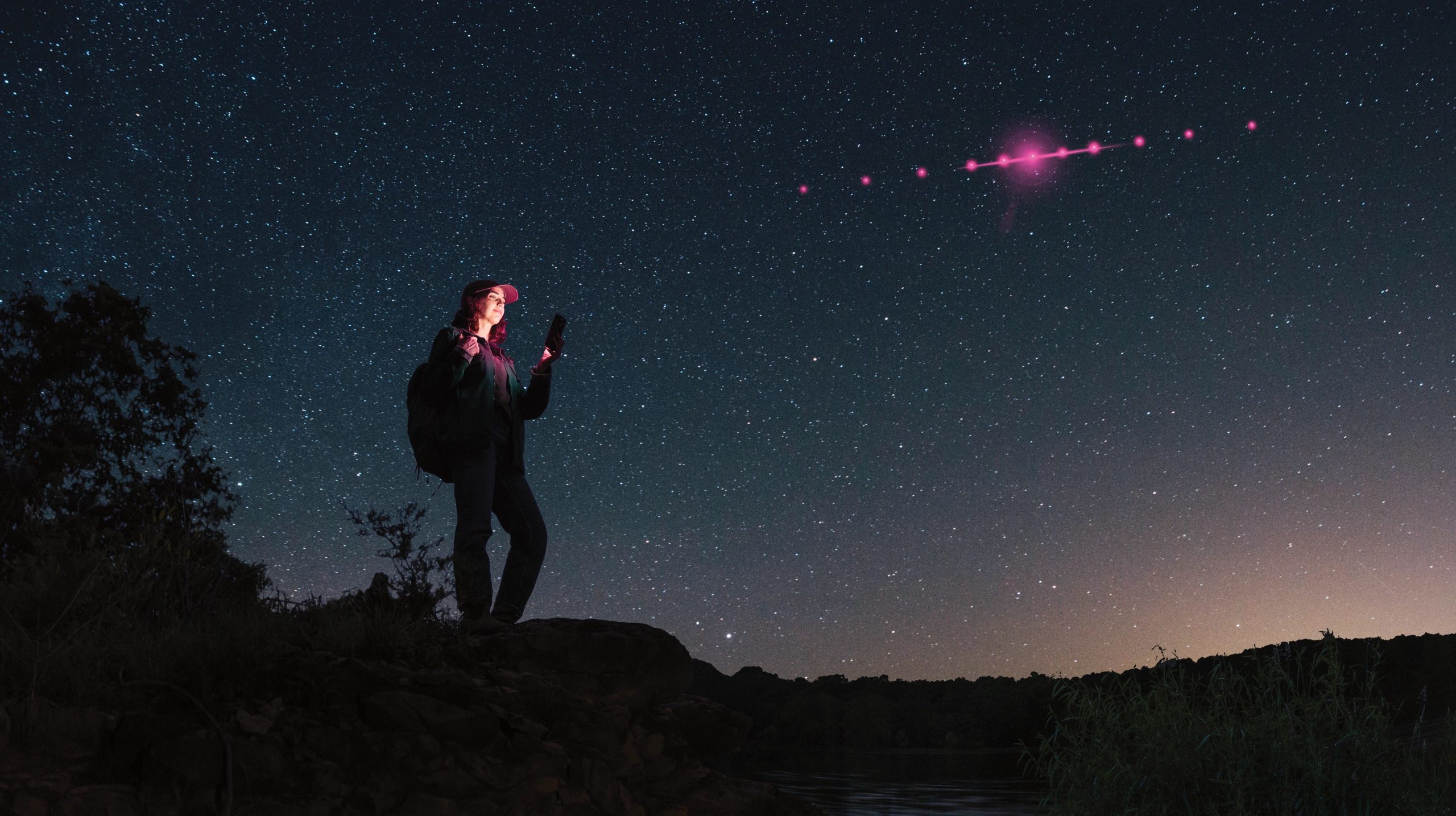
SpaceX was dealt a new setback on April 23, 2006 by the Federal Communications Commission (FCC) after the U.S. government agency dismissed the company’s petition to access a Mobile Satellite Service spectrum that would allow direct-to-device (D2D) capabilities.
The FCC regulates communications by radio, television, wire, and cable, which also includes regulating D2D technology that lets your existing smartphone connect directly to a satellite orbiting Earth, the same way it would connect to a cell tower.
Elon Musk’s SpaceX has been building toward this through its Starlink Mobile service, formerly called Direct-to-Cell, in partnership with T-Mobile. The service officially launched on July 23, 2025, starting with messaging and expanding to broadband data in October of that year.
T-Mobile Starlink Pricing Announced – Early Adopters Get Exclusive Discount
It’s worth noting that SpaceX is not alone in this race. AT&T and Verizon have their own satellite texting deals with AST SpaceMobile, while Verizon separately offers free satellite texting through Skylo on newer phones.
The regulatory foundation for all of this dates to March 14, 2024, when the FCC adopted the world’s first framework for what it called Supplemental Coverage from Space, allowing satellite operators to lease spectrum from terrestrial carriers and fill gaps in their coverage. On November 26, 2024, the FCC granted SpaceX the first-ever authorization under that framework, approving its partnership with T-Mobile to provide service in specific frequency bands. SpaceX then went further, completing a roughly $17 billion acquisition of wireless spectrum from EchoStar, which gave it the ability to negotiate with global carriers more independently.
Starlink’s EchoStar spectrum deal could bring 5G coverage anywhere
This recent ruling by the FCC blocked SpaceX from going further, protecting incumbent spectrum holders like Globalstar and Iridium. But the market momentum is already in motion. As Teslarati reported, SpaceX is targeting peak speeds of 150 Mbps per user for its next generation Direct-to-Cell service, compared to roughly 4 Mbps today, which would bring satellite connectivity close to standard carrier performance.
With a reported IPO targeting a $1.75 trillion valuation on the horizon, each spectrum fight, carrier deal, and regulatory win or loss now carries weight beyond just connectivity. SpaceX is quietly becoming the infrastructure layer underneath the phones of millions of people, and the FCC’s next move will help determine how much further that reach extends.
FCC Satellite Rule Makings can be found here.
Elon Musk
Elon Musk talks Tesla Roadster’s future
Elon Musk confirmed the Roadster as Tesla’s last manually driven car, with a debut coming soon.
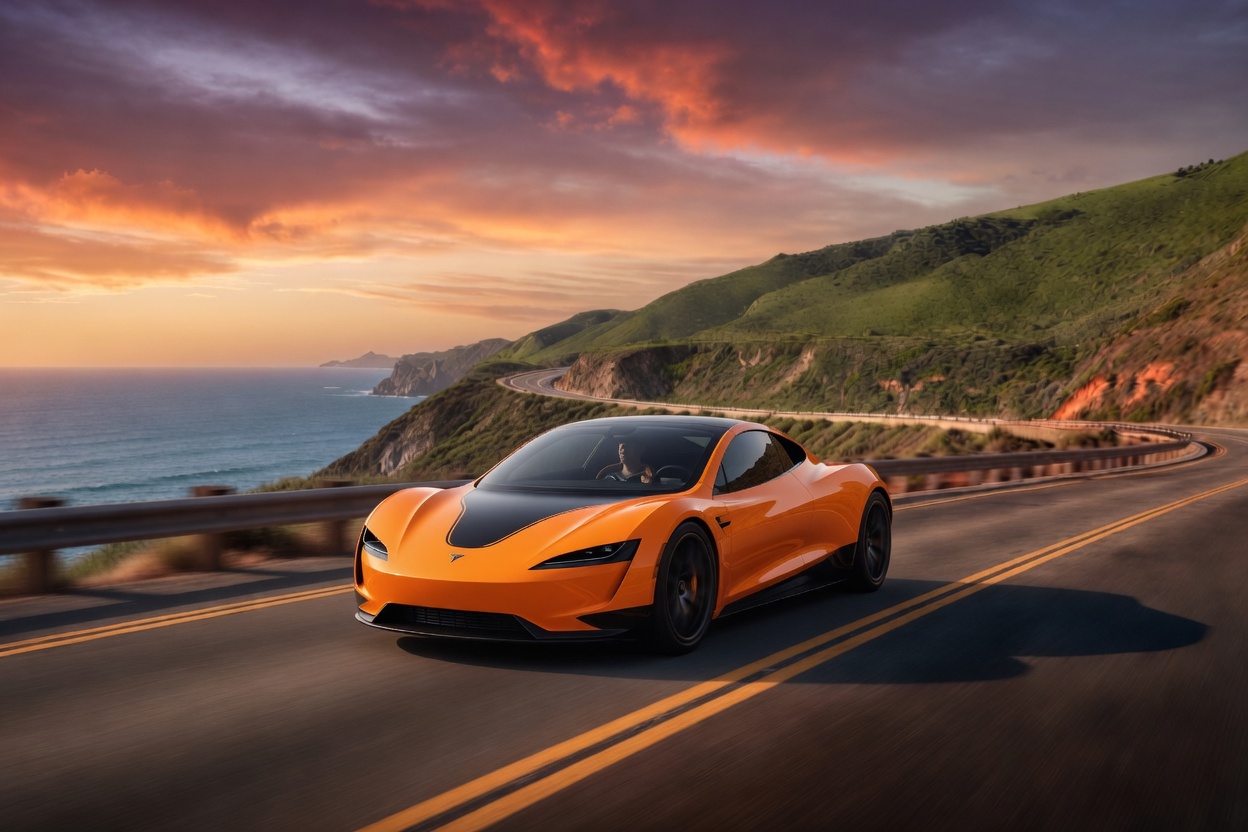
During Tesla’s Q1 2026 earnings call on April 22, Elon Musk made a brief but notable comment about the long-awaited next generation Roadster while describing Tesla’s future vehicle lineup. “Long term, the only manually driven car will be the new Tesla Roadster,” he said. “Speaking of which, we may be able to debut that in a month or so. It requires a lot of testing and validation before we can actually have a demo and not have something go wrong with the demo.”
That single statement is the entire Roadster update from yesterday’s call, and while it represents another timeline shift, it comes as no surprise with Tesla heads-down-at-work on the mass rollout of its Robotaxi service across US cities, and the industrial scale production of the humanoid Optimus.
The fact that Musk specifically framed the Roadster as the last manually driven Tesla is significant on its own. As the rest of the lineup moves toward full autonomy, the Roadster becomes something rare in the Tesla-sphere by keeping the driver in control. Driving enthusiasts who buy a $200,000 supercar are not doing so to be passengers. They want the physical connection to the road, the feel of acceleration under their own input, and the experience of controlling something with that level of performance. FSD, however capable it becomes, removes that entirely. The Roadster signals that Tesla understands this distinction and is building a car specifically for the people who consider driving itself the point.
Tesla isn’t joking about building Optimus at an industrial scale: Here we go
The specs for the Roadster Musk has teased over the years are genuinely unlike anything in production. The base model targets 0 to 60 mph in 1.9 seconds, a top speed above 250 mph, and up to 620 miles of range from a 200 kWh battery. The optional SpaceX package takes it further, rumored to add roughly ten cold gas thrusters operating at 10,000 psi, borrowed directly from Falcon 9 rocket technology. With thrusters, Musk has claimed 0 to 60 mph in as little as 1.1 seconds. In a 2021 Joe Rogan interview he went further, stating “I want it to hover. We got to figure out how to make it hover without killing people.” Tesla filed a patent for ground effect technology in August 2025, suggesting the hover concept has not been abandoned. The starting price remains $200,000, with the Founders Series requiring a $250,000 full deposit. Some reservation holders placed those deposits in 2017 and are approaching a full decade of waiting.
With production now targeted for 2027 or 2028 at the earliest, the Roadster remains Tesla’s most audacious promise and its longest-running delay. But if what Musk is testing lives up to even half of what he has described, the demo alone should be worth waiting for.
Elon Musk says the Tesla Roadster unveiling could be done “maybe in a month or so.”
He said it should be an extraordinary unveiling event. pic.twitter.com/6V9P7zmvEm
— TESLARATI (@Teslarati) April 22, 2026
Elon Musk
Tesla isn’t joking about building Optimus at an industrial scale: Here we go
Tesla’s Optimus factory in Texas targets 10 million robots yearly, with 5.2 million square feet under construction.
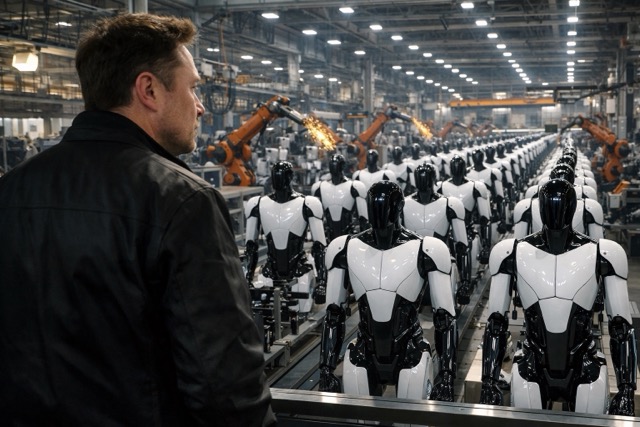
Tesla’s Q1 2026 Update Letter, released today, confirms that first generation Optimus production lines are now well underway at its Fremont, California factory, with a pilot line targeting one million robots per year to start. Of bigger note is a shared aerial image of a large piece of land adjacent to Gigafactory Texas, that Tesla has prominently labeled “Optimus factory site preparation.”
Permit documents show Tesla is seeking to add over 5.2 million square feet of new building space to the Giga Texas North Campus by the end of 2026, at an estimated construction investment of $5 billion to $10 billion. The longer term production target for that facility is 10 million Optimus units per year. Giga Texas already sits on 2,500 acres with over 10 million square feet of existing factory floor, and the North Campus expansion is being built to support multiple projects, including the dedicated Optimus factory, the Terafab chip fabrication facility (a joint Tesla/SpaceX/xAI venture), a Cybercab test track, road infrastructure, and supporting facilities.
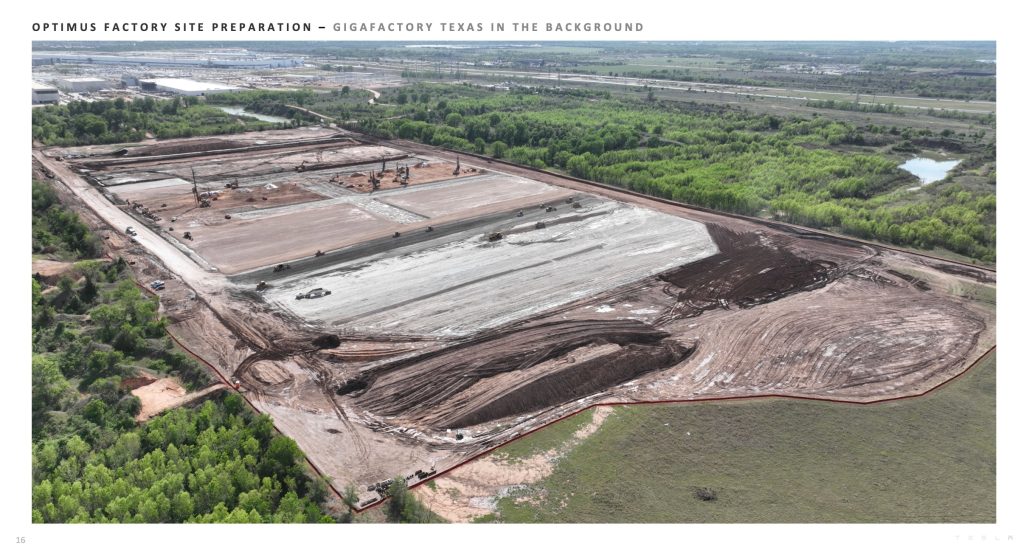
Credit: TESLA
Texas makes strategic sense beyond the existing infrastructure. The state’s tax structure, lower labor costs relative to California, and the proximity to Tesla’s AI training cluster Cortex 1 and 2, both located at Giga Texas and now totaling over 230,000 H100 equivalent GPUs, means the Optimus software stack and the factory producing the hardware will share the same campus. Tesla’s Q1 report also confirmed completion of the AI5 chip tape out in April, the inference processor designed specifically to power Optimus units in the field.
As Teslarati reported, the Texas facility is intended to house Optimus V4 production at full scale. Musk told the World Economic Forum in January that Tesla plans to sell Optimus to the public by end of 2027 at a price between $20,000 and $30,000, stating, “I think everyone on earth is going to have one and want one.” He has previously pegged long term demand for general purpose humanoid robots at over 20 billion units globally, citing both consumer and industrial use cases.

Tesla gives HW3 owners another massive update

SpaceX Board has set a Mars bonus for Elon Musk


