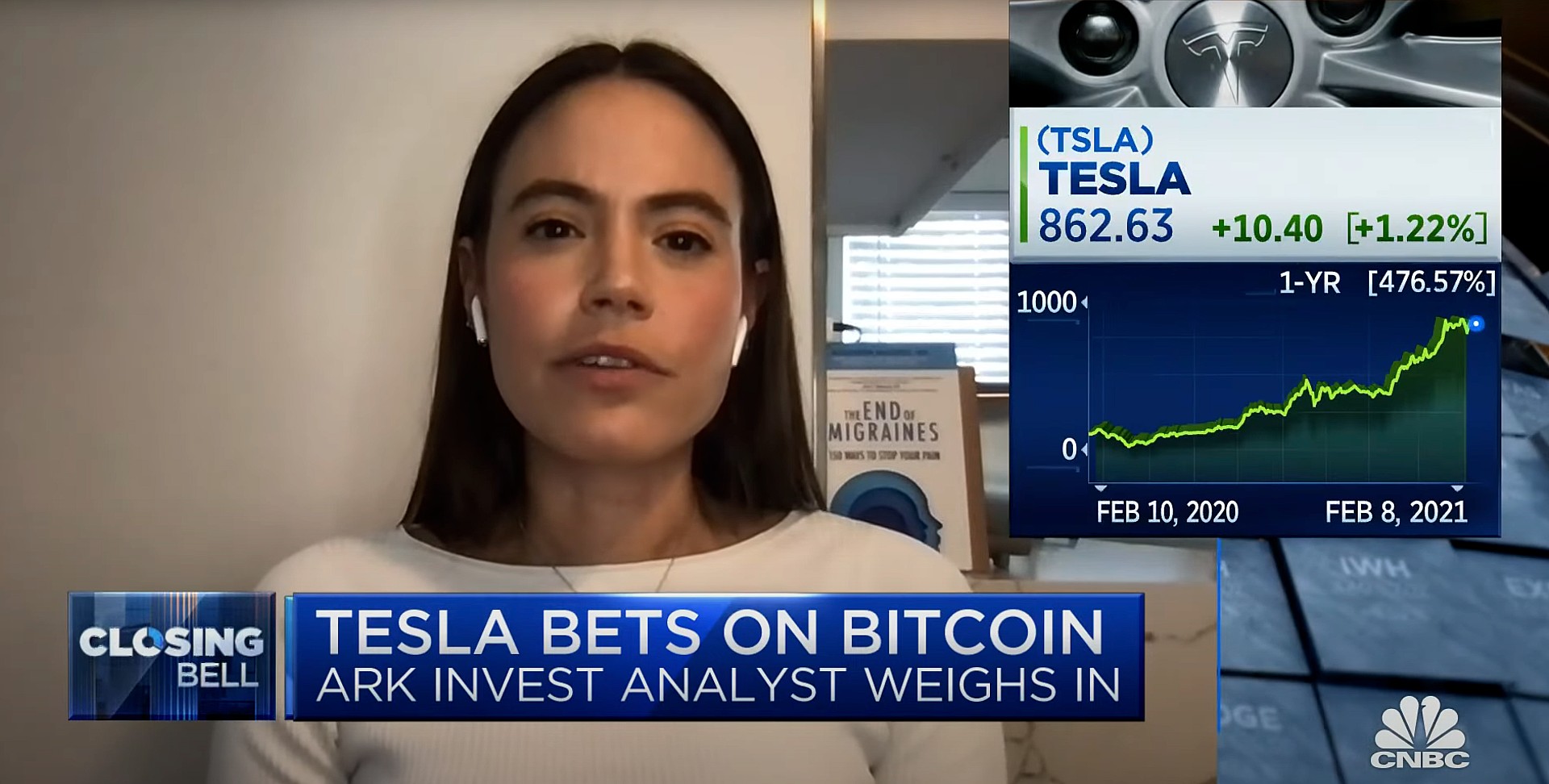

Tesla’s (NASDAQ: TSLA) $1.5 billion purchase of Bitcoin, a move announced yesterday in a 10-K document filed with the SEC, was the most popular news surrounding the electric automaker on Monday. While some TSLA investors saw it as their time to get out of being shareholders, others look at it as an advantage in several ways. One person looking at the move from a bullish perspective is ARK Invest’s Tasha Keeney, who believes Tesla’s Bitcoin purchase has heavy advantages as the company moves toward a broader consumer base, especially in international markets.
Tesla’s BTC Purchase
In a 10-K filing with the Securities and Exchange Commission (SEC), Tesla announced it had purchased $1.5 billion in Bitcoin, a cryptocurrency that has massive value, trading at over $46,600 at the time of writing. Tesla added that it “may acquire and hold digital assets from time to time or long-term,” and that it anticipates the purchase of its cars and other products by using the cryptocurrency in the near future.
The move follows CEO Elon Musk’s vocal support of both Bitcoin and Dogecoin, two cryptocurrencies that have maintained huge upside potential over the past several months. Among the ever-growing list of digital currencies, Bitcoin and Dogecoin are among the most popular in 2021, mainly because of ongoing celebrity support.
In the past several years, Bitcoin has become widely popular, especially after a meteoric rise in value in 2017 and 2018 that made it a household name. Early investors used Bitcoin to purchase goods from the internet in an untraceable manner. Now, more retail companies are working on accepting the crypto as a form of payment for everything from a pizza to a Rolex watch.
“It is a very serious move from [Tesla] – Keeney
Tasha Keeney, an analyst for Ark Invest, stated that Tesla’s move to purchase Bitcoin is one that aligns with the company’s recent Big Ideas Report. One of the most significant advantages to purchasing Bitcoin for Tesla is the versatility of the cryptocurrency, especially when doing business internationally. “Using Bitcoin as corporate cash, especially if you’re doing business in many different countries with many different foreign currencies…instead of dealing with the complication and the treasury risk, you can instead do this with Bitcoin,” Keeney said. “We think it makes sense from a corporate cash standpoint, and actually, we’ve done some analysts to say that if 1% of all the cash from the companies in the S&P 500 were to be converted into Bitcoin for corporate treasury purposes, this could actually increase the price by a meaningful amount, by about $40,000.”
Additionally, when operational in other countries, Tesla’s planned ride-hailing Robotaxi service could avoid hurdles and complications in payment by using a universal currency instead of multiple different foreign currencies. Keeney says the payment function could be void of conversion issues if customers used a single form of payment instead of dealing with various currencies in each region.
Tesla bull ARK Invest estimates autonomous ride-hailing to generate over $1T in revenue by 2030
A Publicity Move? ARK doesn’t think so
Bitcoin is no longer a risky or unusual form of payment. Many large companies accept the crypto as a form of currency, and Tesla just plans to be the latest one to accept it. “[Their move] is validated by other firms doing the same thing,” Keeney added during an interview with CNBC.
With Tesla focused on a widespread and quickly accelerating rollout of its products in foreign countries, Bitcoin’s international usage seems to be an advantage that the automaker can use. From a treasury perspective, it doesn’t make sense to deal with so many different foreign currencies, and Bitcoin’s universal acceptance across the world gives Tesla versatility as it expands. With plans to enter the highly elusive Indian market shortly, and expansions in Singapore, Israel, among several other countries, Tesla is technically making a move that supports its goal: accelerate the world’s transition to sustainable energy.
Tesla’s somewhat early adoption of Bitcoin as a payment method and as an internal investment also holds other benefits, Keeney says. With Tesla joining the Bitcoin movement, it, along with other companies, could experience a tailwind in growth from its influence. Other companies are bound to either invest or accept Bitcoin as a currency later on. The entities that got in before it was widely-accepted could benefit from a surge in valuation after it continues to be looked at as a payment method.
“Being one of the first companies to invest in Bitcoin, to transact in Bitcoin, actually gives them sort of an advantage to really lay that infrastructure as it becomes increasingly important. And again, as other firms might do it, because we feel there will be the need for the infrastructure to be set up. So, [Tesla] will be one of the first players to figure this out,” Keeney stated.
Check out Keeney’s interview with CNBC below.
Disclosure: Joey Klender is a TSLA shareholder. He does not hold any BTC and has no intentions to open any positions within 72 hours.


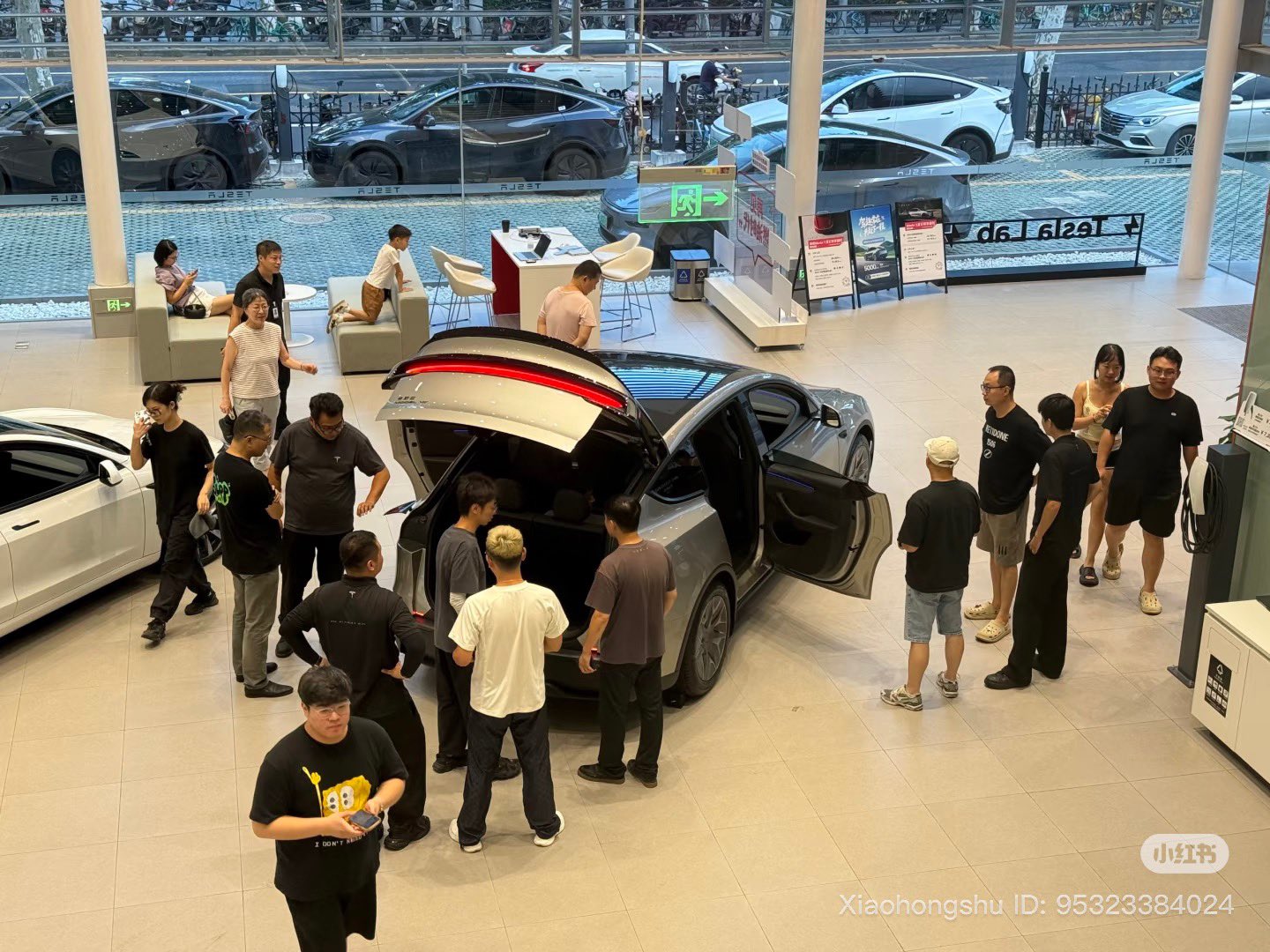
Tesla (NASDAQ: TSLA) showrooms have been picked clean ahead of the end of the third quarter of the year, as demand looks to be strong and delivery estimates for new vehicles are pushed into late 2026 and early 2027.
Tesla appears to have sold out of many of its Model 3 and Model Y trim levels in the United States, as only the Model Y RWD and Model Y All-Wheel-Drive are available for delivery before the end of the year.
Additionally, many showrooms are either completely empty or void of all but just one demo unit within the buildings themselves in an effort to bolster what could be one of Tesla’s best quarters in vehicle deliveries in recent memory.
I’m at Tesla right now and when I walked into their showroom I was shocked to see it basically empty.
I asked one of the people working there where all of the cars are “Gone – it’s the end of the quarter and we’ve sold out of everything… including the display vehicles”So… pic.twitter.com/rN7s3gE6sJ
— Devin Olsen (@DevinOlsenn) September 25, 2026
All the cars are gone from Tesla Century City!
All they have is Model Y L, a self-driving video playing on the background. I guess the best product is no product. Either that or they just sold the showroom cars. pic.twitter.com/mzCjWaXwww
— Whole Mars Catalog (@wholemars) September 26, 2026
Show room is empty. I asked and they have sold the demo cars too. Delivery numbers better be outstanding! pic.twitter.com/jq5N28Q6tZ
— Electric Brawl (@3lectricBrawl) September 22, 2026
Additionally, when I spoke to the guys at Tesla Mechanicsburg two weeks ago, when I returned the Model Y L, their third hauler of the week had just arrived, and every vehicle on it, along with every vehicle in their delivery lot, was accounted for and had a name attached to it for delivery.
Talking to the guys at the Mechanicsburg showroom on Friday, they couldn’t believe they had ANOTHER hauler coming in of cars for delivery—and each was accounted for
No car just sitting in inventory. They’re expecting a BIG quarter, and this is more than just the Y L https://t.co/ce801GkKVv
— TESLARATI (@Teslarati) September 21, 2026
Tesla saw a 25 percent increase in deliveries in Q2 compared to the same quarter the year before. The vast majority of the 480,126 units it delivered, 467,762 vehicles to be exact, were the Model 3 and Model Y.
In Q3 2025, Tesla delivered 497,099 vehicles, once again a figure that was dominated by the company’s two mass-market vehicles. Analysts have unusually wide predictions for this quarter, likely because so many firms missed the Q2 delivery figure by such a substantial margin; Wall Street predicted 408,000 cars, while Tesla delivered 480,000.
Goldman Sachs has Tesla slotted for 435,000 deliveries in Q3, while JPMorgan said it anticipates 482,000. The median guess is about 449,000 deliveries for Q3.
Interested in ordering a Tesla? Use my referral code for three free months of Full Self-Driving (Supervised) here.
Elon Musk
SpaceX turned a heralding moment for Starship into its greatest
Starship reached orbit despite losing an engine, deployed 26 Starlink V3 satellites on Flight 14.

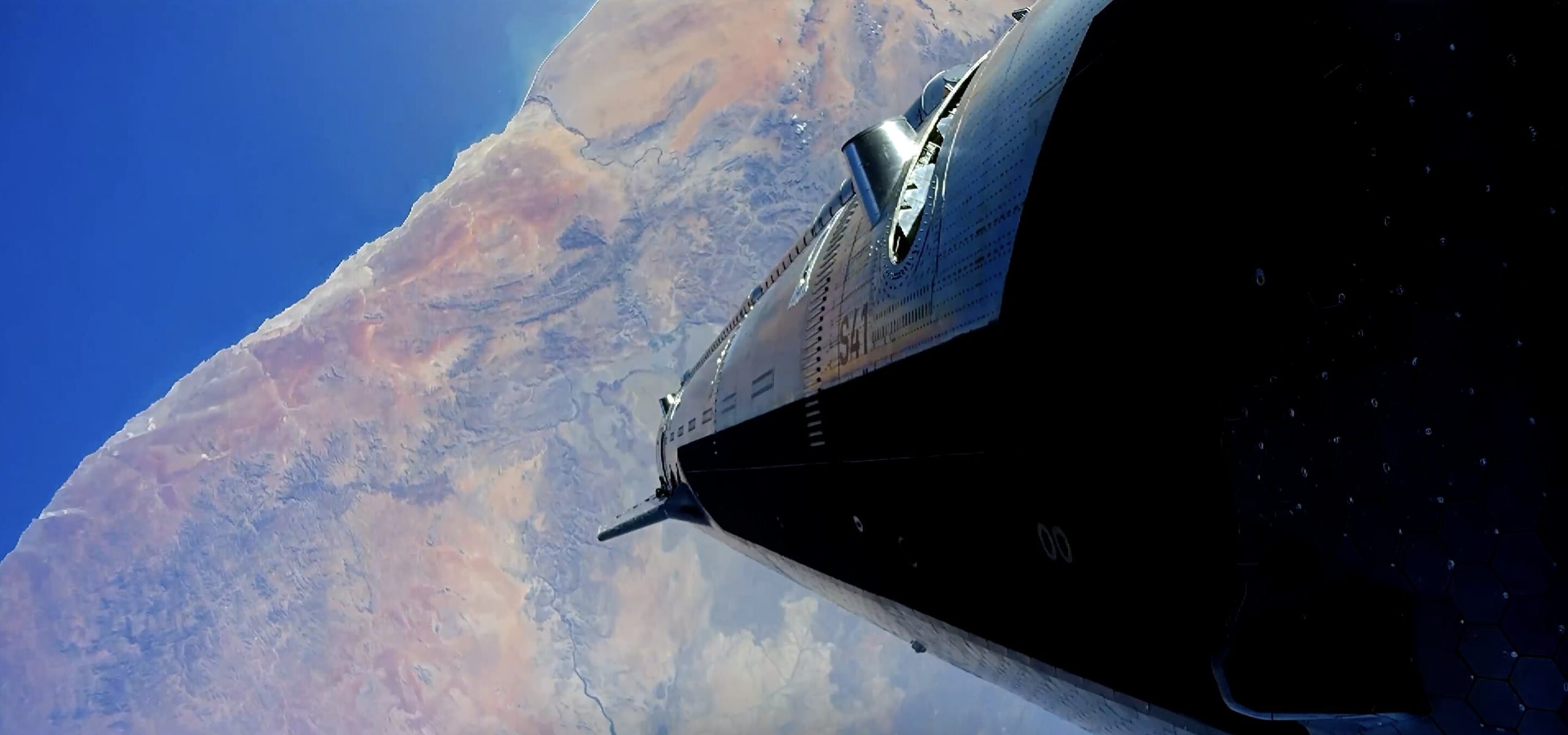
SpaceX’s Starship reached orbit for the first time on Monday, and for a few nail-biting minutes it looked like it wouldn’t. During ascent on Flight 14, one of Ship 41’s six Raptor engines shut down early, and SpaceX’s livestream host Dan Huot told viewers the team had decided not to commit to orbit. Minutes later, after what Huot described as a lot of conversation in the control room, the final poll came back in favor, and a roughly 19 second burn of a single Raptor pushed the ship into orbit about 170 miles up.
The reversal matters because SpaceX had written the exit ramp into the mission plan. The company said it would only fire the orbital insertion burn if flight controllers confirmed enough backup hardware remained for the deorbit burn, a condition Teslarati laid out ahead of the flight. Losing an engine was exactly the scenario that rule was built for.
Pressing forward fits Elon Musk’s history. Falcon 1 failed three straight times before its fourth launch reached orbit in 2008, with SpaceX nearly out of money, and Starship was developed by flying prototypes until they broke. What changed this year SpaceX going public, and with $SPCX sliding below its IPO price in July when Flight 13 slipped, the short interest climbed significantly, as Teslarati reported at the time. A Starship potentially lost today with revenue generating next-gen Starlink satellites aboard would have landed directly on shareholders.
Splashdown confirmed. Congratulations to the entire SpaceX team on the first orbital flight of Starship! pic.twitter.com/urjmiwnvNl
— SpaceX (@SpaceX) September 28, 2026
That pressure showed up after orbit. SpaceX cut a flight planned to last nearly 10 hours to about three, moving splashdown from west of Chile to the North Pacific near Hawaii. SpaceX gave no reason, though Musk said this month the company was being extremely cautious about debris risk. The single Raptor for deorbit worked, and Ship 41 completed its flip and landing burn before breaking apart in the water, an outcome SpaceX expected. Musk has structured SpaceX’s governance to shield long term bets from market pressure.
The payload is the bigger business story. Musk posted that all 26 Starlink V3 satellites deployed and are “operating nominally.” Each V3 is rated for about 1 Tbps of downlink and 160 Gbps of uplink, so this single launch adds roughly 26 Tbps, about 10 times what a Falcon 9 load of V2 Mini satellites adds. The V3 is too large for Falcon 9, making Starship the only vehicle that can build out the planned 100,000 satellite constellation, at up to 60 per flight once it reaches routine service. Unlike the 20 V3 units on Flight 13, which reentered on a suborbital path, these will raise their orbits and could begin serving customers within weeks and bring in hundreds of millions of additional dollars in projected Starlink revenue.
SpaceX has already begun winding down Falcon 9 Starlink launches from Florida in favor of Starship. Reported targets put Flight 15 as early as October 19, leaving about three weeks to diagnose Monday’s engine shutdown before the next orbital attempt.
Starship’s 14th flight is set to launch on Monday, Sept 28. The 75-minute launch window opens at 7:15 a.m. CT. Live coverage of the mission starts ~35 minutes before launch → https://t.co/uQKQvgaTmJ
— SpaceX (@SpaceX) September 27, 2026
Elon Musk
SpaceX just got the green light Starship has waited years for
The FAA has cleared Starship Flight 14, setting up SpaceX’s first orbital attempt on Monday.
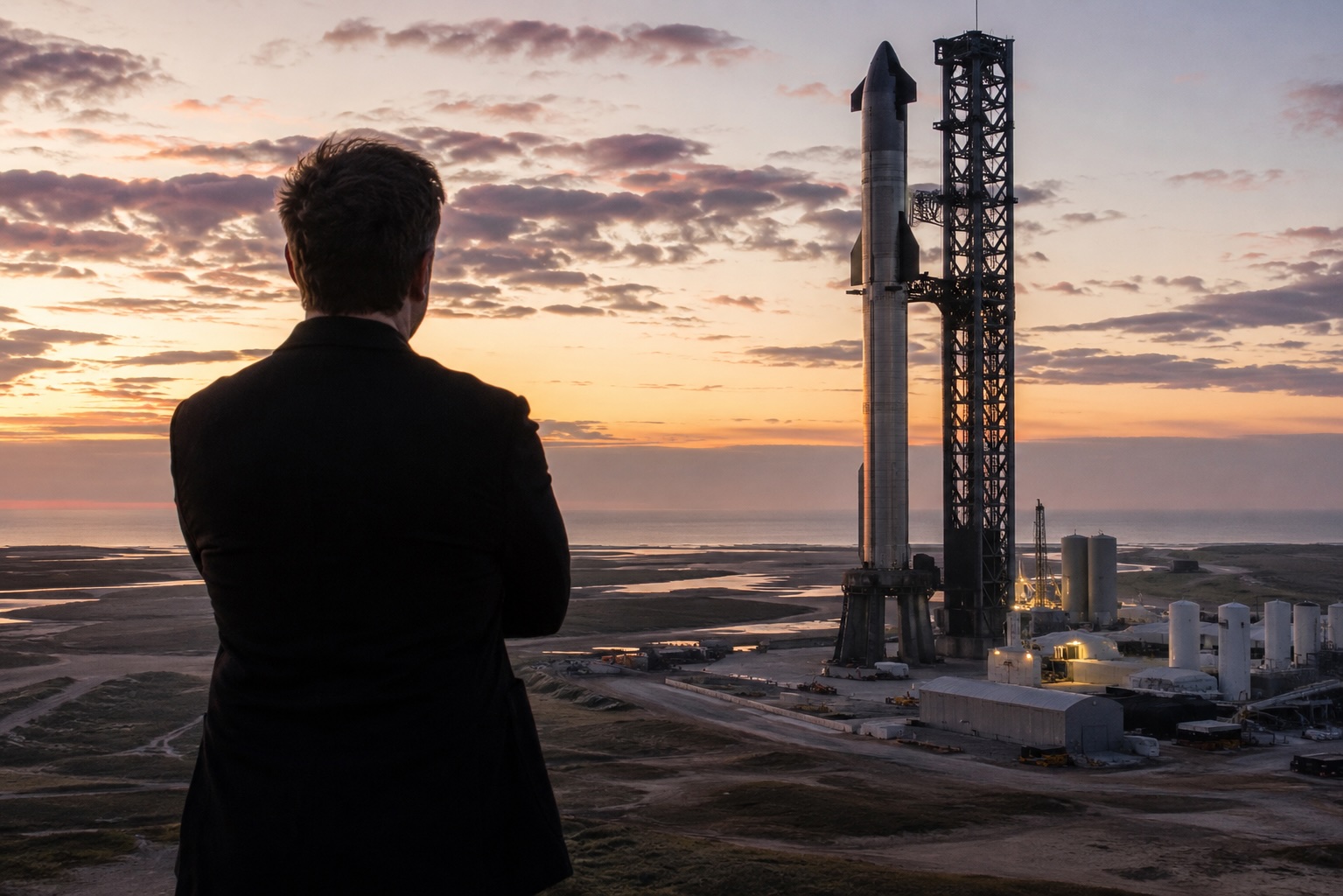
SpaceX has cleared the last regulatory hurdle standing between Starship and its first trip to orbit. The Federal Aviation Administration issued the launch license for Starship Flight 14 late Saturday, keeping the mission on track for liftoff Monday, September 28, from Pad 2 at Starbase, Texas.
The 75 minute launch window opens at 7:15 a.m. Central, and Boca Chica Beach closures are also scheduled for September 29 and 30 as backup dates. This will be Starship’s first revenue generating mission.
The license was the missing piece after SpaceX completed a full wet dress rehearsal with Booster 21 and Ship 41 on September 24. At the time, the company said the flight remained on track pending regulatory approval. Because Flight 14 flies an orbital profile, the FAA had to sign off on a modified license that met its safety, payload and financial responsibility requirements.
Observers combing through the new FAA paperwork also noticed that lightning no longer appears among Starship’s listed launch hazards. If that holds, it matters more for where Starship is headed than for Monday’s attempt. Florida and Louisiana, home to LC-39A and the planned Starbase Louisiana site, see some of the most frequent lightning in the United States.
SpaceX tells the FCC that Starship Flight 14 is going to orbit
Flight 14 is the mission SpaceX has been building toward for months. Ship 41 will carry 26 Starlink V3 satellites, the first operational V3 units to be deployed, and attempt roughly six orbits at about 275 kilometers over a flight lasting just under 10 hours. SpaceX says the ship will only perform its orbital insertion burn after flight controllers confirm enough hardware redundancy remains for the deorbit burn at the end of the mission. Ship 41 is targeting a splashdown in the Pacific west of Chile, while Super Heavy will return to the Gulf of Mexico.
The date carries some symbolism as well. A Monday launch would come 10 years and one day after Elon Musk first presented the Interplanetary Transport System, the design that became Starship, at the International Astronautical Congress in Guadalajara, Mexico.
SpaceX has not announced what comes next, but air traffic planning slides reported this week, list Flight 15 no earlier than October 19 and a first Starship launch from LC-39A in Florida no earlier than October 30. Both dates depend on how Monday goes.

Tesla Roadster’s new patent preps white-knuckle speeds, keeping it grounded

Tesla showrooms picked clean ahead of Q3 end as demand looks strong


