Investor's Corner
Tesla shareholders urge Board to take legal action against misleading media reports

Misleading reports about Tesla and its leadership have pretty much been the norm for a very long time, but a number of TSLA shareholders are drawing the line in the sand.
As per the shareholders in a letter to the Tesla Board of Directors, now is the time to hold news media outlets that publish misleading reports about the electric vehicle maker accountable.
The trigger:
- Last week, a Tesla Cybertruck loaded with explosives was detonated in front of a Trump hotel in Las Vegas. The vehicle’s driver died and seven others were injured.
- Elon Musk quickly clarified on X that the incident was the result of explosives that were detonated from the bed of the Cybertruck. Thus, the explosion was not in any way related to a fault in the all-electric pickup.
- Authorities later credited the Cybertruck for containing the explosion and preventing more damage in the area.
- Despite this, news reports about the incident framed the narrative as a Cybertruck explosion killing one person.
- Some headlines included “1 dead after a Cybertruck explodes outside Trump Hotel in Las Vegas,” “Tesla Cybertruck explodes outside Trump Las Vegas Hotel, killing driver,” and “Tesla Cybertruck explosion in front of Trump Hotel in Las Vegas leaves 1 dead, 7 injured.”
Maybe it is time to do so https://t.co/2i4q5QZOUn
— Elon Musk (@elonmusk) January 2, 2025
Musk’s comments:
- Amid complaints from users on X and some Tesla shareholders that the story of the Cybertruck’s detonation was being misrepresented, Elon Musk mused that perhaps it is time for the electric vehicle maker to take legal action against media outlets that seemingly sabotage Tesla.
- “Maybe it is time to do so,” Musk wrote in a response to X user Robby Starbuck, who called out the headlines about the incident.
Tesla shareholders’ letter:
- Tesla shareholders have supported the idea of holding news outlets accountable.
- In a letter, the shareholders called on the Board of Directors to file legal action against media outlets that misrepresent Tesla news.
- Following is the TSLA shareholders’ letter:
- Dear Members of the Board:
- As concerned Tesla shareholders, we are writing to express our deep concern regarding what appears to be a pattern of materially misleading press coverage about Tesla, its products, and operations. We believe these articles are negatively impacting shareholder value and warrant the Board’s attention.
- Of particular concern are recent articles regarding the criminal event where firework mortars and camp fuel canisters exploded in the bed of a Cybertruck in Las Vegas. The reporting contained numerous apparent inaccuracies. These three articles were the most mentioned by us shareholders with regards to inaccurate reporting:
- [to be filled out with survey results]
- [to be filled out with survey results]
- [to be filled out with survey results]
- These and other major media outlets have often published articles containing factual inaccuracies about Tesla’s business operations, product capabilities, and market position.
- While we all fully support and value press freedom, we believe there is a clear distinction between protected speech and demonstrably false statements that harm shareholder interests and our company.
- We respectfully request that the Board commissions an independent analysis of recent press coverage to identify potentially actionable cases of material misrepresentation and evaluates potential legal remedies available to protect shareholder interests. We understand that engaging in legal action against press outlets requires careful consideration of multiple factors, including First Amendment protections, litigation costs, and potential public relations implications. However, we believe the Board has a fiduciary duty to evaluate all available options to protect shareholder interests when faced with demonstrably false information that may be damaging to the company’s value.
- We would appreciate the Board’s consideration of these concerns and look forward to hearing your response on how Tesla plans to address this issue moving forward.
- Sincerely,
- Tesla Shareholders
Ok
— Elon Musk (@elonmusk) January 3, 2025
- Tesla CEO Elon Musk has seemingly supported the shareholders’ efforts, responding with a short “Ok” on X.
Don’t hesitate to contact us with news tips. Just send a message to simon@teslarati.com to give us a heads up.


Elon Musk
Why automakers keep turning down Elon Musk’s Tesla Full Self-Driving offer
Elon Musk confirms no automaker has ever accepted Tesla’s offer to license Full Self-Driving software.

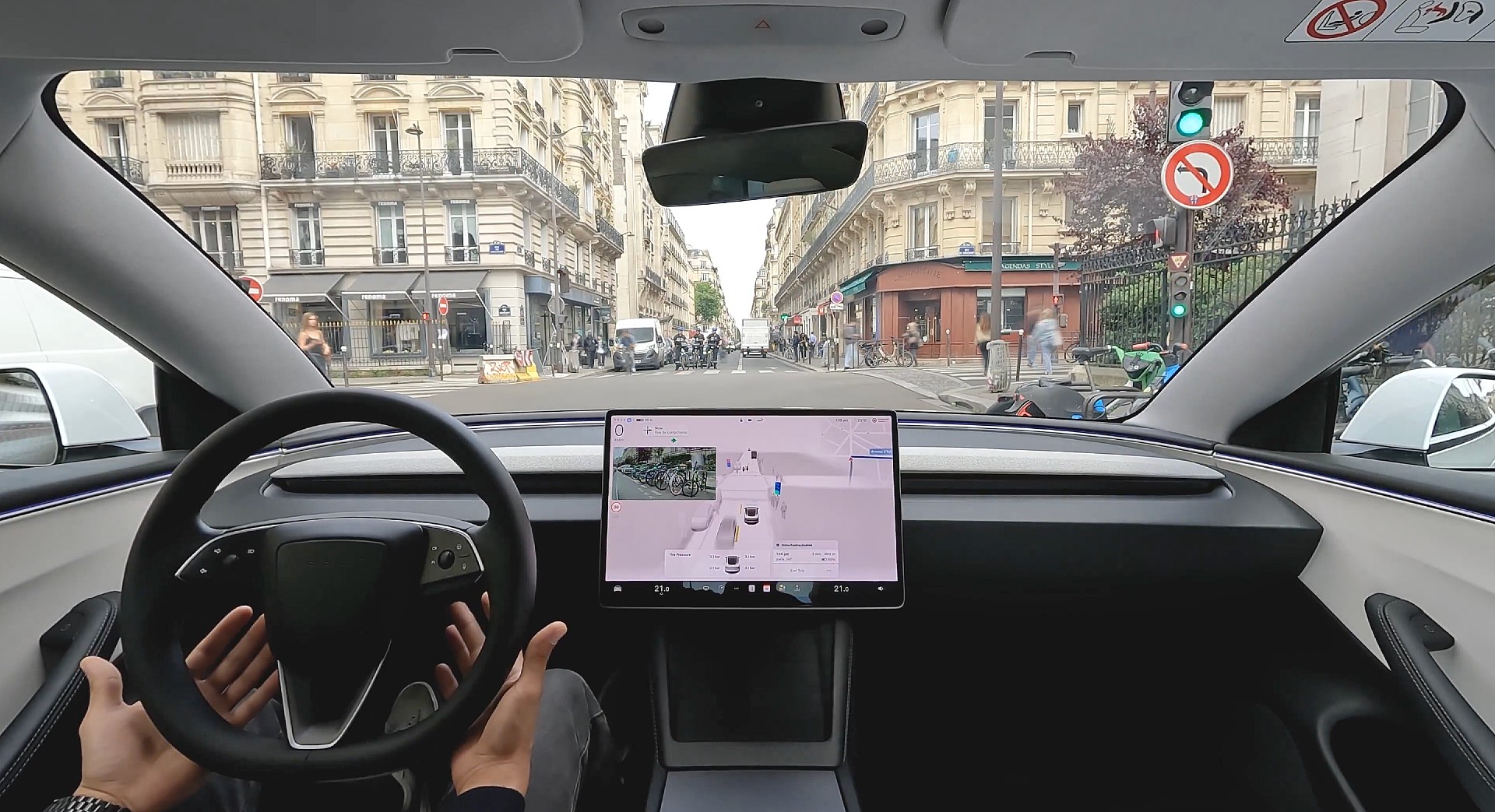
Elon Musk gave a brief answer on X Monday that confirmed that Tesla’s standing offer to license Full Self-Driving to other automakers still has zero takers. Sawyer Merritt wrote that “Tesla has for years openly invited other automakers to license FSD. None of them have accepted,” responding to a prediction from Boom Supersonic founder Blake Scholl that Tesla would eventually open FSD the way it opened its Supercharger network to rival brands. Musk’s reply to Merritt was one word: “Exactly.”
It is not the first time Musk has made this point. He said something similar in November, when he called legacy automakers reluctance to adopt FSD “crazy,” and Tesla has floated the offer publicly since at least 2021. Scholl’s prediction touches on something real. Once NACS became the de facto charging standard, adoption from Ford, GM, Rivian and others followed within about a year. FSD licensing was supposed to work the same way once Tesla built enough of a lead that switching made sense for everyone.
Tesla has for years openly invited other automakers to license FSD. None of them have accepted. https://t.co/kgz4idpoUM
— Sawyer Merritt (@SawyerMerritt) September 22, 2026
The case for licensing now is stronger than it was two years ago. Waymo and Zoox are logging hundreds of thousands of unsupervised autonomous miles, along with Tesla’s own Robotaxi fleet. Every automaker still selling driver assist systems that lag FSD has given the robotaxi conversation to Tesla, Waymo and Zoox by default. Licensing FSD would let a GM or a Ford compete on the same field without spending a decade and billions of dollars building a stack from scratch, the same argument Tesla made when it opened the Supercharger network to bring more EVs onto its chargers.
But FSD is not a connector standard. As one reply to Musk’s post pointed out, licensing FSD is not a software license the way NACS was a plug spec. It requires adopting Tesla’s eight camera layout and its onboard compute architecture, meaning a licensee’s cars would effectively become Tesla hardware wearing someone else’s badge. That is the visible obstacle. The less visible one is data. A licensed FSD stack would report back the same telemetry Tesla collects from its own fleet, giving Tesla a continuous read on how a competitor’s cars are actually driven, where they struggle, and how often drivers intervene. For an automaker trying to build its own autonomy program, or simply trying to keep its build quality and safety record private, handing Tesla that visibility could be a bigger cost than the hardware bill. It is the reason the Supercharger comparison only goes so far. Opening a charging plug cost Tesla very little. Opening FSD would cost a rival something it cannot get back.
Elon Musk
Tesla eyes supply partners for Optimus mass production
Tesla certified three Chinese suppliers for Optimus mass production, signaling its robot timeline is accelerating.
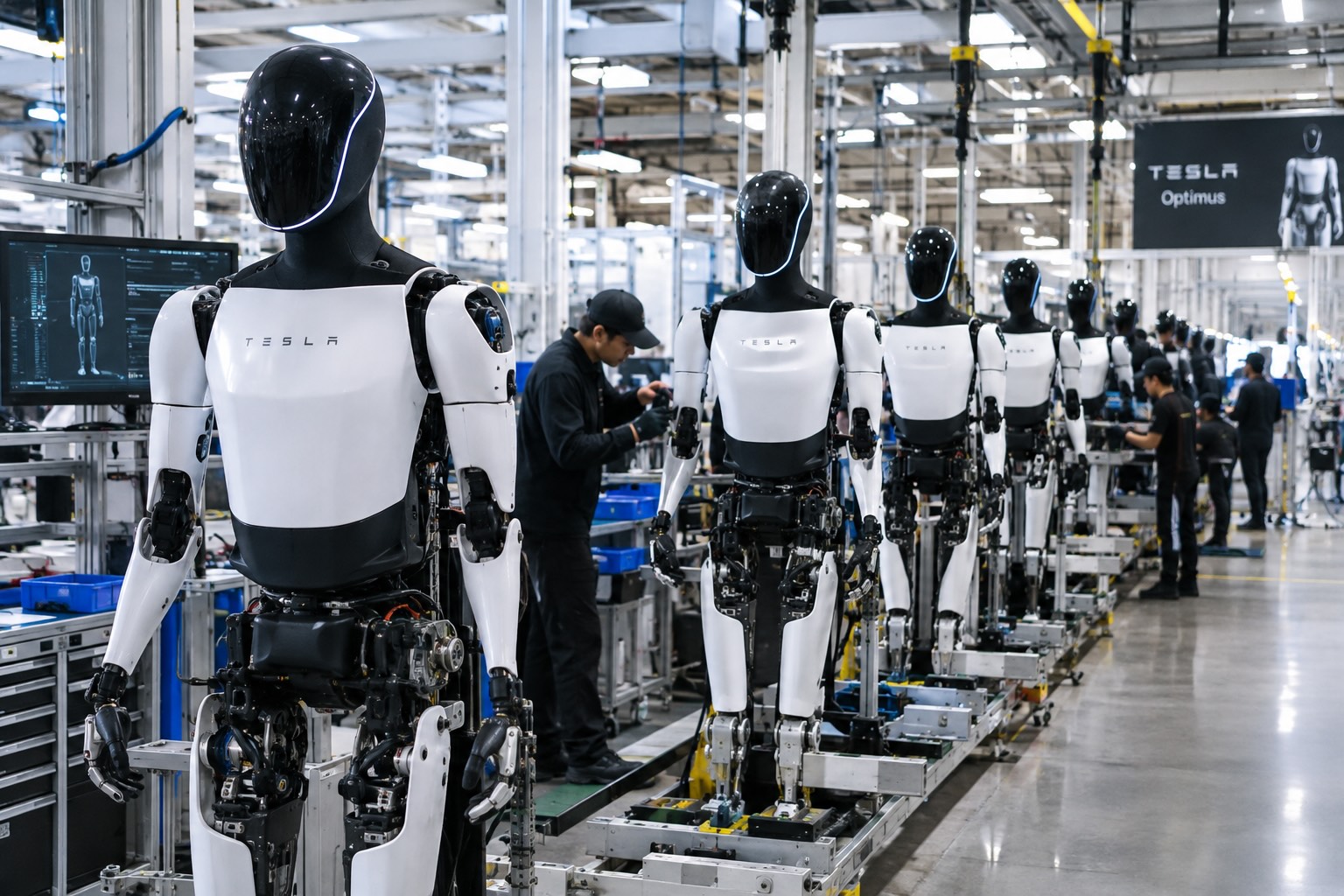
Tesla’s robotics team traveled to Ningbo, in China’s Zhejiang province, on September 16 and spent the following day auditing component suppliers for Optimus, according to a Bloomberg report cited by RobotAIGeek. The visit moved three manufacturers from provisional status to certified mass production partners: Tuopu Group, which handles actuators and chassis components, Ningbo Joyson Electronic, a sensor supplier, and Zhejiang Sanhua Intelligent Controls, which builds thermal management systems. All three already supply parts to Tesla’s electric vehicles, and the audit reportedly came with fresh orders that supply chain reports put at an initial batch of roughly 5,000 units.
Tuopu, Joyson, and Sanhua built their manufacturing base serving the automotive industry, where tolerances and volume requirements are already close to what a mass produced humanoid robot demands. Sanhua in particular has history here. Teslarati reported last October that the company had received a roughly $685 million order for linear actuators tied to Optimus, a volume industry watchers estimated could cover around 180,000 robots once production ramped.
Supply chain reports tied to this week’s audit put Tesla’s near term production goal at about 1,000 Optimus units a week by late September, rising to 2,000 to 2,500 units a week by the end of the year. That pace would put real weight behind the timeline Tesla has been building toward since May, when it wound down Model S and Model X production at Fremont to convert that floor space into a dedicated Optimus line targeting one million units annually. JPMorgan analysts who toured the factory in August confirmed the conversion took roughly four months, a pace Musk has called unprecedented for a facility that size.
New drone video shows Tesla’s Optimus Factory reaching a turning point
Fremont is only the first phase. A second, larger Optimus plant is rising at Gigafactory Texas, where drone footage shared by Joe Tegtmeyer last week showed the structural steel nearing completion on the north end of the building. Tesla has said that facility is meant to eventually support production of up to 10 million units a year, though volume output there is not expected before 2027.
Commercial sales of Optimus are still targeted for the second half of 2027, but production is expected to start well before then. JPMorgan analyst Rajat Gupta has said Tesla’s “Optimus Academy” program, which uses early units to collect real world training data inside Tesla’s own facilities, is expected to be running later this year. Bloomberg Intelligence analyst Ian Ma described the Ningbo audits as “a positive commercialization signal for China’s humanoid supply chain,” noting that sentiment could improve further if the visit leads to confirmed supplier nominations and larger orders. The Solactive China Humanoid Robotics Index rose about 1.4% on the news, though it remains down roughly 30% for the year.
Investor's Corner
New drone video shows Tesla’s Optimus Factory reaching a turning point
New drone footage shows Tesla’s dedicated Optimus factory steel frame nearing completion at Giga Texas.
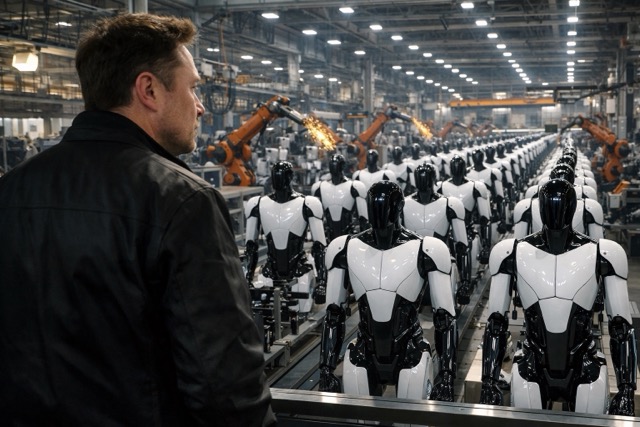
Tesla’s dedicated Optimus factory at Gigafactory Texas is closing in on a finished steel frame, according to drone footage posted Thursday afternoon by longtime site observer Joe Tegtmeyer. In the video, Tegtmeyer said structural steel assembly is now about five column grids away from reaching the building’s north perimeter beam, putting the primary skeleton in its final stretch roughly six months after Tesla broke ground on the North Campus site in late March.
The Giga Texas Optimus Factory latest update … construction keeps moving fast!
Steel assembly is now only about 5 column grids from the north perimeter beam. Concrete is going in on the three upper floors, rebar is still being laid for more pours, and footing / grade-beam work… pic.twitter.com/qvFPvwnYzW
— Joe Tegtmeyer 🚀 🤠🛸😎 (@JoeTegtmeyer) September 17, 2026
Tegtmeyer’s footage shows concrete already going in on three upper floors while crews continue laying rebar and pouring grade beam footings at ground level. That kind of parallel work, steel rising at one end of the site while concrete sets at the other, is a scheduling approach Tesla used at the original Giga Texas building and appears to be repeating here to save time before the plant’s targeted 2027 production start.
Teslarati has tracked the building’s progress since Tesla confirmed construction was officially underway in May, when the first steel structure went up on what was then bare, reclaimed land. The facility is part of a more than 5.2 million square foot expansion of Giga Texas’s North Campus that Tesla has said will eventually run nearly the length of the existing vehicle factory, over 4,000 feet, while sitting somewhat narrower. Musk has pegged the long term output target at 10 million Optimus units a year once the line is running at full capacity, a volume that would dwarf the one million unit pilot line Tesla is standing up separately at its Fremont, California factory.
Tesla Giga Texas to feature massive Optimus V4 production line
The Texas facility sits alongside another major buildout on the same campus. Terafab, the joint Tesla and SpaceX chip fabrication plant that will eventually supply the silicon running Optimus units in the field. Housing robot assembly and chip production on the same grounds is a deliberate supply chain decision, cutting down on the shipping and lead time that would otherwise sit between the two.
Tesla has not given an updated timeline beyond its previously stated goal of bringing high volume Optimus production online at the site in the summer of 2027. Fremont’s smaller pilot line began mass producing the current Gen 3 robot in January, with that plant expected to build tens of thousands of units this year primarily to generate the real world data Tesla needs to refine the robot’s software before Giga Texas ramps up. Six months of visible construction progress, tracked almost entirely through Tegtmeyer’s recurring drone flights, gives the clearest outside look yet at how seriously Tesla is treating that 2027 deadline.

Why automakers keep turning down Elon Musk’s Tesla Full Self-Driving offer

Tesla Roadster is available for order once again following brief hold


