News
SpaceX Falcon 9 Block 5 rocket’s drone ship return captured in stunning detail [gallery]

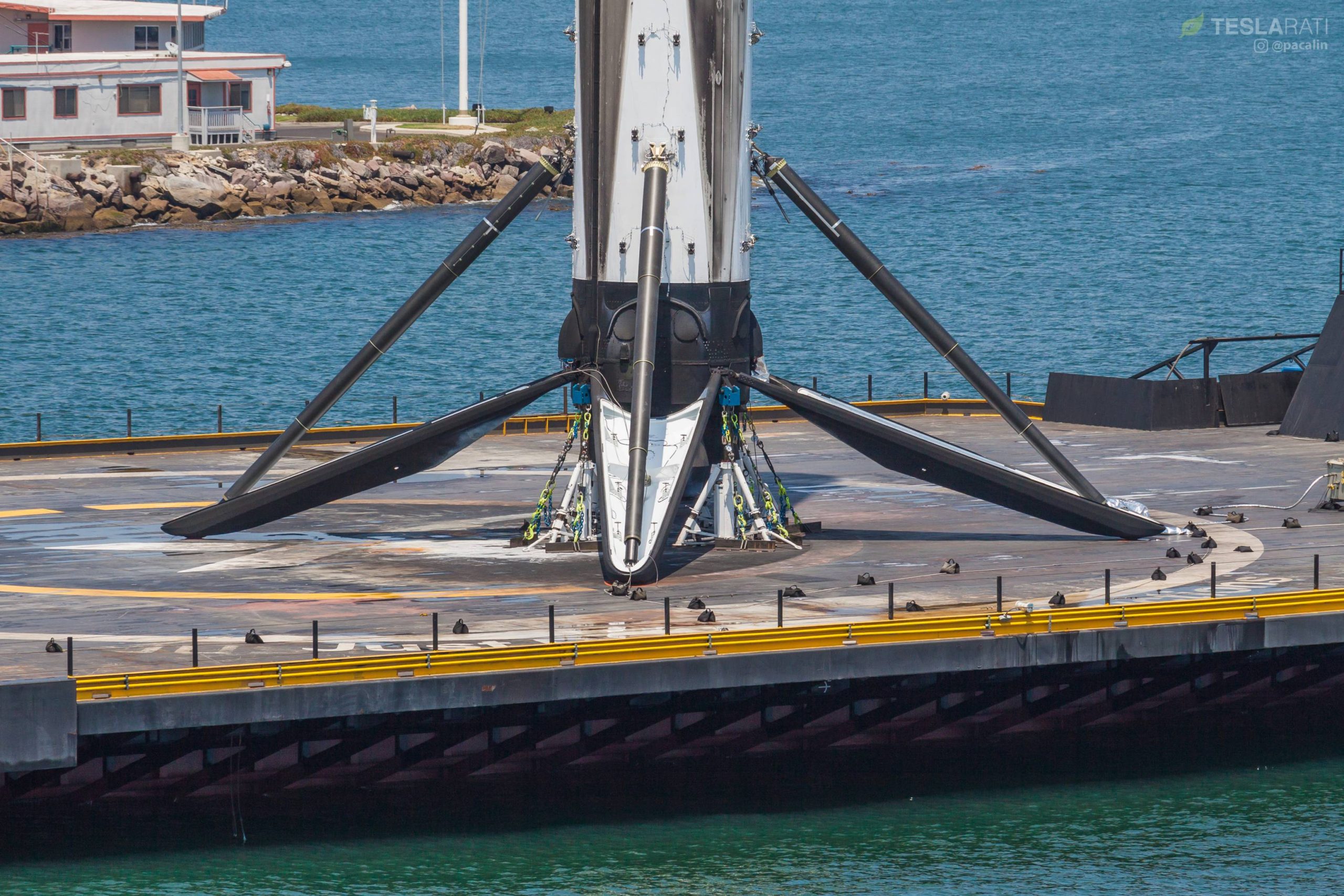
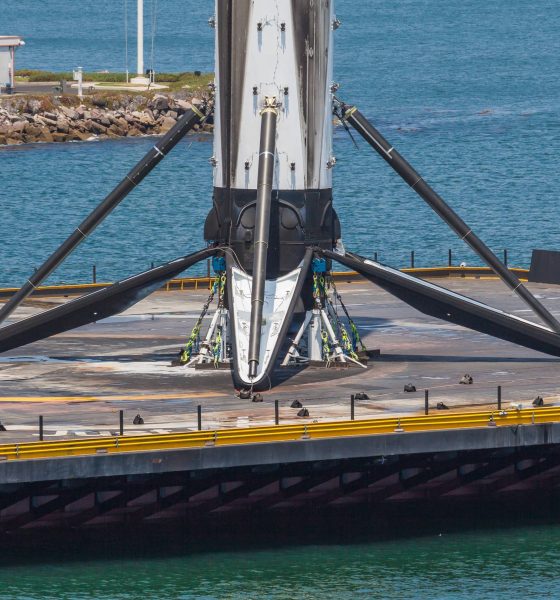
Teslarati photographer Pauline Acalin has captured SpaceX’s first West Coast Falcon 9 Block 5 booster recovery in the best detail yet seen of the rocket upgrade, well-worn after its first successful launch of Iridium NEXT-7, July 25.
Iridium-7 marked a number of important debuts for SpaceX: Falcon 9 Block 5 (Booster 1048, in this case) completed its first West Coast launch from SpaceX’s Vandenberg pad, drone ship Just Read The Instructions’ (JRTI) first rocket recovery attempt and success in nearly ten months, and recovery vessel Mr Steven’s first (albeit unsuccessful) attempt at catching a Falcon fairing with a dramatically enlarged net and arms.
-
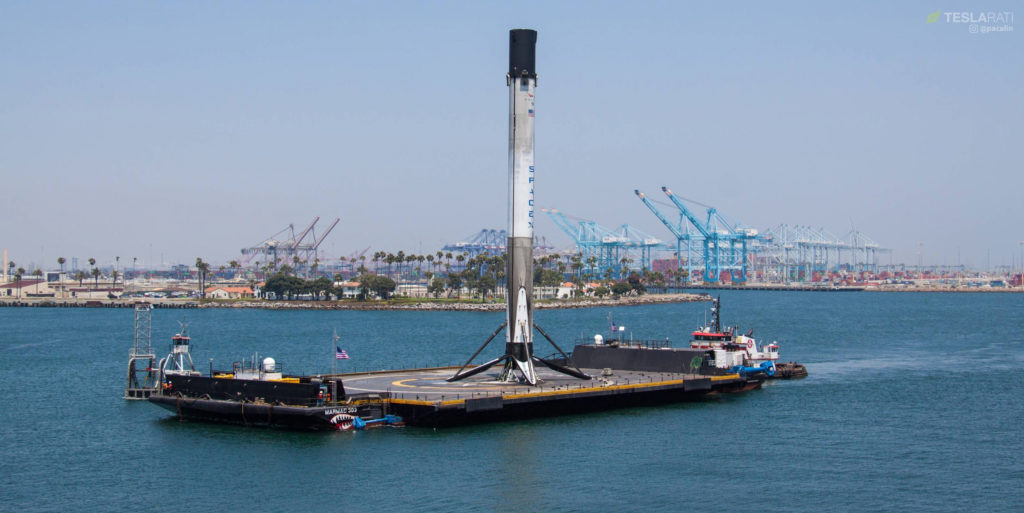
- B1048 returns to port on drone ship JRTI after its successful July 2019 launch debut. (Pauline Acalin)
Although inclement wind conditions foiled Mr Steven’s fairing catch effort and put pressure on Falcon 9 B1048’s journey to JRTI, Iridium-7 was flawlessly placed in orbit and Falcon 9 managed a slightly off-center but still thoroughly successful landing on the drone ship off the coast of California. With that launch and land debut on the West Coast and a second successful East Coast launch of a Block 5 rocket to the East just a few days prior, SpaceX has effectively demonstrated the basic functionality and reliability of the upgrade’s many far-reaching changes to the underlying Falcon 9 architecture.
Recovered booster 1048’s single-piece cast titanium grid fins. They were able to maneuver the vehicle through stormy winds at sea, landing it safely on Just Read the Instructions following Iridium-7 launch. #spacex #iridium7 #falcon9 pic.twitter.com/yATFVrjGjc
— Pauline Acalin (@w00ki33) July 29, 2018
Just Read The Instructions recovers a rocket
After nearly ten months largely spent berthed at SpaceX’s original Port of San Pedro dock space, drone ship JRTI has at long last returned to sea and successfully recovered a Falcon 9 booster, this time marking the West Coast launch and landing debut of the Block 5 rocket. Photos of the drone ship and rocket’s return to port were some of the best ever seen, thanks largely to the port’s layout and narrow mouth, which allowed Teslarati photographer Pauline Acalin to put giant telephoto lenses and a unique top-down perspective to good use.
Iridium NEXT-7 thankfully brought an end to the understandable but still-painful practice of intentionally expending twice-flown Falcon 9 boosters in the ocean after launch. Thanks to Iridium-7’s new Block 5 booster, B1048, expending the rocket was out of the question, as it likely will be for most Block 5 launches in the future. A combination of several expendable missions and an unfortunate duo of recovery anomalies (a small fire after Koreasat 5A and the Falcon Heavy center core landing failure) led to JRTI sitting on the sidelines since October 2017, as a considerable subset of its critical thruster hardware had to be stripped in order to keep East Coast sister ship Of Course I Still Love You (OCISLY) operational for a handful of attempts in 2018.
-
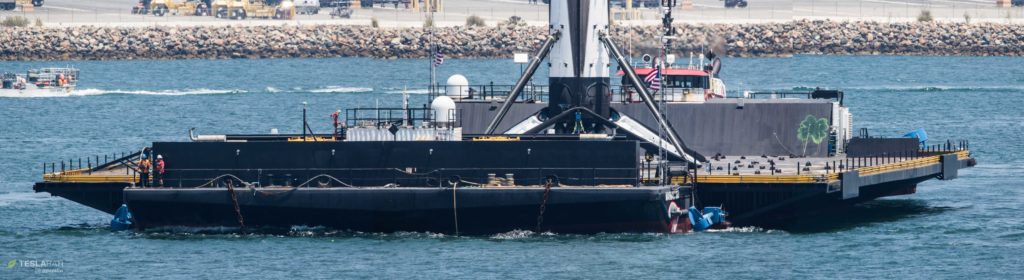
- Falcon 9 B1048 returns to Port of Los Angeles aboard drone ship Just Read The Instructions, July 27. (Pauline Acalin)
-
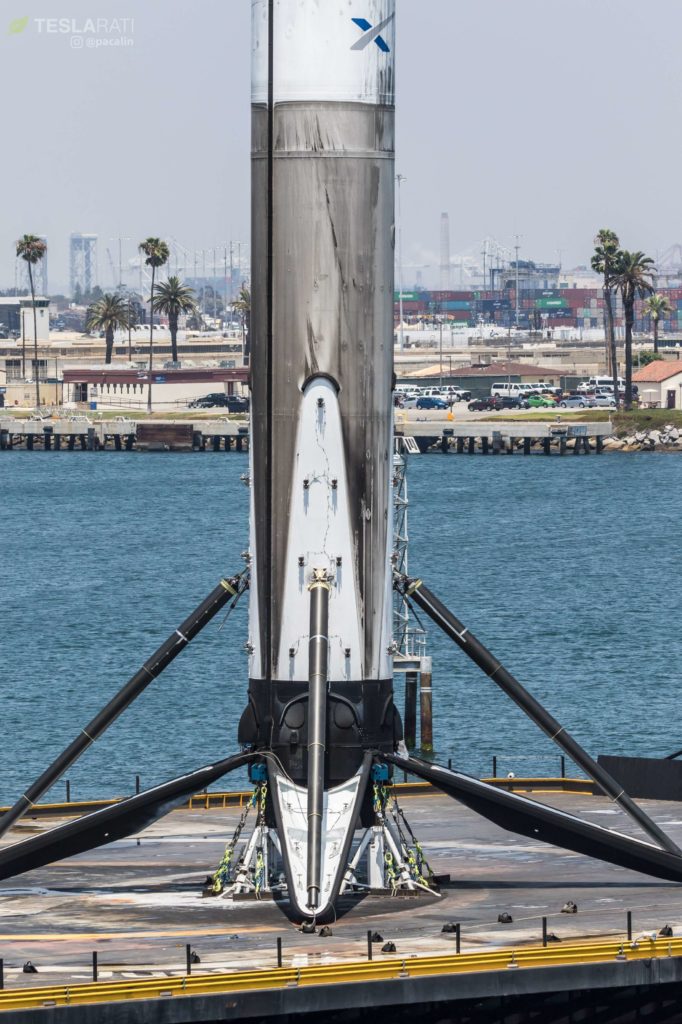
- Falcon 9 B1048 returned to Port of Los Angeles aboard drone ship Just Read The Instructions after its first launch. July 27. (Pauline Acalin)
-
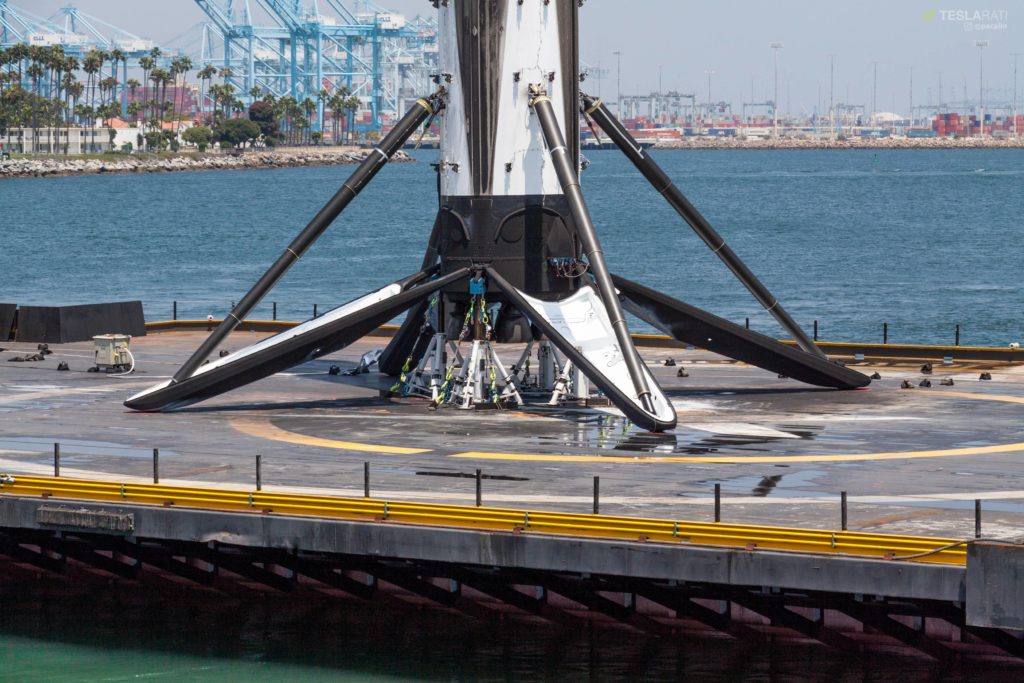
- Falcon 9 B1048 returns to Port of Los Angeles aboard drone ship Just Read The Instructions, July 27. (Pauline Acalin)
-
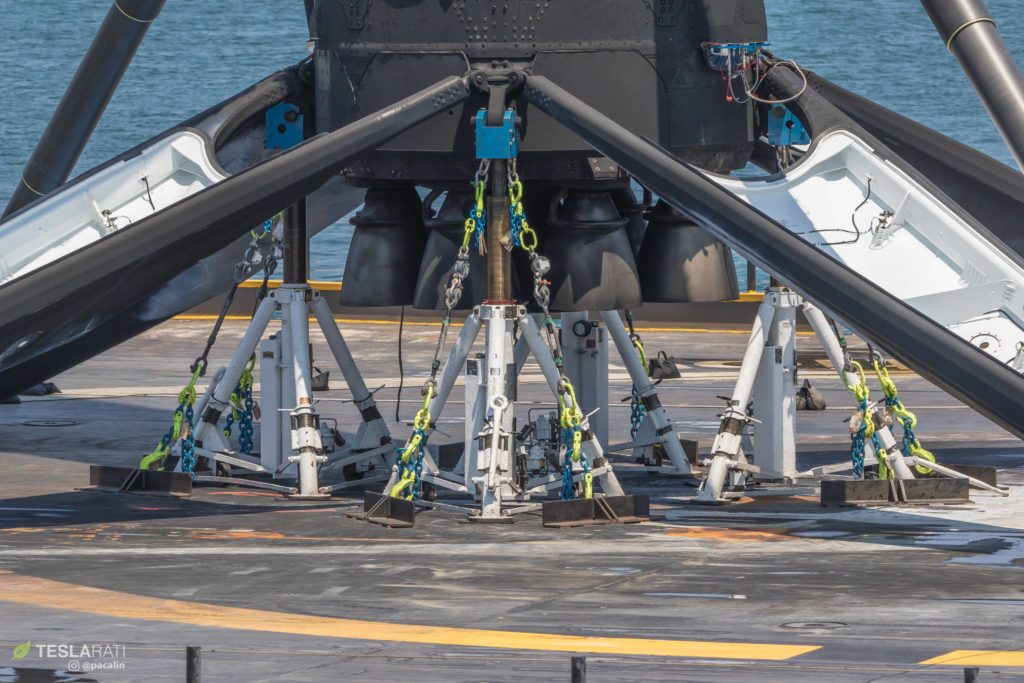
- Falcon 9 B1048 returns to Port of Los Angeles aboard drone ship Just Read The Instructions, July 27. (Pauline Acalin)
-
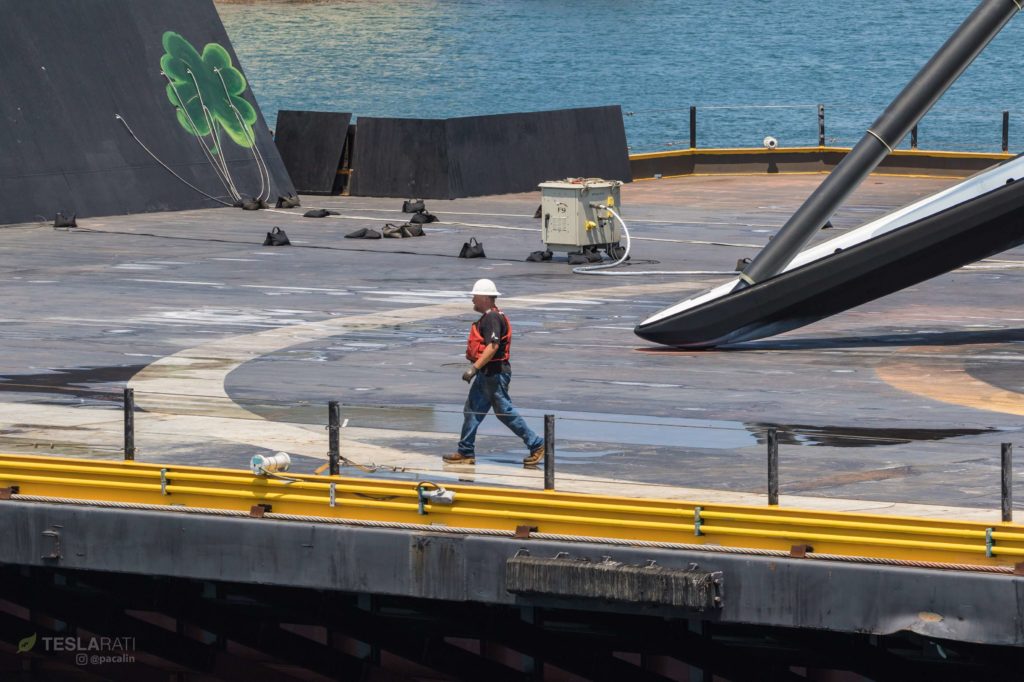
- Falcon 9 B1048 returns to Port of Los Angeles aboard drone ship Just Read The Instructions, July 27. (Pauline Acalin)
Many of the months JRTI spent at berth were thus without the pod thrusters the drone ship needs to keep itself at the proper landing point once at sea. Still, JRTI departed the port with a full complement of four blue thrusters on the evening of July 22 and had a highly successful return-to-action. Sadly, it’s unclear how much SpaceX will need the vessel within just a month or two from today – after the final Iridium launch (NEXT-8) in November or December, perhaps all of SpaceX’s future Vandenberg launches will be lofting lightweight payloads that should allow the company to rely almost entirely on its brand-new rocket landing zone – conveniently colocated barely 1000 feet from the pad – for CA rocket recoveries.
F9 Block 5 shows off its upgraded exterior
Falcon 9 Block 5 booster (B1048) arrived at Port of Los Angeles on July 27 after landing at sea aboard drone ship JRTI. Photos captured by Pauline arguably show the best details yet seen of the rocket upgrade, ranging from titanium grid fins to extraordinary shots of its sooty-but-still-sorta-shiny Merlin 1D engines.
-
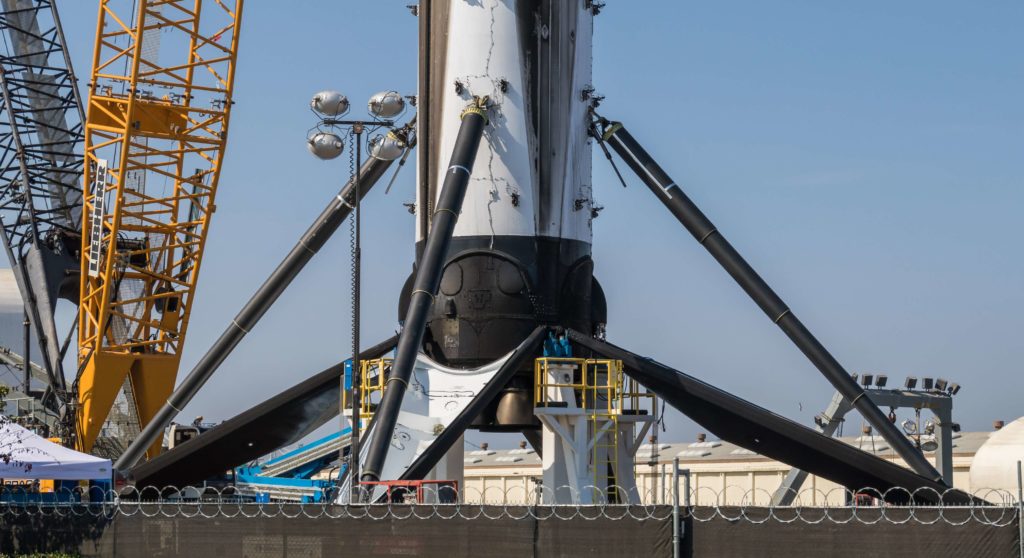
- B1048 arrives in Port of LA aboard drone ship JRTI. (Pauline Acalin)
-
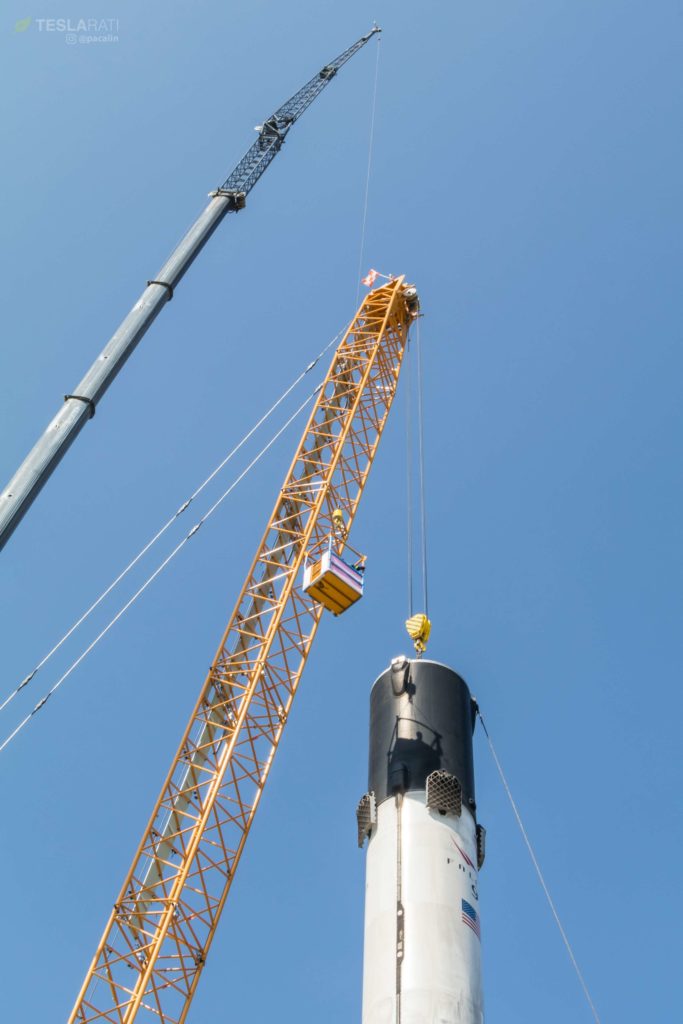
- B1048, one launch down and dozens to come. (Pauline Acalin)
-
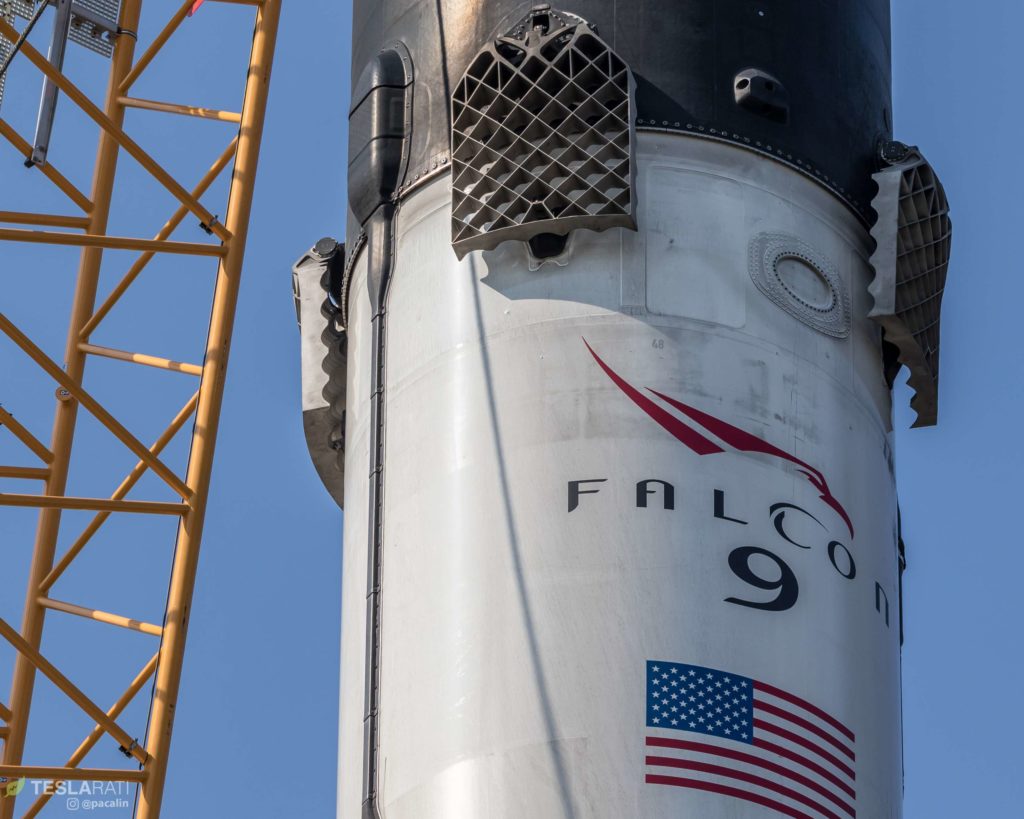
- B1048, one launch down and many more to come. (Pauline Acalin)
-
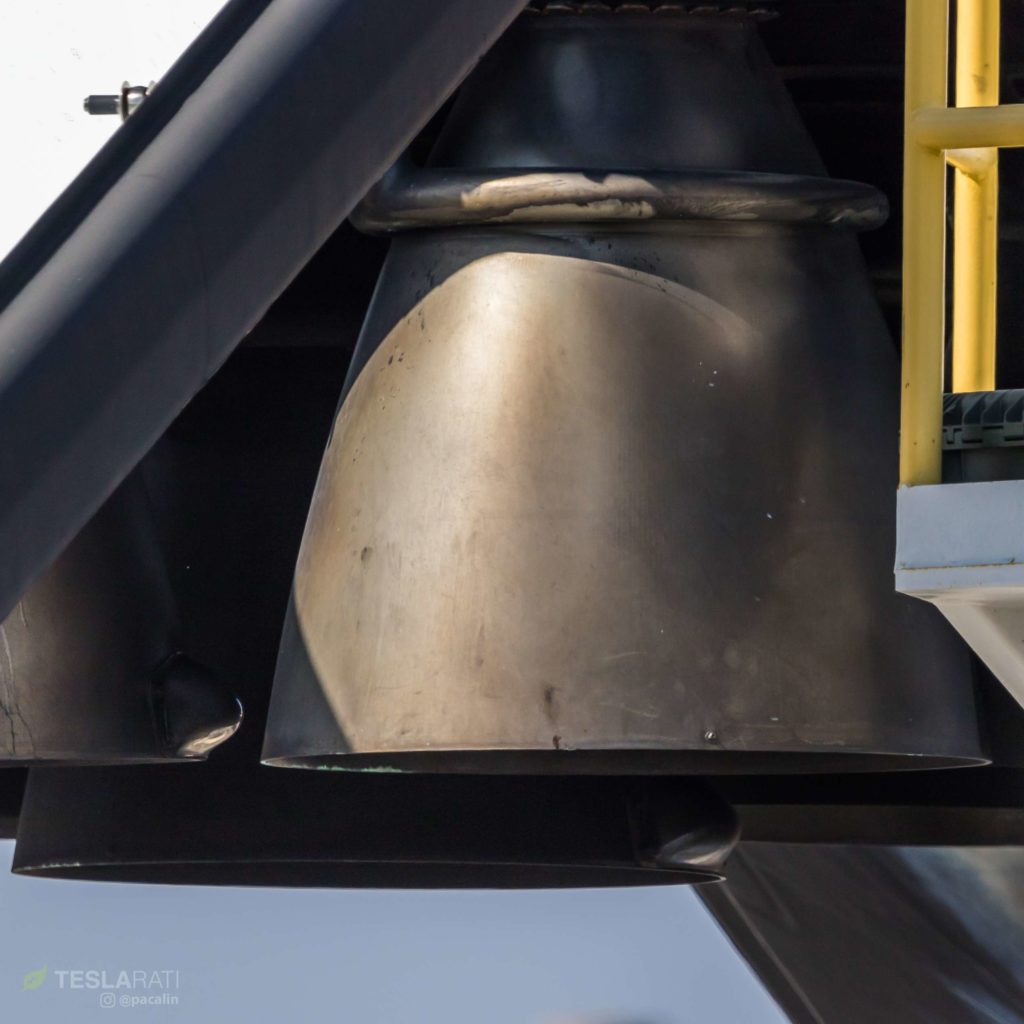
- B1048’s beautiful Block 5 Merlins, showing off their subtle shine despite a healthy coating of soot. (Pauline Acalin)
Myriad others provide an amazing sense of place with SpaceX technicians conducting thorough post-landing checkouts, carefully documenting the booster’s condition, and generally wrenching on a massive, orbital-class rocket that completed a suborbital jaunt to space just days prior.
Of particular note are detailed views of the silky black “highly flame-resistant felt” now covering Falcon 9’s interstage (the top segment), landing legs, octaweb section, and raceways (the black lines traveling up and down the rocket). Compared to beat-up, older Falcon 9s, B1048’s shielded components look barely worse for wear, and it would genuinely be difficult to determine if the rocket had flown before without the telltale soot fingerprint present after every Falcon 9 recovery.
-
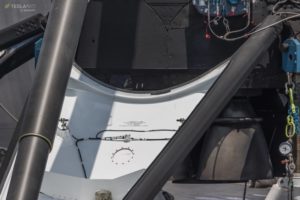
- A little of everything: landing leg, octaweb, Merlin 1Ds, and drone ship JRTI. (Pauline Acalin)
-
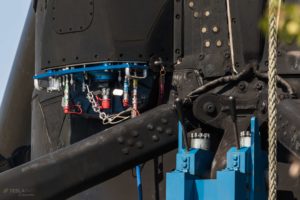
- B1048’s octaweb attach points for a huge range of fluids and propellants. (Pauline Acalin)
-
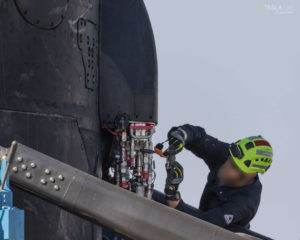
- A SpaceX recovery technician documents one of Falcon 9 B1048’s quick-disconnect panels. (Pauline Acalin)
-
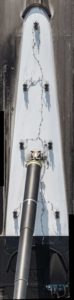
- One of B1048’s four upgraded landing legs. (Pauline Acalin)
-
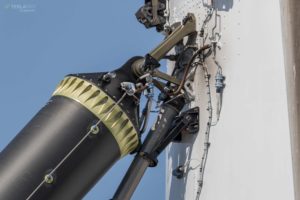
- And another view of B1048’s beautifully intricate leg hardware. (Pauline Acalin)
The only mystery that still remains is what exactly Falcon 9 Block 5’s octaweb heat-shielding looks like, reportedly one of the most critical and research-intensive upgrades necessary for true rapid reusability and reliability through many, many flights. Now built largely of titanium bolted to the octaweb, among a number of other extremely heat-tolerant metals and materials and even active water-cooling in spots, the new heat-shield was designed to carry the brunt of the reentry heating Falcon 9 experiences with ease.
Perhaps we’ll get a glimpse of that yet-unseen heat-shield over the next few weeks and months. Many, many more launches to come, so stay tuned!
For prompt updates, on-the-ground perspectives, and unique glimpses of SpaceX’s rocket recovery fleet (including fairing catcher Mr Steven) check out our brand new LaunchPad and LandingZone newsletters!



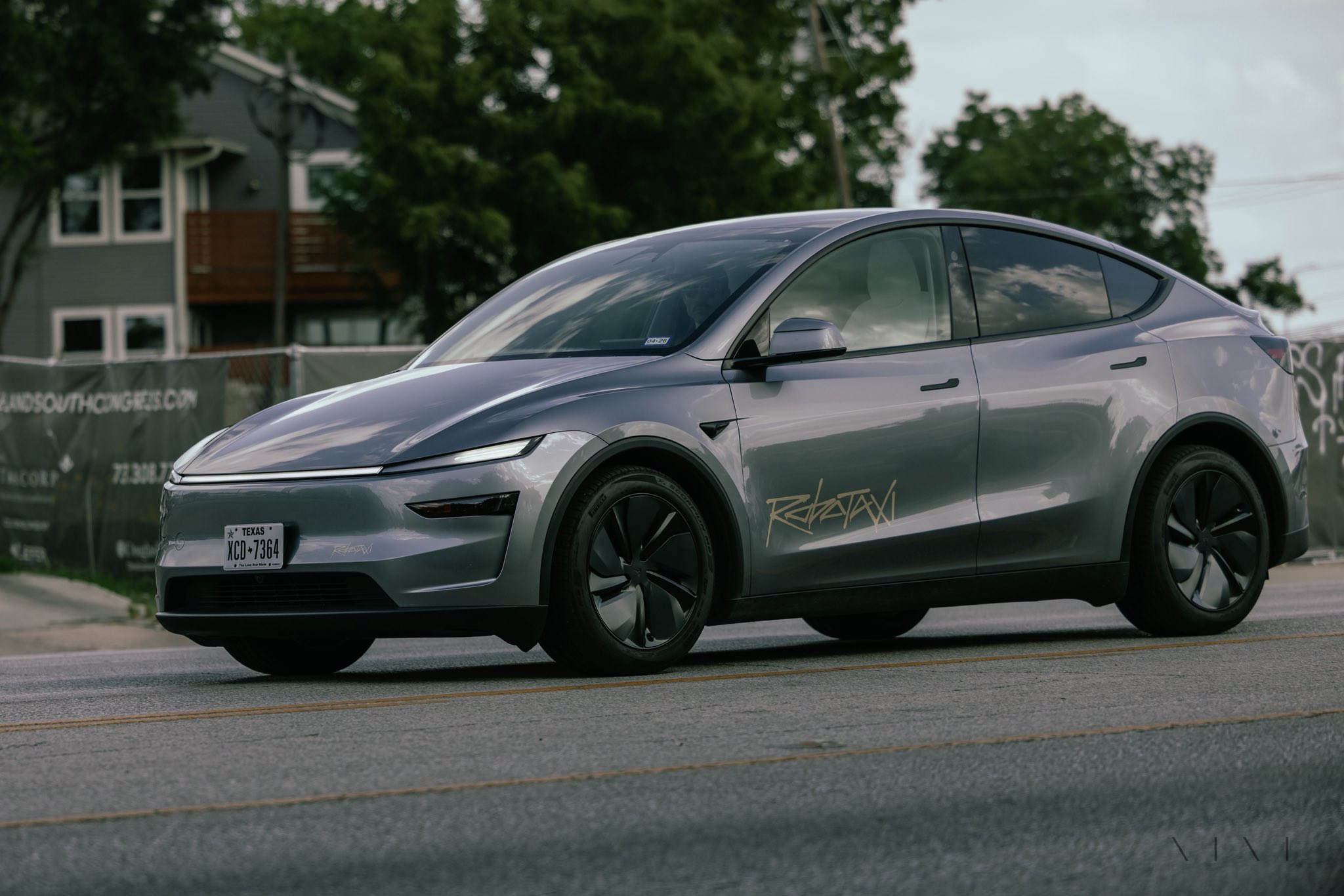
Tesla AI lead Ashok Elluswamy said this week that 24-hour Robotaxi service is close. Replying on X to a rider who wanted Cybercab trips all night, he wrote that the capability would arrive “next month or so” once “the next tech to merge on the v15 plan” is ready.
The comment landed on September 4, one day after Tesla opened public Cybercab rides in Austin. It is the clearest near-term timeline yet for overnight unsupervised operation. Tesla’s paid Robotaxi network currently runs from 6 a.m. to 10 p.m. seven days a week across Austin, Dallas, Houston, Miami, Orlando, and Tampa.
next month or so. the next tech to merge on the v15 plan will enable it.
— Ashok Elluswamy (@aelluswamy) September 4, 2026
That 16-hour window is shorter than the 6 a.m. to 2 a.m. schedule the company used for much of the prior year.
Elluswamy did not name the specific feature or say whether the change would apply first to purpose-built Cybercabs, the existing Model Y fleet, or both. He also offered no city-by-city rollout list. The link to Full Self-Driving v15 is nevertheless significant.
Tesla has described v15 as a step-change architecture with seven parallel improvement tracks and roughly ten times more parameters than earlier builds. Early versions of that software already operate on the Robotaxi fleet and contain about 40 percent of the planned gains.
By July 2026, the unsupervised fleet had logged more than 380,000 miles across six cities in two states with what the company called an impeccable safety record and no notable incidents caused by the vehicles themselves. Tesla has repeatedly argued that camera-based end-to-end neural networks, rather than extra sensors, are the core of the solution.
Overnight service would test that claim in lower-light conditions and would also raise vehicle utilization, a key variable for Robotaxi unit economics. The company has already begun using public Superchargers at night and is building dedicated Robotaxi charging sites.
Riders have asked why software must change if the cars already drive in the dark. The practical answer appears to be reliability and scale: Tesla has held back mass expansion until more of the v15 stack is merged, citing the need for higher confidence before putting thousands of unoccupied vehicles on streets around the clock.
If the next module arrives on the timetable Elluswamy sketched, 24-hour service could begin in October 2026 in at least some markets.
That would mark a shift from a daytime-bounded pilot to a service that can run whenever demand exists, including the late-night hours that have so far remained out of reach.
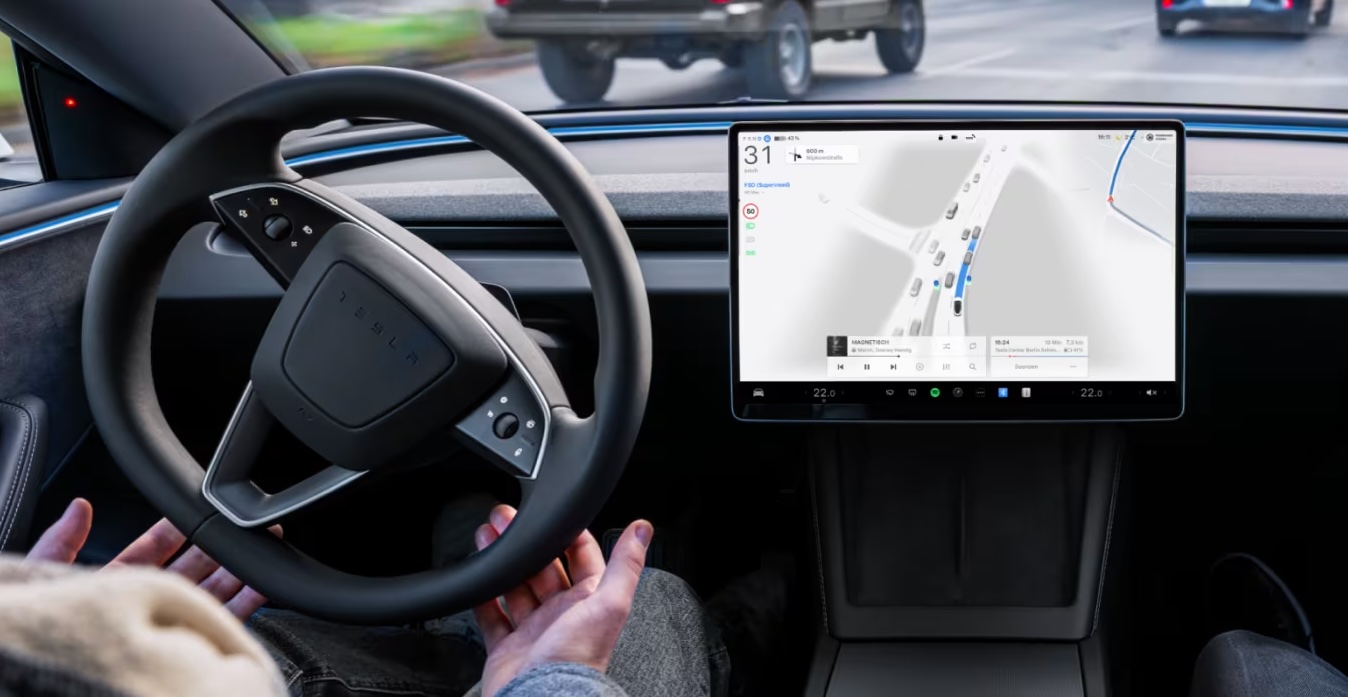
Tesla is beginning to roll out Full Self-Driving Supervised v14.3.9 with a new active safety layer that can take control even when the driver is operating the car manually.
Tesla AI said the software can activate FSD on the driver’s behalf when an imminent collision is detected and Automatic Emergency Braking may not be enough. It may also engage if the system detects heavy distraction or an accidental FSD disengagement.
FSD Supervised v14.3.9 starting to roll out shortly
This release includes a new active safety feature set: FSD Supervised can now activate on your behalf when an imminent collision is detected and Automatic Emergency Braking (AEB) may not be enough.
It may also engage if we…
— Tesla AI (@Tesla_AI) September 4, 2026
The capability is essentially Automatic Collision Evasion. However, unlike conventional AEB, which mainly applies the brakes in a straight line, this feature can use steering, braking, and acceleration together if the car calculates that stopping alone will not prevent impact and a safer path exists. The system may change lanes or move toward a shoulder when conditions allow, then continue driving after the immediate threat is handled rather than simply coming to a stop.
The intervention is meant as a last-resort safety net, not a replacement for attentive driving.
Tesla Full Self-Driving v14.3.7 early review: FSD saved me from an accident
Tesla’s own description still frames FSD as supervised assistance. Secondary reports on internal release notes say the feature can fire while the car is being driven manually if cabin-camera monitoring suggests the driver is not sufficiently attentive, such as reaching toward the back seat, or if FSD appears to have been turned off unintentionally.
After the emergency maneuver, the car is expected to alert the driver and request a return to manual control.
The safety case is straightforward. Many collisions happen in the last second because a driver is looking away, fumbles a control, or faces an obstacle that braking cannot fully solve. A system that can both recognize that AEB is insufficient and execute a coordinated evasive path can reduce those remaining high-severity events.
Re-engaging after accidental disengagement also addresses a practical failure mode: a small steering nudge that drops FSD at the worst moment. The advantage is a background safety net that uses the same vision stack already running in v14, instead of leaving the car solely to emergency braking once the driver is no longer in command.
The feature still depends on FSD being enabled and, according to reports, an active FSD purchase or subscription. It does not make the vehicle unsupervised. Drivers remain responsible, and Tesla has not published how often the system is expected to intervene or how it will handle false positives.
If the rollout is conservative and the false-alarm rate stays low, the update is a meaningful step: FSD is no longer only a feature the driver turns on. In the rare moments when disaster is already forming, it can step in.
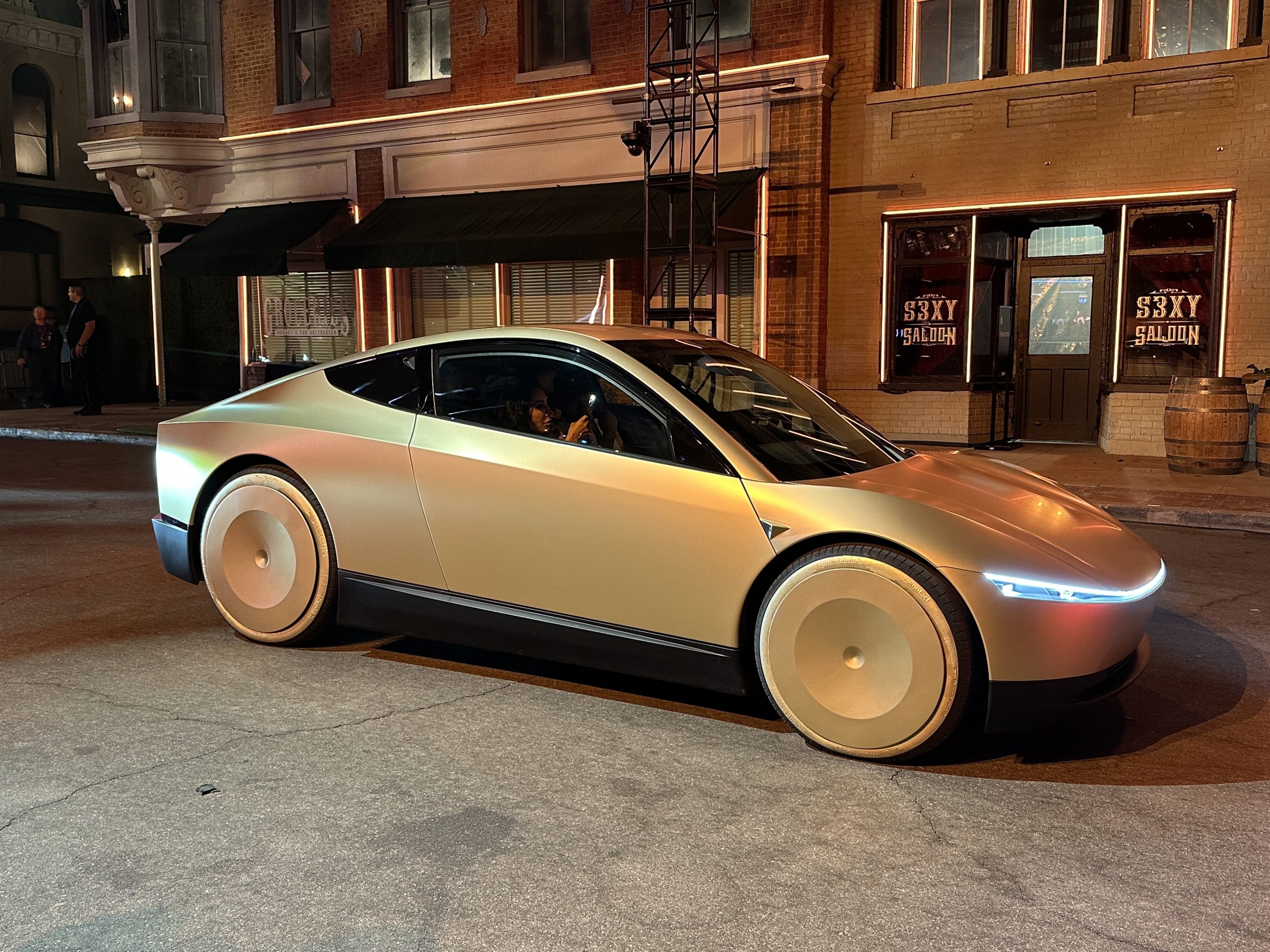
Tesla launched the all-electric, steering wheel-less, and pedal-less Cybercab last night at a quiet and small event in downtown Austin, Texas.
The launch, which marked the beginning of unsupervised ride-hailing for Tesla’s Robotaxi platform with Cybercab, has already caught the attention of the National Highway Traffic Safety Administration (NHTSA) who has more questions.
NHTSA opened an Audit Query (AQ) into the Cybercab’s Federal Motor Vehicle Safety Standards (FMVSS) certification that Tesla gave the vehicle. Manufacturers self-certify vehicles much of the time to avoid excessive regulatory delays.
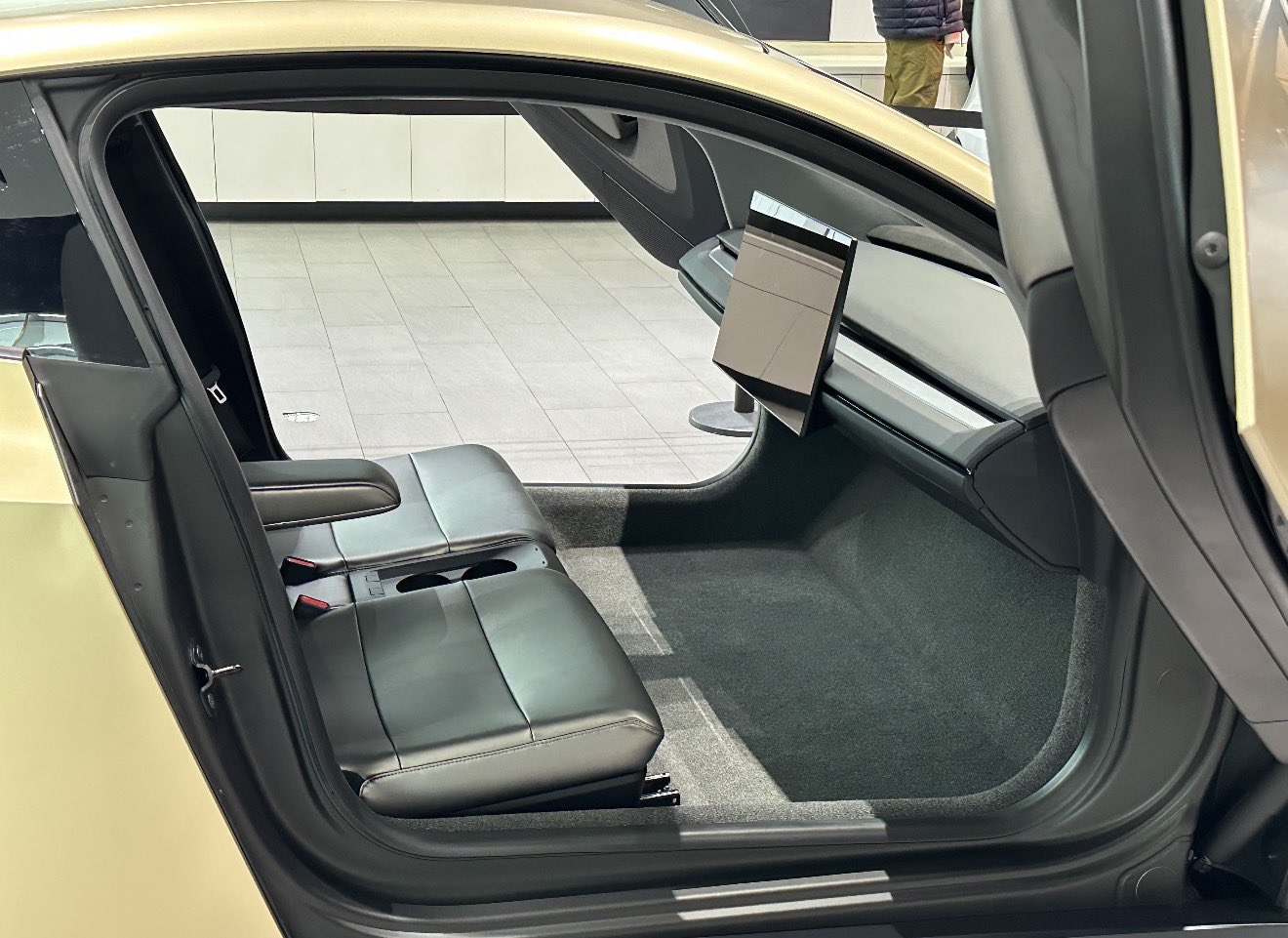
Tesla Cybercab interior, note the lack of steering wheel and pedals. (Credit: @niccruzpatane/X< /a>)
However, the agency needs more information; it said in a summary:
“On September 3, 2026, Tesla began commercial deployment with a small number of its Cybercab vehicles in Austin, Texas. Tesla notified the Agency that it certified those Cybercab vehicles as compliant with all applicable Federal Motor Vehicle Safety Standards (FMVSS). Tesla also notified the Agency that it plans to gradually expand commercial deployment of the Cybercab to include additional vehicles and locations.”
It also went on to state that the Cybercab lacks traditional automotive controls, which is a groundbreaking move. The process is entirely new to the NHTSA, which gives the agency some leverage to put Tesla’s launch under a microscope:
“The vehicles lack permanently attached, conventional manual controls, such as a brake pedal, gas pedal, steering wheel, and mirrors. NHTSA is opening this AQ to examine the process and technical data on which Tesla relied when certifying the Cybercab and related issues. Among other things, NHTSA will consider the extent to which Tesla’s certification depended on determinations that certain FMVSS are inapplicable to the Cybercab.”
Tesla has added 45 Cybercab units to its fleet of Robotaxi-enabled cars in Austin, according to public documents the company submitted to the State of Texas over the past week. Enabling this level of self-driving is something Tesla has worked toward for many years, and now that it is finally here, it seems more than reasonable that regulatory agencies will have some questions.
Many outlets might try to frame this as a negative, but it is truly an agency looking to gain more information about groundbreaking tech that Tesla has been developing for years.
In an effort to keep riders, pedestrians, and property safe, any and all data accumulated from these first days, weeks, and months of rides will likely be shared with the NHTSA to enable broader rollout strategies across the United States and more in the future.

Tesla Robotaxi will be a 24/7 service: here’s when

Tesla Full Self-Driving will now overtake manual driving to avoid disaster


