Lifestyle
When Tesla ideas go mainstream… again

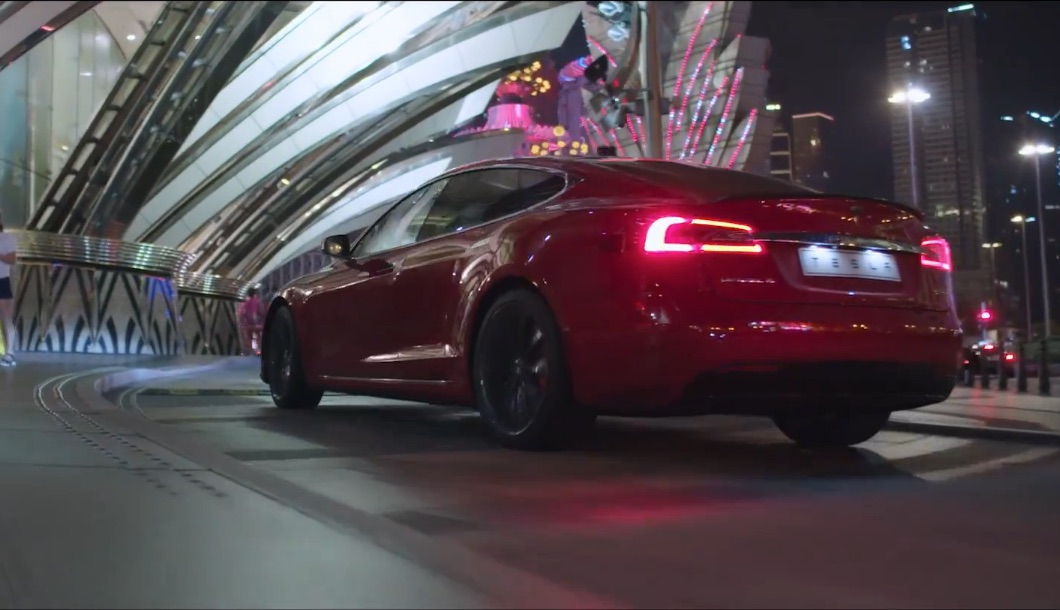
There are times in life where you have a lightbulb moment, so to speak, where suddenly a new way of doing things seems obvious. A month doesn’t seem to go by where Tesla isn’t doing some form of that to the auto industry.
First, it was electric cars. Against all odds, Tesla has proven that electric cars can be beautiful, compelling, practical and fast, all at once.
Next, it was over the air updates. A car that gets better over time? Unfathomable. Same goes for their off-cycle upgrades. A car company that doesn’t work in model years? Absurd!
Then, in what’s probably the least likely of Tesla’s practices to be copied, it was not making parts and service a profit center. While traditional dealers make a majority of their profits from these areas, Tesla chooses not to. Insanity!
Tesla also built out their own refueling infrastructure. Making it free or low cost is just not something anyone ever pictured with regards to the auto industry. Outside of gimmicky “free gas for a year” promotions, it’s just unheard of.
There are many more: the effective use of social media, the refusal to pay for traditional advertising, not paying sales folks on commission, online ordering, built-to-order cars, up front pricing, and many more. All of these items on their own amount to mosquito bites on the bare skin of other automakers. This small, once thought insignificant start up from California had no chance in their deeply entrenched good ole’ boys club. Except, that’s just not true anymore. 250,000 reservation deposits in two days for a new car proves it. Tesla is here to stay and has changed the course of how other companies in the auto industry will have to operate to stay alive.

In fact, I got a surprising email from a major auto insurance company recently. The subject was “About those driver’s-assist features you love.” The content provided some great and practical advice to using them, reminding drivers to provide the brains and not to fall into the trap of say, failing to check your blind spot just because your car has blind spot detection. That advice however, wasn’t what I noticed first. “Tesla did this,” I thought to myself, before I even read the content of the email. Tesla has brought attention to the lightening-fast march of car technology so much so that a major insurer felt compelled to talk to customers about it.
Speaking of insurers, Tesla wants to go there too. Place another checkmark in the column of industries Tesla is stepping on the toes of. They can get in line behind ride-sharing giants, since Tesla has also mentioned ride sharing in their Master Plan Part 2. Which reminds me that the airline industry may also take a hit.
My personal favorite change, however, is the car dealership experience. The current model is obsolete. No matter how well prepared I was, how keen to their tricks, how adamantly against being sold an extended warranty, it still took me three whole hours to help a neighbor buy a car recently. It took at least that long to buy our last Jeep and longer than that to buy my first new car, a Scion. I just want to do some research, narrow down choices, go for a test drive, then buy a darn car. I don’t care if it takes weeks to get, as long as those weeks are spent at home doing my own thing and not sitting in an uncomfortable dealership filled with stale pretzels and fluorescent lighting. I don’t want to haggle. I especially don’t want my intelligence insulted by being shown monthly payment terms that hide the fact that your first offer was actually $9,000 over MSRP. (I’m talking to you, Jeep.) I have a calculator. Actually, I have a printed out spreadsheet that shows my monthly payments for 10 different price points and 3 different interest rates since I know you insist on negotiating in monthly payment terms rather than total purchase price. I’m a dealership’s worst nightmare. But it doesn’t need to be that way. Tesla proves it. Scion claimed they did – pure pricing they called it. I knew wherever I shopped, my 2008 tC was going to cost me exactly $18,400. It still took me all day to buy that car. Buying my Model S was a joy.
And now, a couple hundred thousand of my closest friends are about to experience that same joy. Actually, they may experience something better. Tesla appears to be trying to best themselves by providing a 5-minute delivery model. After all, Tesla doesn’t discriminate when it comes to who they show up when they decide they’ve found a better way, they just do it.


Lifestyle
NTSB findings on fatal Tesla crash tell a very different story
The NTSB confirmed the driver, not Tesla’s FSD, caused the fatal Texas house crash.

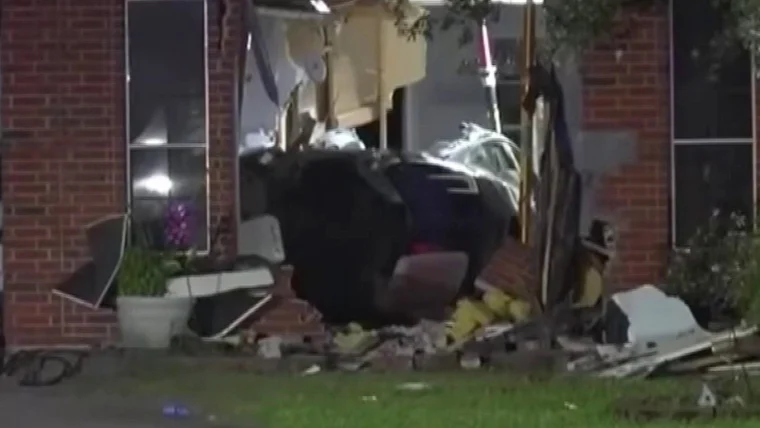
The National Transportation Safety Board released preliminary findings Wednesday confirming that a Tesla driver, not the vehicle’s software, caused a fatal crash in Katy, Texas in June. The driver, 44-year-old Michael Butler, had engaged Full Self-Driving Supervised mode on Rose Hollow Lane, a residential street with a 30 mph speed limit, before manually overriding the system by pressing the accelerator pedal all the way to 100%. Data recovered from the 2025 Tesla Model 3 showed the vehicle was traveling over 70 miles per hour when it struck a home and killed 76-year-old Martha Avila, who was inside. Weather was clear, the road was dry, and it was daylight.
Texas man charged in fatal Tesla crash where he blamed Autopilot
Butler told authorities he had passed out at the wheel. But security camera footage obtained by the NTSB told a different story, and showed the car accelerating through an intersection before leaving the road entirely. Police also found that Butler’s phone had Google searches including the terms “Tesla FSD not aggressive enough 2026” and “Tesla FSD too timid,” raising serious questions about how he was using the system before the crash. Butler has since been charged with manslaughter. The victim’s family has filed a lawsuit against both Butler and Tesla, alleging negligence.
The NTSB findings aligned directly with what Tesla VP of AI Software Ashok Elluswamy had already stated publicly on X in the weeks after the crash, writing that “the driver manually overrode self-driving by pressing the accelerator all the way to 100%.” The data confirmed his account.
Yup. In this case, the driver manually overrode self-driving by pressing the accelerator all the way to 100% of the accel pedal in this residential area. They reached a speed of 73 mph during the crash, and had the accelerator pressed even after the crash.
— Ashok Elluswamy (@aelluswamy) June 22, 2026
Elon Musk
Elon Musk’s Texas ranch to showcase the lifelong work that changed the world
Elon Musk is building a product gallery at his Texas ranch spanning his lifelong inventions.
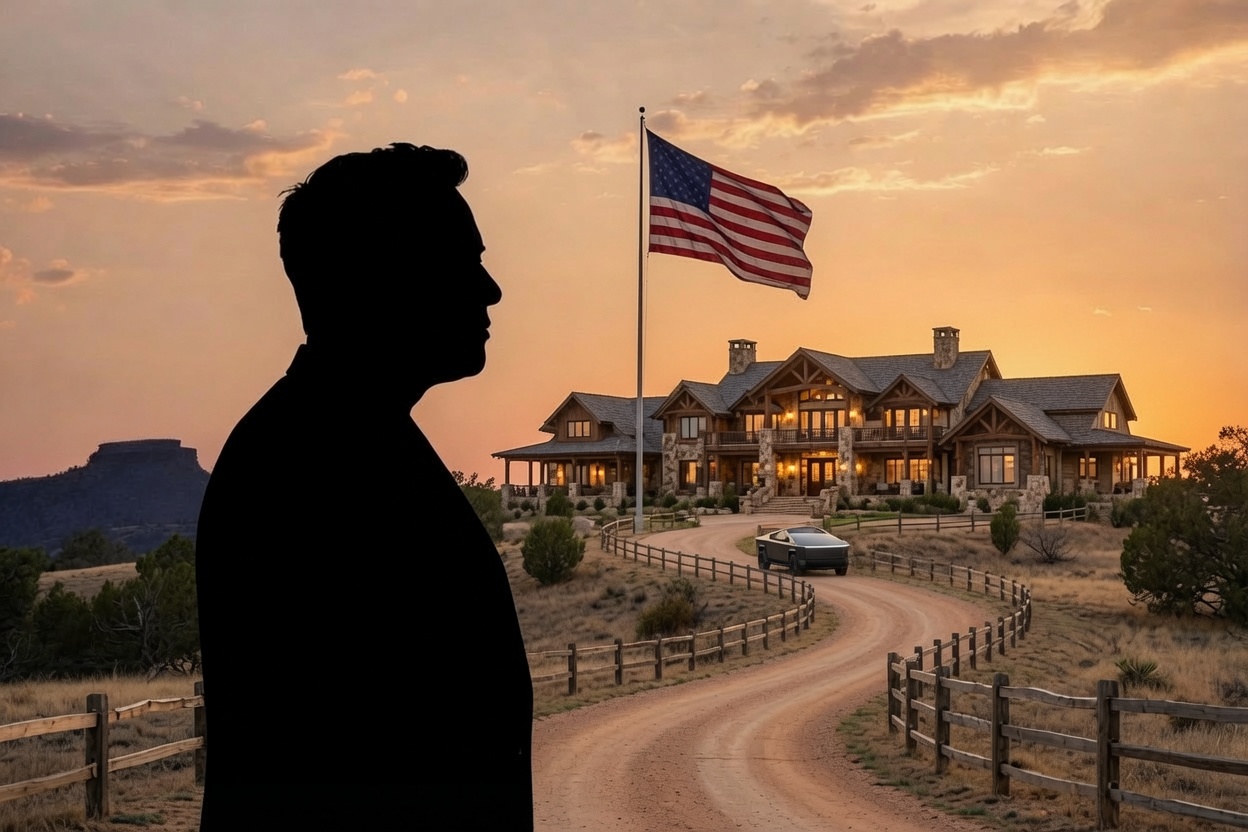
Elon Musk took to X earlier today, noting “Am putting together a product gallery at my ranch in Texas.” in response to a resurfaced famous quote from JPMorgan CEO Jamie Dimon’s wherein he draw parallels of the Tesla CEO to legendary physicist Albert Einstein.
Dimon made the remark at the World Economic Forum in Davos, Switzerland back in January 2025, telling CNBC at the time, “SpaceX, Tesla, Neuralink, I mean, the guy is our Einstein.” The remark seemingly ended a long-time feud between the two high profile execs.
While details are thin about the exact location of Elon Musk’s Texas ranch and any pending projects that would serve as a gallery and homage to his portfolio of revolutionary product inventions spanning from 1984 to 2025, land acquisition records point to roughly a location of several thousand acres in Bastrop County, east of Austin near the Colorado River and held through an LLC called Horse Ranch LLC that’s managed by Musk’s longtime personal friend and family wealth manager Jared Birchall. Birchall also serves as the CEO of Neuralink.
Tesla’s “ecological paradise” in Giga Texas may be larger than expected
The broader Bastrop County footprint surrounding the ranch has grown significantly. Entities tied to Musk have accumulated approximately 2,000 acres in Bastrop County as of mid-2026, up from 700 acres earlier in the year, with possibly as much as 6,000 acres acquired in total across Bastrop and Travis counties based on deed records.
No completion date for the gallery has been announced and Musk has not confirmed whether it will be open to the public. As Teslarati has reported, SpaceX just completed the largest IPO in history raising $75 billion, a milestone that makes this particular moment in Musk’s career a natural inflection point for looking back at what he has built through the years.
Am putting together a product gallery at my ranch in Texas https://t.co/xQf5FRy4uz
— Elon Musk (@elonmusk) July 15, 2026
Starting with Blastar, a simple space shooter game Musk coded at 12 years old and sold to a South African magazine for $500. From there the timeline moves through a commercial career that started with Zip2 in 1995, a city guide software company sold to Compaq for roughly $300 million in 1999. That was followed by X.com in 1999, which merged with Confinity to become PayPal, acquired by eBay in 2002 for $1.5 billion. SpaceX came in 2002, Tesla in 2003, SolarCity in 2006, the Supercharger network in 2012, Neuralink in 2016, The Boring Company in 2016, OpenAI co-founded in 2015, X acquired in 2022, xAI in 2023, Optimus in 2024, the Cybercab in 2026, and most recently SpaceXAI following the SpaceX and xAI merger. The gallery will also likely include items that blur the line between product and cultural artifact, among them The Boring Company’s Not-a-Flamethrower from 2018, Tesla Short Shorts from 2020, and Burnt Hair perfume released under X in 2022.
Lifestyle
Tesla makes the cut on California’s newest EV Rebate program
California just signed a $270 million EV rebate into law and it starts this summer.
California Governor Gavin Newsom signed SB 168 into law on Monday, July 13, 2026, creating a $270 million EV rebate program that delivers money directly at the dealership rather than as a tax credit applied months later. The program, called MyFirstEV, is funded equally by California’s state budget and participating automakers, with each contributing $135.5 million to make the math work.
The timing is directly tied to the loss of federal support when the $7,500 federal EV tax credit ended, removing the most significant consumer incentive that had driven EV adoption in the U.S. California, which accounts for roughly one-third of all EVs sold nationally, moved to fill that gap with a state-level replacement.
The rebate structure is straightforward. First-time EV buyers can receive $3,500 off any new battery-electric vehicle with an MSRP up to $50,000. Used EVs priced at $25,000 or below qualify for a $1,750 rebate. The credit is applied at the point of sale, which removes the friction of the old federal system where buyers had to wait for tax season to see the benefit. The program goes live later this summer, with the California Air Resources Board expected to release full participation details next month.
California hits Tesla Cybercab and Robotaxi driverless cars with new law
For Tesla buyers, the implications are mixed. The Tesla Model 3 RWD at $42,490 and the Model 3 Long Range at $47,490 both fall under the $50,000 cap and would qualify for the full $3,500 rebate for first-time buyers. The Model Y, which starts at $44,990 after Tesla’s recent price adjustment, also qualifies. The Model X, Model S, and Cybertruck all exceed the cap and receive no benefit. As Teslarati has reported, the program also includes a carve-out exempting California-based automakers like Rivian and Lucid from the price cap entirely, a provision that puts Tesla at a disadvantage since it relocated its headquarters to Texas in 2021.
Other qualifying vehicles include the Chevrolet Equinox EV, Ford Mustang Mach-E, Hyundai Ioniq 5, Kia EV6, and Volkswagen ID.4.

NTSB findings on fatal Tesla crash tell a very different story

Elon Musk’s Texas ranch to showcase the lifelong work that changed the world


