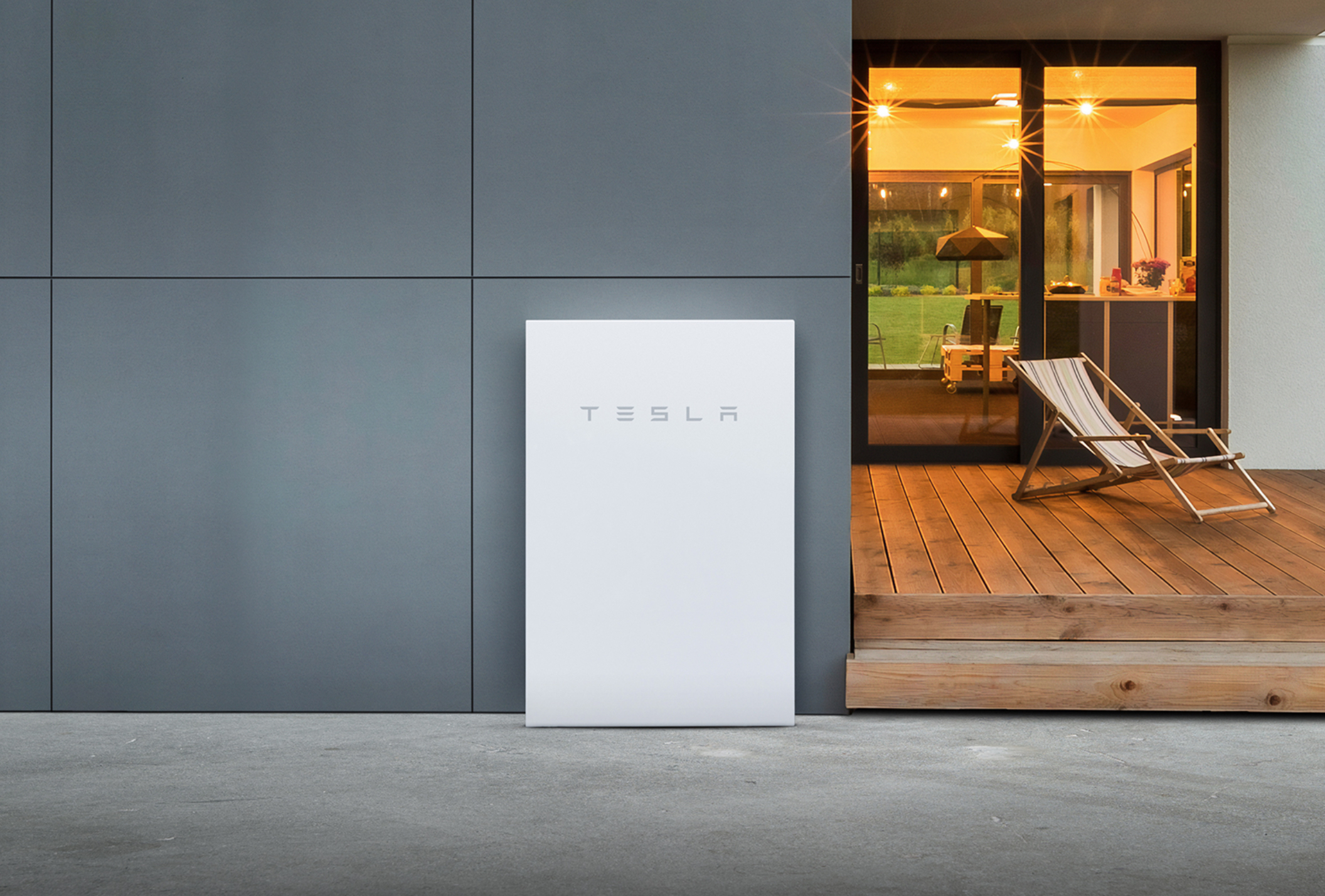

Tesla has shared its latest advertisement for its energy products and ecosystem, this time highlighting one owner in Australia who reportedly saved 94% on his electricity bill using one of the company’s electric vehicles (EVs) in tandem with Powerwalls.
On Tuesday, the Tesla Energy account on X shared a brief advertisement video sharing a customer experience from Nathan, a Brisbane, Australia-based EV and Powerwall owner and owner of a ride-sharing business. The video notes that Nathan drives over 93,000 km (~57,788 miles) per year in multiple Tesla vehicles, including a Model 3, along with using solar panels and a Powerwall to power both his home and business.
The video claims that, within a month of installing multiple Powerwall home batteries, Nathan saved 94 percent on his electricity bill. It also notes that he regularly charges his vehicles with excess solar energy using Tesla’s Charge on Solar feature, showing multiple shots of the mobile app and energy ecosystem features offered by the company.
You can see the full advertisement below, as posted on X.
Nathan drives over 93,000km a year in his Tesla, within a month of installing Powerwalls he saved 94% on his electricity bill pic.twitter.com/TEn0jcJS0k
— Tesla Energy (@teslaenergy) July 9, 2024
Tesla has shared other advertisements for its energy products in the past, including one shared in March that highlights the latest Powerwall’s ability to be submerged in over two feet of water. While the video shows Tesla’s Powerwall 2 units, the company also launched its next-generation Powerwall 3 in select markets this year.
Increased advertising from Tesla began trickling out last year, after CEO Elon Musk told shareholders that the company would start experimenting with some small-scale ad campaigns. Although Musk had previously been opposed to advertising, many investors have argued in the past few years that ads may be necessary to help educate the public about Tesla’s EVs and energy products.
Despite sweeping layoffs in April that affected what seemed to be much of the advertising team, Tesla has continued to roll out new ads over the last couple of months.
While the vast majority of Tesla’s “advertisements” are simply posted to the company’s social media accounts, like the one above, the company has also started sharing dedicated ads on other platforms. For example, Tesla launched YouTube ads last November, and later followed up with some traditional ads on X in February.
The company has also started advertising on Cars.com this year, and it deployed a unique “Mobile Gallery” advertisement in New York and Florida, which included a Cybertruck driving around and towing a trailer hauling a Model Y in a glass case, with the glass reading, “The Best-Selling Car in the World is Made in America.”
What are your thoughts? Let me know at zach@teslarati.com, find me on X at @zacharyvisconti, or send us tips at tips@teslarati.com.


Lifestyle
Tesla teases “Halloween Mode” update with Optimus rising from a graveyard
Tesla’s Halloween teaser hides a covered vehicle and an Optimus hand rising from the ground.

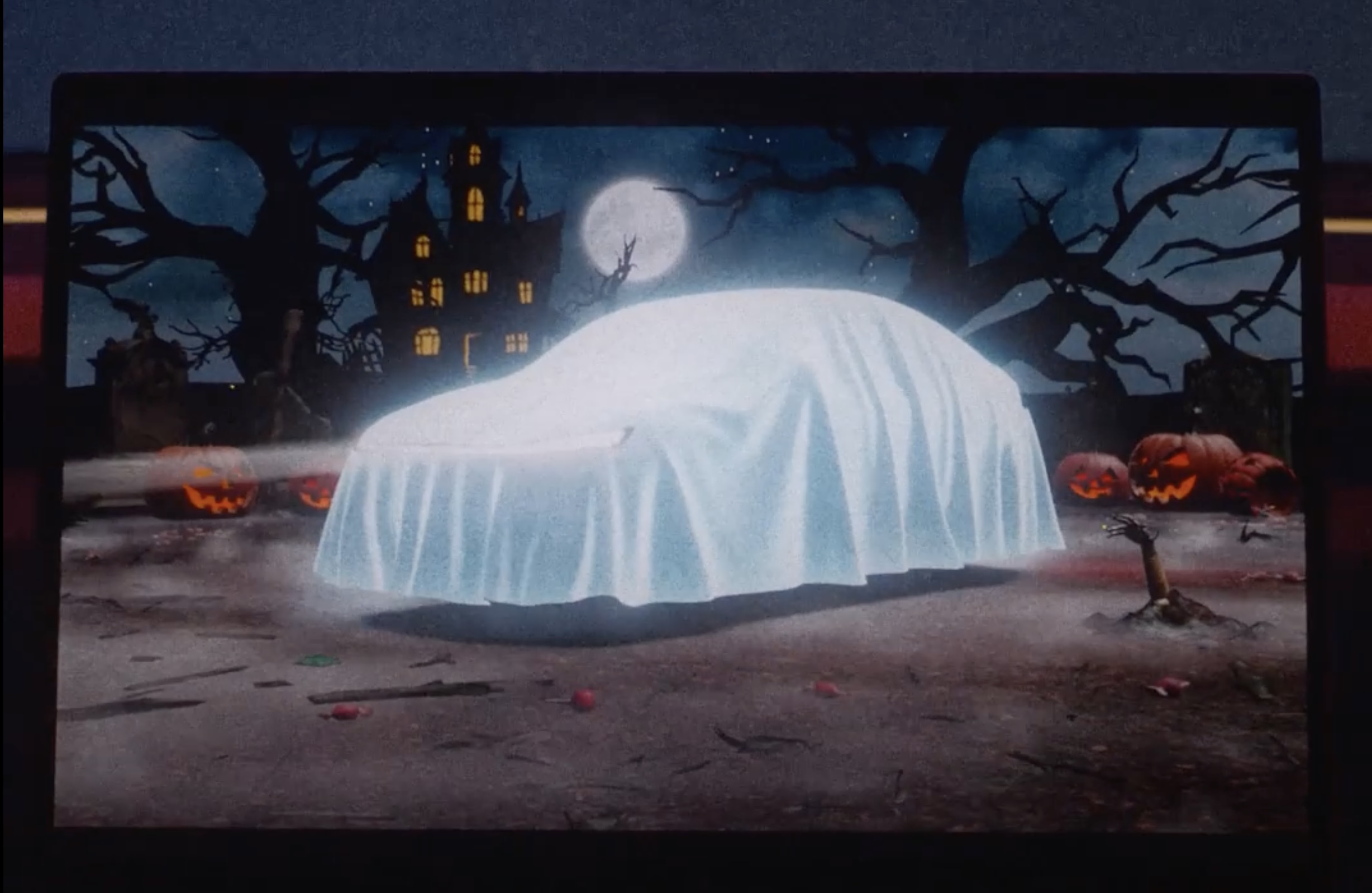
Tesla has started teasing a Halloween software update for its vehicles, with a short clip on X that reads, “Halloween is coming.” The clip opens on a glowing pumpkin before pulling back to the car’s center touchscreen, where the usual parked visualization has been replaced by a graveyard scene, and the vehicle draped with a white sheet so it reads as a cartoon ghost.
Halloween is coming pic.twitter.com/lM3ASUeOqX
— Tesla (@Tesla) October 1, 2026
The second detail is a robotic hand clawing its way out of the dirt like a zombie, which looks to be the hand of Tesla’s latest Optimus V3 humanoid robot. While Tesla still has not formally shown Optimus Gen 3 walking around in service, renders pulled from Tesla’s Android app last month gave the clearest look yet, including far more refined hands that Tesla has said carry 22 degrees of freedom. The hand has been the hardest part of the program. Musk has called it the majority of the robot’s engineering difficulty, and Tesla’s patents describe a design driven by tendons with the actuators moved into the forearm.
Tesla Optimus V3 hand and arm details revealed in new patents
Optimus also has a Halloween track record. Last October the robot handed out candy in Times Square, and a costumed “zombie” Optimus shuffled around the Tesla Diner in Los Angeles on Halloween night.
On the software side, Tesla’s 2025 Holiday Update expanded Santa Mode with a Santa sleigh, snowmen, snow effects, and a festive lock chime, so it wouldn’t be too far fetched if we saw something similar but themed for a Halloween Mode.

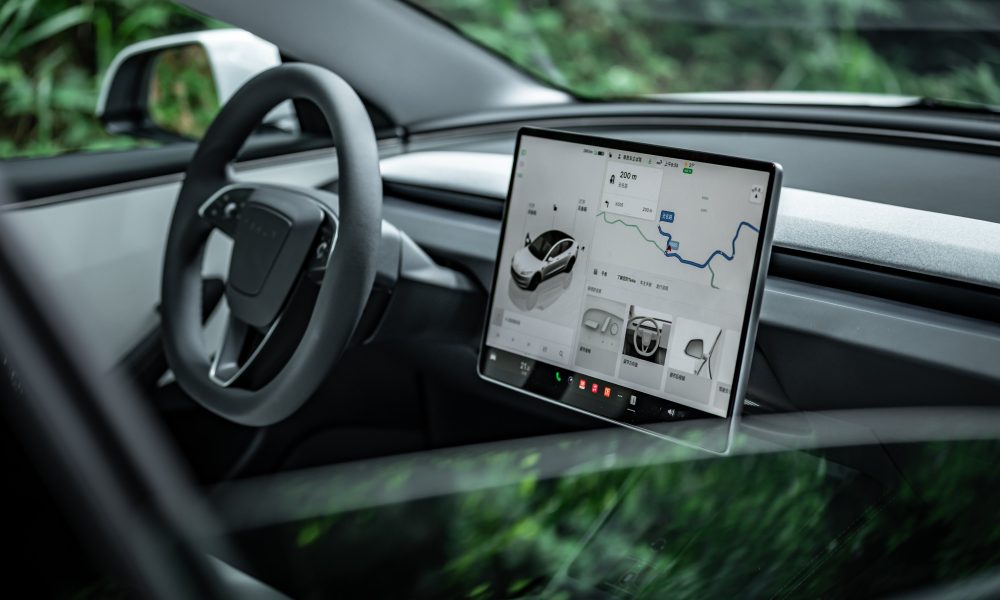
Tesla Full Self-Driving is set to receive improvements to address its two biggest issues, according to a company engineer.
Director of Engineering at Tesla AI, Phil Duan, revealed in a post on X that improvements to both pothole avoidance and navigation “are coming,’ something we have heard many times in the past. However, there are a few things that seem to hint that things might be different this time around.
Improvements on both are coming.
— Phil Duan (@pduan) October 1, 2026
Pothole avoidance, navigation, speed control, and left lane camping are some of the most prevalent and frequently mentioned shortcomings of the Full Self-Driving suite. These are a few of the biggest issues that have kept Tesla Full Self-Driving as a Supervised suite, meaning drivers must remain attentive during operation.
Pothole Avoidance
Pothole avoidance was first mentioned as an “Upcoming Improvement” with the Tesla Full Self-Driving v14.3 update back in early April of this year. It was listed alongside “Expand reasoning to all behaviors beyond destination handling.”
It’s been six months since we first saw pothole avoidance explicitly mentioned, and it has not moved beyond that and joined the main release notes yet.
Tesla has not shed any light on why pothole avoidance has been such an issue for it to solve, but it also has issues identifying large bumps much of the time, so its modeling of sudden changes in road conditions is likely pretty weak at this particular point. I’ve had more issues with large bumps than potholes, personally, but both are issues that need to be resolved.
This is that big bounce that I mentioned in the quoted post.
It’s just a tad too drastic to take at the speed FSD wants to go over it. You can see me quickly swipe down into Sloth, but I intervened. https://t.co/K20PK9ysBg pic.twitter.com/81Oc82ZJcZ
— TESLARATI (@Teslarati) August 2, 2026
It makes sense that things might be pretty close to being released to the public, as we are going on such an extensive period of time between it being mentioned and it actually being deployed.
Navigation
Navigation is likely the most painful part of using Full Self-Driving, as it routinely takes strange routes, has trouble with local rules (like Except Right Turn Stop Signs in Pennsylvania), and sometimes does not realize that maneuvers it is suggesting are against the law. Turning out of my neighborhood, you cannot turn left, yet my Model Y still suggests it roughly 70 percent of the time when I’m leaving.
However, Tesla might be close to a breakthrough on this. With the Summer Update, Tesla added “Preferred Routes” alongside “Automatic Navigation.”
Preferred Routes prioritized roads that the driver had actually taken before, instead of always defaulting to what the vehicle believes is the most efficient path. This has already solved many of my issues. Formerly, I would turn off the Online Routing setting, and that would eliminate most of my complaints with routing, but then you lose out later on the Live Traffic Visualization.
Tesla’s Navigation has improved tremendously thanks to the Preferred Routes release with the Summer Update, but it still could use some polishing, as it still suggests strange routes from time to time, and it also has a lot of issues getting out of a parking lot. I find that those truly confuse FSD sometimes.
News
SpaceX’s midnight spy satellite launch quietly set a new record
Falcon Heavy launched its first NRO mission while SpaceX landed four boosters in one day.
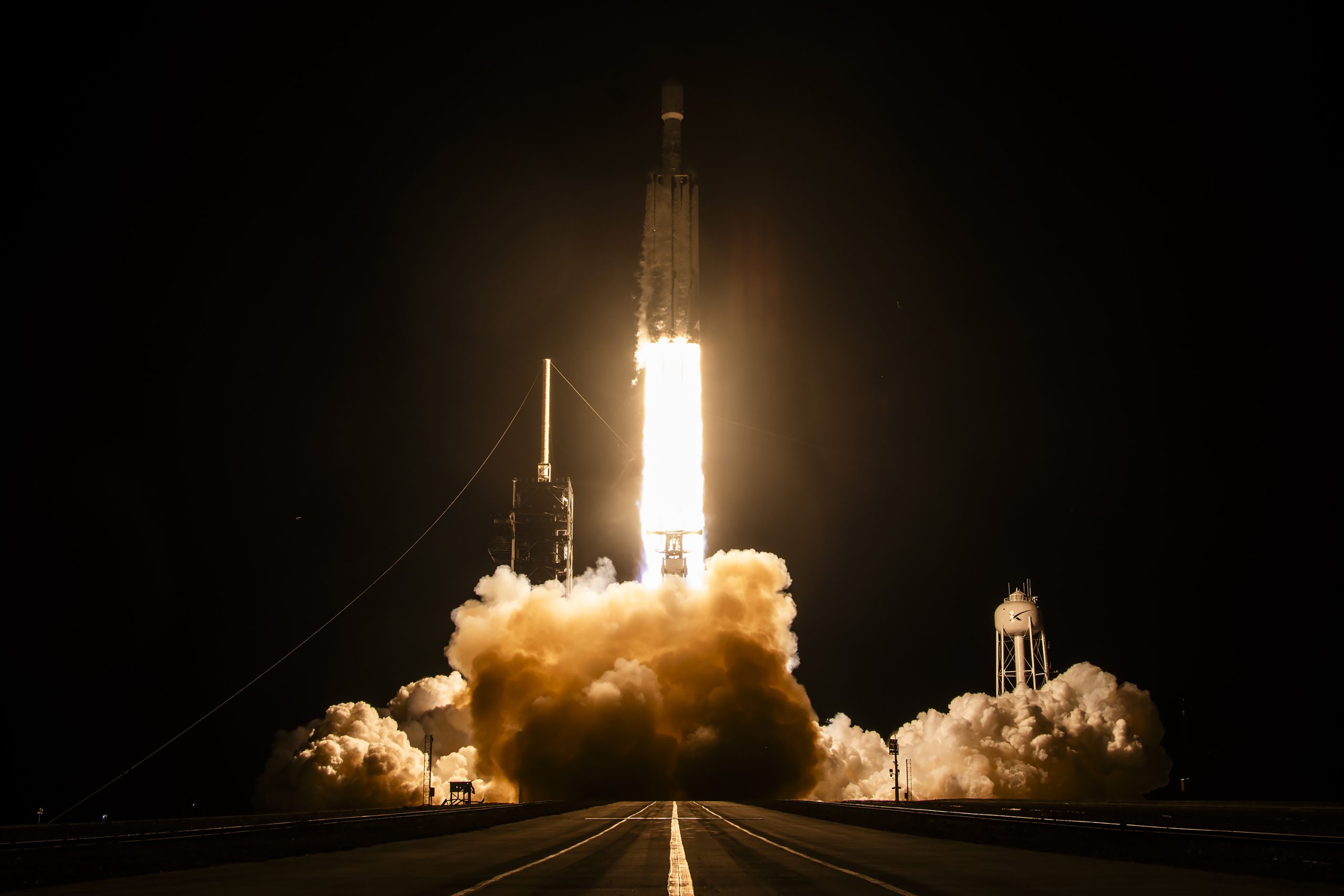
SpaceX closed out one of its busiest days ever with a midnight Falcon Heavy launch from Florida, and the rocket’s two side boosters came home to finish off a landing record the company had never set before.
Falcon Heavy lifted off from Launch Complex 39A at NASA’s Kennedy Space Center at 11:54 p.m. ET Thursday carrying NROL-97, a classified payload for the National Reconnaissance Office. It was the first time the NRO has flown on Falcon Heavy after 22 missions on Falcon 9, and the first NRO mission bought through the National Security Space Launch Phase 3 Lane 2 contract awarded in 2025, according to Spaceflight Now.
Falcon Heavy lifts off from pad 39A in Florida for the 14th time! pic.twitter.com/uuZLKNTdD7
— SpaceX (@SpaceX) October 2, 2026
Roughly eight minutes after liftoff, side boosters B1104 and B1072 touched down at Landing Zones 1 and 2 at Cape Canaveral Space Force Station, setting off double sonic booms across Brevard County. B1104 was flying for the second time and B1072 for the fourth. Both last flew on August 30 on NASA’s Nancy Grace Roman Space Telescope, making NROL-97 the quickest turnaround between Falcon Heavy missions to date. The brand new center core, B1106, was expended in the Atlantic so the payload could reach its high energy orbit, and SpaceX’s mission page noted the fairing had previously flown on the NROL-95 mission in July.
The two landings capped a record for SpaceX. Earlier Thursday, Falcon 9 booster B1101 returned to Landing Zone 40 after sending the Crew-13 astronauts to the International Space Station, and another Falcon 9 launched the Transporter-18 rideshare with 130 payloads from Vandenberg Space Force Base in California. Spaceflight Now reported it was the first time SpaceX has landed four boosters in a single day, wrapping up the triple header Teslarati previewed on Wednesday.
Falcon Heavy’s side boosters land on LZ-1 and LZ-2 pic.twitter.com/dBPcNeggFx
— SpaceX (@SpaceX) October 2, 2026
The mission also brought Landing Zone 1 back for what may be its final landing. SpaceX first landed an orbital class booster there in December 2015, but its lease on the former Launch Complex 13 site ended in 2025 as the company moved Florida landings to new pads at its own launch complexes. With LZ-40 already holding the Crew-13 booster, SpaceX brought LZ-1 back into service for one more night. Launch tracker Next Spaceflight listed NROL-97 as the final expected landing at the site.
NROL-97 adds to a fast growing stack of national security work for SpaceX. The company has flown four Space Force missions from Vandenberg since mid August, several believed to carry Starshield satellites, pushing its Pentagon contract total for 2026 past $8 billion. Elon Musk was also named this week to help lead the Pentagon’s Project Meridian study on the future of warfare.
The Florida doubleheader stood out for another reason. The Space Coast saw only one launch in all of September as SpaceX shifts more of its East Coast infrastructure toward Starship, which reached orbit for the first time on Flight 14 just three days earlier.

Tesla teases “Halloween Mode” update with Optimus rising from a graveyard

Tesla says fixes on Full Self-Driving’s two biggest issues are on the way


