Tesla Model S
Tesla Model S Upcoming Hardware and Software Upgrades

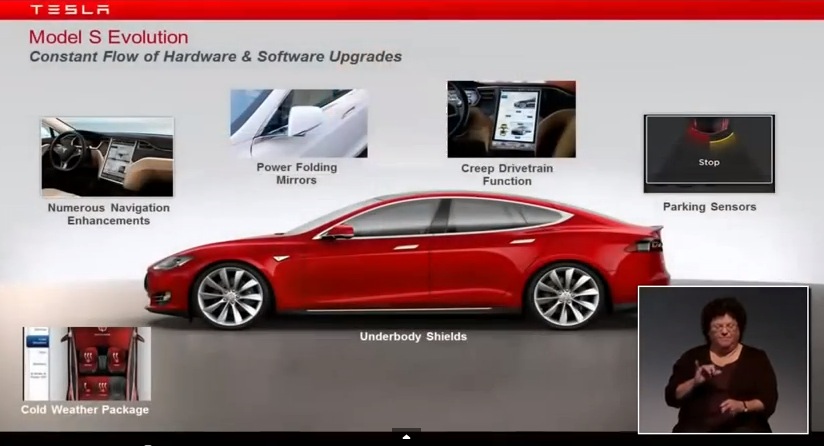
I finally found a chunk of time to sit down and watch Tesla’s 2014 annual shareholder meeting. There’s a lot of information scattered throughout the video, but for this write up I just wanted focus on the hardware and software features that were mentioned by Elon in the video. The features section is fairly short and starts at the 13:07 minute mark and runs through to 15:49.
Personalized Software
Elon said that you’ll be able to personalize the car a lot more from from something as little as naming your car within the Tesla portal and app to more advanced personalization through learning behavior. Not a lot of detail was provided around the personalized learning, but he did mention calendar integration and the ability to factor in traffic data and commute times to your scheduled calendar appointments. This sort of sounds like what you get from an iOS or Android device when taking a look at your day view calendar.
Community Based Traffic
Traffic optimized directions, re-routing around traffic, alerts for upcoming traffic are also on its way. The intelligence for this is from both a collaborative network of other Model S cars on the road as well as external data sources (he said 20 million other data sources). The Model S network data will be given preference/priority over the other data sources, but it won’t be the only source of data. I sincerely hope that data sources include Google traffic. He compared the collaborative network between the Model S to Waze. There may be possibilities that would allow Model S drivers to interact with one another and collaborate on reporting speed traps, road closures, etc. The traffic re-routing will be a great addition but a more interactive environment between Model S’ really opens up some interesting possibilities for the future.
One flier that Elon threw out at the very end (~1h10min mark) is that he’s confident that within a year you’ll be able to go from highway onramp to highway offramp without touching any controls. Their dates aren’t very believable and its not clear if he’s just talking about the possibility of doing this (Google already can do this sort of thing) or if he meant this would be available in a Tesla product. Either way it will be an exciting next step in the driving experience!
Tesla Model S Seat Option
 It should be no surprise to most Tesla owners that Tesla Motors does not have model years for their cars. Instead they roll out changes as they’re needed. Elon cited several cases of improvements made to the seats and undercarriage (Titanium). In addition to that, he mentioned several new features that were introduced like power folding mirrors and parking sensors. The only real “hardware” upgrade that he made mention of is coming later this year as another seat option. It sounds like the current seats will remain standard and this new seat will be an upgrade option that can be retrofitted into the existing Model S price. I’d expect the new seats to be a significant upgrade, but I’m quite happy with the current ones I have.
Summary
There wasn’t a lot of breaking news about features within this shareholder meeting but there were some good clarifications. The collaborative network part between Model S’ was the most exciting and something I hadn’t heard of before. I had assumed they would just use Google traffic. The other items like upgraded seats and a more personalized experience are also interesting.
In terms of a delivery timeline, Elon said it was “rolling out fairly soon” but given their poor history on date estimations, it’s anyones guess when this will be.


Elon Musk
Trump’s invite for Elon just reshuffled Tesla’s big Signature Delivery Event
Tesla rescheduled its final Model S farewell to May 20 after Musk joined Trump in China.

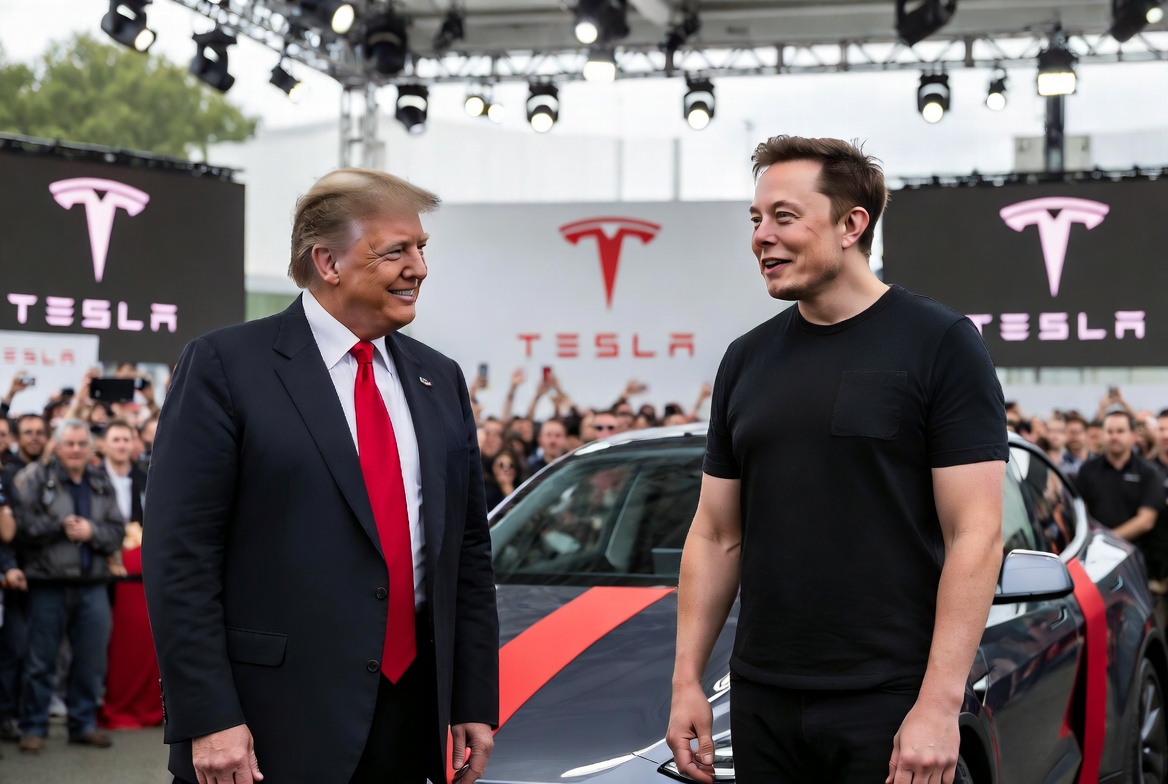
Tesla has rescheduled its Model S and Model X Signature Edition delivery event to Wednesday, May 20, 2026, after abruptly calling off the original May 12 celebration. The event will take place at Tesla’s factory at 45500 Fremont Boulevard in Fremont, California, the same location where the Model S first rolled off the line in 2012. Invitees received a follow-up email asking them to reconfirm attendance and download a new QR code ticket, with Tesla noting that all travel and accommodation expenses remain the buyer’s responsibility.
The reason behind the original cancellation came into focus the same day it was announced. President Trump invited Elon Musk, Apple’s Tim Cook, BlackRock’s Larry Fink, Boeing’s Kelly Ortberg, and executives from Goldman Sachs, Blackstone, Citigroup, and Meta to join his trip to China this week for a summit with President Xi Jinping. The agenda covers trade, artificial intelligence, export controls, Taiwan, and the Iran war, following weeks of escalating friction between Washington and Beijing over AI technology, sanctions, and rare earth exports. Trump wrote on Truth Social, “I am very much looking forward to my trip to China, an amazing Country, with a Leader, President Xi, respected by all.”
Tesla launches 200mph Model S “Gold” Signature in invite-only purchase
The vehicles at the center of all this are the last Model S and Model X units Tesla will ever build. Priced at $159,420 each, the 250 Model S and 100 Model X Signature Edition units come finished in Garnet Red with a one-year no-resale agreement, giving Tesla right of first refusal if the owner decides to sell. As Teslarati reported, the Model S defined Tesla’s early identity as a serious luxury automaker, and the Fremont factory line that built it is now being converted to manufacture Optimus humanoid robots.
Musk’s inclusion in the China delegation drew attention given his very public relationship with Trump, and the invitation signals the two have moved past and past grievances. Trump originally brought Musk on to lead the Department of Government Efficiency following his inauguration, and despite a sharp public dispute in mid-2025, the two have appeared together repeatedly in recent months. A seat on the China trip, the most diplomatically consequential visit of Trump’s current term, puts Musk back at the table on U.S. economic policy at a moment when Tesla’s China revenue remains one of the company’s most important financial pillars.
Elon Musk
Tesla confirmed HW3 can’t do Unsupervised FSD but there’s more to the story
Tesla confirmed HW3 vehicles cannot run unsupervised FSD, replacing its free upgrade promise with a discounted trade-in.
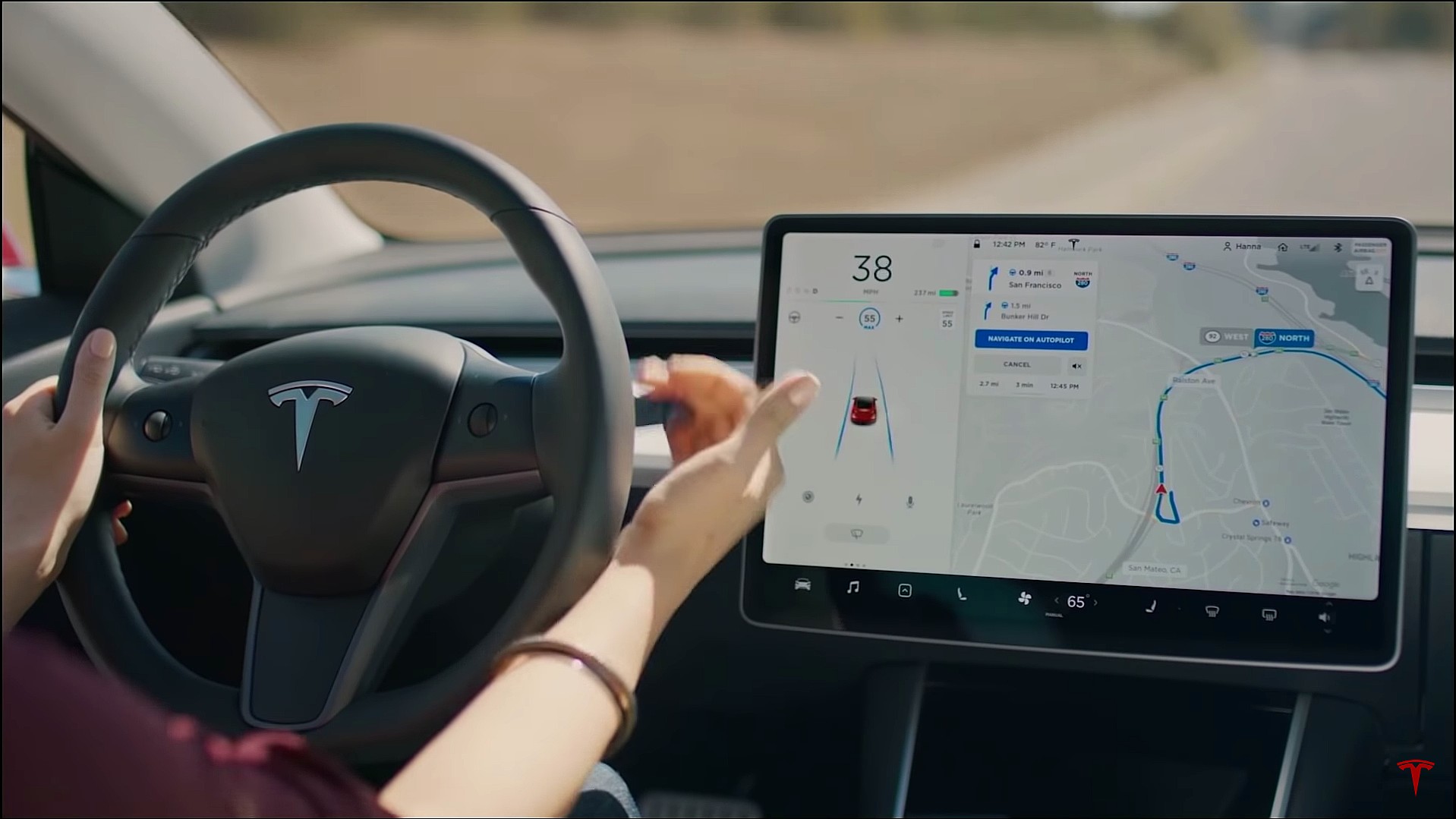
Tesla has officially confirmed that early vehicles with its Autopilot Hardware 3 (HW3) will not be capable of unsupervised Full Self-Driving, while extending a path forward for legacy owners through a discounted trade-in program. The announcement came by way of Elon Musk in today’s Tesla Q1 2026 earnings call.
🚨 Our LIVE updates on the Tesla Earnings Call will take place here in a thread 🧵
Follow along below: pic.twitter.com/hzJeBitzJU
— TESLARATI (@Teslarati) April 22, 2026
The history here matters. HW3 launched in April 2019, and Tesla sold Full Self-Driving packages to owners on the understanding that the hardware was sufficient for full autonomy. Some owners paid between $8,000 and $15,000 for FSD during that period. For years, as FSD’s AI models grew more demanding, HW3 vehicles fell progressively further behind, eventually landing on FSD v12.6 in January 2025 while AI4 vehicles moved to v13 and then v14. When Musk acknowledged in January 2025 that HW3 simply could not reach unsupervised operation, and alluded to a difficult hardware retrofit.
The near-term offering is more concrete. Tesla’s head of Autopilot Ashok Elluswamy confirmed on today’s call that a V14-lite will be coming to HW3 vehicles in late June, bringing all the V14 features currently running on AI4 hardware. That is a meaningful software update for owners who have been frozen at v12.6 for over a year, and it represents genuine effort to keep older hardware relevant. Unsupervised FSD for vehicles is now targeted for Q4 2026 at the earliest, with Musk describing it as a gradual, geography-limited rollout.
For HW3 owners, the over-the-air V14-lite update is welcomed, and the discounted trade-in path at least acknowledges an old obligation. What happens next with the trade-in pricing will define how this chapter ultimately gets written. If Tesla prices the hardware path fairly, acknowledges what early adopters are owed, and delivers V14-lite on the June timeline it committed to today, it has a real opportunity to convert one of the longest-running sore subjects among early adopters into a loyalty story.
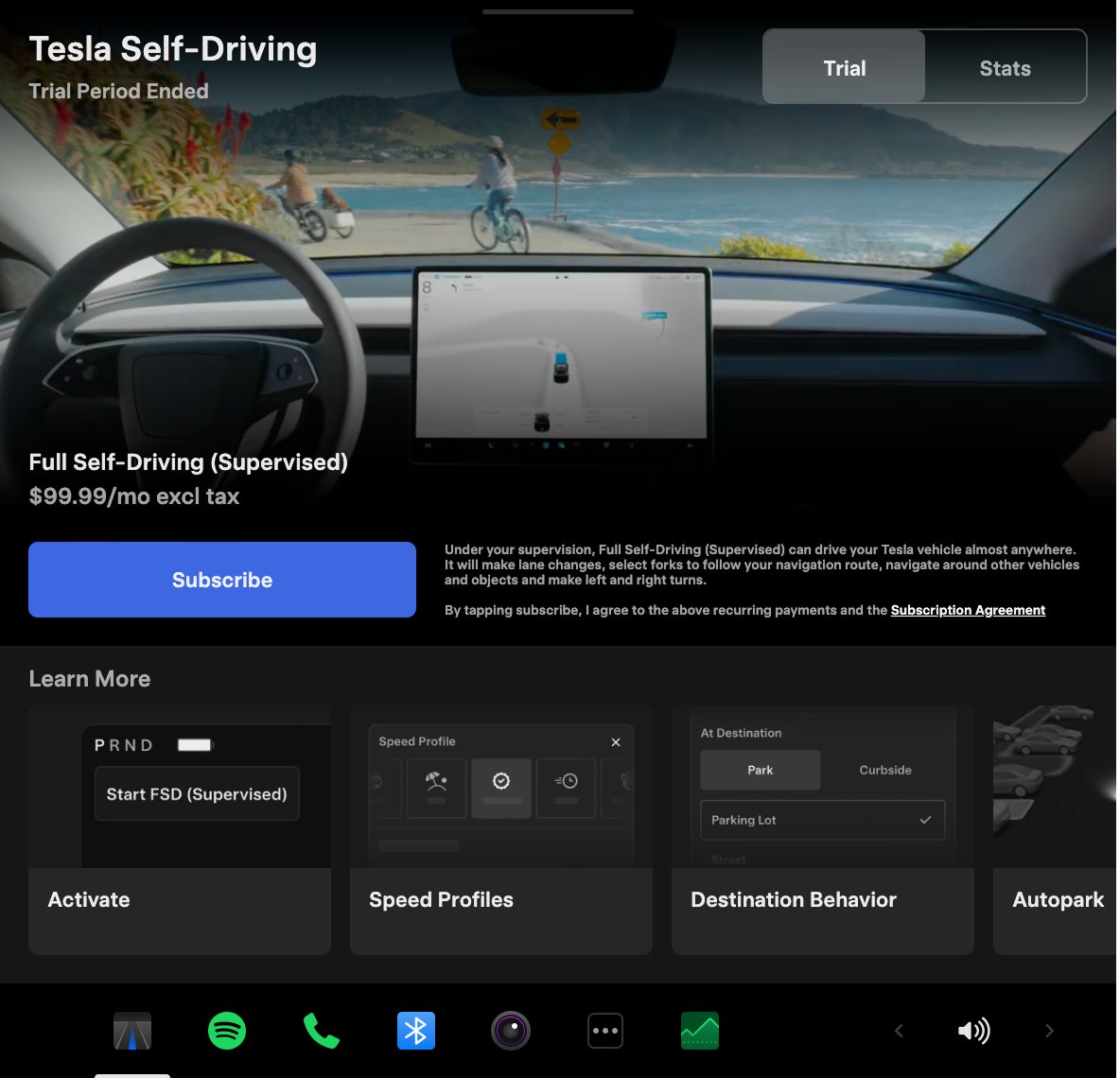
Tesla announced its Spring 2026 software update, and it’s the most feature-dense seasonal release the company has put out. The update covers twelve named changes spanning FSD, voice AI, safety lighting, dashcam storage, and pet display customization, among other things.
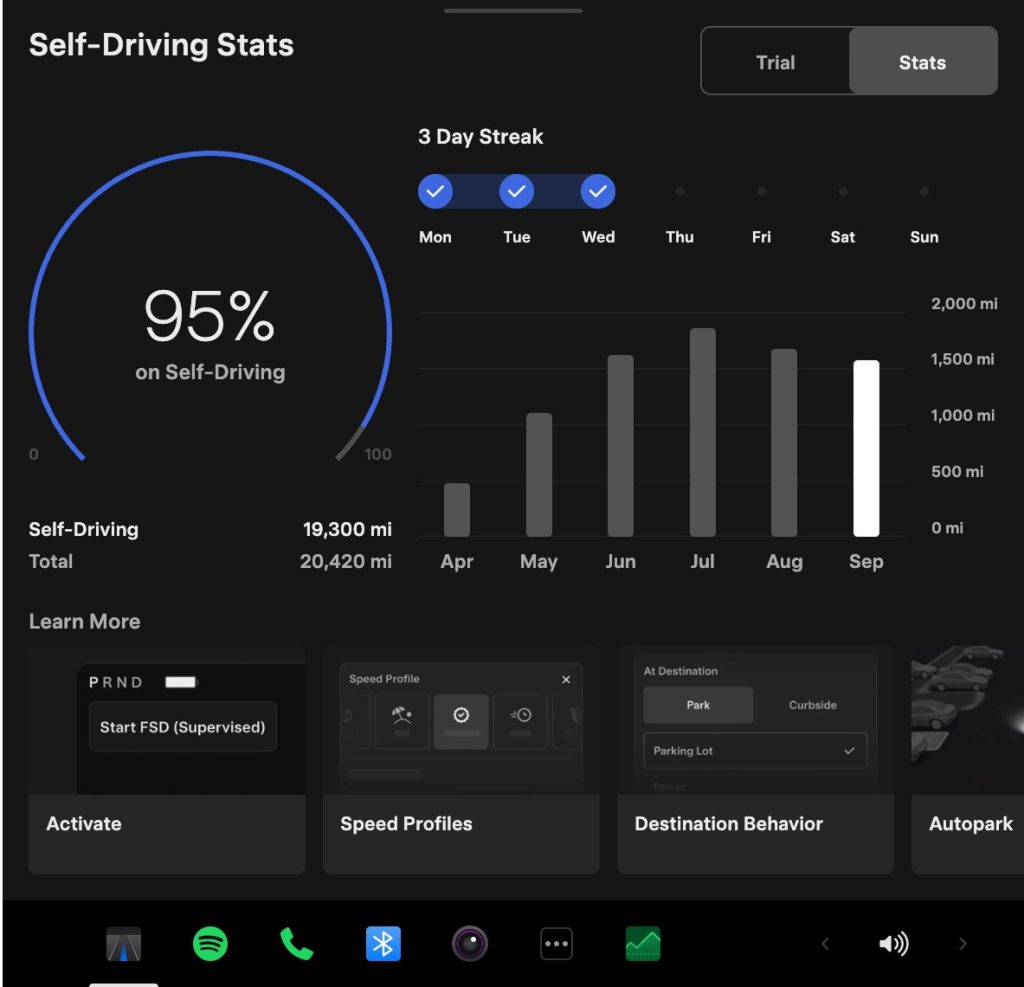
The centerpiece for owners with AI4 hardware is a redesigned Self-Driving app. The new interface lets owners subscribe to Full Self-Driving with a single tap and view ongoing FSD usage stats directly in the vehicle.
Grok gets its biggest in-car upgrade yet. The update adds a “Hey Grok” hands-free wake word along with location-based reminders, so a driver can now say “remind me to pick up groceries when I get home” without touching the screen. Grok first arrived in vehicles in July 2025, but each update has pushed it closer to genuine daily utility. Musk framed the broader vision clearly at Davos in January, saying Tesla is “really moving into a future that is based on autonomy.”
On safety, the update introduces enhanced blind spot warning lights that integrate directly with the cabin’s ambient lighting, building on the blind spot door warning that arrived in update 2026.8.
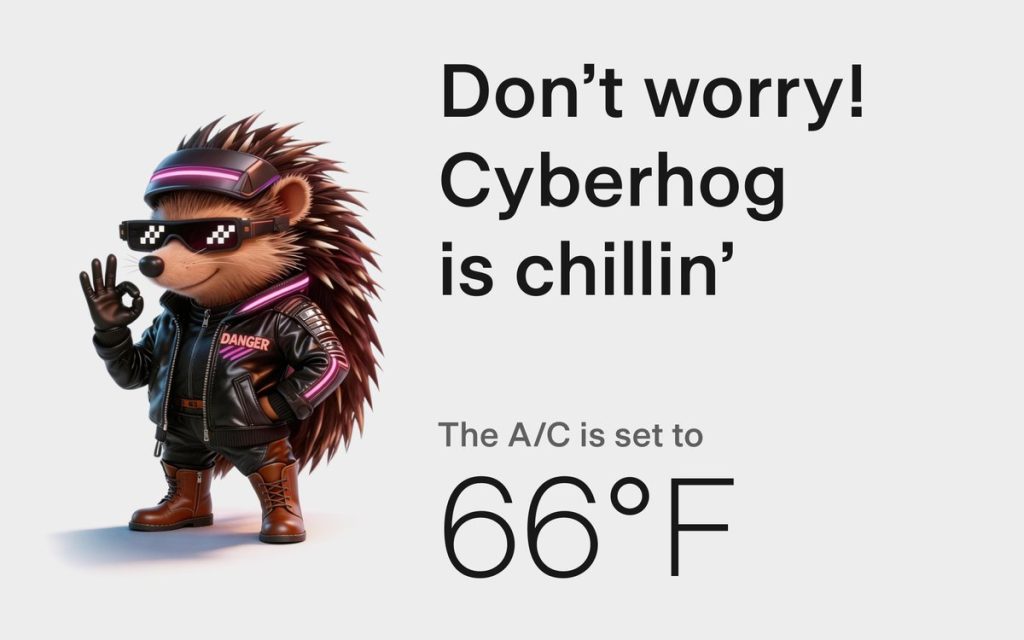
Dog Mode has been renamed Pet Mode and now lets owners choose a dog, cat, or hedgehog icon and add their pet’s name to the display.
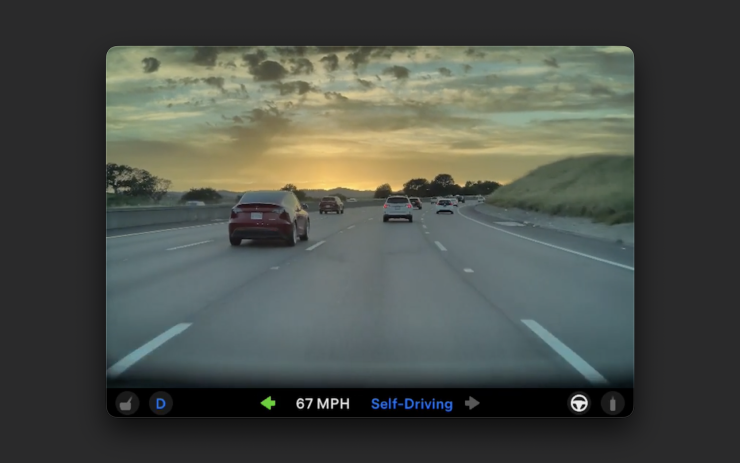
Dashcam retention now extends up to 24 hours, up from the previous one-hour rolling loop, with a permanent save option for any clip. Weather maps now show rain and snow with better color differentiation and include the past hour of precipitation data along the route.
Tesla has now established a clear rhythm of two major OTA pushes per year. As with last year’s Spring update, that cycle started taking shape in 2025 with adaptive headlights and trunk customization. The 2025 Holiday Update then added Grok to the vehicle for the first time. This Spring follows that structure: the Holiday update introduces new architecture, and the Spring update broadens it across the fleet.
Two notable features still did not make it. IFTTT automations, which launched in China earlier this year, were held back from this North American release for unknown reasons, and Apple CarPlay remains absent, reportedly still delayed by iOS 26 and Apple Maps compatibility issues.
Below is the full list of feature updates released by Tesla.
— Tesla (@Tesla) April 13, 2026

Zuckerberg’s Meta taps Musk’s Tesla for massive clean energy project

SpaceX reveals reason for Starship v3 stand down, announces next launch date


