![Test driving a Model X P90D in Atlanta, GA [Source: Landon & Liam Toys & Travel via YouTube]](https://www.teslarati.com/wp-content/uploads/2016/03/Model-X-Windshield-Dash-Store-Logo.jpg)
![Test driving a Model X P90D in Atlanta, GA [Source: Landon & Liam Toys & Travel via YouTube]](https://www.teslarati.com/wp-content/uploads/2016/03/Model-X-Windshield-Dash-Store-Logo-560x436.jpg)
News
Tesla top 5 week in review: Model X wins AAA award, Model 3 Supercharger apocalypse, Gigafactory, and more

This week on Teslarati, several stories in the news caught our readers’ attention. It was exciting when Tesla CEO Elon Musk announced that they intended to add a semi truck to their product line, but no one thought that Wall Street would respond so immediately by downgrading major truck manufacturers’ stock. The Tesla Model X was named the overall best choice in the 2017 AAA Green Car Guide, with the Tesla Model S winning best large car award. The new Tesla San Antonio Service Center now has solar roof panels, images of which were captured by a drone. There was a bit of concern from current Tesla owners this week over discussions of Tesla Supercharger availability when the Model 3 arrives. And a cleaning solvent spill luckily caused minimal injuries at the Tesla Gigafactory in Nevada. Here are those stories and more from this week on Teslarati.
News of Tesla Semi leads analyst to downgrade major truck stocks
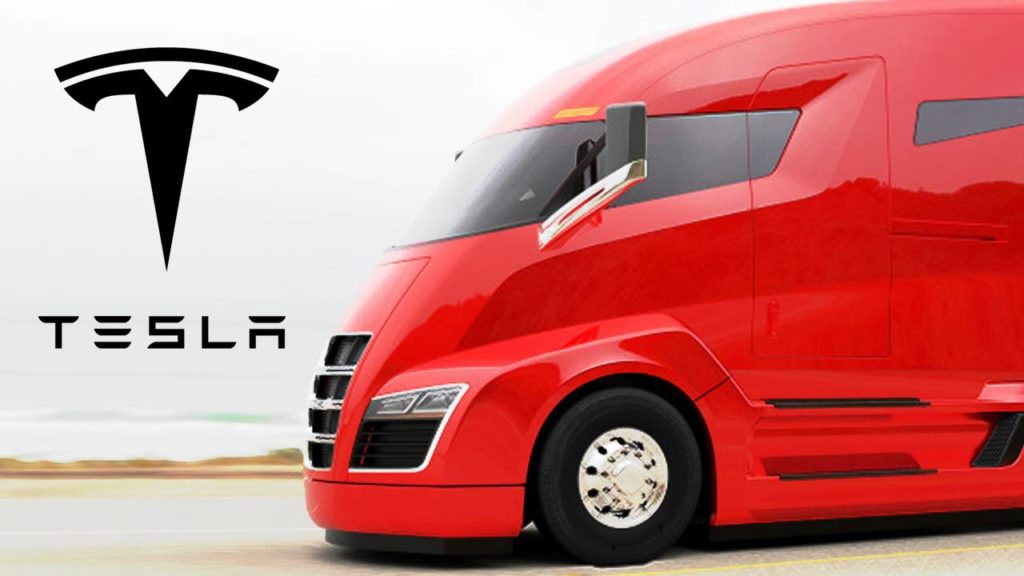
Quickly after Elon Musk tweeted that Tesla would add an electric semi truck to its catalog, a key Wall Street analyst downgraded the value of engine and truck manufacturers, Cummins and Paccar. The analyst, Alex Potter from the firm Piper Jaffray, drew his conclusions from current overvaluation but also “because we think TSLA’s impending arrival could pressure valuations.” The risk of disruption from Tesla’s electric vehicles, with their ability to supplant existing products, could defy the preeminence of diesel engines, especially if Tesla’s electric drivetrains are proven viable in the first commercial vehicle segments.
Tesla Model X ranked #1 in 2017 AAA Green Car Guide, Model S takes #5 spot

The Automobile Association of America’s (AAA) 2017 Green Car Guide was released this week. Sixty-five cars were tested across green categories of full-battery electrics, hybrids, alternative fuel-powered cars, and even some fuel efficient internal combustion cars. Using a wide range of quantitative data collection measures to evaluate the cars, including ride quality, safety, and performance, AAA determined that Tesla’s Model X SUV was the overall best choice. Tesla’s Model S and Model X cars earned acclaim for 3/7 top spots. The Model X, with the 75-kilowatt hour battery pack, won the SUV category. The Tesla Model S, with the 60 kWh pack, won best large car.
Drone shot of the new Tesla San Antonio Service Center reveal solar roof panels
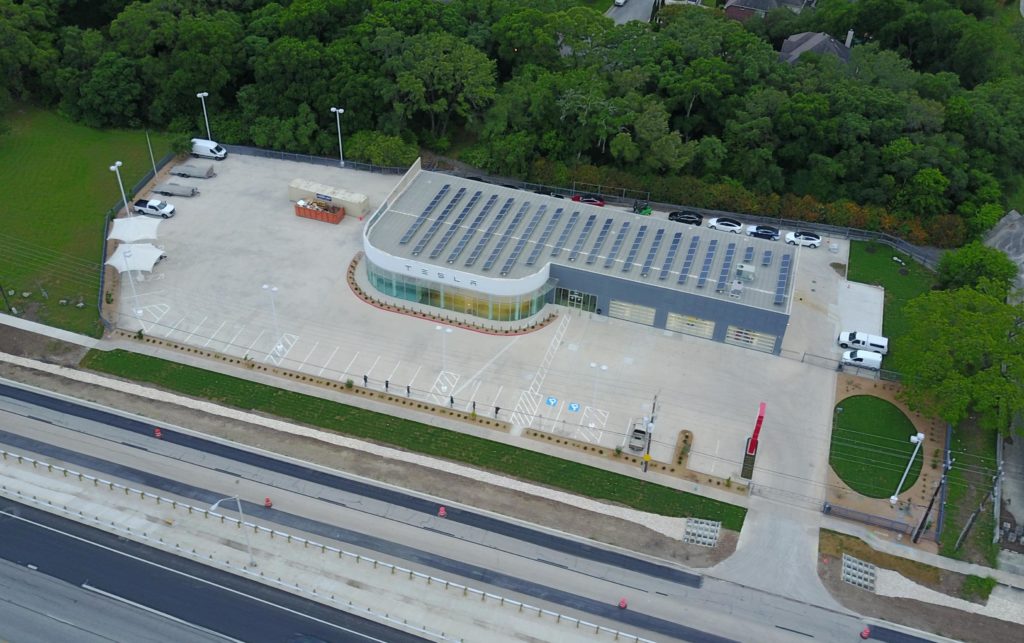
New drone shots revealed solar panels placed on the roof of the new service center in San Antonio, Texas. What better way is there for Tesla to promote confidence in solar than to demonstrate how it’s able to use sustainable energy to service environmentally friendly electric vehicles?
What will happen to Tesla Supercharger availability when Model 3 arrives?
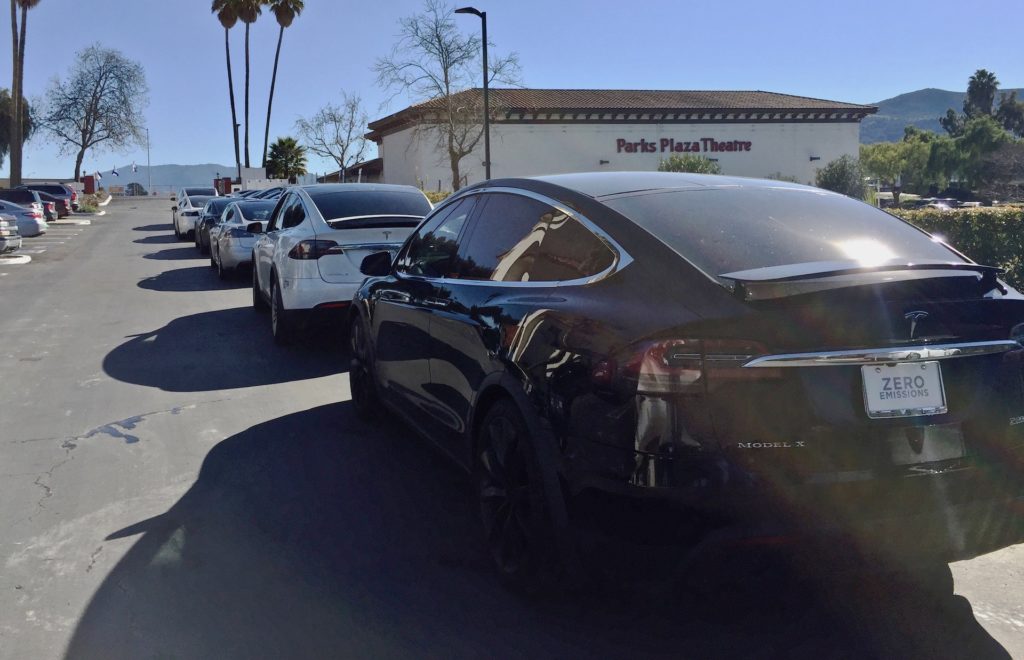
Tesla forums this week were abuzz with concern that, once the Model 3 begins delivery, there will be an exponentially greater number of owners using the Tesla Supercharger network. Will there be an issue waiting for a Supercharger? Four years ago, Tesla introduced the Supercharger Network, which has been the fastest charging solution to date for long distance travel. Tesla designed its network so that all customers could, ideally, have access to a seamless and convenient charging experience as part of long distance travel. The imminent arrival of the Tesla Model 3 by the end of 2018 will more than double annual production volumes and produce 500,000 Model 3 cars annually. Digging into the data behind the issue can reveal some startling findings behind upcoming Supercharger access with the addition of the Model 3 volume.
Authorities respond to Tesla Gigafactory chemical spill, no serious injuries reported
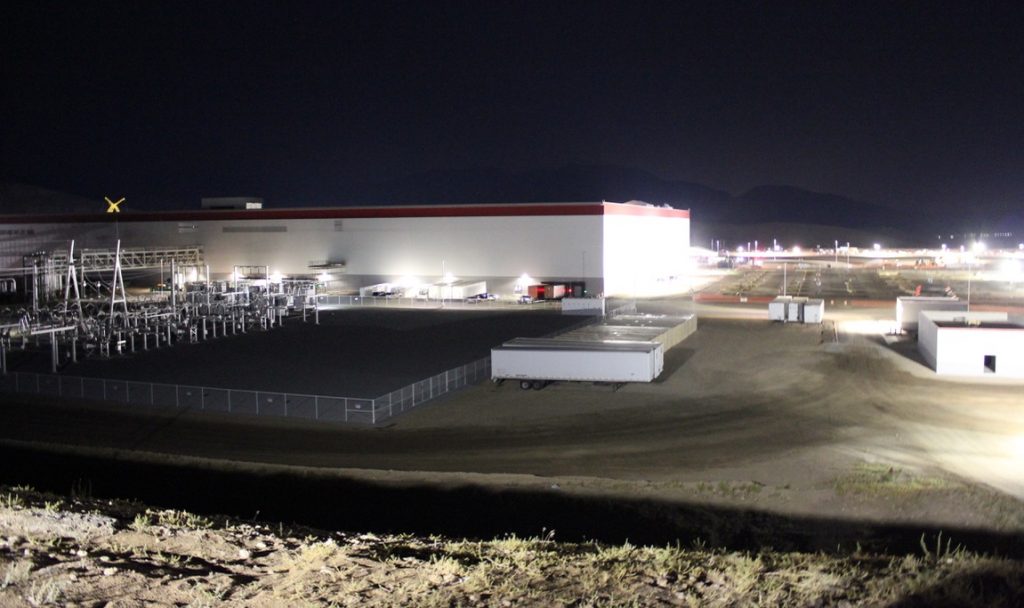
Tesla’s Gigafactory battery plant in Nevada was the site of an investigation following a chemical spill on Monday. The incident occurred when an unidentified agent in a 55-gallon barrel of what the company called “standard construction cleaning solvent” overturned in an isolated area near a vehicle. According to Storey County emergency operations director Joe Curtis, one person was hospitalized. Nine others reported symptoms such as upset stomachs. The chemical spill did force the evacuation of a portion of the Gigafactory. County officials state that no threat to public health emerged as the result of the spill at the industrial park along Interstate 80 east of Reno. The Gigafactory has increased production of batteries of late as it anticipates the release of its new Model 3.


News
Tesla CEO Elon Musk says next FSD release is the one we’ve been waiting for
On Thursday, Musk teased the capabilities and next steps for Tesla’s Full Self-Driving software, focusing squarely on the incremental improvements of the current v14.3 suite, as well as the looming arrival of v15.

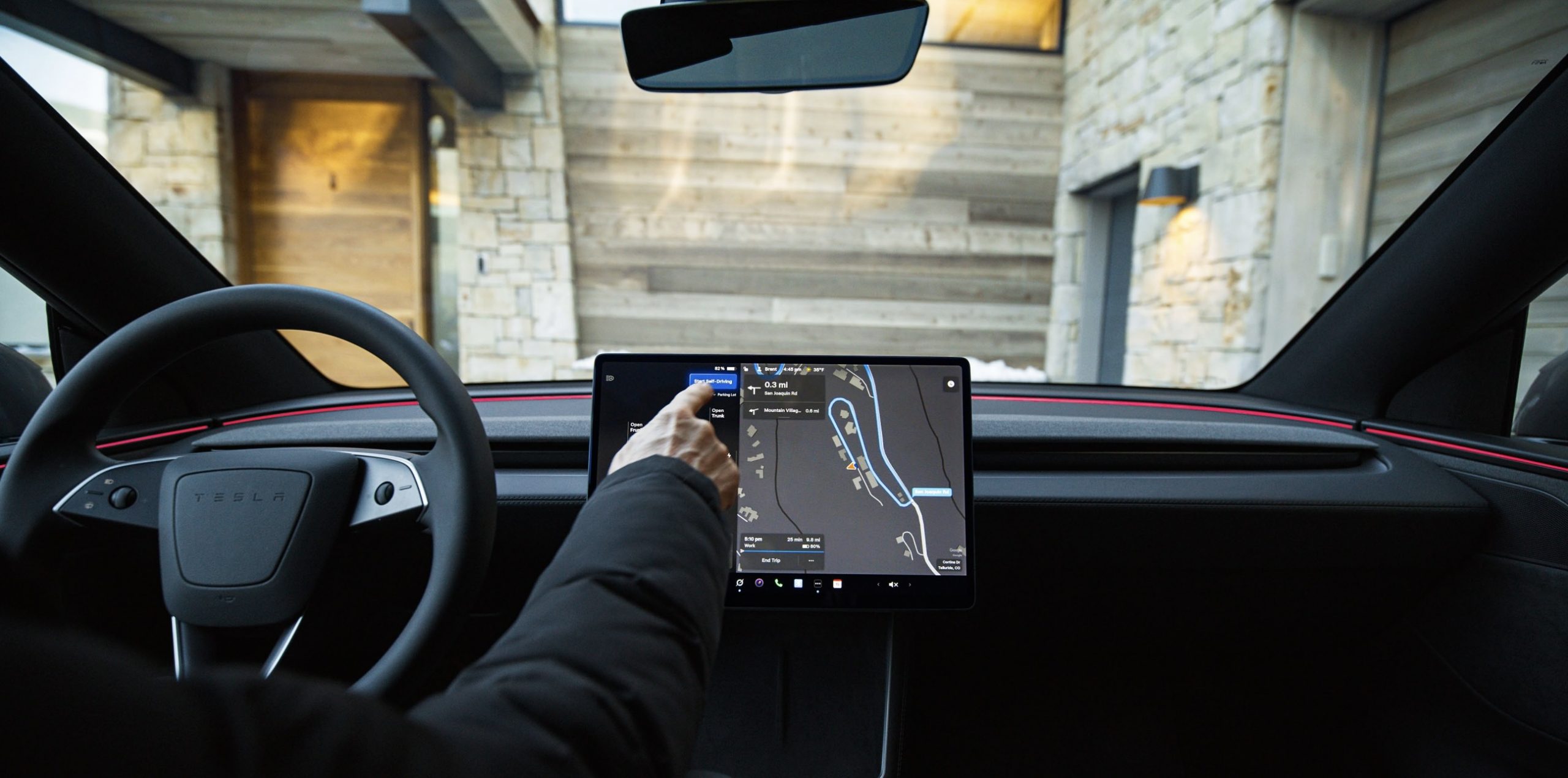
Tesla CEO Elon Musk teased the capabilities of a future Full Self-Driving release, but it seems like we are getting what Yogi Berra once called “Déjà vu all over again.”
On Thursday, Musk teased the capabilities and next steps for Tesla’s Full Self-Driving software, focusing squarely on the incremental improvements of the current v14.3 suite, as well as the looming arrival of v15.
He confirmed that upcoming point releases of v14.3 will deliver additional polish to the current build, smoothing out remaining edges in an already capable system. These iterative updates, Musk noted, are designed to refine performance without requiring a full version overhaul.
Yet the real headline was Musk’s forecast for v15.
“V15 will far exceed human levels of safety, even in completely unsupervised and complex situations,” he wrote.
Tesla V14.3 self-driving review. The point releases will bring polish.
V15 will far exceed human levels of safety, even in completely unsupervised and complex situations. https://t.co/s4UK9RWw9f
— Elon Musk (@elonmusk) April 9, 2026
He clarified that v15 will be powered by Tesla’s long-awaited large model, an AI architecture with roughly 10x the parameters of the smaller model currently in widespread use. The leap, Musk explained, stems from the unusually rapid progress of the compact model, which has advanced so quickly that the larger counterpart has yet to catch up in real-world deployment.
However, it is becoming a pattern that is, by now, familiar to anyone following Tesla’s autonomous driving roadmap.
There’s no debating you on that 🤷
— TESLARATI (@Teslarati) April 9, 2026
Musk has consistently and repeatedly framed each successive major release as the one poised to deliver game-changing autonomy. Earlier versions were similarly positioned as a movement toward the final piece of the puzzle, only for attention to pivot to the next milestone once they arrived.
The refrain has become a recurring feature of FSD communication: current software is impressive, the point releases will sharpen it further, but the true breakthrough lies one major iteration ahead.
Musk’s latest comments fit squarely into that cadence. While v14.3 point releases are expected to tighten supervised driving behaviors in the coming weeks, v15 is cast as the version that finally crosses the threshold into unsupervised operation at human-or-better safety levels across demanding scenarios.
Our rate of advancement with the small model has been so fast that the large model has not yet caught up.
V15 will be the large model.
— Elon Musk (@elonmusk) April 9, 2026
The 10x parameter scale of the underlying large model is presented as the key technical enabler, promising richer reasoning and more robust decision-making than anything deployed to date.
Whether v15 ultimately fulfills that promise remains to be seen. Tesla’s history shows that each new target generates fresh excitement—and occasional skepticism—about timelines.
Fans realize Musk’s timelines for FSD are exciting, but rarely met:
You can see a rift happening in the Tesla bull community between a large group of reasonable people who aren’t afraid to acknowledge the elephants in the room, and those who are essentially bull bots whose entire identities are destroyed if they have to acknowledge any bump in…
— Mike P (@mikepat711) April 9, 2026
For now, Musk’s message is familiar: the immediate focus is polishing v14.3 through targeted point releases, while the 10x-parameter large model in v15 represents the next decisive step toward fully unsupervised, superhuman safety.
Hopefully, Tesla can come through, but we can only believe that once v15 gets here, v16 will be the next big step toward autonomy.
Drivers can expect continued refinement in the short term and a significantly more ambitious leap once the large model is ready. The cycle continues, but the stakes, Musk insists, keep rising.
Elon Musk
Tesla Supercharger for Business exposes jaw-dropping ROI gap between best and worst locations
Tesla’s new Supercharger for Business calculator reveals an eye-opening all-in cost and location-based ROI projections.

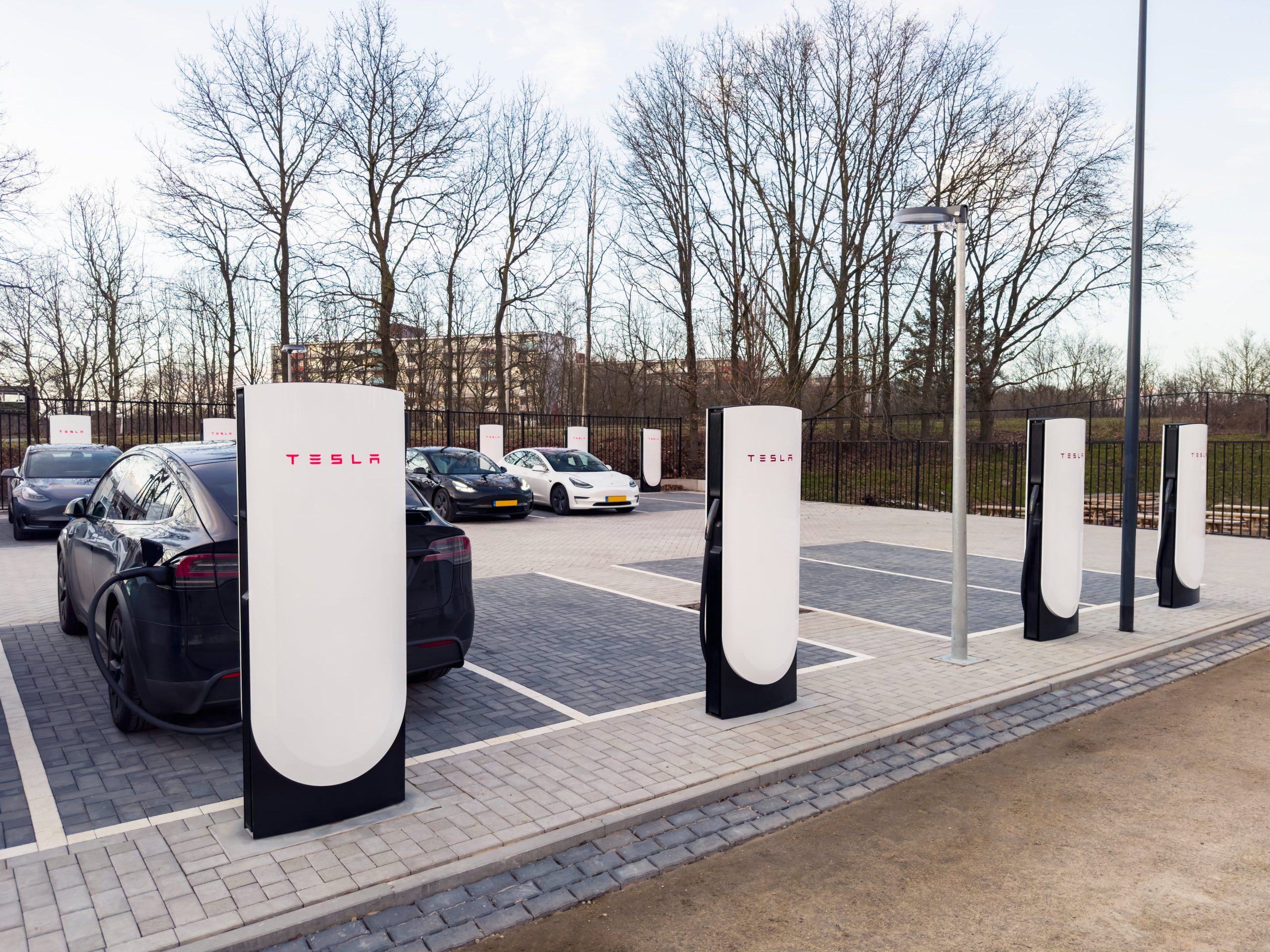
Tesla has launched an online calculator for its Supercharger for Business program, giving property owners their first transparent look at what it really costs to install Superchargers on site and what kind of return they can expect.
The program itself launched in September 2025, allowing businesses to purchase and operate Supercharger hardware on their own property while Tesla handles installation, maintenance, software, and 24/7 driver support. As Teslarati reported at launch, hosts also get their logo placed on the chargers and their location integrated into Tesla’s in-car navigation, meaning drivers are actively routed there. The stalls are open to all EVs, not just Teslas.
We launched Supercharger for Business in 2025 to help companies get charging right. We found simplicity and transparency to be a problem in this industry.
We’re now sharing pricing and a financial calculator to help make informed decisions. The goal is to accelerate investments,…
— Tesla Charging (@TeslaCharging) April 8, 2026
The new online calculator, announced by Tesla on Wednesday with the note that “simplicity and transparency” have been a problem in the industry, lets any business enter a U.S. address and get a real cost and revenue model. A standard 8-stall V4 Supercharger site runs approximately $500,000 in hardware and $55,000 per post for installation, bringing an all-in price just shy of $1 million. Tesla charges a flat $0.10 per kWh fee to cover software, billing, and network operations. Businesses set their own retail price and keep the margin above that fee.
Taking a look at Tesla’s Supercharger for Business online calculator, we can see that ROI is not uniform, and the gap between a strong location and a poor one can stretch the breakeven point by several years.
The biggest driver is foot traffic and how long people stay. A busy rest station, hotel, or outlet mall brings in repeat visitors who need to charge while they’re already stopped, pushing utilization numbers higher and shortening payback time.
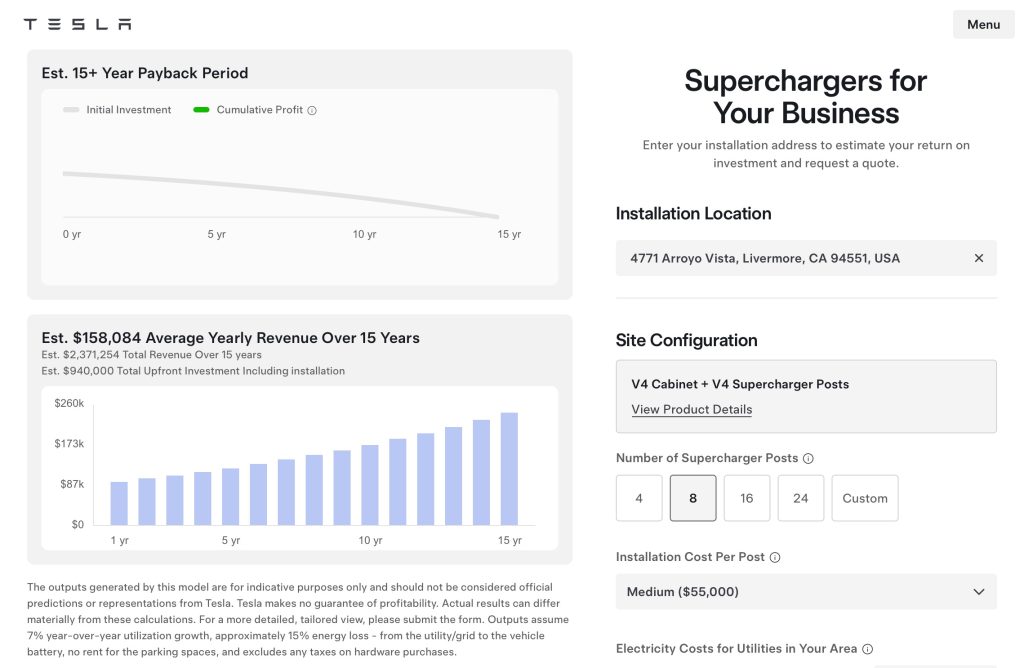
Tesla Supercharger for Business ROI calculator
Local electricity rates matter just as much on the cost side. Markets like California carry some of the highest commercial electricity rates in the country, which eats into the margin between what a host pays per kWh and what they charge drivers. At the same time, dense urban areas with high EV adoption tend to support higher retail charging prices, which can offset that cost if demand is strong enough. Weather also plays a role. Cold climates reduce battery efficiency and increase charging frequency, but they can also suppress utilization in winter months if drivers avoid stopping in exposed outdoor locations. Suburban and rural sites face a different problem: lower baseline EV traffic, which means a site with cheaper power and lower operating costs can still take longer to pay back simply because the stalls sit idle more often. Tesla’s calculator uses real fleet data to pre-fill utilization estimates by ZIP code, so businesses can run their specific address against these variables rather than relying on averages.
The program has seen real adoption. Wawa, already the largest host of Tesla Superchargers with over 2,100 stalls across 223 locations, opened its first fully owned and branded site in Alachua, Florida earlier this year. Francis Energy of Oklahoma and the city of Alpharetta, Georgia have also deployed branded stations through the program, as Teslarati covered in January.
Tesla now exceeds 80,000 Supercharger stalls worldwide, and the calculator makes the economic case for accelerating that number through private investment rather than company-owned sites alone.
News
Elon Musk drops a bomb regarding Tesla Model S, X inventory
After more than a decade on the road, the original flagship sedan and SUV platforms are effectively at the end of the line. Production of new Model S and Model X vehicles has ceased, and custom orders were quietly halted in early April. What remains are roughly a few hundred factory inventory units scattered across the globe, mostly Plaid variants, and they are disappearing fast.
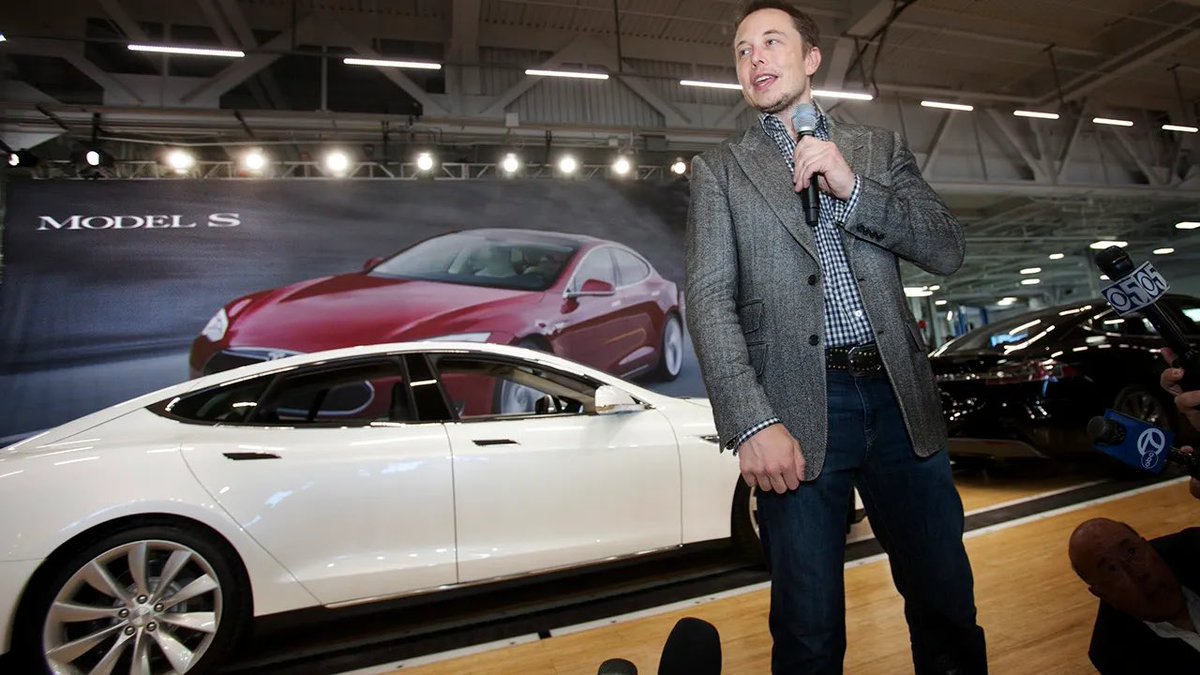
Elon Musk just dropped a bomb regarding Tesla Model S and X inventory, and as the company is phasing out the flagship vehicles, it sounds like the time to purchase one brand new is almost over.
Musk confirmed on Wednesday that there are “only a few hundred Tesla Model S & X cars left in inventory. Order now if you want one.”
Tesla is running out of units rather quickly.
The message from Musk reads like a final call for two of the company’s most storied vehicles.
Only a few hundred Tesla Model S & X cars left in inventory. Order now if you want one.
— Elon Musk (@elonmusk) April 8, 2026
After more than a decade on the road, the original flagship sedan and SUV platforms are effectively at the end of the line. Production of new Model S and Model X vehicles has ceased, and custom orders were quietly halted in early April. What remains are roughly a few hundred factory inventory units scattered across the globe, mostly Plaid variants, and they are disappearing fast.
The news marks the close of a remarkable 14-year chapter. Launched in 2012, the Model S redefined the electric vehicle with blistering acceleration, over-the-air updates, and a luxury interior that embarrassed traditional sedans.
The Model X followed in 2015, turning heads with its Falcon-wing doors and seating for seven.
Together, the Model S and Model X proved EVs could be desirable halo cars, not just eco-friendly commuters. Their departure clears factory space at Tesla’s Fremont plant for something the mass production of the Optimus humanoid robot, which Musk believes will be the greatest contributor to the company’s value.
Musk has repeatedly signaled that Tesla’s future lies beyond passenger cars. Resources once devoted to low-volume flagships are shifting toward autonomy, Robotaxis, and AI hardware. Optimus, the company’s general-purpose robot, is expected to handle manufacturing, household chores, and eventually complex labor.
In the short term, the scarcity has already driven prices on remaining inventory up by about $15,000, turning the last Model S and X into instant collector’s items.
Tesla uses Model S and X ‘sentimental’ value to enforce massive pricing move
The announcement underscores Tesla’s relentless pivot. While the Model Y continues to hold strong sales, the legacy S and X represented an earlier era of pure performance luxury.
The future has been paved by Tesla and Musk’s focus on autonomy, at least in the United States. Customers continue to call for a large SUV, which might be on the way after a recent nudge from Musk on X.
However, whatever the future holds, it has been forged by Tesla’s two flagship vehicles.
Once these final cars are gone, the Model S and Model X will live on only in driveways, forums, and the rear-view mirror of automotive history.

Tesla CEO Elon Musk says next FSD release is the one we’ve been waiting for

Tesla Supercharger for Business exposes jaw-dropping ROI gap between best and worst locations


