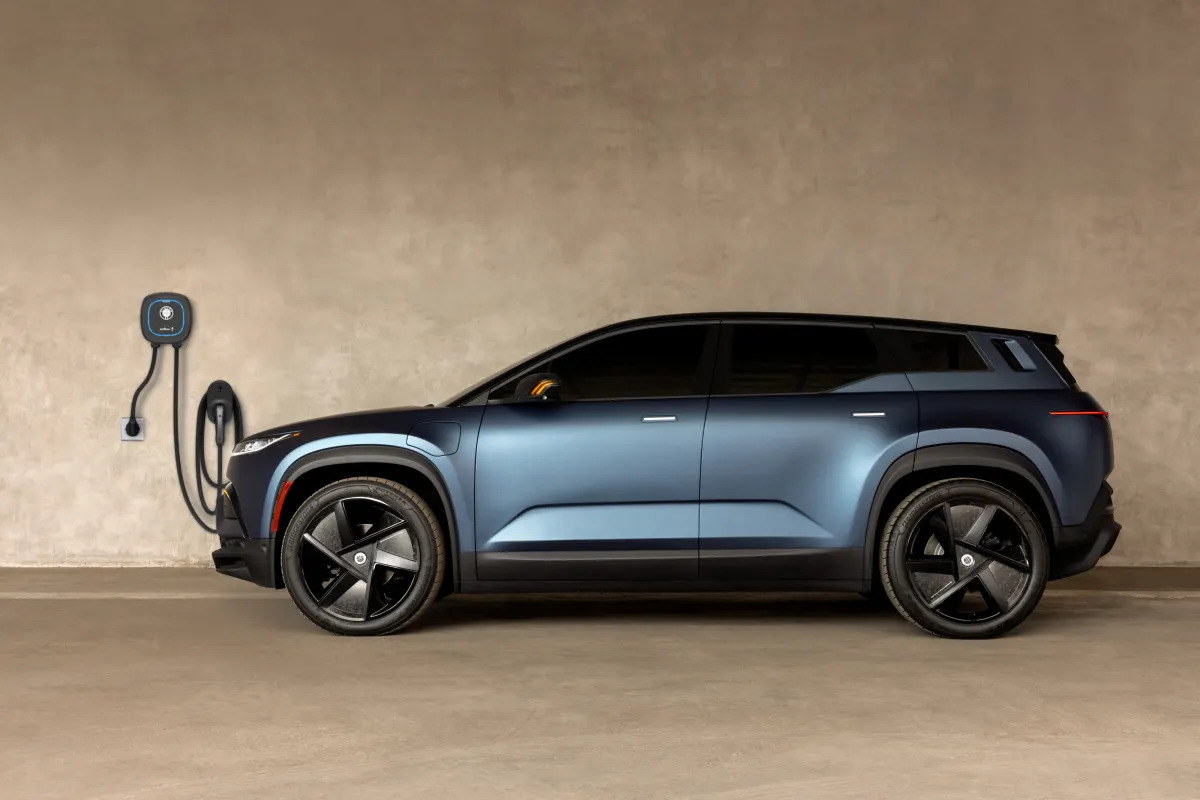

Fisker has had a tough time getting its first battery-electric vehicle (BEV) product off the ground, and now the startup automaker is facing both federal probes and potential delisting from the stock exchange.
After complaints of a partial loss of braking in the 2023 Fisker Ocean sparked a probe from the National Highway Traffic Safety Administration (NHTSA) last month, the automaker now faces an additional NHTSA probe over complaints of unintended vehicle movement and an inability to shift into park or other intended gears.
The Office of Defects Investigation (ODI) has received four complaints about the unintended vehicle movement issue in the 2023 Fisker Ocean, one of which alleges that the issue resulted in an injury. The ODI has opened a Preliminary Evaluation (PE) to investigate the issue in around 4,000 Fisker Ocean units, and the report says that the issue could result vehicle rollaway, whether the driver is inside the vehicle or not, along with other unintended movements.
You can see the NHTSA’s ODI resume for the unintended vehicle movement issue below, as shared earlier this month.
Along with the recent NHTSA probe being opened last week, Fisker has also been issued a non-compliance notice from the New York Stock Exchange (NYSE), after the automaker’s stock dipped below $1 on average for 30 consecutive days (via Automotive News). The notice gives the automaker six months to become compliant again, or else the company will be delisted from the NYSE.
Fisker produced over 10,000 of its electric Ocean SUVs last year, which was under a fourth of its initial production forecast. However, the company only delivered around 4,700 of the BEVs despite producing thousands more. The company has said it plans to offload all of the extra vehicles in the first quarter of this year, and it has also moved away from its direct sales model to instead work with dealerships.
MKBHD says the Fisker Ocean is the ‘worst car’ he’s ever reviewed
What are your thoughts? Let me know at zach@teslarati.com, find me on X at @zacharyvisconti, or send us news tips at tips@teslarati.com.


News
SpaceX set to launch astronauts and a classified Falcon Heavy mission on the same day
SpaceX plans three launches Thursday, including Crew-13 astronauts and Falcon Heavy’s first classified NRO mission.

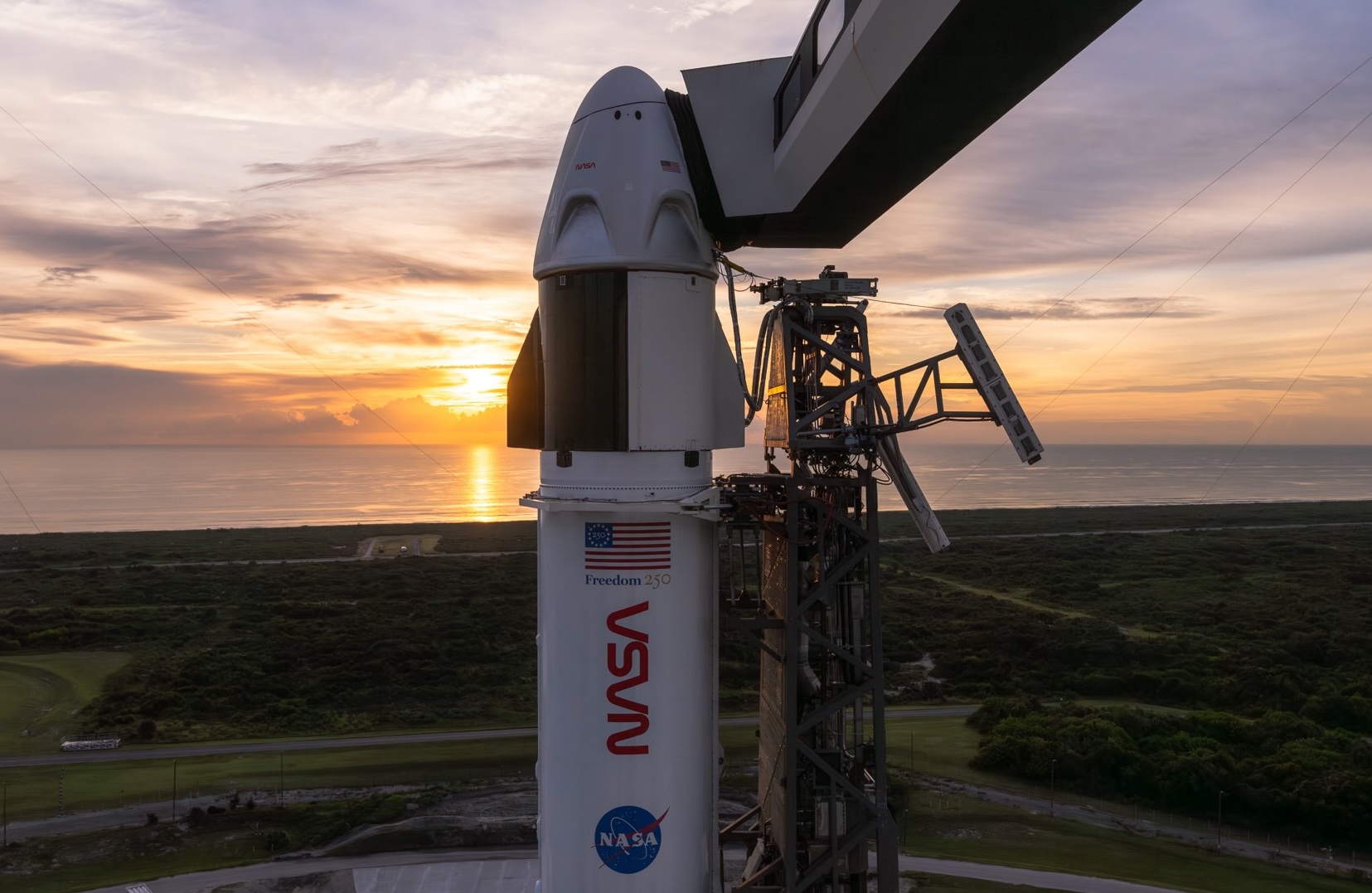
SpaceX is lining up one of the busiest single days in its history, and the company offered a preview on Wednesday morning with a simple post on X: “Sunrise at pad 40.” The video and photos show Falcon 9 standing at Space Launch Complex 40 at Cape Canaveral, roughly a day before it is scheduled to carry four astronauts to the International Space Station.
That launch is only the first of three SpaceX missions planned for Thursday, October 1, across both coasts.
Sunrise at pad 40 pic.twitter.com/J7Qme4VvIX
— SpaceX (@SpaceX) September 30, 2026
Crew-13 is targeting liftoff at 11:10 a.m. ET, with a backup opportunity Friday at 10:47 a.m. ET. NASA astronaut Jessica Watkins will command the mission, with NASA’s Luke Delaney as pilot and Canadian Space Agency astronaut Joshua Kutryk and Roscosmos cosmonaut Sergey Teteryatnikov serving as mission specialists. According to NASA, Dragon is set to dock with the forward port of the station’s Harmony module around 8 p.m. ET, less than nine hours after launch. Watkins is the only member of the crew who has flown before, and Kutryk will become the first Canadian to reach orbit through NASA’s Commercial Crew Program.
The Falcon 9 booster is flying for the third time after supporting Crew-12 and a Starlink mission, and it will attempt a landing at Landing Zone 40 beside the pad. That site made its debut in February when the Crew-12 booster touched down there, as Teslarati reported at the time. Crew-13 will relieve the Crew-12 astronauts, who have been aboard the station since the middle of February.
On the West Coast, another Falcon 9 is scheduled to lift off from Vandenberg Space Force Base in a window running from 2:18 to 3:16 p.m. ET, a flight NASASpaceflight lists as a Transporter rideshare mission.
The day is set to close at 11:53 p.m. ET, when Falcon Heavy launches from Launch Complex 39A with NROL-97, the first National Reconnaissance Office payload ever to fly on the rocket. SpaceX rolled the vehicle out to the pad Tuesday night. Its two side boosters, which previously flew GOES-U, ViaSat-3 F3 and NASA’s Roman Space Telescope, will return to Landing Zones 1 and 2, while a new center core will be expended in the Atlantic. The Roman launch took place on August 30, so NROL-97 will come barely a month later as Falcon Heavy’s third flight of 2026 and 14th overall.
NASA taps SpaceX to launch the telescope that could unlock new worlds
If all three Florida boosters land as planned, it would be the first time the Space Coast has seen landings at LZ-40, LZ-1 and LZ-2 on the same day, according to the Orlando Sentinel, which has warned residents in Brevard, Orange and Volusia counties that more than one sonic boom is possible.
The schedule arrives just three days after Starship reached orbit for the first time on Flight 14 from Starbase, Texas, deploying 26 Starlink V3 satellites. If Thursday’s missions stay on time, SpaceX will have flown Starship, Falcon 9 and Falcon Heavy from four different pads in about four days.
Crew-13 is also the start of a longer run for Dragon. NASA recently added Crew-15, Crew-16 and Crew-17 to SpaceX’s contract in a $946 million modification, keeping Dragon as the agency’s only operational ride to the station while Boeing’s Starliner remains grounded.

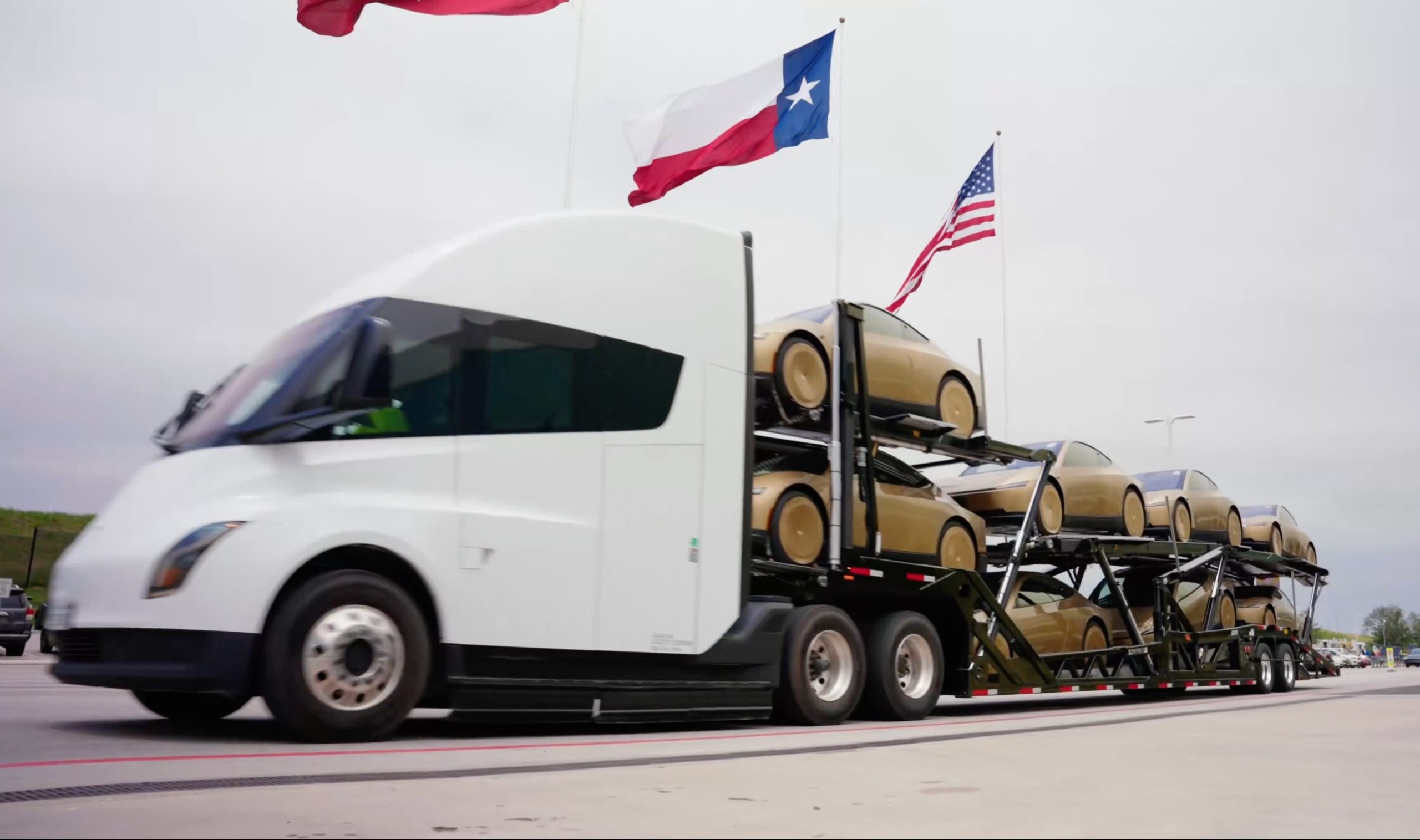
Although the two vehicles are built for completely different use cases, Tesla utilized engineering expertise while developing both the Cybercab and Semi to build a thermal architecture that would fit both vehicles. Of course, with some slight revisions.
The development was noted by Lars Moravy and Dan Priestley last week at Tesla’s Semi Handover event in Sparks, Nevada, where the company showed off its dedicated production facility for the Class 8 truck.
🚨 Tesla designed the integrated thermal systems for Cybercab and Semi at the same time as the vehicles were both in development
Tesla wanted to build one thermal system that worked with both vehicles, apart from small modifications.
Semi and Cybercab share parts 🤯 pic.twitter.com/KmzSsUbrcg
— TESLARATI (@Teslarati) September 25, 2026
Tesla’s decision to develop one thermal architecture for both the Cybercab and Semi is one of the more revealing engineering choices in the company’s 2026 lineup:
“We designed it at the same time we designed the Cybercab and we said okay we’re going to take our most efficient vehicle and our biggest vehicle and we’re going to take one thermal system and make it work for both.”
Core parts, meaning the compressor, pumps, and heat exchangers, are shared, with only modest changes to cooling-loop sizing and a larger radiator on the truck. The result, they said, is a compressor and thermal stack already proven across millions of miles, delivering “reliability from day one.”
Priestley also highlighted a practical payoff of the indirect design:
“There’s no AC lines, there’s no refrigerant lines…It comes from the factory fully charged, sealed with refrigerant, and it just exchanges coolant. It doesn’t actually run refrigerant up to the front of the vehicle.”
This eliminates potentially leak-prone plumbing that would otherwise require hands-on service, reducing overall uptime and potentially cutting into business margins. The megamanifold runs cabin HVAC and every powertrain heating and cooling loop at once, recapturing waste heat from motors and the battery instead of dumping it the way a diesel engine does.
The approach is just the latest chapter in a continuing story of stretching thermal solutions across wildly different vehicles. Model Y’s Octovalve evolved into the Super Manifold used on Cybertruck, and later Model S/X refreshes. Cybercab then introduced Supermanifold V3, which Tesla says is 80 percent automated to build and 38 percent more efficient than typical automotive thermal systems.
This thermal system is also shared with Cybercab – one thermal system for both our most efficient vehicle & our biggest vehicle
— Tesla Semi (@tesla_semi) September 25, 2026
Tesla has done the same with the 4680 cells, both being utilized in the Cybertruck and Semi, and with heat-pump compressors that Priestley noted were already common across the passenger-car fleet.
Concurrent development of crucial vehicle elements buys scale and reliability that a truck-only thermal system could not match. High-volume passenger car parts are cheaper and more accessible, which can give fleets a sealed, low-maintenance loop of operation from their first day of operation.
For owners and operators, that translates into less energy spent on cabin heat in the colder months, fewer refrigerant-related repairs, and a thermal architecture already stress-tested at passenger-car volumes before the first high-volume Semi left the lines in Nevada.
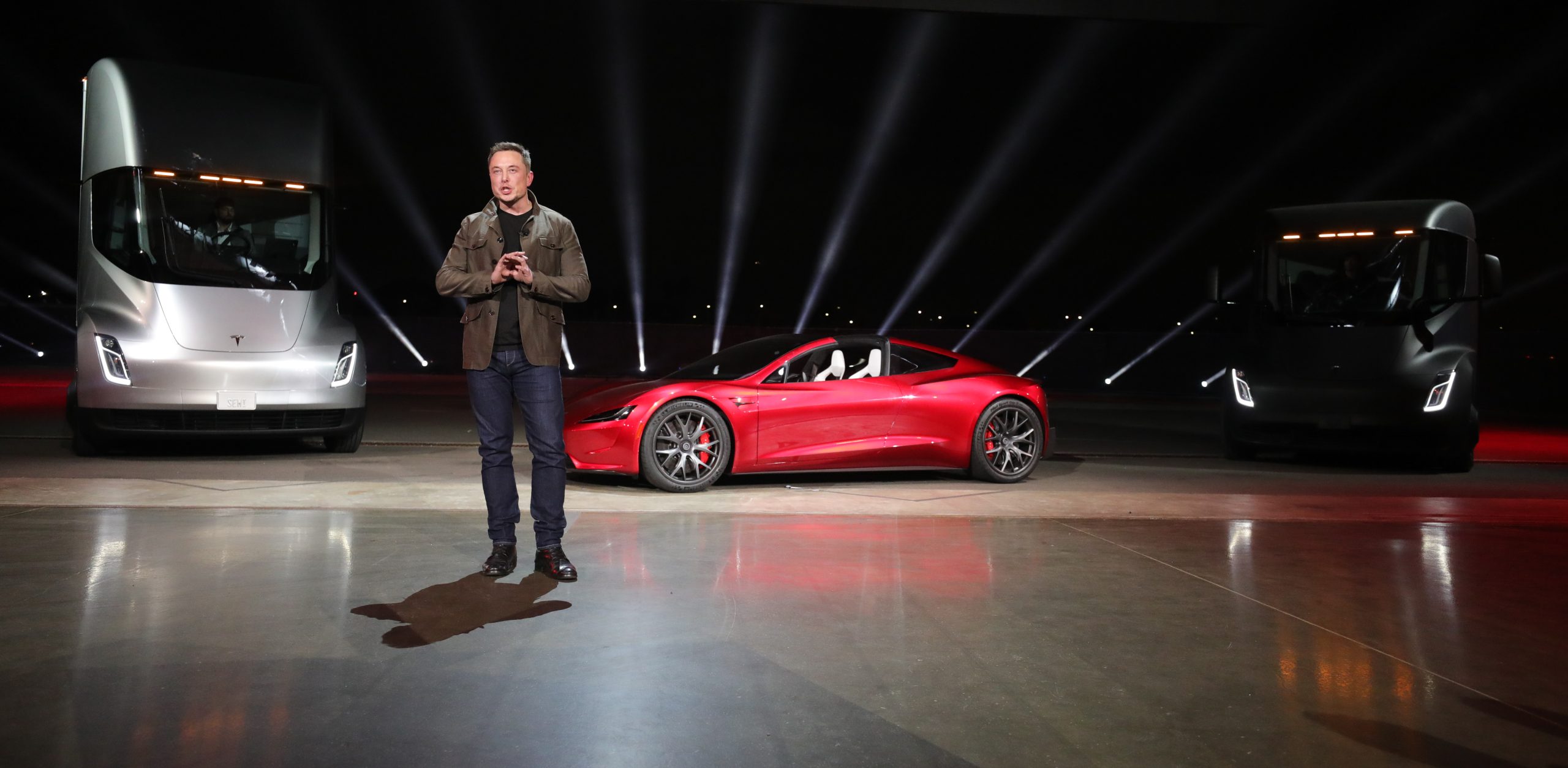
Tesla CEO Elon Musk certainly tipped off some details of the Tesla Roadster event with a broadening of information regarding the company’s decision to delay the unveiling for two weeks.
For years, people have speculated about what the Roadster will be capable of. While there have been plenty of things said about what it *could* do, we have not seen or been told by Tesla what it will actually be capable of.
However, over the past few days, Tesla’s weather updates have truly pushed the speculation into Plaid Mode, basically all but confirming the car will have some sort of aerial capability — whether that would be hovering or fully flying remains to be seen — but it definitely seems that it will be able to leave the ground intentionally.
“Because this event can only be held outdoors…”
Tesla posted on Monday that it would delay the Roadster event until October 15, and it indicated that it had to do this because the event “can only be held outdoors.”
With the potential SpaceX collaboration to develop cold-gas thrusters that will help the vehicle go airborne, doing this indoors is probably not a safe, or even plausible, possibility.
Roadster event update
We’ve been tracking the weather closely with local meteorologists, but given the severe conditions predicted & because this event can only be held outdoors, we’ve made the difficult decision to reschedule.
New date is October 15. Additional details to…
— Tesla (@Tesla) September 28, 2026
FAA Airspace Restriction
The FAA gave Tesla a Temporary Flight Restriction (TFR) for 10,000 feet above ground level, much higher than the typical 2,000-foot restrictions that are usually placed at SpaceX’s McGregor, Texas site.
Tesla Roadster event requires restricted airspace, and the FAA obliges
Some have said that this massive increase is due to Tesla’s need to restrict unauthorized drone use for spying on the event.
Elon Admits High Winds
“Due to high winds, the new Roadster demo is postponed by 2 weeks,” Musk said in a post on X yesterday.
Due to high winds, the new Roadster demo is postponed by 2 weeks https://t.co/dV3ojDh1iT
— Elon Musk (@elonmusk) September 30, 2026
A reply reading, “What’s strong wind got to do with a car demo with four grounded wheels?” was directly below Musk’s post, satirically and sarcastically probing for more details.
All signs are pointing toward an aerial demonstration for the Roadster.

SpaceX set to launch astronauts and a classified Falcon Heavy mission on the same day

Tesla Cybercab and Semi have more in common than you might think


