Investor's Corner
Sorry Jim Chanos, but the Tesla Model 3 is definitely not ‘looking to be a lemon’

A lot of Tesla’s immediate future is tied to the Model 3. Elon Musk said as much in an interview last July, when he accurately described the Model 3 ramp as a “bet-the-company” situation. This means that if the Model 3 proves a success, Tesla could take a definitive step towards Elon Musk’s Master Plan; but if the vehicle fails, it would be catastrophic for the company.
The Model 3’s failure is something that Jim Chanos, arguably the most high-profile of Tesla’s short-sellers, is looking forward to. Chanos has taken an aggressive stance against the electric car company, never hesitating to express his belief that TSLA stock is worth $0. Over the years, the prominent short-seller has frequently attacked the electric car maker, pointing out Elon Musk’s alleged fraudulent activities and Tesla’s weaknesses as a company.
So far, Chanos’ bet against Tesla has not been paying off. His hedge fund, Kynikos Capital Partners, has not done very well since 2015, a time in which he held a short position against Solar City, and not long before he announced that he was shorting Tesla. Including a 9% loss through July of this year, Kynikos exhibited a net annualized return of 4.86% since 2015, compared with the S&P 500’s return of 12.17% during the same period.
Considering the high-stakes bet that Tesla took with the Model 3, the success of the electric car is something that would not do any favors for Kynikos’ already-embattled year. Chanos, for his part, noted in a recent interview with Institutional Investor that he still likes his odds on Tesla. He does, for one, believe that Elon Musk “handcuffed” himself by promising profitability during the second-half of 2018. He also believes that there are inherent problems with the Model 3, as shown in its production slowdowns in August and alleged issues with the vehicle.
“It’s looking to be a lemon,” Chanos said.
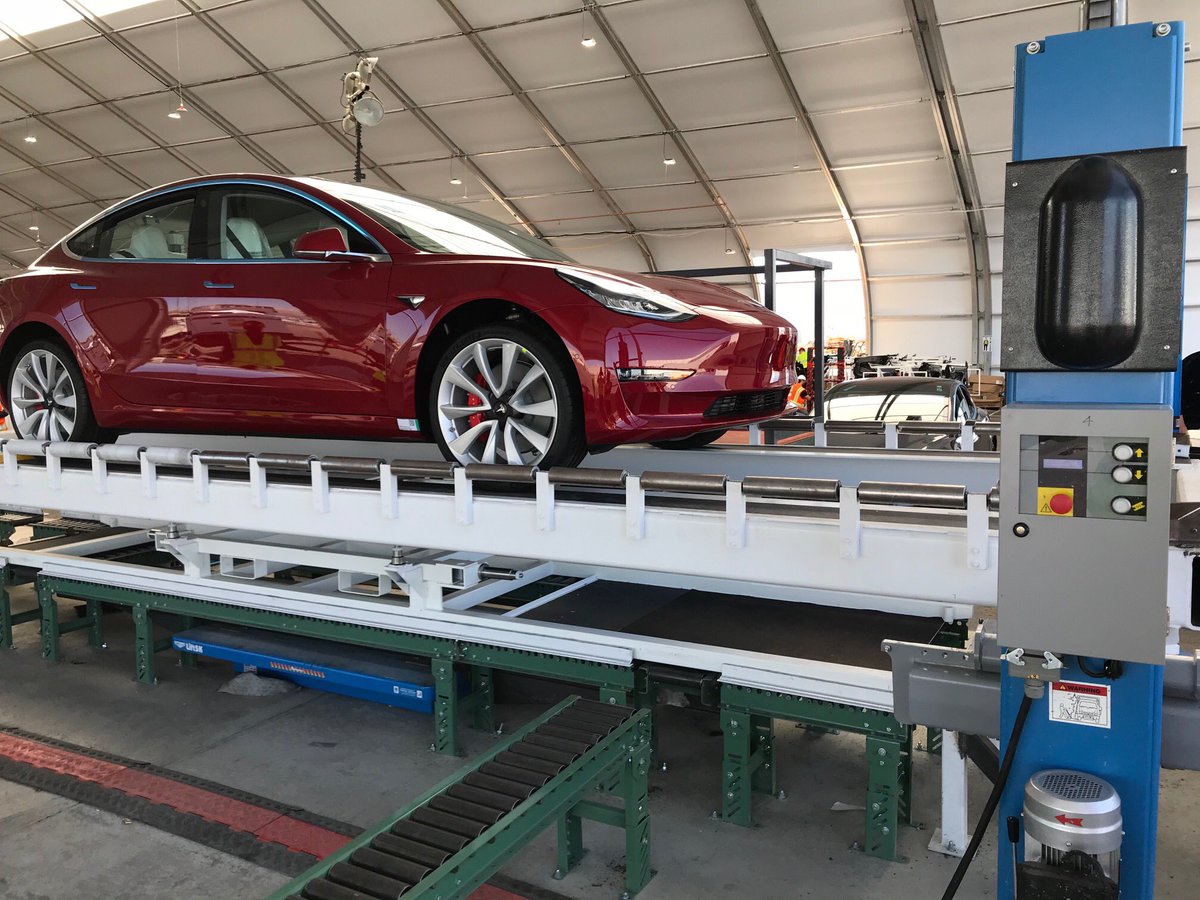
As the third quarter draws to a close, the prominent short-seller’s thesis against Tesla would be put to the test. The electric car maker, after all, has set aggressive targets for itself this Q3, aiming to build 50,000-55,000 Model 3 during the quarter while attaining profitability. Whether Tesla could accomplish its ambitious objectives remains to be seen, but there is one thing that is starting to become evident — the Model 3 does not seem to be a lemon at all.
The electric car’s production issues are well-known, and the teething problems that Tesla exhibited in the vehicle’s initial run were evident, as shown by the first observations of teardown specialist Sandy Munro when he started tearing down an early-production Model 3. But even Sandy Munro eventually admitted that behind the inconsistent panel gaps and imperfect fit and finish issues of the early production Model 3 he tested, he was thoroughly impressed with Tesla’s battery technology, electronics, performance, and ride quality. Tesla’s fit and finish on the Model 3 has improved since the car that Munro tested rolled off the assembly line, and the vehicle has only gotten more praise since then.
The electric car, particularly the Model 3 Performance, has practically garnered unanimous praise from professional auto reviewers. Various auto journalists, from the Wall Street Journal to Car & Driver to Road & Track (to name a few), have praised the vehicle, with the consensus being that it is a car that can disrupt the high-performance sedan market dominated by longtime legends such as the BMW M3.
-
- The Tesla Model 3 gets crash tested by the National Highway Traffic Safety Administration. [Credit: NHTSA]
-

- The Tesla Model 3 gets crash tested by the National Highway Traffic Safety Administration. [Credit: NHTSA]
-
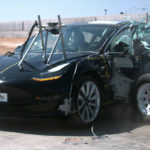
- The Tesla Model 3 gets crash tested by the National Highway Traffic Safety Administration. [Credit: NHTSA]
The Tesla Model 3 gets crash tested by the National Highway Traffic Safety Administration. [Credit: NHTSA]
The Model 3 was given a flawless 5-Star safety rating by the Highway Traffic Safety Administration as well, garnering perfect scores in all categories and subcategories. Videos of the vehicle’s frontal crash, side crash, and rollover crash depicted the electric sedan providing ample protection for its driver and passengers during collisions. With the Model 3’s rating, all of Tesla’s vehicles currently in production now have the distinction of having 5-Star safety ratings from the NHTSA.
Recent reports from the Tesla community in both the United States and abroad also indicate that the company has adopted an aggressive delivery schedule for reservation holders, with centers reportedly conducting handovers until 10 p.m. Other reports further suggest that Tesla’s delivery centers are handing over up to 100 cars per day.
Tesla’s capability to become profitable is linked to the Model 3, which would comprise the majority of its sales this quarter. A vote of confidence for this came in the form of analyses from a German teardown firm and Detroit’s Munro and Associates, both of which concluded that Tesla could make a profit with the Model 3. Munro, for one, noted after his teardown of the Long Range RWD Model 3 that the vehicle could give Tesla a 36% profit. More expensive trims, such as the Long Range Model 3 AWD and the Model 3 Performance, are likely even more profitable.
The third quarter is not yet finished, and much of Tesla’s production and delivery progress remains unknown. But all things considered, Jim Chanos’ bet against the Model 3 as a vehicle could very well end up being a disappointment for the esteemed short-seller.


Elon Musk
SpaceX just filed for the IPO everyone was waiting for
SpaceX filed its public S-1, revealing $18.7 billion in revenue and billions in losses.

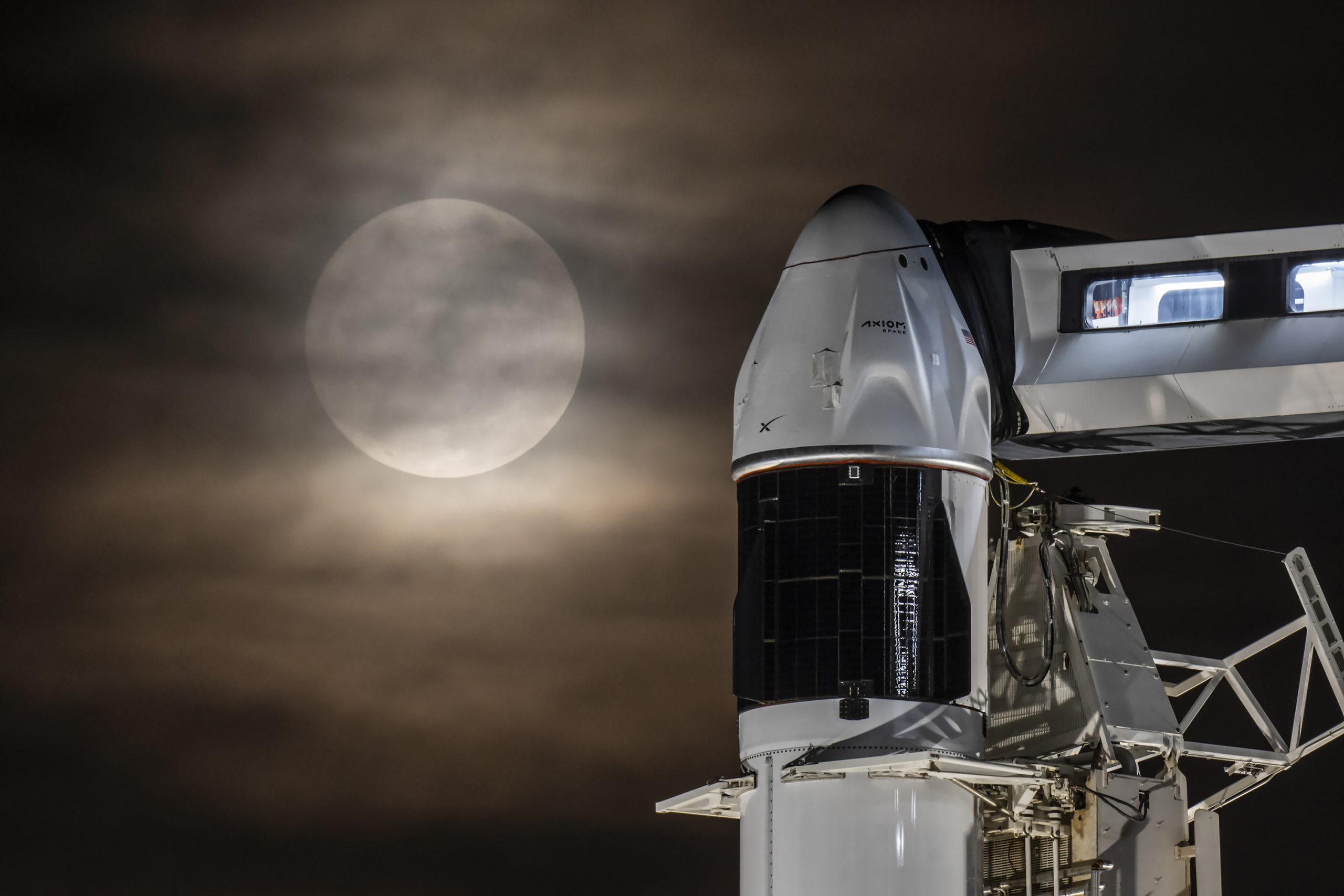
SpaceX publicly filed its S-1 registration statement with the Securities and Exchange Commission on May 20, 2026, making its financial details available to the public for the first time ahead of what could be the largest IPO in history.
An S-1 is the formal document a company must submit to the SEC before going public. It includes audited financials, risk factors, business descriptions, and how the company plans to use the money it raises. Companies are required to file one before selling shares to the public, and it must be published at least 15 days before the investor roadshow begins. SpaceX had already submitted a confidential draft to the SEC in April, which allowed regulators to review the filing privately before it went public.
The S-1 reveals that SpaceX generated $18.7 billion in consolidated revenue in 2025, driven largely by its Starlink satellite internet division, which posted $11.4 billion in revenue, growing nearly 50% year over year. Despite that growth, the company lost about $4.9 billion in 2025 and has burned through more than $37 billion since its founding.
SpaceX just forced Verizon, AT&T and T-Mobile to team up for the first time in history
A significant portion of those losses trace back to xAI, Elon Musk’s artificial intelligence company, which was recently merged into SpaceX. SpaceX directed roughly 60% of its capital spending in 2025 to its AI division, totaling around $20 billion, yet that division lost billions and grew revenue by only about 22%.
SpaceX plans to list its Class A common stock on Nasdaq under the ticker SPCX, with Goldman Sachs, Morgan Stanley, and Bank of America leading the offering. The dual-class share structure means going public will not meaningfully reduce Musk’s control, as Class B shares he holds carry 10 votes per share compared to one vote for public Class A shares.
The company is targeting a raise of around $75 billion at a valuation of roughly $1.75 trillion, which would make it the largest IPO ever. The investor roadshow is reportedly planned for June 5.
Elon Musk
Tesla ditches India after years of broken promises
Tesla has ditched its plans to build a factory in India after years of failed negotiations.
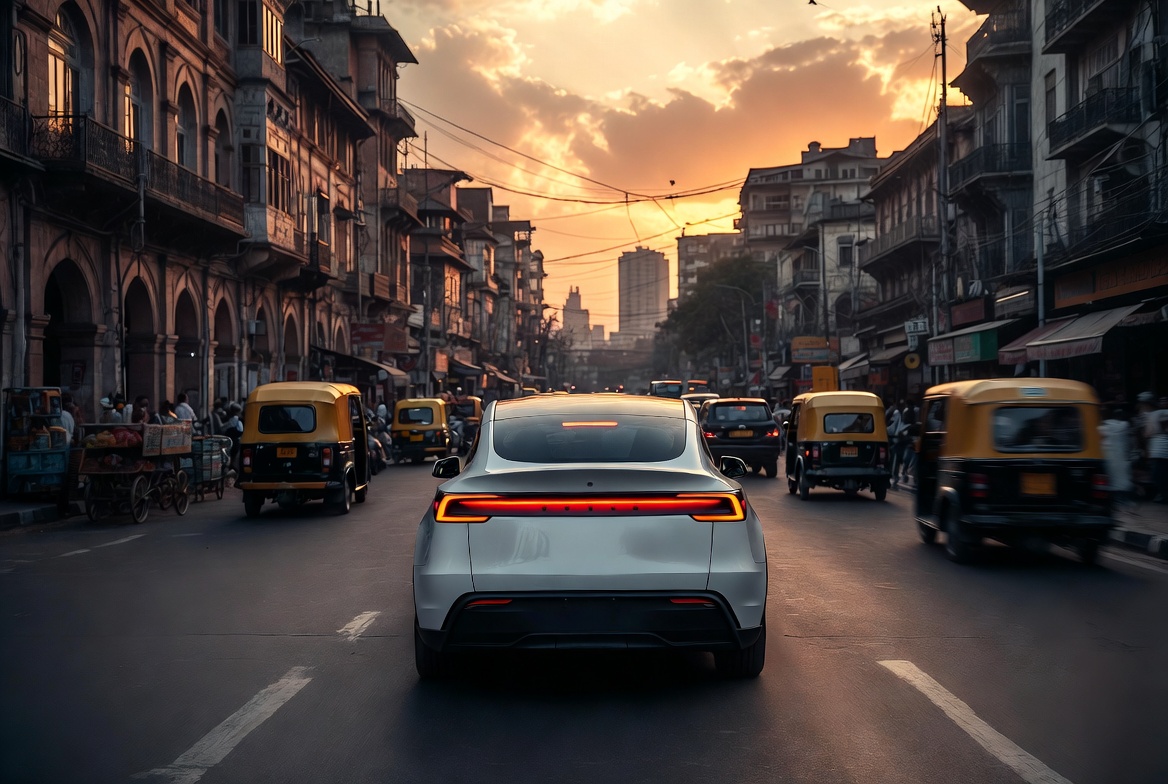
Tesla’s long-running effort to establish a manufacturing presence in India is officially over. India’s Minister of Heavy Industries H.D. Kumaraswamy confirmed on May 19, 2026 that Tesla has informed authorities it will not proceed with a manufacturing facility in the country.
Tesla first signaled serious interest in India around 2021, when it began hiring local staff and lobbying the Indian government for lower import tariffs. The ask was straightforward: reduce duties enough for Tesla to test the market with imported vehicles before committing capital to a local factory. India’s position was equally firm, with an ask of Tesla to commit to manufacturing first, then receive tariff relief. Neither side moved, and the talks quietly collapsed.
Tesla to open first India experience center in Mumbai on July 15
India had offered a policy that would reduce import duties from 110% down to 15% on EVs priced above $35,000, provided companies committed at least $500 million toward local manufacturing investment within three years. Tesla declined to participate. The tariff standoff was only part of the problem. Analysts pointed to significant gaps in India’s local supply chain, inadequate industrial infrastructure, and a mismatch between Tesla’s premium pricing and the purchasing power of India’s automotive market as additional factors that made the investment difficult to justify.
First signs of an unraveling relationship came in April 2024, when Musk abruptly cancelled a planned trip to India where he was set to meet Prime Minister Modi and announce Tesla’s market entry. By July 2024, Fortune reported that Tesla executives had stopped contacting Indian government officials entirely. The government at that point understood Tesla had capital constraints and no plans to invest.
The more fundamental issue is that Tesla’s existing factories are currently operating at approximately 60% capacity, making a commitment to building new manufacturing capacity in a new market difficult to defend to investors. Tesla will continue selling imported Model Y vehicles through its existing showrooms in Mumbai, Delhi, Gurugram, and Bengaluru, but local production is no longer part of the plan.
Elon Musk
SpaceX just forced Verizon, AT&T and T-Mobile to team up for the first time in history
AT&T, T-Mobile, and Verizon just joined forces for one reason: Starlink is winning.
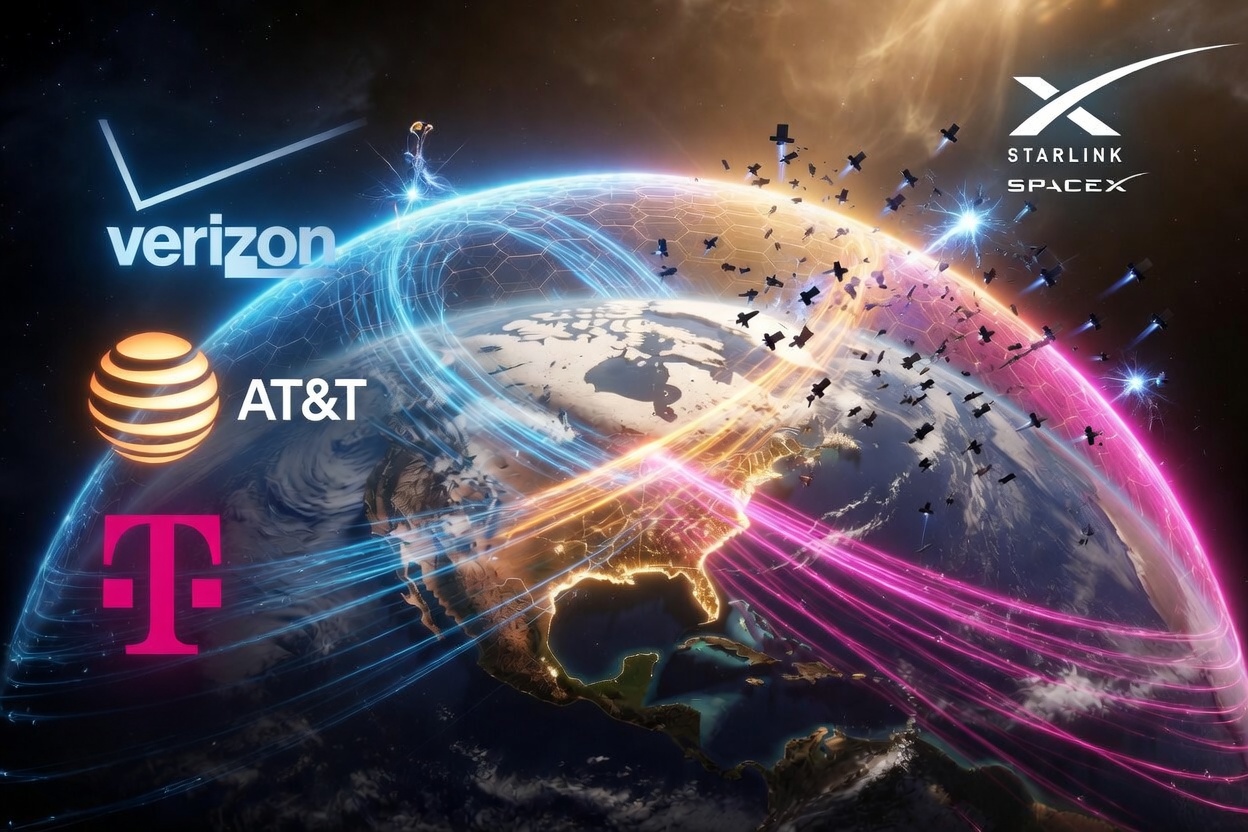
America’s three largest wireless carriers, AT&T, T-Mobile, and Verizon, announced on On May 14, 2026 that they had agreed in principle to form a joint venture aimed at pooling their spectrum resources to expand satellite-based direct-to-device (D2D) connectivity across the United States in what can be seen as a direct response to SpaceX’s Starlink initiative. D2D, in plain terms, is technology that lets a standard smartphone connect directly to a satellite in orbit, the same way it connects to a cell tower, with no extra hardware required.
The alliance is widely seen as a means to slow Starlink’s rapid expansion in the satellite internet and mobile markets. SpaceX’s Starlink Mobile service launched commercially in July 2025 through a partnership with T-Mobile, starting with messaging before expanding to broadband data. SpaceX secured access to valuable wireless spectrum through its $17 billion deal with EchoStar, paving the way for significantly faster satellite-to-phone speeds.
SpaceX was not shy about its reaction. SpaceX president and COO Gwynne Shotwell responded on X: “Weeeelllll, I guess Starlink Mobile is doing something right! It’s David and Goliath (X3) all over again — I’m bettin’ on David.” SpaceX’s VP of Satellite Policy David Goldman went further, flagging potential antitrust concerns and asking whether the DOJ would even allow three dominant competitors to coordinate in a market where a new rival is actively entering.
Weeeelllll, I guess @Starlink Mobile is doing something right! It’s David and Goliath (X3) all over again — I’m bettin’ on David 🙂 https://t.co/5GzS752mxL
— Gwynne Shotwell (@Gwynne_Shotwell) May 14, 2026
Financial analysts at LightShed Partners were blunt, saying the announcement showed the three carriers are “nervous,” and pointed to the timing: “You announce an agreement in principle when the point is the announcement, not the deal. The timing, weeks ahead of the SpaceX roadshow, was the point.”
As Teslarati reported, SpaceX’s next generation Starlink V2 satellites will deliver up to 100 times the data density of the current system, with custom silicon and phased array antennas enabling around 20 times the throughput of the first generation. The carriers’ JV, which has no definitive agreement, no financial structure, and no deployment timeline yet, will need to move quickly to matter.
Elon Musk’s SpaceX is targeting a Nasdaq listing as early as June 12, aiming for what would be the largest IPO in history. With Starlink now serving over 9 million subscribers across 155 countries, holding 59 carrier partnerships globally, and now powering Air Force One, the carriers’ joint venture announcement landed at exactly the wrong time to look like anything other than a defensive move.

Zuckerberg’s Meta taps Musk’s Tesla for massive clean energy project

SpaceX reveals reason for Starship v3 stand down, announces next launch date


