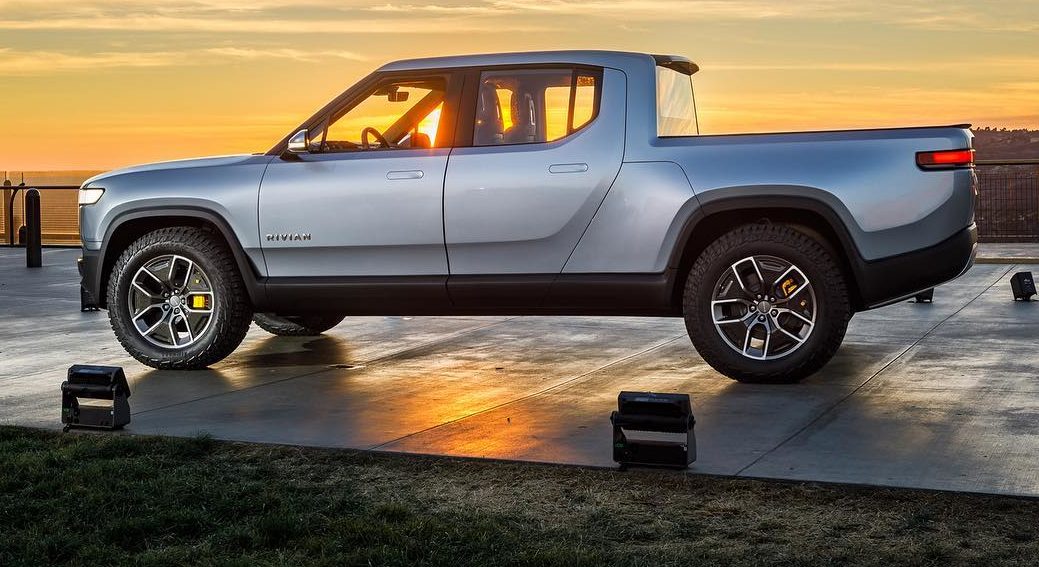
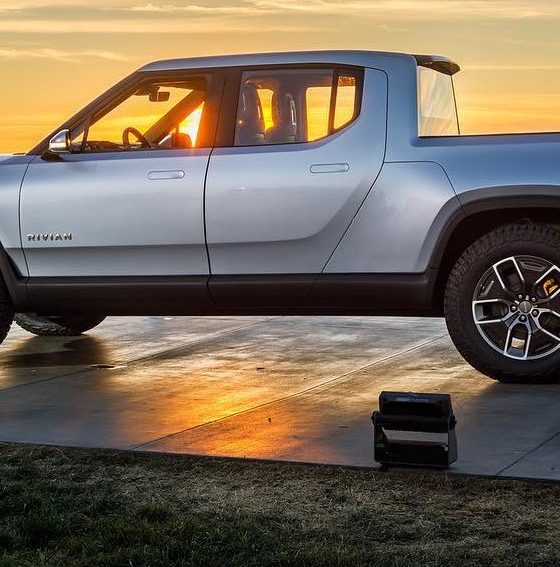

Rivian is attending Amazon’s re:MARS 2019 event this week, an information and networking conference sponsored by the online retail giant focused on artificial intelligence (AI), robotics, and other related Earth and space technologies, including self-driving.
The latest research, scientific advancements, and industry innovations are shared during four-days of networking, keynotes, and information sessions, and speakers from companies such as Walt Disney Imagineering and NASA’s Jet Propulsion Laboratory are on the schedule. The event takes place from June 4-7 at the Aria Resort & Casino in Las Vegas, Nevada.
The Amazon re:MARS Twitter account posted a tweet announcing Rivian’s appearance, which was then retweeted by CEO RJ Scaringe. “What happens when you combine a thirst for adventure with automotive tech and AI? Meet the world’s first Electric Adventure Vehicle at #reMARS to find out,” it said. The tweet was also tagged with “#alexaauto”, possibly indicating Rivian’s inclusion of Amazon’s Alexa voice assistant in its upcoming R1T truck and R1S SUV. Another electric car maker has already opted for this route – China’s Byton has Alexa integrated into its vehicle operating system.
What happens when you combine a thirst for adventure with automotive tech and AI? Meet the world’s first Electric Adventure Vehicle at #reMARS to find out: https://t.co/41ICnYmPNN #alexaauto @Rivian pic.twitter.com/gRG2kZh3mI
— Amazon re:MARS (@AmazonreMARS) June 2, 2019
re:MARS stands for Machine Learning, Automation, Robotics, and Space, and the event is described on its website as follows:
“re:MARS brings together innovative minds with diverse skill sets who share an inventors spirit, a builders mentality, and a desire to use AI to initiate change and shape the future. The event is designed for business leaders and technical builders (including developers, engineers, data scientists, ML [machine learning] experts, and roboticists) who translate customer problems into real-world technology solutions using AI.”
Given re:MARS’s description, Rivian’s plans for including self-driving in its R1T and R1S make its presence particularly relevant to the focus of the event. The camera and radar hardware on Rivian’s production vehicles will be capable of Level 3 autonomous driving that’s upgradable via over-the-air software updates. The initial vehicles will ship with Level 2 capabilities and use data accumulated from its customers’ driving sent to the cloud to develop its Level 3 transition.
Amazon has also invested heavily into Aurora, a self-driving startup led by ex-Tesla and ex-Google executives, and an information session hosted by the company as part of the re:MARS event. Rivian’s self-driving plans could possibly cross over with Aurora’s autonomy developments as both companies share an Amazon business linkage. The description of the Aurora information session is as follows:
“The Future of Self-Driving Technology: Aurora is improving self-driving technology with the Aurora Driver, the computer system that powers and coordinates signals from its perception system to control vehicles of different makes, models and classes. Hear from Aurora to better understand the role of AI in self-driving technology and the longstanding impacts of self-driving cars for our future.”
A map of re:MARS’s tech showcase location shows Rivian mingled with Alexa & iRobot | Smart Home, and Cybic, an electric bike company using Amazon’s Alexa digital assistant.

Amazon’s $700 million dollar investment into Rivian also likely plays a part in Rivian’s appearance at re:MARS. CEO Jeff Bezos recently referred to the electric car industry as “fascinating” and said he was excited to participate in its developments along with vehicle connectivity. Specifically referring to Rivian, he complimented Scaringe, saying he’s “one of the most missionary entrepreneurs I’ve ever met.”
RJ Scaringe has made reference to Rivian’s vehicles hosting self-guided tours fashioned like those seen in the classic 90s movie Jurassic Park. Given Amazon’s investment in the all-electric startup and the car maker’s subsequent appearance at an Alexa-focused event, perhaps the Rivian AI tour guide won’t be modeled after a classic Hollywood actor and narrator after all, an idea which was admittedly driven by imagination to begin with. “The voice you’re now hearing is Richard Kiley. Heh, we’ve spared no expense!” Richard Hammond, the fictional owner of Jurassic Park, exclaims in the movie while the tour group advanced through the dinosaur exhibits. Alexa, take me to the Tyrannosaurus rex, anyone?
While Rivian’s presence at Amazon’s re:MARS event hasn’t yet produced many details to confirm any speculations, it’s at the very least a nod towards the company’s exciting, technology-driven future.



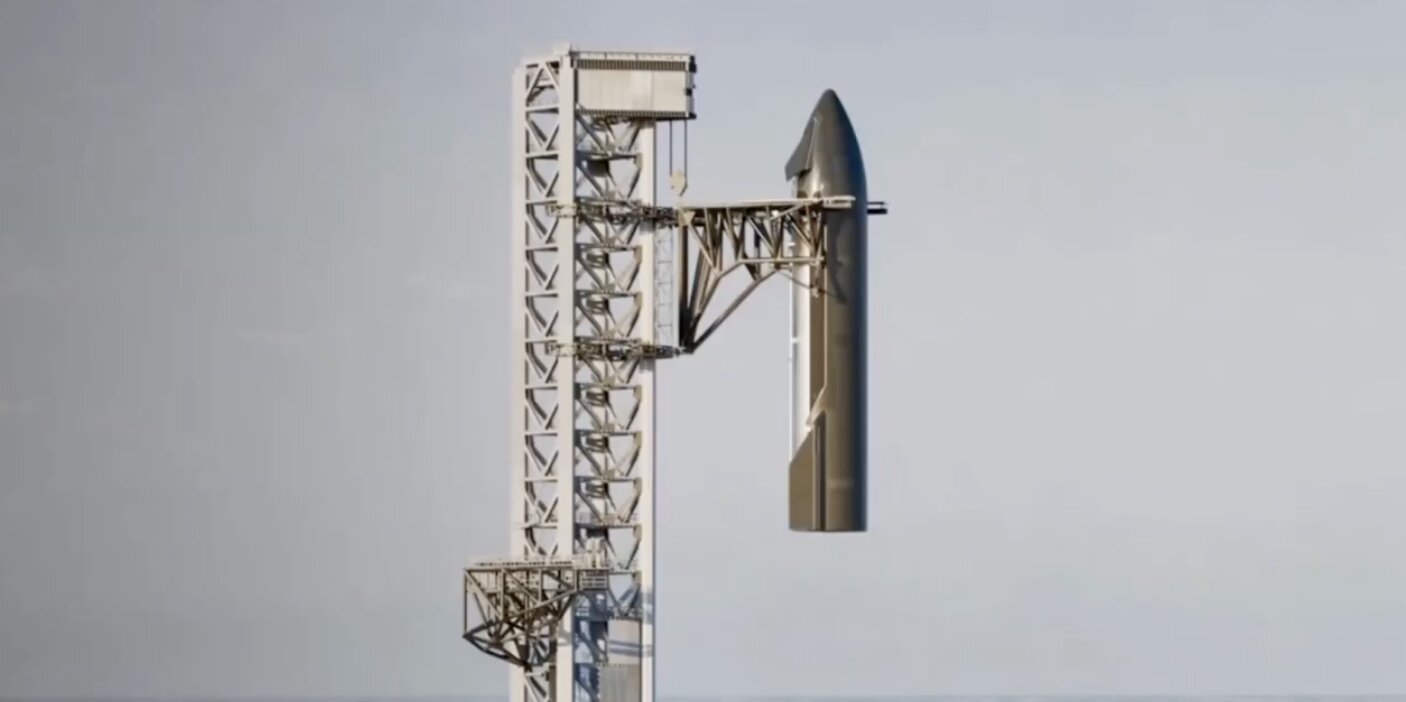
SpaceX is set to attempt its 15th test flight of Starship this evening from Starbase, Texas.
SpaceX is targeting Starship Flight 15 for a launch as soon as today, Friday, November 13, pending an FAA Flight License, during a 75-minute window that opens at 4:45 p.m. CT (5:45 p.m. ET) from Orbital Launch Pad 2 at Starbase, Texas. The flight remains pending final regulatory approval.
WATCH Starship Flight 15 here:
https://t.co/C6GnCHyF8p
— TESLARATI (@Teslarati) November 13, 2026
The mission, using Booster 22 and Ship 42, aims to achieve the first full recovery of an orbital launch system. Primary objectives include a tower catch of the Super Heavy booster roughly six and a half minutes after liftoff and the first-ever tower catch of a Starship upper stage after more than 22 hours in space.
SpaceX will perform Starship double catch attempt with Flight 15
Between those catches, Ship 42 is planned to enter a low Earth orbit of about 275 km, complete roughly 14 orbits, and deploy 26 next-generation Starlink V3 satellites (Starlink Group 31-2). Three of those satellites carry cameras to inspect the ship’s heat shield in orbit and help controllers decide whether the vehicle is healthy enough for a return to the tower.
Contingency ocean splashdown options exist if either stage is not cleared for catch.
To watch the attempt, check the link to the broadcast in both X posts in this article. The live webcast is scheduled to begin about 30 minutes before liftoff and is planned to continue through the ship catch the next day, with the possibility of extended onboard views during the orbital coast via Starlink.
Because the schedule is dynamic, check back here or on our social media channels for the latest updates on window timing and regulatory status. A successful dual catch would mark a major milestone toward making Starship a rapidly reusable rocket capable of frequent flights.
WATCH Starship Flight 15 here:
https://t.co/C6GnCHyF8p
— TESLARATI (@Teslarati) November 13, 2026
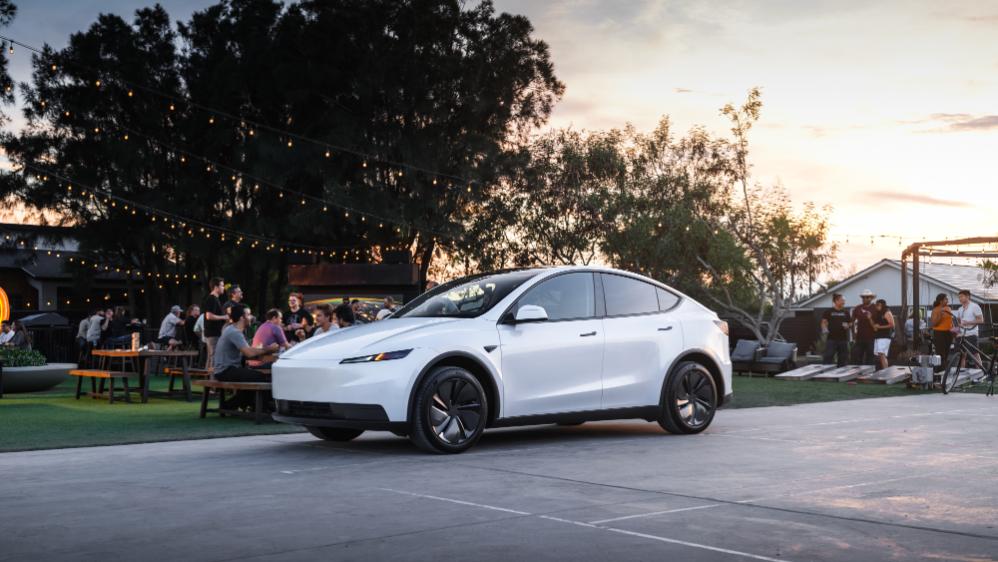
Tesla has trimmed its Model Y offerings as its Standard All-Wheel-Drive configuration has been removed from the online configurator after roughly nine months on sale. The move follows the removal of the Cybertruck, as its trims have also been minimized as that vehicle heads for total discontinuation at the end of Summer 2027.
Launched in February 2026 as a mid-tier dual-motor option between the Rear-Wheel-Drive model and the Premium trims, the Standard All-Wheel-Drive Model Y offered 294 miles of range and a 4.6-second 0-60 mph time in a stripped-down package.
🚨 Tesla has pulled the $41,990 Model Y AWD from its U.S. configurator after nine months on sale.
The cheapest AWD Model Y you can order is now the $49,990 Premium AWD, with Premium deliveries quoted for Jan–Mar 2027.
The $39,990 RWD stays, and AWD units remain in inventory. https://t.co/uROJp2lVpx
— TESLARATI (@Teslarati) November 13, 2026
With it gone, the cheapest new AWD Model Y buyers can configure is now the Premium AWD at $49,990, with estimated deliveries pushed into January–March 2027. The $39,990 rear-wheel-drive Model Y remains available for custom orders, and some AWD units are still listed in inventory.
The move arrives days after Tesla sharply narrowed its Cybertruck lineup. New orders for the Dual Motor AWD and Premium AWD versions have been disabled, leaving only the high-performance Cyberbeast—priced around $109,990 before fees—as the sole configurable option.
Elon Musk has stated that Cybertruck production at Gigafactory Texas will wind down around the middle to late summer of 2027 to free manufacturing space for greater Cybercab output. Tesla has raised prices on remaining trims and is prioritizing higher-margin builds while working through an existing order backlog that exceeds what the line can complete before conversion.
These parallel decisions reflect a broader effort to simplify Tesla’s retail customer lineup. Lower-volume or lower-margin variants are being phased out or deprioritized in favor of core, higher-spec models that generate stronger profitability and clearer production planning.
For the Model Y, this concentrates volume on the remaining RWD and Premium configurations while Premium deliveries already stretch into 2027. For the Cybertruck, it accelerates the transition away from a stainless-steel pickup that underperformed relative to initial volume expectations.
Tesla Model Y Standard Full Review: Is it worth the lower price?
The freed capacity and reduced complexity directly support Cybercab scaling. Tesla began pilot Cybercab production at Giga Texas in early 2026, launched paid autonomous rides in Austin in September, and is preparing for substantial volume growth.
By streamlining the existing vehicle portfolio, the company is reallocating factory space, engineering attention, and supply-chain resources toward its purpose-built Robotaxi, which lacks a steering wheel or pedals and is designed exclusively for unsupervised autonomy.
The result is a leaner retail lineup today and a clearer path to high-volume Cybercab deployment tomorrow.
Elon Musk
SpaceX Starship is going for a catch that could change spaceflight forever
SpaceX will try to catch both Starship stages today, a first for any orbital rocket.

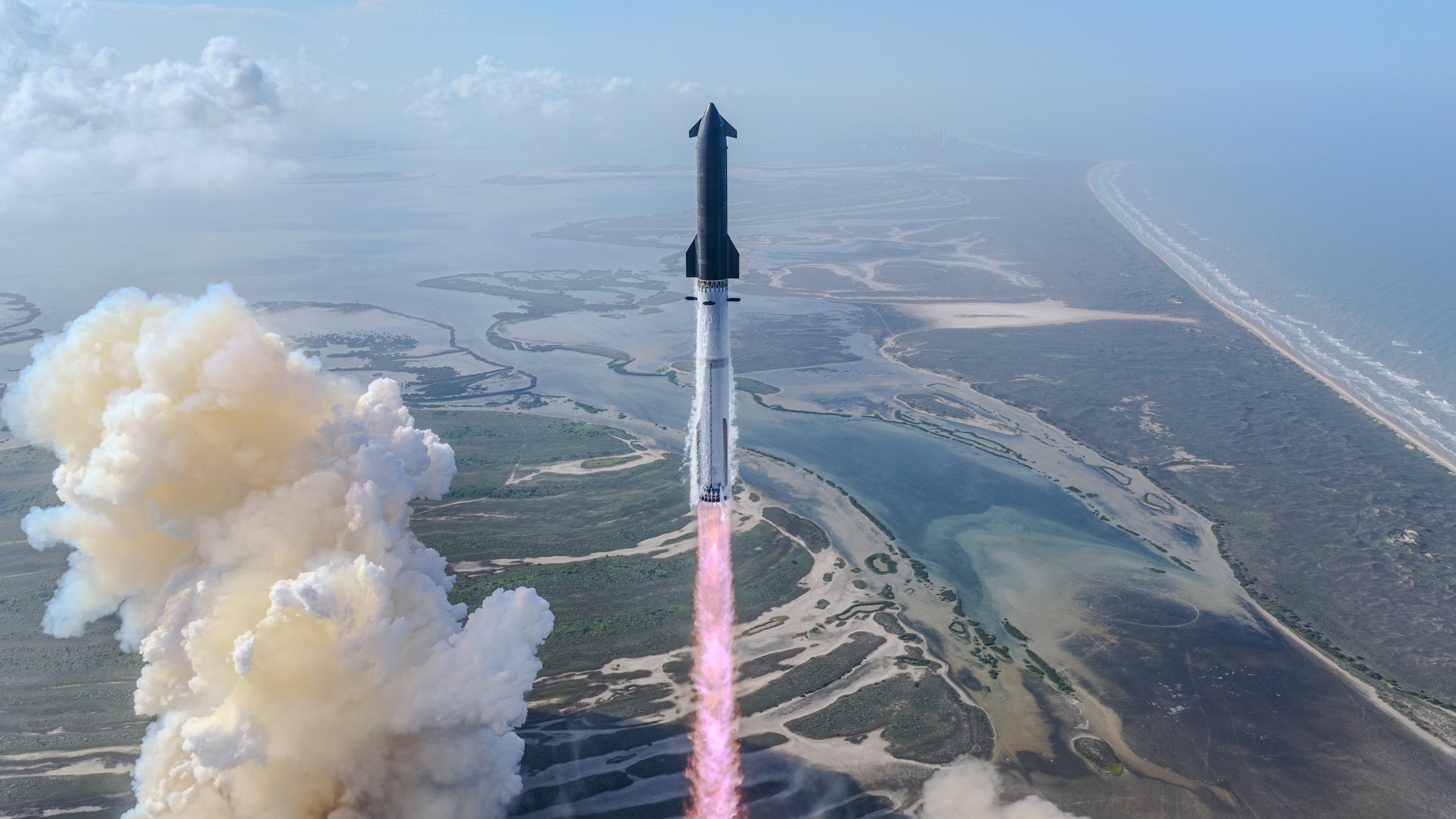
SpaceX is set to launch Starship Flight 15 from Starbase on Friday afternoon, and if both stages make it back to the tower, the mission will go down as the first time an orbital rocket has ever been fully recovered. The 75 minute launch window opens at 4:45 p.m. CT from Pad 2, a day after SpaceX rolled Ship 42 out to the pad and shared photos of the move on X.
The first catch comes quickly. About six and a half minutes after liftoff, Booster 22 is scheduled to fly back to Starbase and settle into the launch tower’s chopstick arms, the first catch attempt for SpaceX’s V3 Super Heavy. SpaceX has caught the booster three times before most recently in March 2025.
Ship 42 moves to the Starbase pad ahead of launch https://t.co/pMUFTHneJQ — SpaceX (@SpaceX) November 13, 2026
The second catch is the one that has never been done. Ship 42 will climb to an orbit about 275 kilometers up, deploy 26 Starlink V3 satellites and complete about 14 orbits. Three of those satellites carry cameras to inspect the ship’s heat shield before it commits to coming home. If its reentry, landing burn and tower approach systems pass their checks, the ship will fire its engines to leave orbit, fall through the atmosphere in its belly flop position, flip vertical and drop into the tower about 22 and a half hours after launch, on Saturday afternoon. SpaceX gave a preview of that maneuver in an animation during its third quarter earnings webcast.
Elon Musk described a successful double catch on that call as “the first time that an orbital launch vehicle has been fully recovered” and a “profound technology milestone,” putting the odds of catching the ship at “more likely than not.” SpaceX has called it a potential “breakthrough moment in making Starship a reliable, rapidly reusable rocket,”
Reuse is where the economics change. Falcon 9 lands its boosters routinely, but its upper stage is thrown away on every flight. Starship is designed so both stages can be refueled and flown again, which is key to cutting launch costs. That matters for Starlink, where each V3 satellite is expected to carry roughly 10 times the download capacity of the V2 Mini satellites flying today, and for Starmind, SpaceX’s planned constellation of AI compute satellites.
It matters for NASA too. Starship is the lunar lander for the Artemis program, and reaching the Moon requires refilling a ship in orbit using several tanker flights. That plan only works if Starships can fly again and again. Musk has said he expects Starship to reach a weekly launch cadence in the first half of 2027.
Investors are paying attention. Morgan Stanley’s Adam Jonas wrote this week that a catch of both stages would likely be “a material positive” for SpaceX stock.
The last Starship flight in September reached orbit for the first time but ended after about three hours with a splashdown in the Pacific, short of its planned 10 hours, after some engines shut down. Since then, Booster 22 has completed a full 33 engine static fire and Ship 42 a six engine firing, as Teslarati previously reported. As of Friday morning, SpaceX was still waiting on the FAA to approve a license change covering the ship’s return over land.

SpaceX Starship Flight 15: How to watch the double catch attempt

Tesla trims Model Y offerings as All-Wheel-Drive gets the axe


