
Investor's Corner
Lucid compared to Tesla, Ferrari as Bank of America initiates coverage

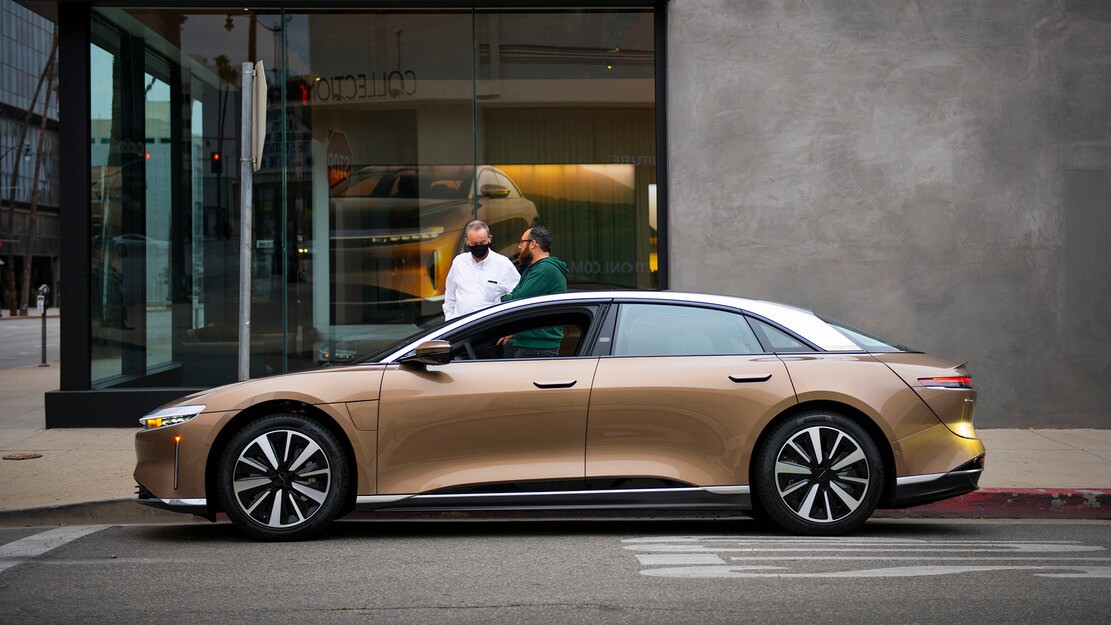
Lucid Group (NASDAQ: LCID) is being compared to EV leader Tesla and legendary Italian performance vehicle company Ferrari by Bank of America, which initiated coverage on the electric car company’s stock today. Bank of America’s coverage predicts Lucid stock will jump by 50% in the coming years as the company holds high expectations from analysts.
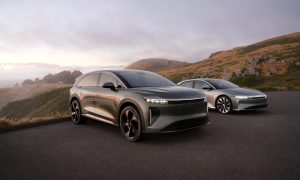
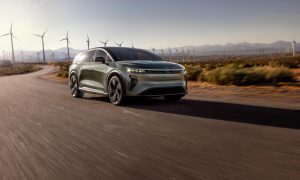
Lucid, led by CEO and CTO Peter Rawlinson, a former Tesla employee, is set to launch its first vehicle, the Air, later this year. After the company became publicly traded earlier in 2021 after a merger with Churchill Capital Corp. IV, analysts have started to break down the company’s potential in an emerging EV market. Bank of America said that the company is undoubtedly a reputable, competitive threat to other companies like Tesla, Rivian, and Ford.
Bank of America said in their note to investors that Lucid’s “innovative technology, attractive product, compelling brand, clean sheet manufacturing approach, and impressive management” are key factors in the company’s quest to become number one in the sector. With notable and experienced executives, a quality product with the Air Dream Edition, and a broad-scale manufacturing plant in Casa Grande, Arizona, Lucid has all the ingredients for success. The question is whether the company can follow through in production as it has plenty of advantages.
The analysts at Bank of America have a bullish view of Lucid based on an EV/sales ratio of around 3.0x and an EV/EBITDA multiple of around 37x for 2025 estimates. Analyst John Murphy said, “These are a premium to TSLA’s early trading multiples and to average multiples from EV OEM SPAC peers, but still a notable discount to TSLA’s recent trading multiples (forward five-year basis), reflecting our view of LCID as one of the most legitimate start-up EV automakers.” The analyst also called Lucid the “Tesla/Ferrari of new automakers” and stated that the company is “one of the most legitimate start-up EV makers.”
Lucid announces Air production preview event in late September
Lucid had its first coverage initiated late last week by CFRA analyst Garrett Nelson. In his note, Nelson said that Lucid has plenty of competitive advantages that spawn from its first-class specs on its forthcoming luxury EV models, strong balance sheet and management team, and brand new factory in Arizona.” Nelson also added that “LCID appears to check all the boxes of an industry newcomer with staying power.” However, CFRA is also aware of the tough road it could encounter based on Tesla’s “formidable competitive moat,” which is likely to slow down their anticipated momentum.
Lucid has a $30 price target from Bank of America’s Murphy. John Murphy is ranked 1,070 out of 7,641 analysts and has a success rate of 62% and an average return of 12.1%, TipRanks says.
Disclosure: Joey Klender is not an LCID Shareholder and has no plans to initiate any positions.







Elon Musk
Tesla investors will be shocked by Jim Cramer’s latest assessment
Jim Cramer is now speaking positively about Tesla, especially in terms of its Robotaxi performance and its perception as a company.
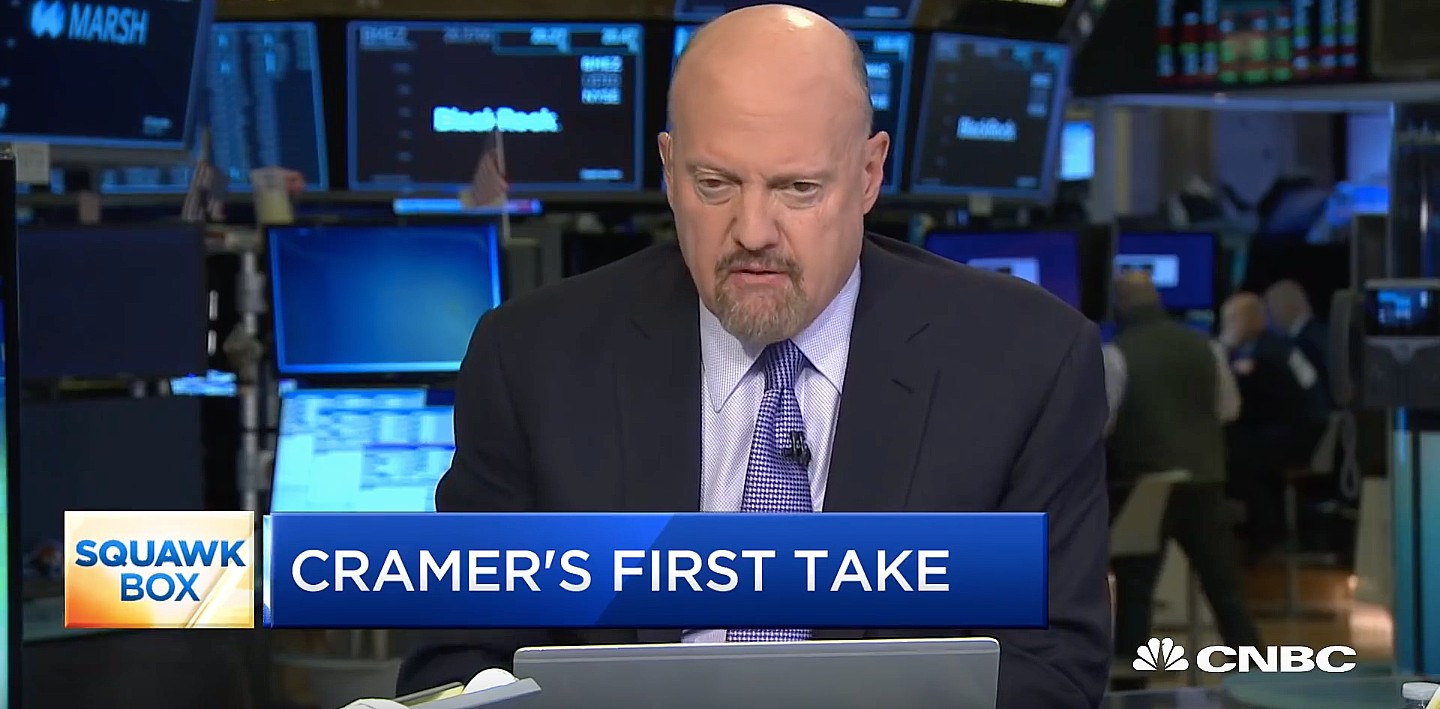
Tesla investors will be shocked by analyst Jim Cramer’s latest assessment of the company.
When it comes to Tesla analysts, many of them are consistent. The bulls usually stay the bulls, and the bears usually stay the bears. The notable analysts on each side are Dan Ives and Adam Jonas for the bulls, and Gordon Johnson for the bears.
Jim Cramer is one analyst who does not necessarily fit this mold. Cramer, who hosts CNBC’s Mad Money, has switched his opinion on Tesla stock (NASDAQ: TSLA) many times.
He has been bullish, like he was when he said the stock was a “sleeping giant” two years ago, and he has been bearish, like he was when he said there was “nothing magnificent” about the company just a few months ago.
Now, he is back to being a bull.
Cramer’s comments were related to two key points: how NVIDIA CEO Jensen Huang describes Tesla after working closely with the Company through their transactions, and how it is not a car company, as well as the recent launch of the Robotaxi fleet.
Jensen Huang’s Tesla Narrative
Cramer says that the narrative on quarterly and annual deliveries is overblown, and those who continue to worry about Tesla’s performance on that metric are misled.
“It’s not a car company,” he said.
He went on to say that people like Huang speak highly of Tesla, and that should be enough to deter any true skepticism:
“I believe what Musk says cause Musk is working with Jensen and Jensen’s telling me what’s happening on the other side is pretty amazing.”
Tesla self-driving development gets huge compliment from NVIDIA CEO
Robotaxi Launch
Many media outlets are being extremely negative regarding the early rollout of Tesla’s Robotaxi platform in Austin, Texas.
There have been a handful of small issues, but nothing significant. Cramer says that humans make mistakes in vehicles too, yet, when Tesla’s test phase of the Robotaxi does it, it’s front page news and needs to be magnified.
He said:
“Look, I mean, drivers make mistakes all the time. Why should we hold Tesla to a standard where there can be no mistakes?”
It’s refreshing to hear Cramer speak logically about the Robotaxi fleet, as Tesla has taken every measure to ensure there are no mishaps. There are safety monitors in the passenger seat, and the area of travel is limited, confined to a small number of people.
Tesla is still improving and hopes to remove teleoperators and safety monitors slowly, as CEO Elon Musk said more freedom could be granted within one or two months.
Investor's Corner
Tesla gets $475 price target from Benchmark amid initial Robotaxi rollout
Tesla’s limited rollout of its Robotaxi service in Austin is already catching the eye of Wall Street.

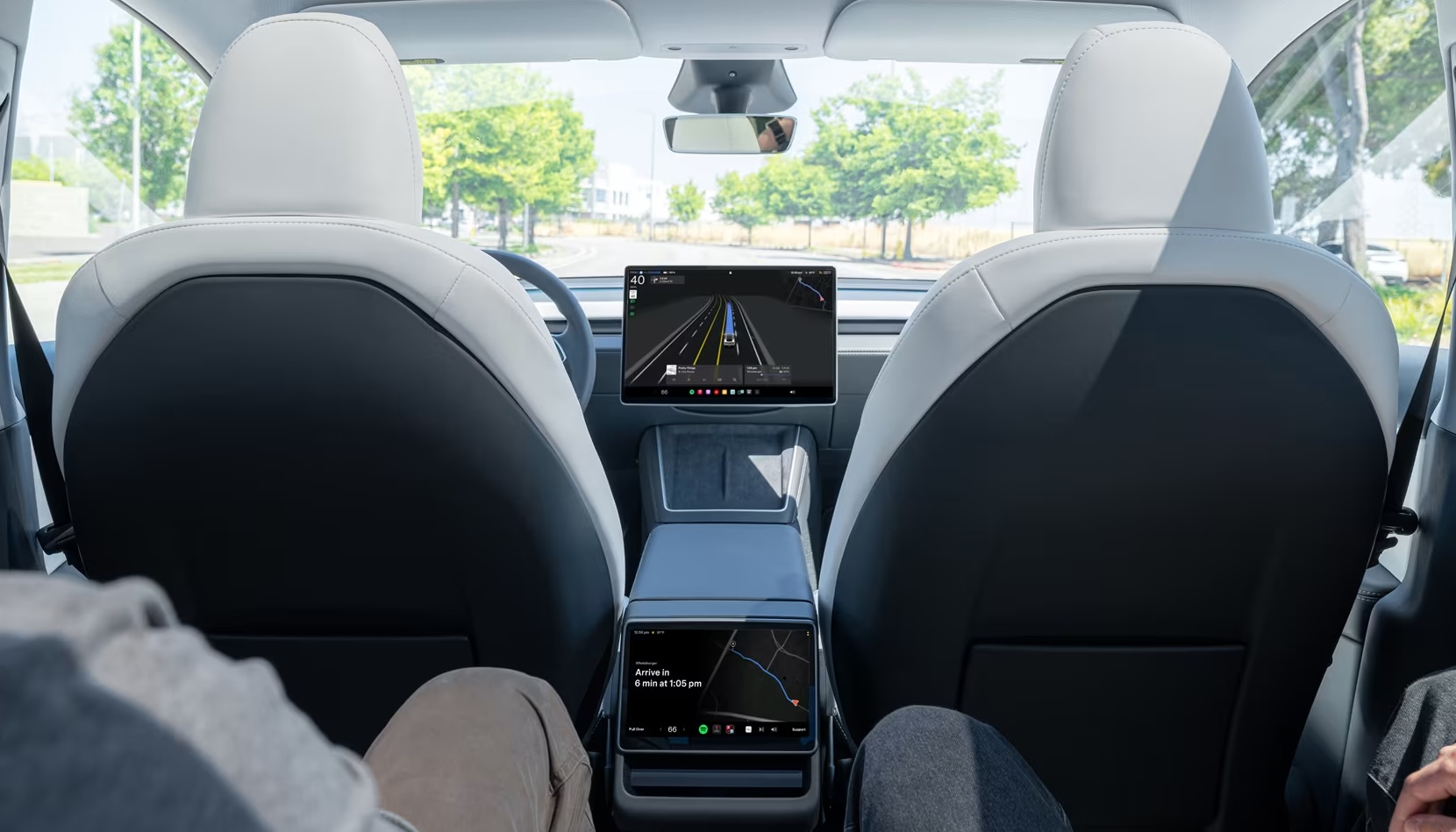
Venture capital firm Benchmark recently reiterated its “Buy” rating and raised its price target on Tesla stock (NASDAQ: TSLA) from $350 to $475 per share, citing the company’s initial Robotaxi service deployment as a sign of future growth potential.
Benchmark analyst Mickey Legg praised the Robotaxi service pilot’s “controlled and safety-first approach,” adding that it could help Tesla earn the trust of regulators and the general public.
Confidence in camera-based autonomy
Legg reiterated Benchmark’s belief in Tesla’s vision-only approach to autonomous driving. “We are a believer in Tesla’s camera-focused approach that is not only cost effective but also scalable,” he noted.
The analyst contrasted Tesla’s simple setup with the more expensive hardware stacks used by competitors like Waymo, which use various sophisticated sensors that hike up costs, as noted in an Investing.com report. Compared to Tesla’s Model Y Robotaxis, Waymo’s self-driving cars are significantly more expensive.
He also pointed to upcoming Texas regulations set to take effect in September, suggesting they could help create a regulatory framework favorable to autonomous services in other cities.
“New regulations for autonomous vehicles are set to go into place on Sept. 1 in TX that we believe will further help win trust and pave the way for expansion to additional cities,” the analyst wrote.
Tesla as a robotics powerhouse
Beyond robotaxis, Legg sees Tesla evolving beyond its roots as an electric vehicle maker. He noted that Tesla’s humanoid robot, Optimus, could be a long-term growth driver alongside new vehicle programs and other future initiatives.
“In our view, the company is undergoing an evolution from a trailblazing vehicle OEM to a high-tech automation and robotics company with unmatched domestic manufacturing scale,” he wrote.
Benchmark noted that Tesla stock had rebounded over 50% from its April lows, driven in part by easing tariff concerns and growing momentum around autonomy. With its initial Robotaxi rollout now underway, the firm has returned to its previous $475 per share target and reaffirmed TSLA as a Benchmark Top Pick for 2025.
Elon Musk
Tesla blacklisted by Swedish pension fund AP7 as it sells entire stake
A Swedish pension fund is offloading its Tesla holdings for good.
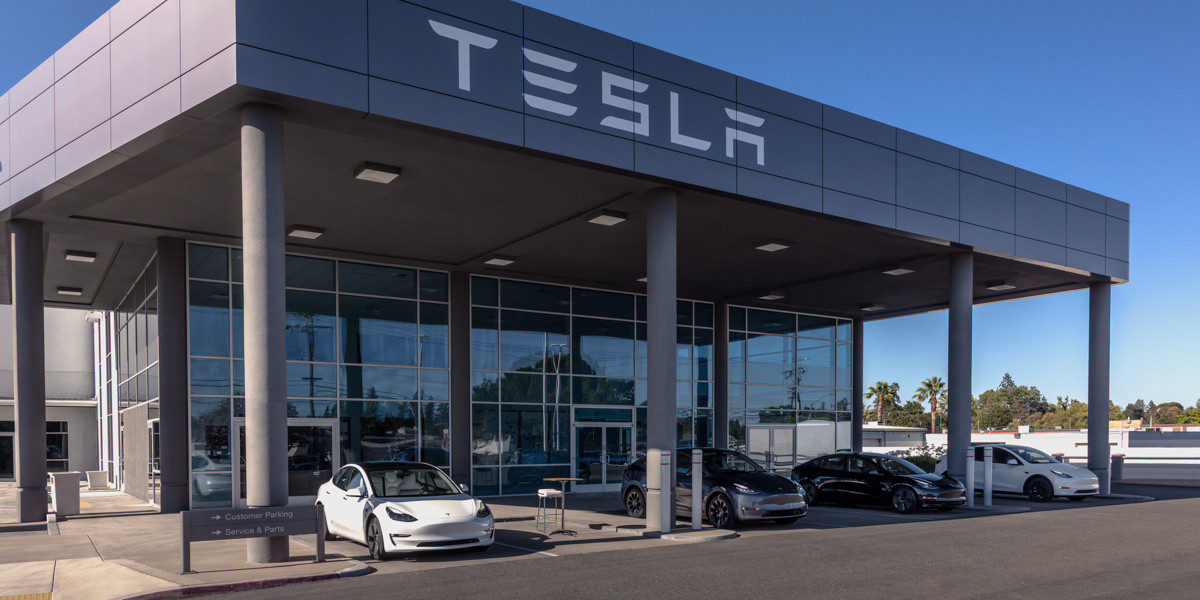
Tesla shares have been blacklisted by the Swedish pension fund AP7, who said earlier today that it has “verified violations of labor rights in the United States” by the automaker.
The fund ended up selling its entire stake, which was worth around $1.36 billion when it liquidated its holdings in late May. Reuters first reported on AP7’s move.
Other pension and retirement funds have relinquished some of their Tesla holdings due to CEO Elon Musk’s involvement in politics, among other reasons, and although the company’s stock has been a great contributor to growth for many funds over the past decade, these managers are not willing to see past the CEO’s right to free speech.
However, AP7 says the move is related not to Musk’s involvement in government nor his political stances. Instead, the fund said it verified several labor rights violations in the U.S.:
“AP7 has decided to blacklist Tesla due to verified violations of labor rights in the United States. Despite several years of dialogue with Tesla, including shareholder proposals in collaboration with other investors, the company has not taken sufficient measures to address the issues.”
Tesla made up about 1 percent of the AP7 Equity Fund, according to a spokesperson. This equated to roughly 13 billion crowns, but the fund’s total assets were about 1,181 billion crowns at the end of May when the Tesla stake was sold off.
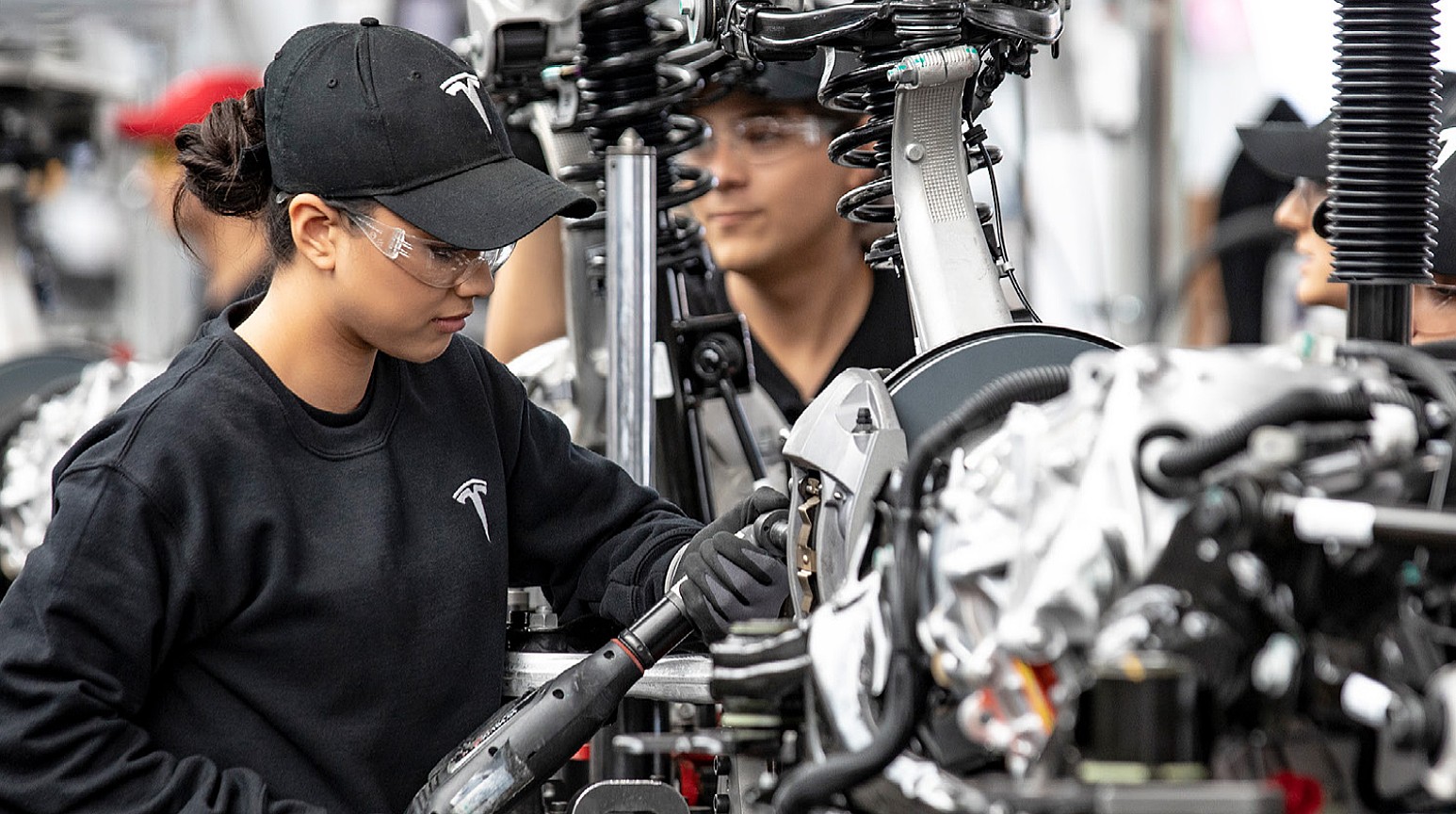
Tesla has had its share of labor lawsuits over the past few years, just as any large company deals with at some point or another. There have been claims of restrictions against labor union supporters, including one that Tesla was favored by judges, as they did not want pro-union clothing in the factory. Tesla argued that loose-fitting clothing presented a safety hazard, and the courts agreed.
(Photo: Tesla)
There have also been claims of racism at the Fremont Factory by a former elevator contractor named Owen Diaz. He was awarded a substantial sum of $137m. However, U.S. District Judge William Orrick ruled the $137 million award was excessive, reducing it to $15 million. Diaz rejected this sum.
Another jury awarded Diaz $3.2 million. Diaz’s legal team said this payout was inadequate. He and Tesla ultimately settled for an undisclosed amount.
AP7 did not list any of the current labor violations that it cited as its reason for

Tesla investors will be shocked by Jim Cramer’s latest assessment

Tesla launches ultra-fast V4 Superchargers in China for the first time

Elon Musk hints at when Tesla could reduce Safety Monitors from Robotaxi


-
 News5 days ago
Tesla Robotaxi’s biggest challenge seems to be this one thing
-
 News2 weeks ago
Tesla confirms massive hardware change for autonomy improvement
-
 Elon Musk2 weeks ago
Elon Musk slams Bloomberg’s shocking xAI cash burn claims
-
 News2 weeks ago
Tesla China roars back with highest vehicle registrations this Q2 so far
-
 News2 weeks ago
Tesla features used to flunk 16-year-old’s driver license test
-
 News2 weeks ago
Texas lawmakers urge Tesla to delay Austin robotaxi launch to September
-
 News2 weeks ago
Tesla dominates Cars.com’s Made in America Index with clean sweep
-

 News2 weeks ago
Tesla’s Grok integration will be more realistic with this cool feature