News
The Tesla Semi’s recent Giga 1 sighting highlights its difference from other concept trucks

To say that the Tesla Semi ruffled some feathers when it was unveiled last year is an understatement. Prior to the reveal of all-electric truck, questions were abounding about its viability as an alternative to conventional diesel-powered long-haulers. Even after the Semi’s specs and performance were announced, the vehicle still attracted a lot of skepticism.
During an event for Daimler’s e-Actos electric truck, for example, the company’s Head of Trucks, Martin Daum, noted that Elon Musk’s claims about the Semi’s 300 and 500-mile range are farfetched. Citing limitations in battery tech, Daum stated that “If Tesla really delivers on this promise, we’ll obviously buy two trucks — one to take apart and one to test because if that happens, something has passed us by. But for now, the same laws of physics apply in Germany and in California.” Jon Mills, a spokesman for engine maker Cummins Inc. noted back in August that while electrification is in the future of the trucking industry, the vehicles are not viable in their current state.
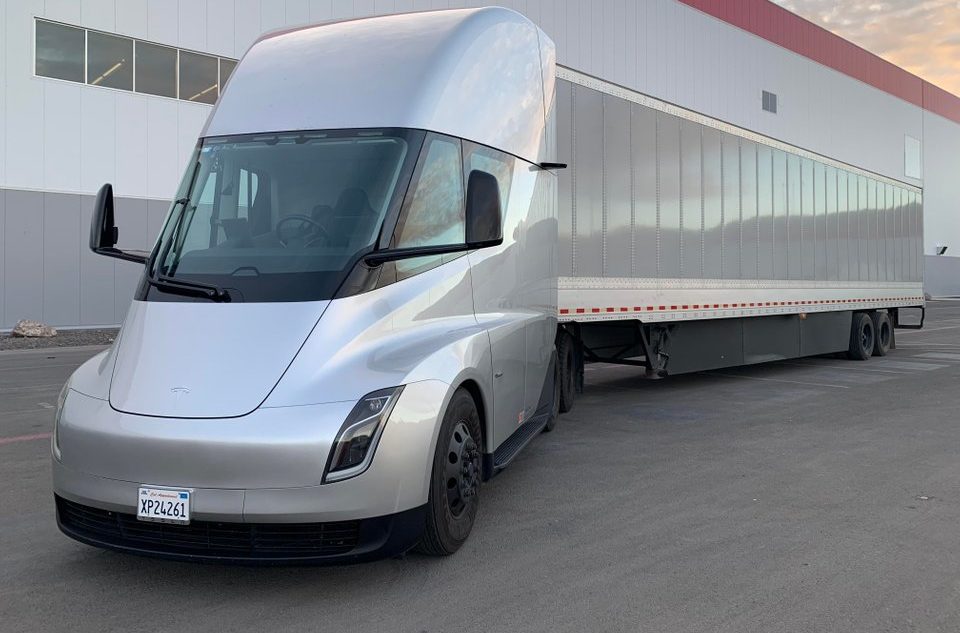
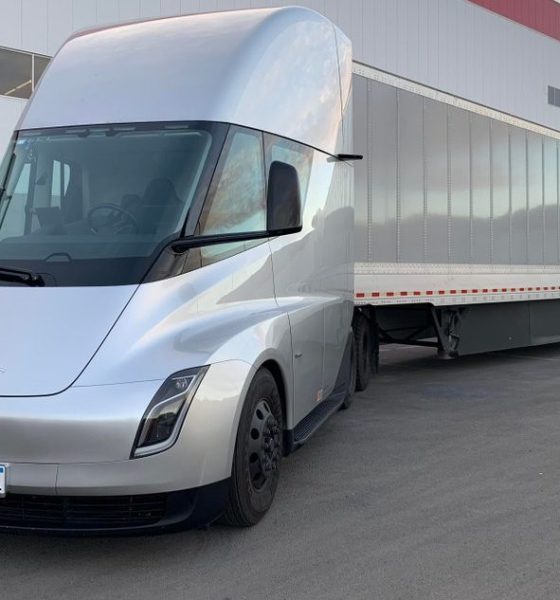
Since it was unveiled, the Tesla Semi has been spotted traveling across the United States. Tesla unveiled two working prototypes of the Semi – one painted silver and the other matte black – when it unveiled the vehicle, and so far, both have been spotted testing on US roads. Both trucks were also sighted delivering cargo from Gigafactory 1 in NV to the Fremont factory in CA. Most recently, the silver Tesla Semi was sighted in Gigafactory 1, hauling a trailer and seemingly ready to transport cargo.
Tesla is not the only manufacturer coming up with a zero-emissions truck. As the transport industry starts accelerating its shift towards electrification, even prominent truck companies are coming up with their own green vehicles. Most of these vehicles exist as concepts for now, but they do give an idea of how veteran truckmakers are approaching the industry’s transition to the electric age.
Ford, for one, recently revealed the F-Vision concept, which is loaded to the teeth with cutting-edge tech, including an adaptable windshield that can lower and rise depending on the driver’s preference, as well as front lights that can be fully customized. Last month, Volvo introduced the Vera, its next-generation semi-trailer concept. Unlike Tesla and Ford’s truck, Volvo’s vehicle does not even have a driver’s cabin, as it is designed fully for autonomy. Startup trucking companies are also showcasing their offerings. Nikola Motors, for one, made headlines when it unveiled its long-range sleeper hydrogen-electric truck – the Nikola One – back in December 2016, and the company has since teased its next offering, a day cab called the Nikola Two.
There is little doubt that the upcoming electric truck concepts that have been unveiled so far are exciting vehicles in their own right. Inasmuch as this is the case, though, many of these impressive concepts feature technology that is still yet to be developed or refined. During the F-Vision’s unveiling, for one, Ford clarified that the truck is strictly a concept for now. Volvo’s Vera is a perfect fit for short-haul trips thanks to its 300 kWh battery that gives it a 187-mile range, but the vehicle can’t be deployed anytime soon since self-driving tech is still under development (even autonomous tech leader Waymo is reportedly struggling with its fleet’s real-world testing). Nikola’s hydrogen-electric trucks are powerful and boast long-range, but they would need a network of H2 refilling stations before they can be a viable alternative to diesel trucks. As a result, most zero-emissions truck concepts, including the Nikola One prototype, are yet to be sighted doing real-world tests on public roads.
-
- The Volvo Vera. [Credit: Volvo]
-
- The Ford F-Vision concept. [Credit: Ford]
-
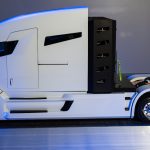
- The Nikola One
This is where the Tesla Semi is different. Among the upcoming electric trucks in the market, the Semi is the one undergoing consistent, intensive real-world testing. The vehicle has been spotted in multiple states since its unveiling, at times even visiting the sites of reservation holders like UPS, J.B. Hunt and PepsiCo. As it conducts its extensive real-world tests, the vehicle undergoes a consistent process of improvement. This was highlighted by Tesla’s Head of Automotive Jerome Guillen during the Q2 2018 earnings call, when he stated that several improvements have already been introduced to the electric truck since it was unveiled last year. Elon Musk even teased on Twitter that the Semi would likely have closer to 600 miles of range per charge. With this, it seems safe to infer that the production version of the Tesla Semi would be better than the prototype that is currently traveling across the country today.
The Tesla Semi balances its features without overdoing it as well. It does not have the cloud-based autonomy of concepts like the Vera or the flashy variable front design of the Ford F-Vision, but ultimately, it does not need to have all these extra bells and whistles to become effective at what it’s designed to do. Tesla created the Semi to be a viable alternative to diesel-powered long-haulers, and if recent sightings and its consistent road tests is any indication, it appears that the vehicle is poised to be exactly that.
The Tesla Semi is expected to start production sometime in 2019. Recent reports have indicated that Tesla is planning on “earnestly” producing the Semi sometime in 2020.



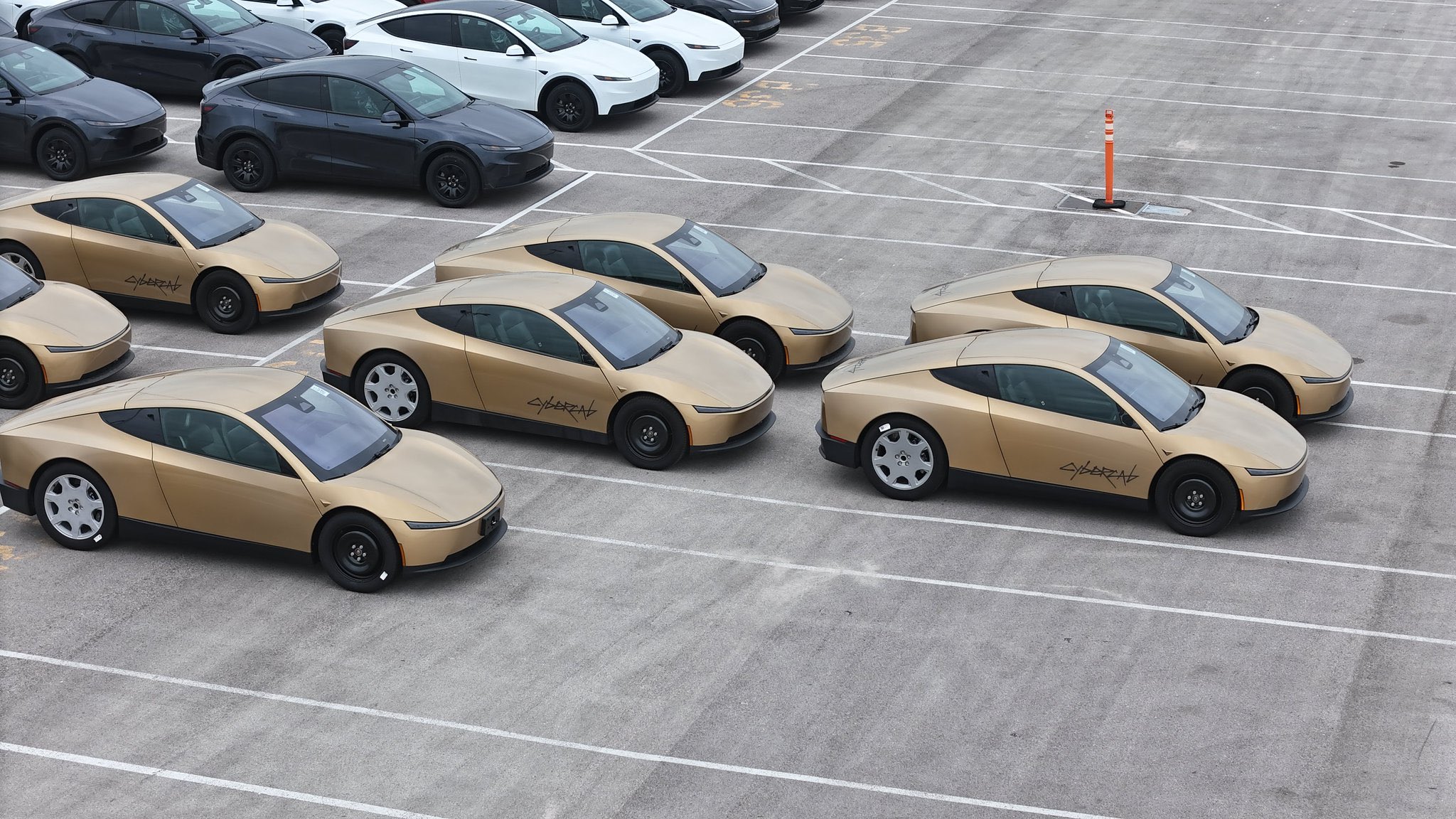
Tesla just gave what is perhaps its biggest signal yet that the launch of the Cybercab, its autonomous ride-hailing-geared car, is imminent.
The Cybercab has been spotted outside of Gigafactory Texas in massive numbers over the past few days, with hundreds of units being stored on property just days after the vehicle received a Certificate of Conformity from the EPA.
Today, things were a bit different.
Cybercabs spotted on Giga Texas property today had an addition: a Cybercab decal on the side, reminiscent of the “Robotaxi” ones that were placed on Model Ys just as the company launched its ride-sharing platform about a year ago.
Giga Texas drone operator Joe Tegtmeyer noticed the change today:
Tesla Cybercabs are now getting “Cybercab” logos on the side of them!
Tesla did the same with Model Ys that were given “Robotaxi” logos: https://t.co/DanANtw1m7 pic.twitter.com/FqOhH0S9Ks
— TESLARATI (@Teslarati) June 19, 2026
Tesla could be signaling that the Cybercab is preparing to enter the Robotaxi fleet in the coming weeks or months with this move. It seems more symbolic than anything; Tesla is ready to throw Cybercabs in the ride-hailing platform just as it did with Model Ys last year.
The addition of the Certificate of Conformity awarded to the Cybercab is another major factor working to Tesla’s advantage. The company now has permission from the EPA to allow the vehicle to operate on public roads and enter the chain of commerce. It’s officially street legal.
Tesla Cybercab specs revealed: range, curb weight, range ratings, and more
The big question that remains is whether Tesla will be able to operate the car without a safety monitor, especially considering it plans to put the car out there without a steering wheel or pedals. With the Cybercab only having a seating capacity of two, it is hard to believe Tesla will even consider putting a Safety Monitor in the car.
It did recently self-certify as Level 4 and has the ability to operate driverless vehicles in the State of Texas under a law that took effect on May 28. You can read more about that here:
Tesla’s Robotaxi dreams just took a massive step toward reality
We’d imagine Cybercabs will be on the roads as soon as July, but August will likely be a better estimate of when the car will be entered into the Cybercab fleet. It all depends at where Tesla is, as they’ve truly prioritized safety with the rollout of the Robotaxi platform.
Elon Musk has publicly questioned Moody’s credit assessments following the rating agency’s decision to assign SpaceX a Baa1 investment-grade rating, two notches above Tesla’s Baa3. The comments came amid discussions comparing the two companies’ financial profiles.
SpaceX earned its first-time Baa1 rating with a stable outlook from Moody’s. The agency highlighted the company’s leadership in orbital launches, the growing recurring revenue from its Starlink satellite network, strong vertical integration, U.S. government contracts, and emerging opportunities in AI infrastructure.
These factors were cited as supporting robust cash flows, margin expansion, and financial flexibility.
Musk responded directly: “Tesla’s credit rating is ridiculously low tbh,” and added, “Yeah, makes no sense. Tesla has over $40B in cash, no debt, and is consistently profitable!” His remarks underscored Tesla’s balance sheet strength and profitability at a time when many traditional automakers continue to report losses in the shift to electric vehicles.
Yeah, makes no sense.
Tesla has over $40B in cash, no debt and is consistently profitable!
— Elon Musk (@elonmusk) June 19, 2026
Tesla maintains a leading position in the global EV market, with diversification into energy and storage, battery technology, and robotics through projects like Optimus. Recent financial updates show the company generated positive free cash flow of $1.4 billion in Q1 2026, supported by operating cash flow of $3.9 billion. Cash and short-term investments stood at approximately $44.7 billion.
Moody’s has affirmed Tesla’s Baa3 issuer rating with a stable outlook in periodic reviews, acknowledging the company’s EV leadership, technology strengths, including AI for autonomous vehicles, solid profitability, and strong liquidity.
Tesla (TSLA) scores Baa3 Moody’s rating for ‘stable’ outlook
However, the agency has also noted challenges in the automotive segment and expectations for margin pressures.
Musk’s critique highlights a common debate about how traditional rating methodologies apply to high-growth, capital-intensive technology companies. SpaceX benefits from long-term government-backed contracts and diversified, recurring revenue streams, while Tesla’s valuation reflects heavy investment in future technologies such as autonomy and robotics.
Both ratings remain investment-grade, yet the one-notch difference has fueled online discussion about potential inconsistencies in evaluating innovative firms.
The exchange comes as SpaceX explores financing options following its recent valuation milestones, while Tesla continues executing on its multi-year roadmap. Musk’s pointed response serves as a reminder that credit ratings, though influential for borrowing costs, represent one lens through which markets assess corporate strength—and that company leaders often view their financial positions through the lens of long-term innovation and cash generation rather than short-term risk metrics alone.
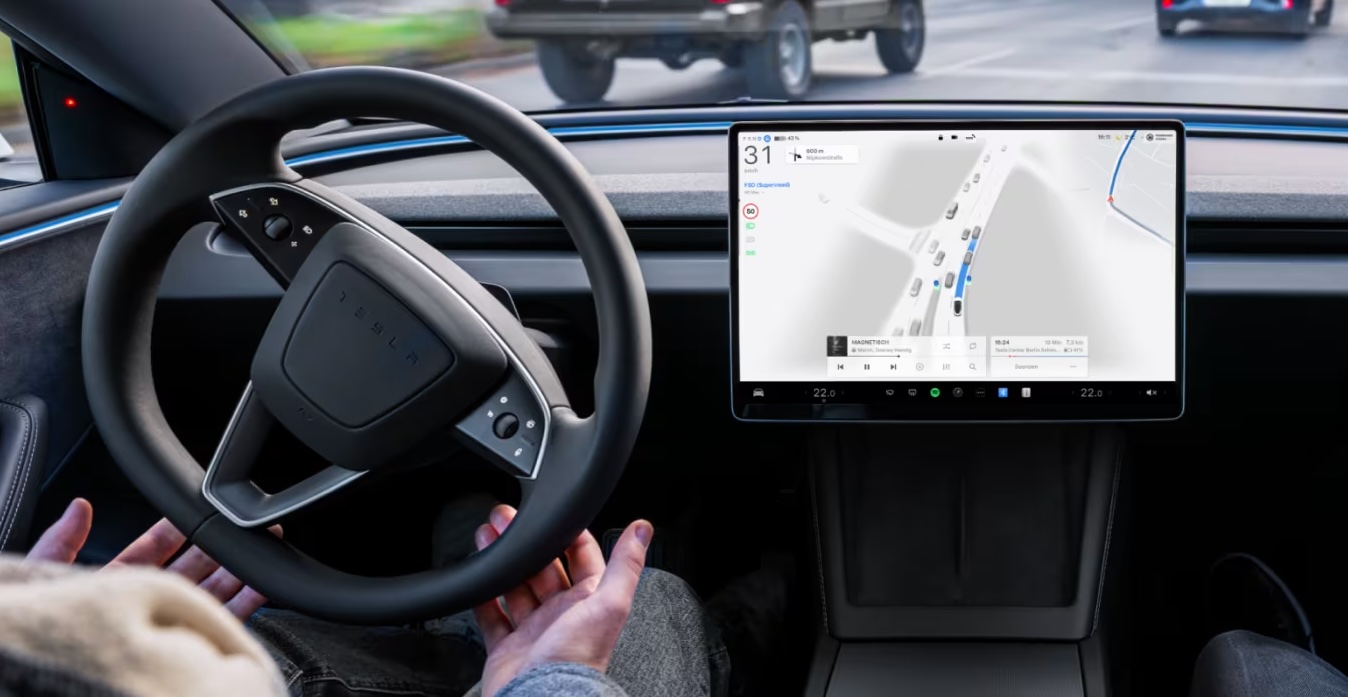
A new report from Reuters claims that a transport authority in Sweden is pushing back against the approval of Tesla’s Full Self-Driving suite because it will travel over speed limits.
The report says the Swedish Transport Administration (TRV) recommends the European Union votes against FSD’s approval. TRV believes it should not be approved until Tesla disables FSD’s ability to speed.
TRV sent a letter to the European Union’s Technical Committee on Motor Vehicles (TCMV), which is set to meet on June 30 to discuss the potential approval of the Tesla FSD suite in the country. Tesla, which has received various approvals in Europe over the past two months, has not provided a comment.
Teslas operating on FSD do travel over the speed limit, depending on the Speed Profile that is chosen. Drivers have the ability to disengage FSD at any point; Tesla specifically states that those supervising the suite are responsible for its actions.
Let’s cut to the chase: humans operating any vehicle speed almost daily in the United States. Realistically, speed limits in the U.S. are more frequently treated as speed minimums. However, other countries are different, and driving behaviors are less aggressive.
TRV believes that “allowing automated systems to systematically exceed legal speed limits…risks undermining both the legal framework and the expected safety benefits of vehicle automation,” the report stated. It’s surprising that Tesla has not received this claim from other countries previously.
This could be a good argument to bring Max Speed back, the setting that previously allowed the driver to choose the absolute fastest the car would travel.
This would still put the responsibility of supervision in the hands of the driver. It would allow the driver to choose whether the car would travel over the speed limit or not, acknowledging that they set the speed, and if they get pulled over, there would be no ability to argue it.
However, it does not seem as if this is something Tesla will do, especially considering many U.S. drivers have requested the feature in an effort to eliminate speeding or at least tone it down. The company has not shown any interest in bringing it back.
Tesla has approvals for FSD in Europe in Estonia, Lithuania, Denmark, the Netherlands, and Belgium.

Tesla Cybercab launch is imminent after latest sighting at Giga Texas

Elon Musk says this part of Tesla ‘makes no sense’


