News
Goodwood hosts the introduction of many new EVs

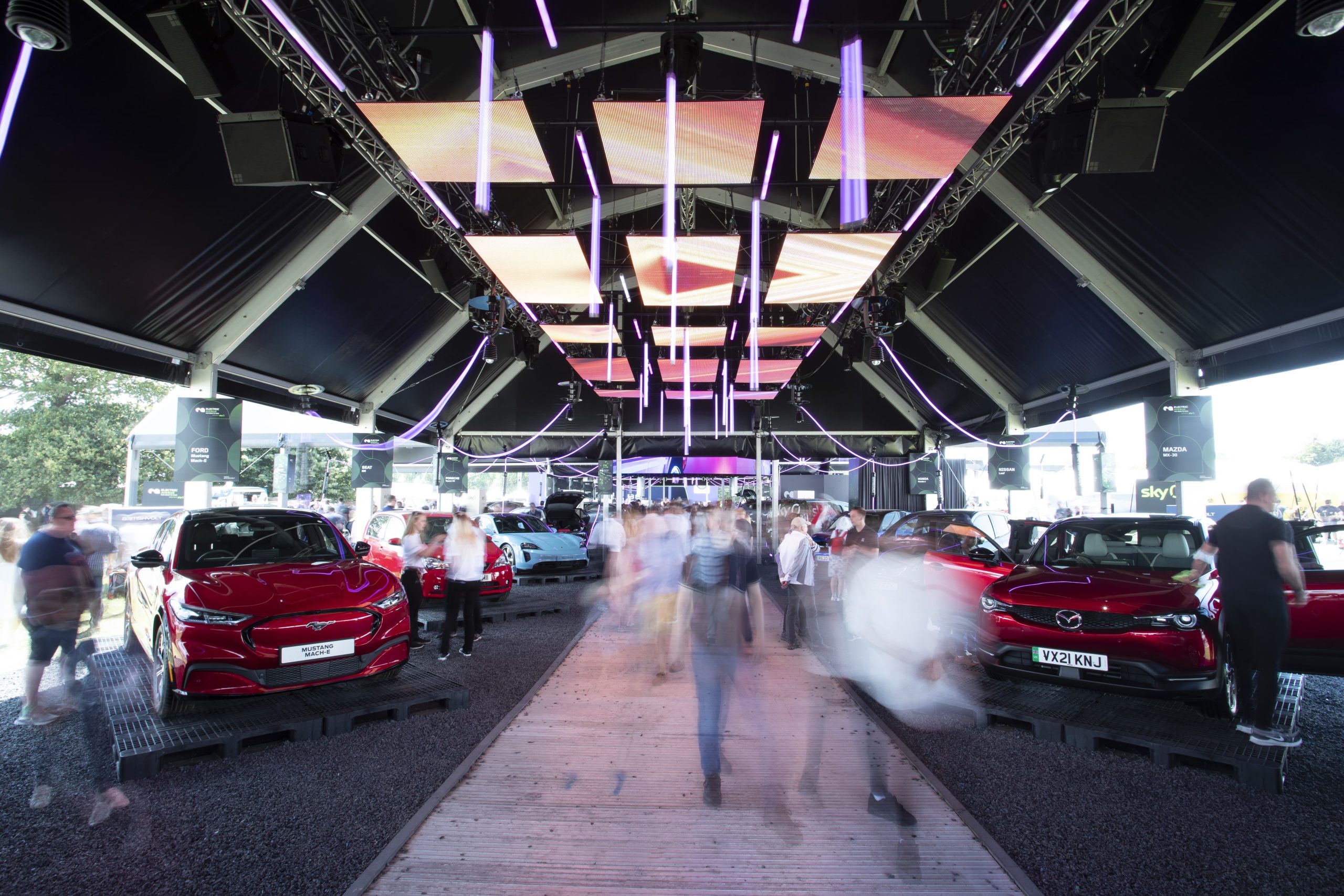
This week, the Goodwood Festival of Speed is happening in West Sussex, England, and many manufacturers are showing off production and concept electric vehicles.
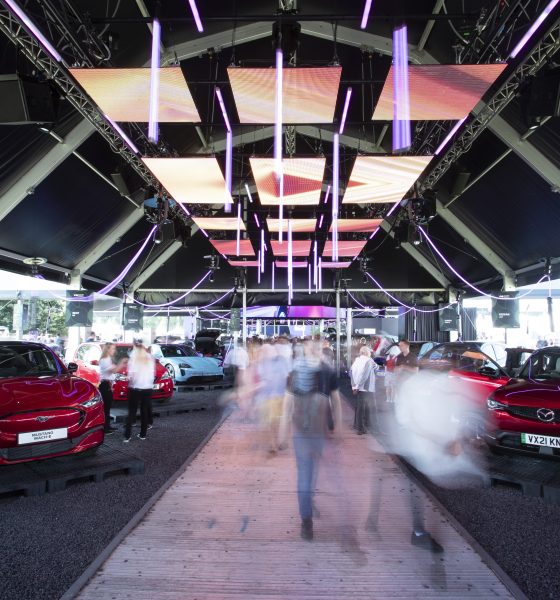
The Goodwood Festival of Speed has been an annual event showing off many different cars since 1993. Since its inception, Goodwood has been the chosen location for many manufacturers to reveal their new cars, especially those who are looking to impress and allure the European market. This year is no different, and electric vehicles have become more of a part of the festival than ever before with the introduction of the Goodwood “Electric Avenue.”
For those unable to attend the event this year, this article will be a culmination of all the new electric vehicles being shown at the event, production, concept, racecar, or otherwise.
Polestar –
-
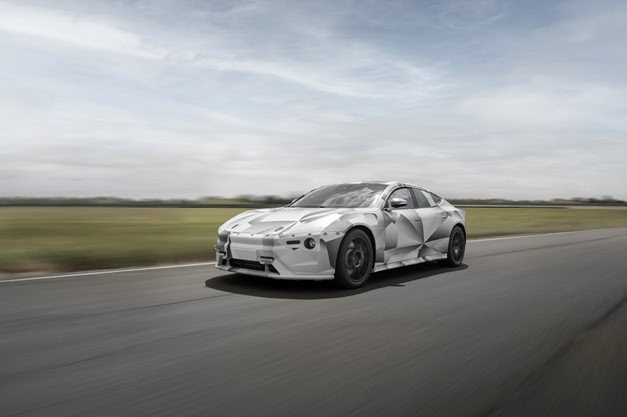
- Polestar 5 prototype on track (Credit: Polestar)
-
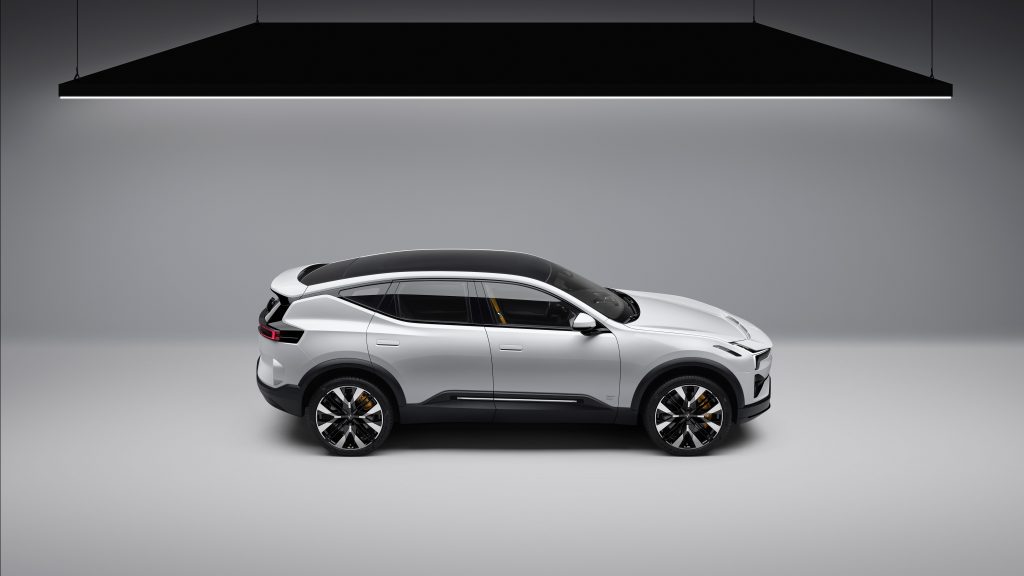
- Polestar to debut first electric performance SUV, Polestar 3, in October 2022
Polestar brought multiple vehicles to the Goodwood festival of speed; the Polestar 2, Polestar 3 SUV, and even their prototype Polestar 5 GT sedan. The Polestar 5 was the star of the show, and according to their press release on the vehicle, the Polestar will have a new 800-volt architecture and will be paired with a dual-motor 884 horsepower and 663 pound-feet of torque motor system. Range information, release date, and pricing have not been released for the vehicle yet.
Polestar has been documenting the process of the transformation of the Polestar Precept concept car into the Polestar 5 that we see today on their YouTube channel. More specific details about interior and exterior design can be found there.
No specific specifications have yet been released for the Polestar 3 SUV. However, in the most recent press release on the SUV, the company claimed it was aiming for a 372-mile WLTP range and would partner with computer chip manufacturer Nvidia to implement a LIDAR system on the vehicle.
Ford –
-
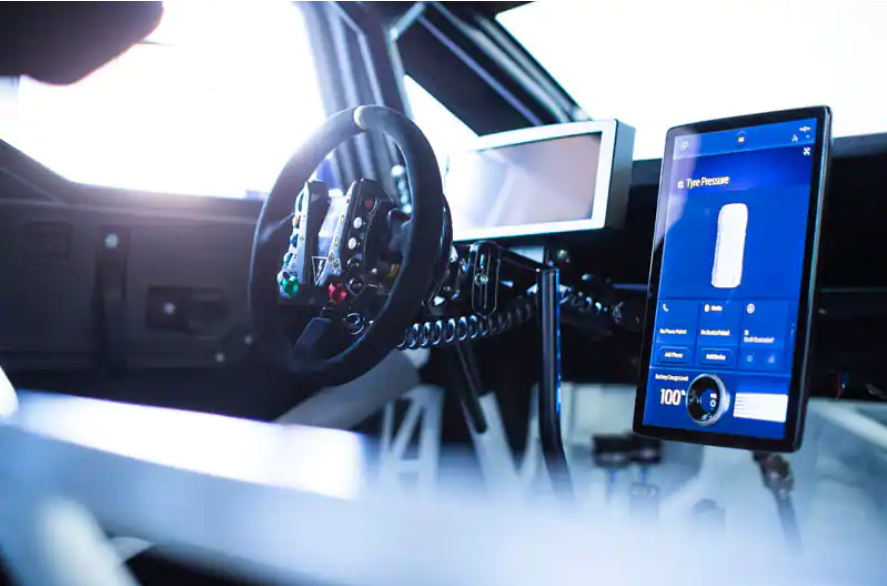
- Ford SuperVan interior (Credit:Ford Performance)
-
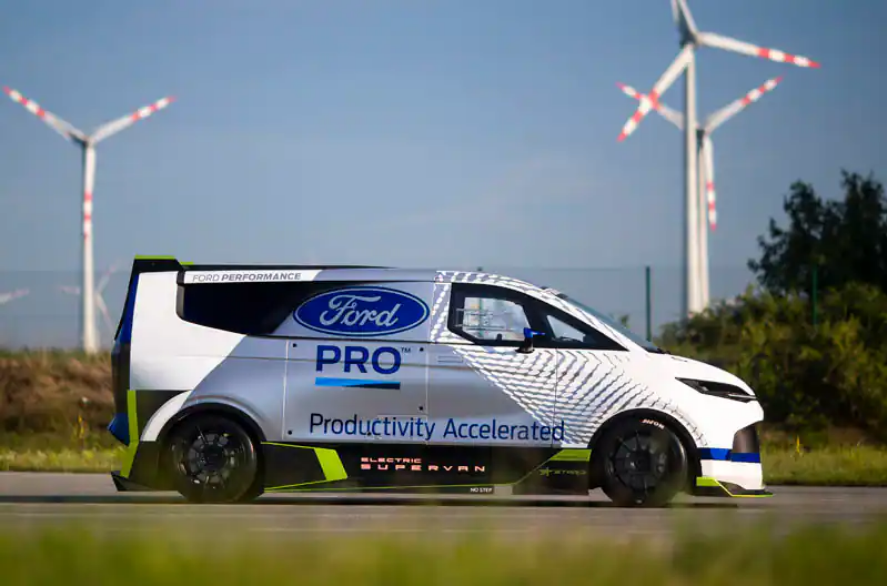
- Ford Supervan side profile (Credit:Ford Performance)
-
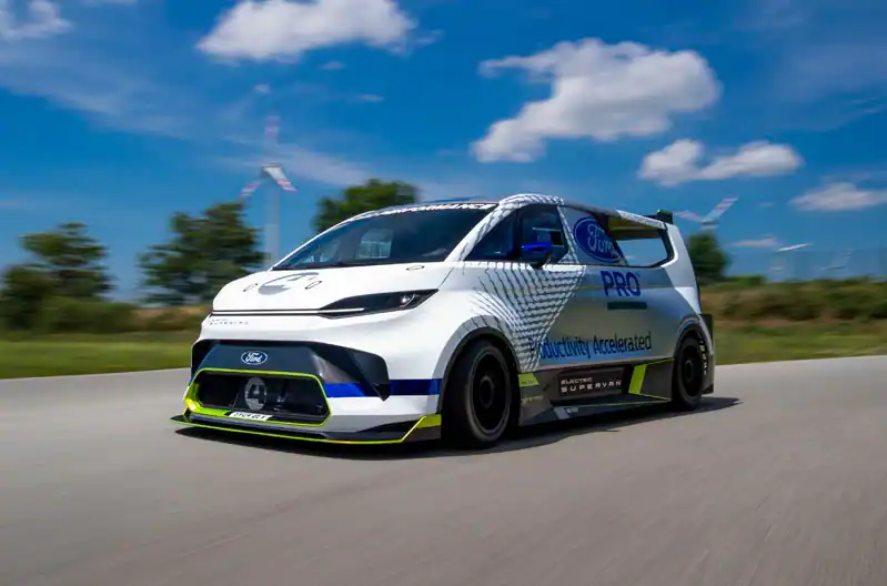
- Ford SuperVan Driver Corner (Credit:Ford Performance)
While headlining their ever-popular Mach E, Ford also revealed their “Pro Electric SuperVan.” The concept of the SuperVan originated, according to MotorTrend, in the early 70s as a cargo van’s body was wrapped around a GT40’s internals. Ford made two generations of Supervan after its first appearance, but in this fourth generation, it is going electric. This proof-of-concept vehicle took the vague body shape of the new Ford E Transit, lowered it to the ground, and introduced massive flying buttresses to the typically tame utility van. In MotorTrend’s interview with Ford, they say that the van can go from 0-60 in just under 2 seconds and that the vehicle has roughly 2000 horsepower. Hopefully, this vehicle, much like previous SuperVans, is not planned to race or be sold. It does highlight some of the amazing electric technology Ford is working to bring to consumers and may even pique the interest of more combustion-minded car enthusiasts.
Lexus –
-
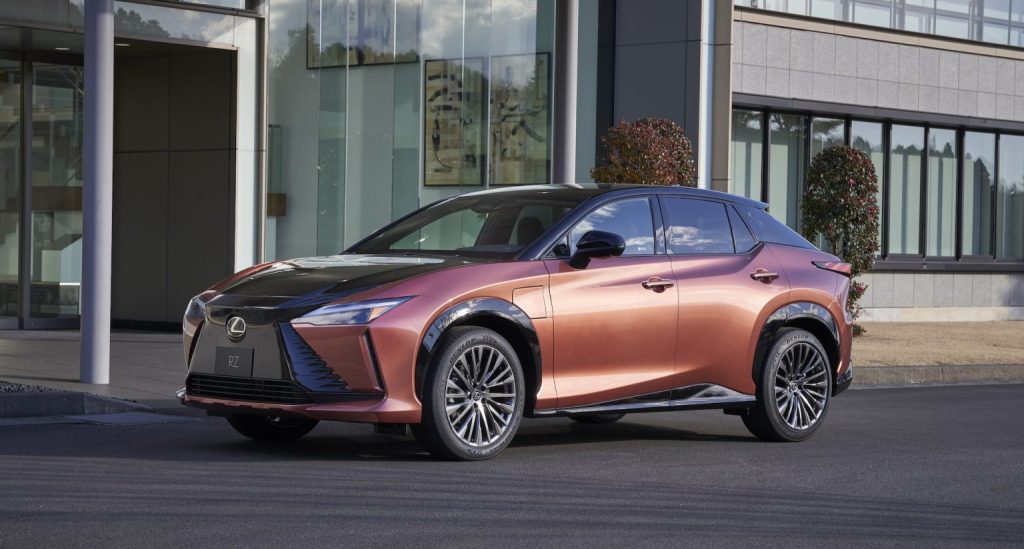
- (Credit: Lexus)
-
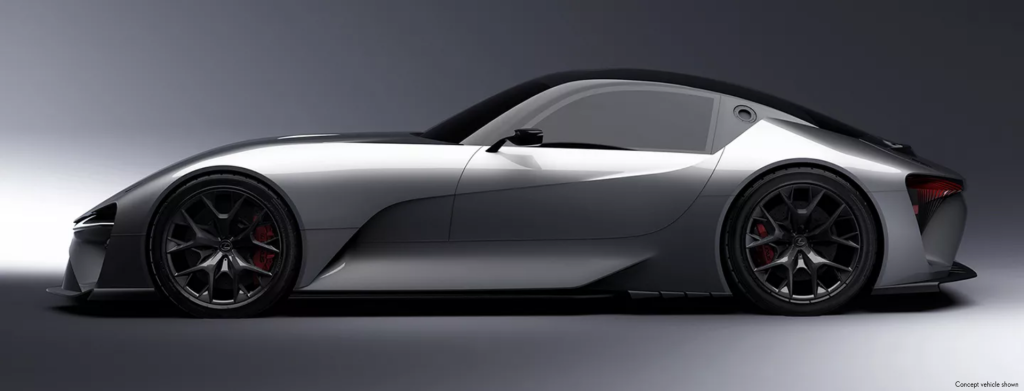
- Lexus Concept Coupe to be unveiled at Goodwood 2022 (Credit:Lexus)
-
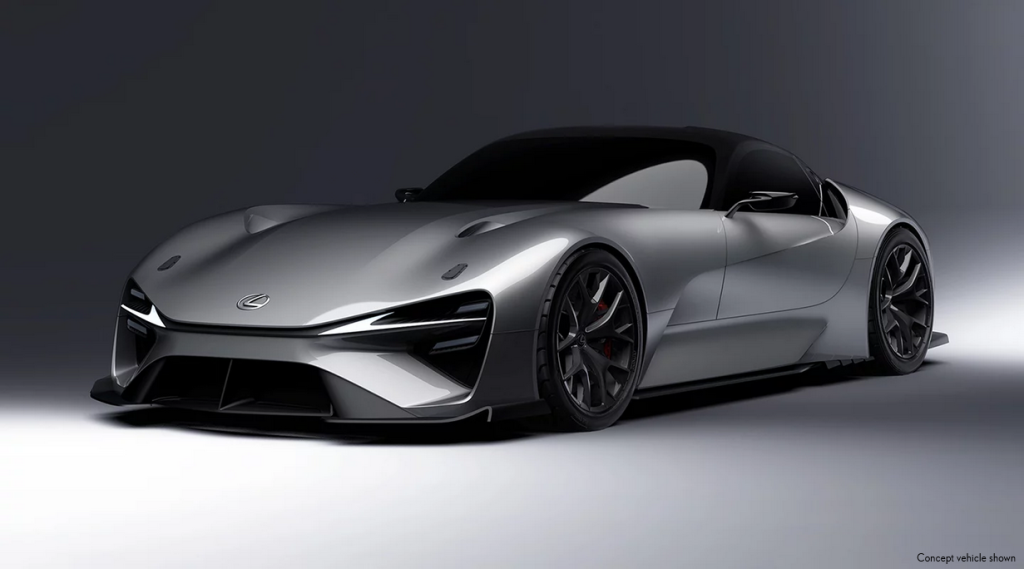
- Lexus Coupe Concept from the front (Credit: Lexus)
Lexus first revealed its LFA lookalike EV back in December of last year, but other than the claim that the vehicle will be able to do 0-60 in the mid-2 seconds, little to nothing is known about the vehicle. From what is listed on the Lexus website, the brand states the vehicle may use solid-state batteries and will hope to achieve a range of 430 miles per charge, a number certainly capable of competing with Tesla if released.
The other vehicle brought to Goodwood by Lexus is the recently revealed RZ 450e, the Lexus variant of the BZ4X/Soltera. Similarly to the other all-wheel-drive variants, the vehicle will have ~226 miles of range, feature an all-wheel-drive setup via dual motors, and will be able to fast charge at 150kW, allowing 20%-80% in roughly half an hour. Where the Lexus differs from its Toyota and Subaru siblings is in its power, the vehicle will produce 312 horsepower compared to the 215 on the Subaru and Toyota.
More broadly, Akio Toyoda announced in December of last year that the Lexus EV coupe and new RZ 450e will be part of 16 new electric vehicles that Toyota plans to bring to the market. These electric vehicles are a key part of Toyota’s carbon neutrality strategy.
Lotus –
-
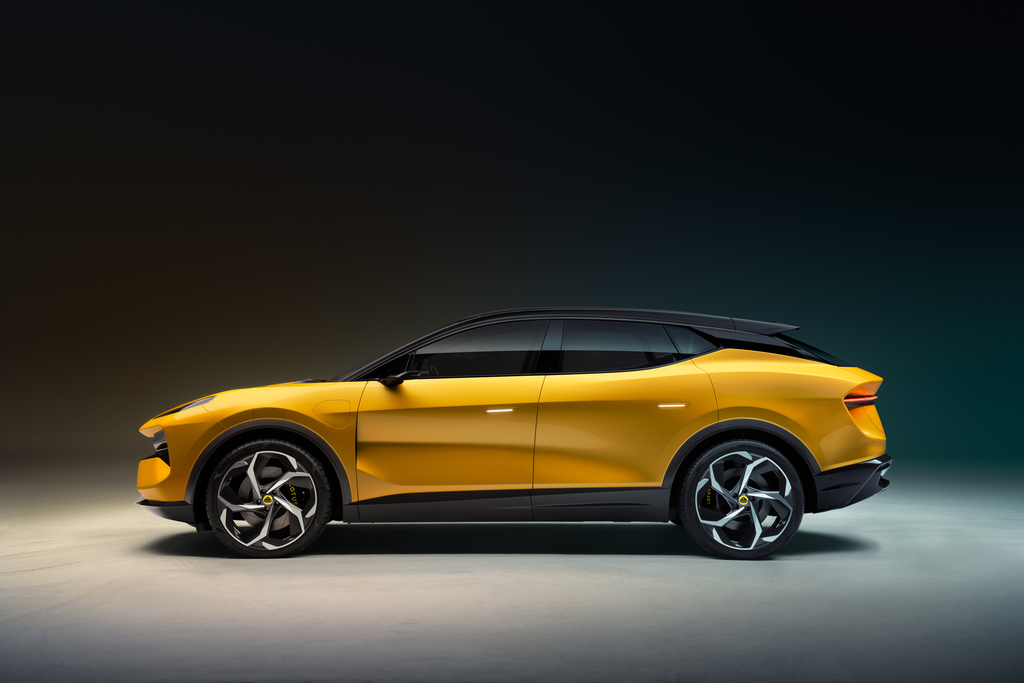
- Lotus Eletre press release March 2022 (Credit: Lotus)
-
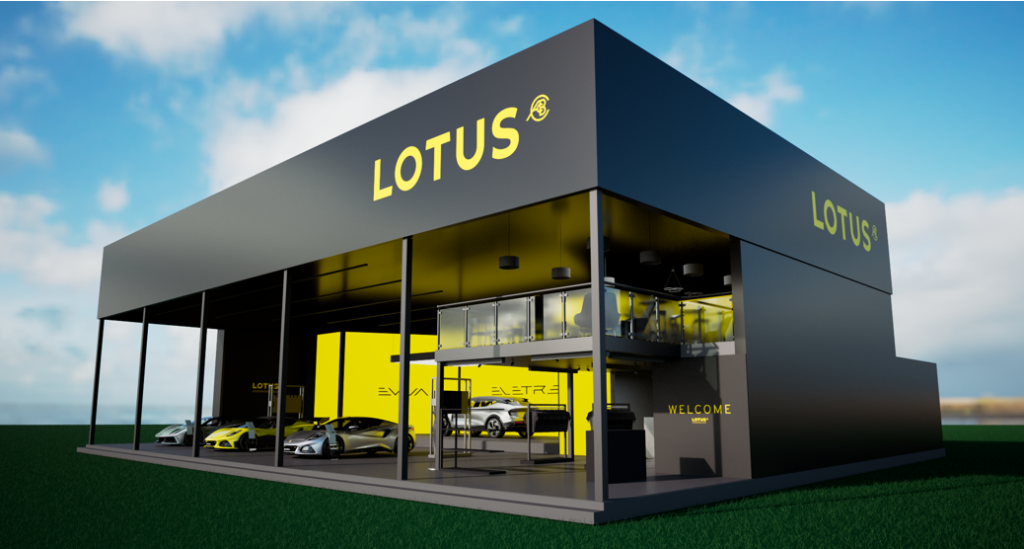
- Lotus Goodwood stand; three car garage 2022 (Credit: Lotus)
-
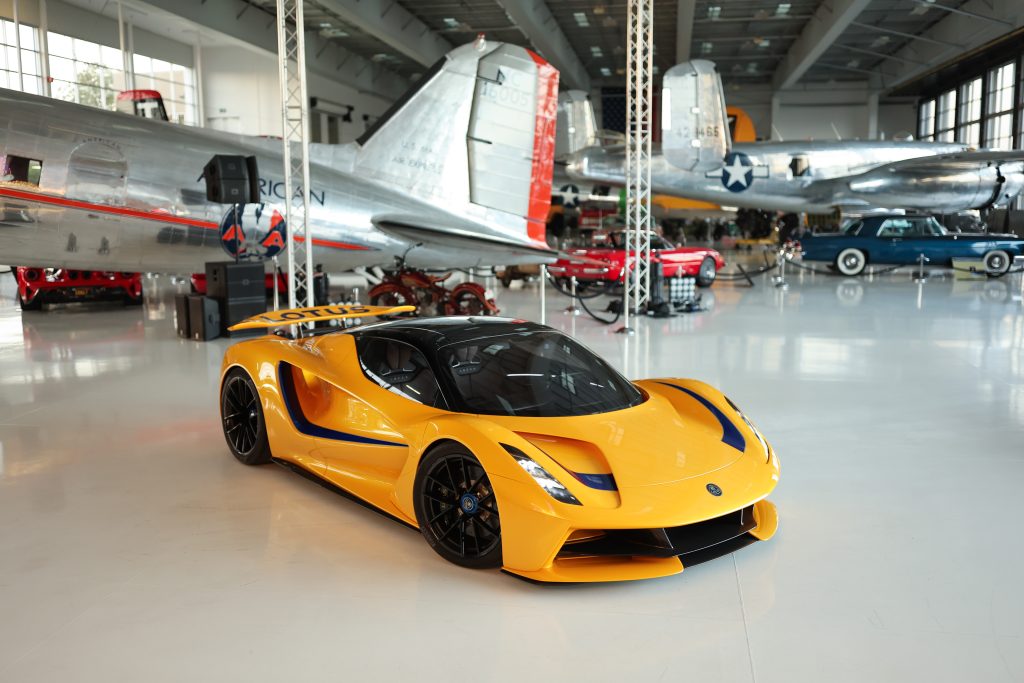
- Lotus Evija at Monterey Car Week (Credit: Lotus)
With the acquisition of the Lotus brand in 2017, the brand has been doing a lot of work to rejuvenate itself. Its most recent attempt to do so comes in the form of two electric vehicles. The Lotus Evija is the brand’s newest quad motor electric hypercar; making 1972 horsepower, weighing only 3703 pounds (making it the lightest production EV according to Lotus), and maintaining a WLTP range of 215 miles.
The other EV shown by Lotus at Goodwood is their new Eletre SUV. This electric SUV is set to compete with the likes of the Tesla Model X Plaid, the Rivian R1S, and perhaps the future Mercedes EQG. The 4wd SUV uses a dual motor setup paired to an over 100kwh battery, is capable of up to 900 horsepower, and claims the first-ever “deployable LIDAR system” in a production EV.
McMurtry –
-
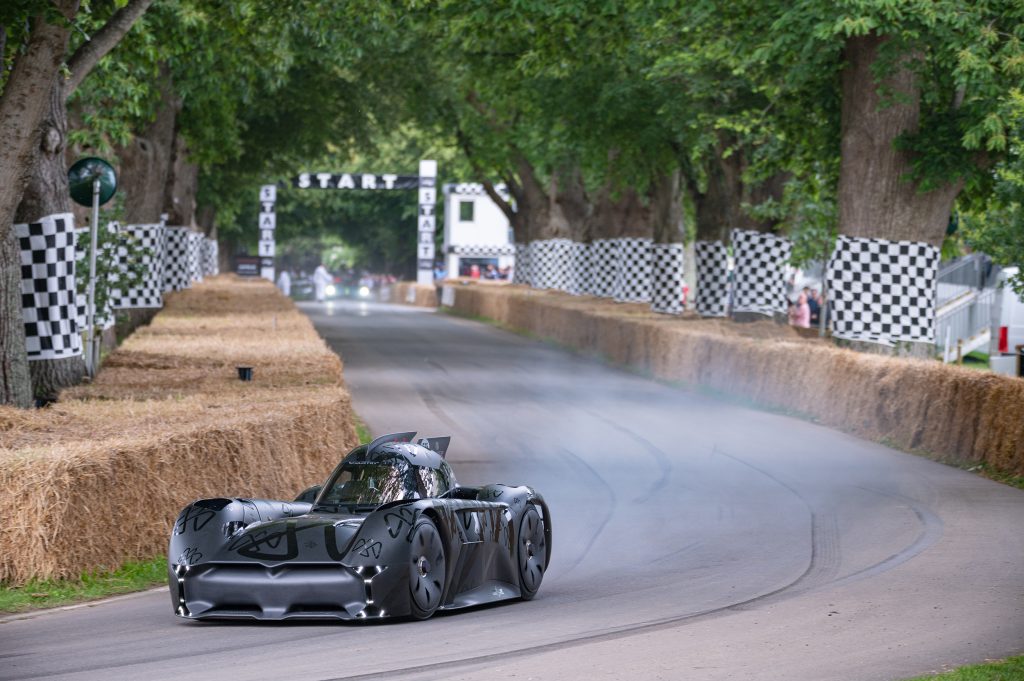
- McMurtry Speirling debut at Goodwood 2022 (Credit:McMurtry)
-
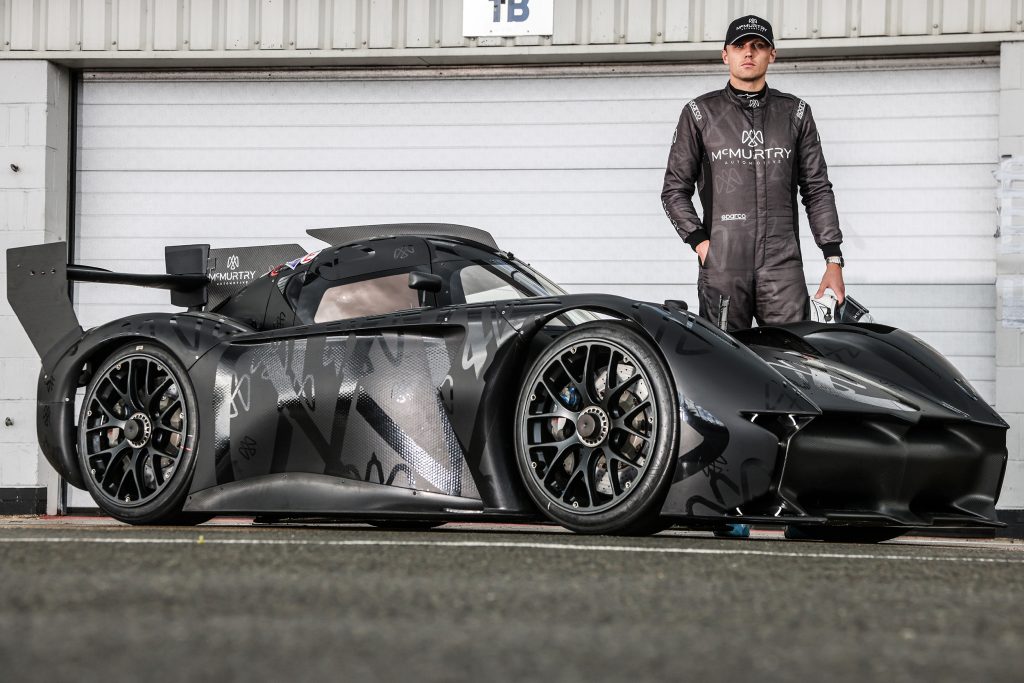
- McMurtry Spiering and driver (Credit:McMurtry)
The startup McMurtry Automotive has designed and built a single-seater electric racecar that they hope will be able to achieve 0-60 in 1.5 seconds; the Speirling. According to the company’s website, the car will supposedly be able to achieve this due to a vacuum system that sucks air from under the car, essentially giving the car downforce even while stationary. On top of that, the car weighs under 2,205 pounds and has a power-to-weight ratio of 1,000 horsepower per ton.
Porsche –
-
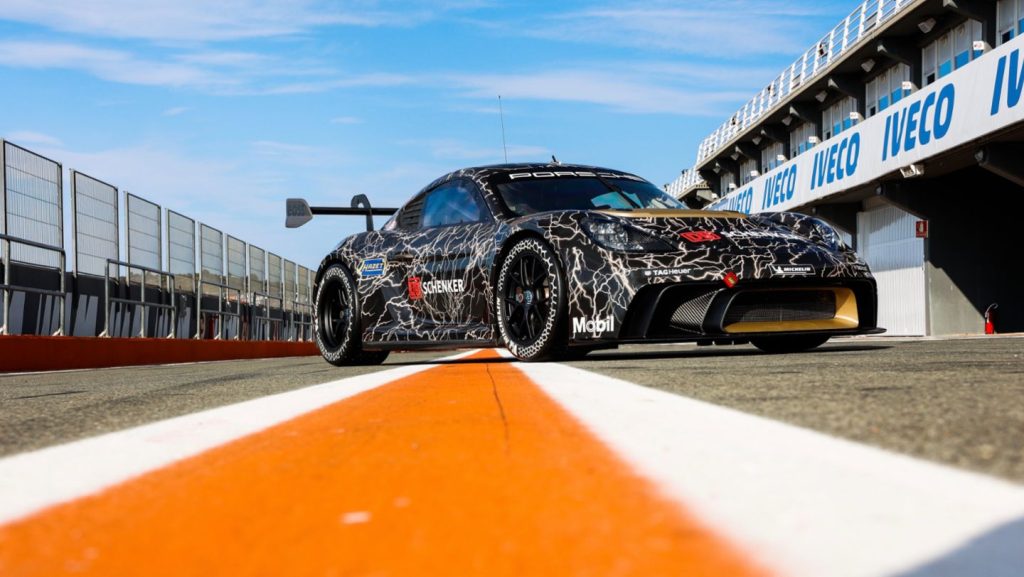
- Cayman GT4 ePerformance as seen on track in testing in Valencia (Credit:Porsche)
-
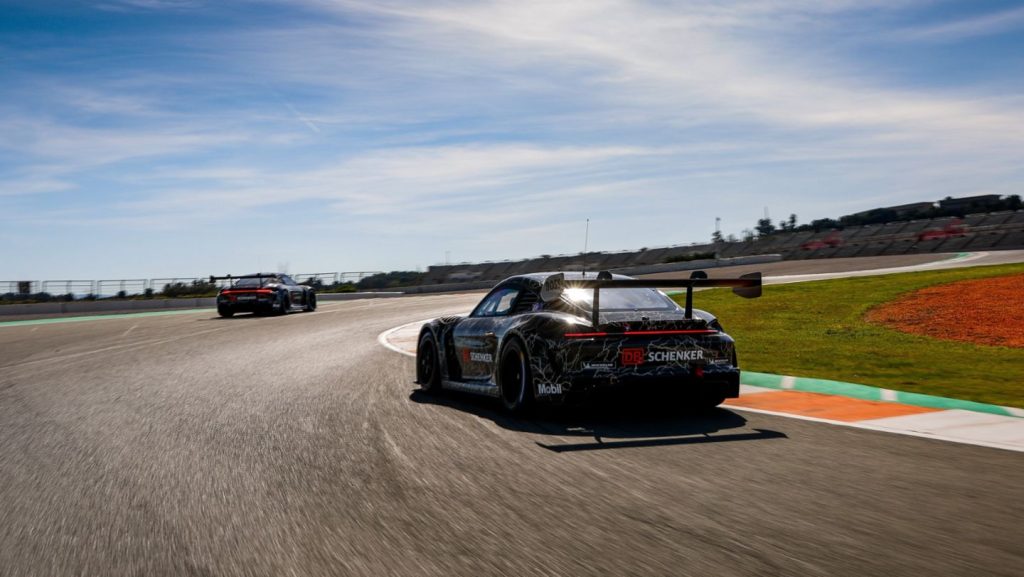
- Porsche 718 Cayman GT4 ePerformance on track from behind in Valencia
-
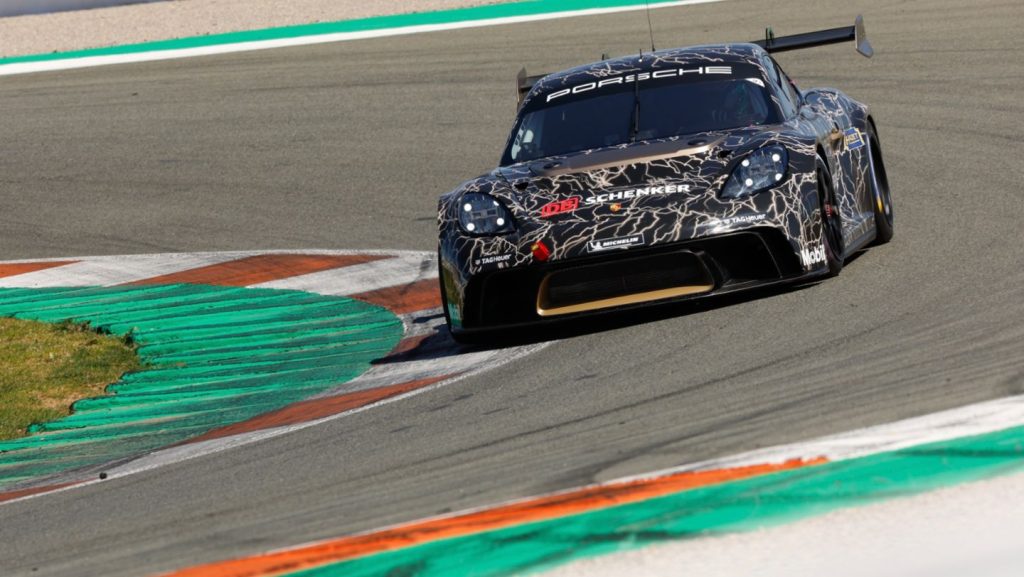
- Porsche 718 Cayman GT4 ePerformance on track in Valencia (Credit:Porsche)
Perhaps one of the most eye-catching vehicles at Goodwood this year is the Porsche 718 Cayman E-Performance. Porsche took one of their GT4 Cayman ICE vehicles but replaced the engine with a dual motor setup and a battery that is designed to allow for 30 minutes of track use, or what Porsche says is the exact length of a Carrera Cup Race. Porsche says the motor system can produce 986 horsepower peaks but produces 603 horsepower in the effort of maintaining power throughout the 30 minutes. Matthias Shultz, a Porsche Racing project manager, comments as part of an accompanying Porsche press release that “we’ve shown how Porsche envisages sustainable customer motor racing in the future. The 718 Cayman GT4 ePerformance now demonstrates that this vision works impressively on the racetrack.”
According to Car and Driver, this prototype vehicle comes before the anticipated next generation of Cayman and Boxster vehicles that will be adopting an electric drive train that will be released in 2025. These models will be a key part of Porsche’s plan to become carbon neutral by 2030.
Kia/Hyundai –
-
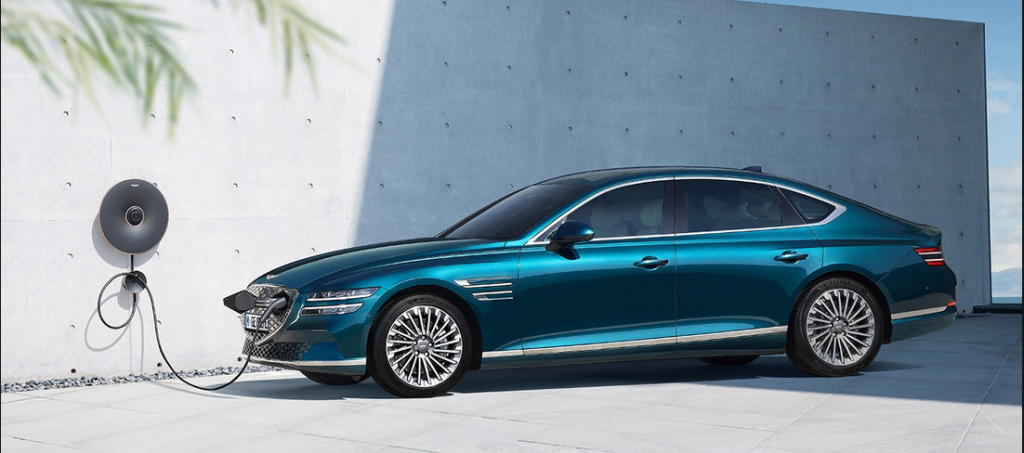
- Electrified G80 seen plugged in via Genesis website
-
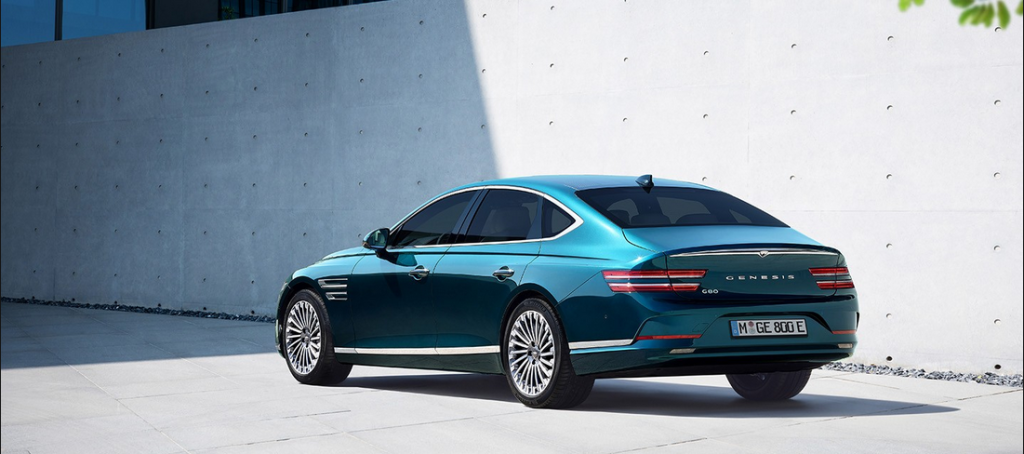
- Genesis G80 Electrified back driver side via Genesis website
-
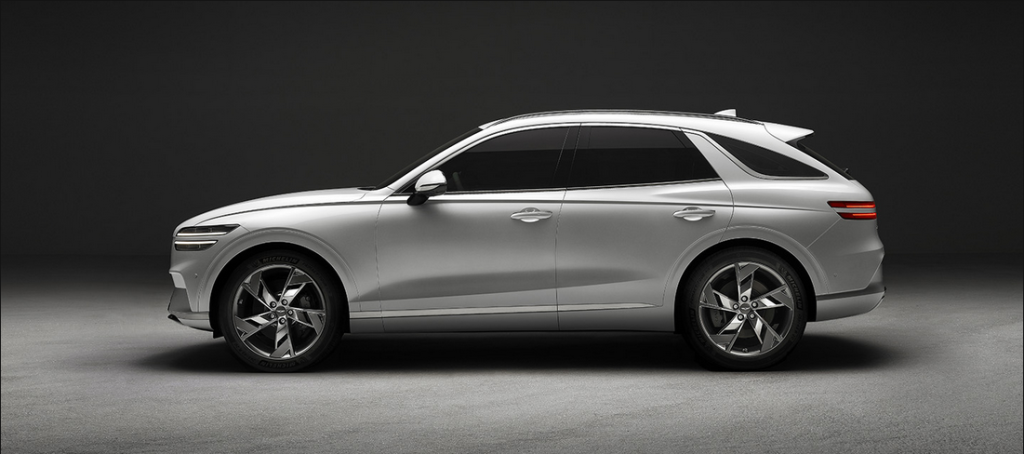
- Genesis GV70 side profile via Genesis website
-
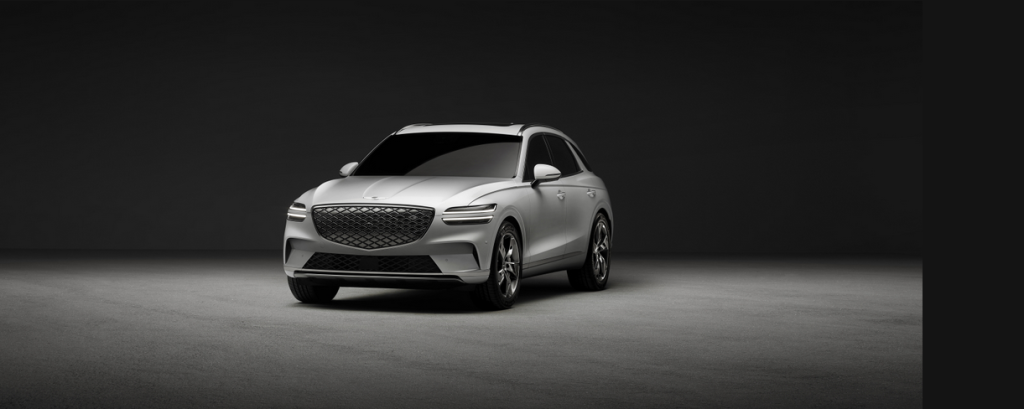
- Genesis GV70 in the dark via Genesis website
-
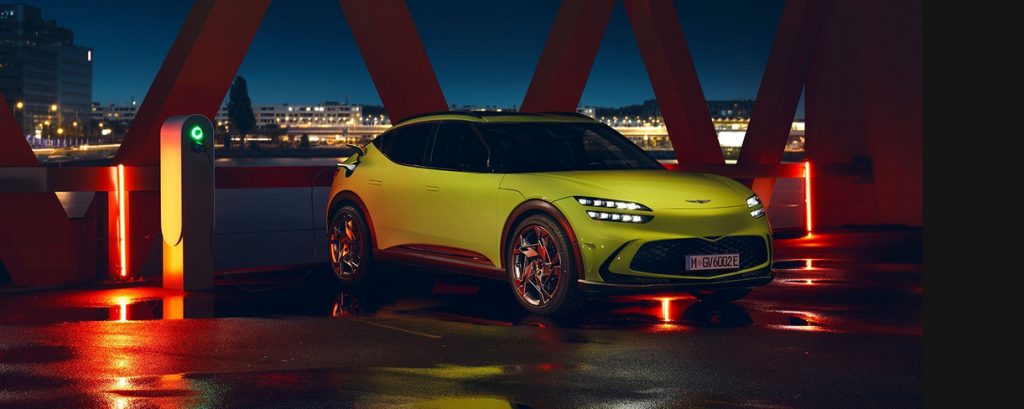
- Genesis GV60 at night via Genesis website
-
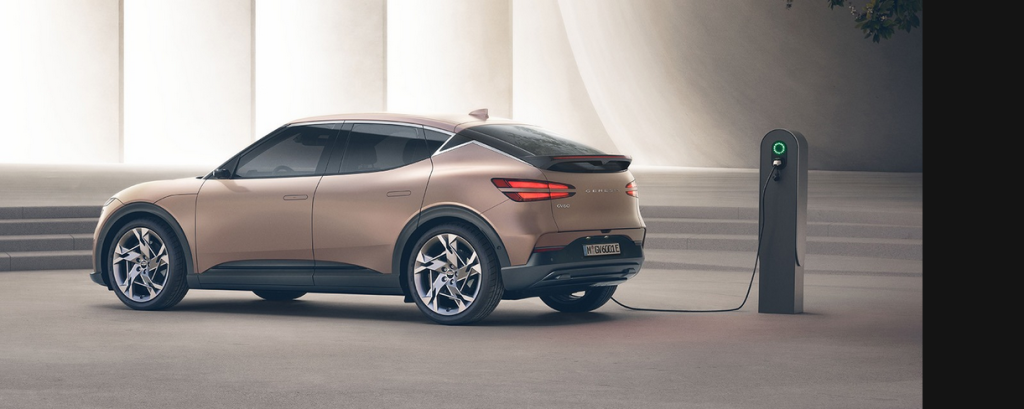
- Genesis GV60 via Genesis website
-
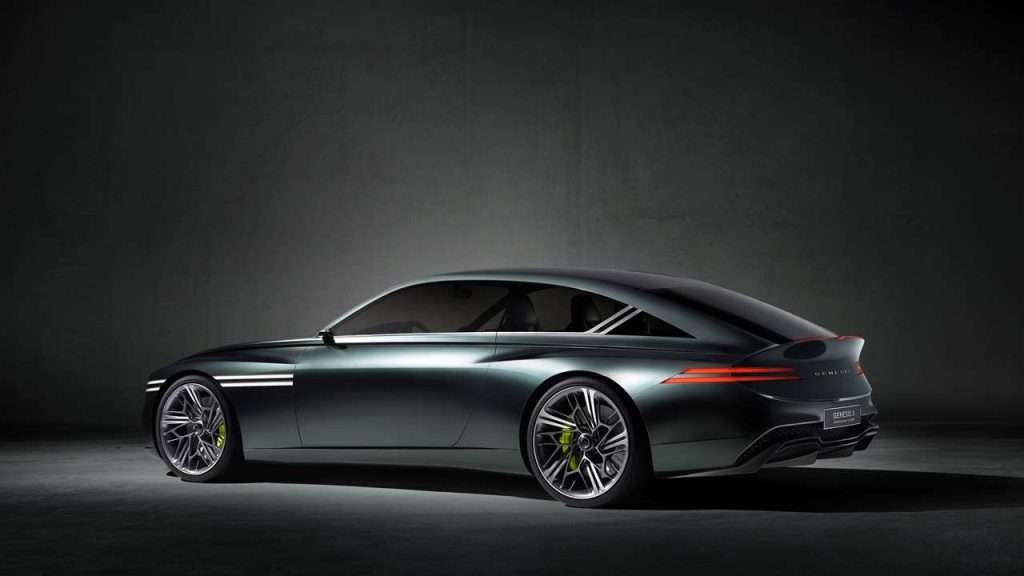
- Genesis Speedium X Concept car to be featured at Goodwood 2022 (Credit:Genesis)
Kia and Hyundai are no longer new to the EV industry, especially after their successful launches of the EV6 and Ioniq 5, respectively. At Goodwood, Kia and Genesis showcased a combined four production electric models and will supposedly also show their Speedium Coupe concept car.
The Kia EV6 GT was on display and will be the high-performance version of the current EV6 on the market. The new EV6 will have 576 horsepower and 545 pound-feet of torque, propelling the vehicle to 60 in 3.5 seconds and achieving a top speed of 161 miles per hour. However, with competition from its own Genesis brand for other powerful electric crossover vehicles, it is unclear how much attention the GT will receive.
The Genesis vehicles, the GV60, GV70, and G80 are the more upscale versions of the EV6 platform. Looking at the Genesis website, each of them offers impressive specifications, but each is going after quite a different clientele. For the performance luxury sedan lovers, the G80 will offer 323 miles of WLTP estimated range, will be capable of “22-minute ultra-fast charging” (from 10%-80%) via Hyundai/Kia’s new 800-volt architecture, and feature a dual-motor all-wheel-drive system delivering 364 total system horsepower.
Crossover customers will have the choice of either the GV60 or the larger GV70. The GV60 will offer slightly better performance than the G80 in many different ways; it will have a max of 321 miles of WLTP estimated range (front-wheel-drive model), will be capable of “18-minute ultra-fast charging” (from 10%-80%) and will offer a max of 483 total system horsepower from a dual-motor setup (all-wheel-drive model). The GV70 has not had full specs announced as of yet but will likely be very similar to its GV60 counterpart; ~18-minute fast charging, ~490 horsepower, etc. What Genesis has said is that the GV70 will be capable of vehicle-to-load use.
Finally, Genesis will supposedly reveal their Genesis X Speedium Coupe, which was first introduced as a concept car titled the X Concept. However, Goodwood is the first place the vehicle has been seen in the real world. If the looks and the other vehicles released are anything to go by, its specifications may be incredible.
Fisker
-
- (Credit: Fisker)
-
- Credit: Fisker Inc.
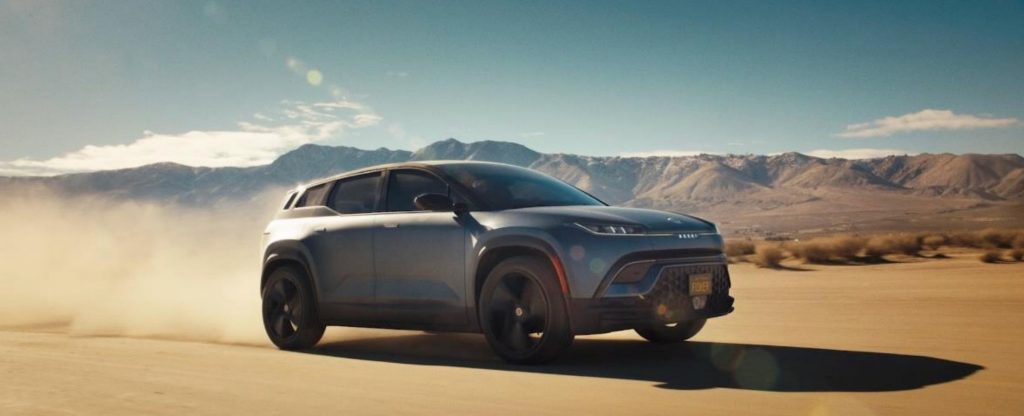
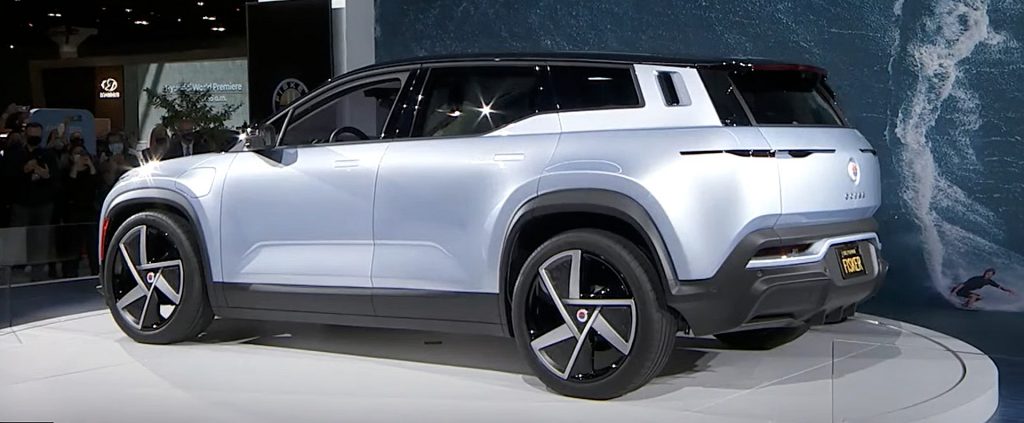
Fisker is part of a smaller group of startups that made an appearance at the festival, however, with news that they recently hit over 50,000 reservations, Fisker may now be worthy of the attention of many looking for an affordable EV SUV. There is still only limited information in terms of specifications, however, the brand plans on a starting price of $37,499. The brand’s website does state that the top-of-the-line Ocean SUV will be able to achieve 350 miles of range and will have a dual-motor all-wheel-drive system.
Perhaps more striking is the many interior quirks they list on the website. A pivoting center screen and rolling down rear window are listed prominently while they also highlight the Ocean’s many “terrain modes.” According to Motor1, more detailed specifications will be announced in November.
Renault
-
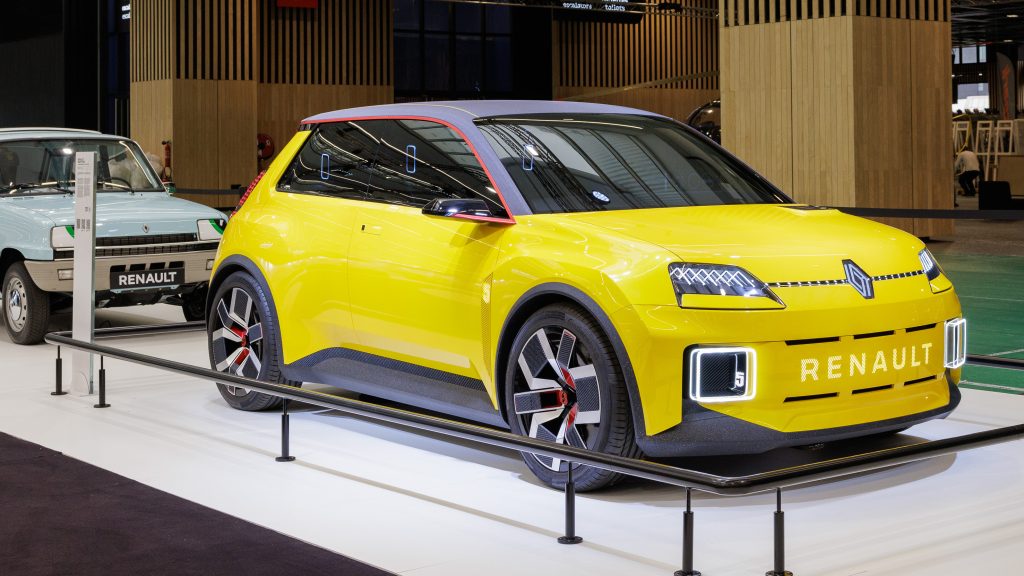
- Renault 5 shown in 50th year anniversary of the vehicle (Credit:Renault)
-
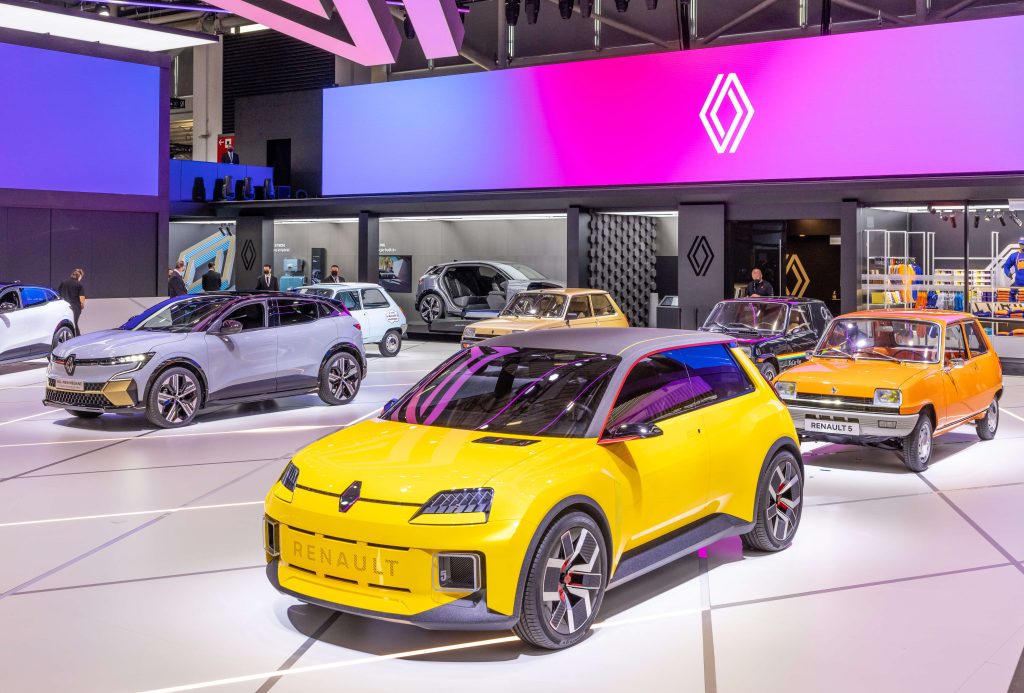
- Renault 5 Concept and Renault Megane EV shown at Munich Motor Show 2021 (Credit:Renault)
While the Renault 5 has been stuck in concept car purgatory for nearly a year now, there is still reason to keep hope. In an interview with Top Gear last year, the CEO of Renault group, Luca de Meo, stated that Renault was significantly shaken when he took charge. One of the first things the CEO did was cancel 7 new ICE products and replaced them with 8 EVs that will hopefully appear in Renault or Nissan’s lineup within the next few years. One of those cars was the Renault 5, a vehicle that de Meo promised would “democratize the electric vehicle.” As of now, no specifics have been revealed about the vehicle, but this hasn’t stopped many from speculating.
With the recent release of the electric Renault Megane, many believe that the five would use a similar platform and hence, achieve similar specifications. The Megane tops out at 217 horsepower from its front-drive system, achieving 220 miles of range via a 60kWh battery, and starts at 36,000 pounds in England.
E-Go
-
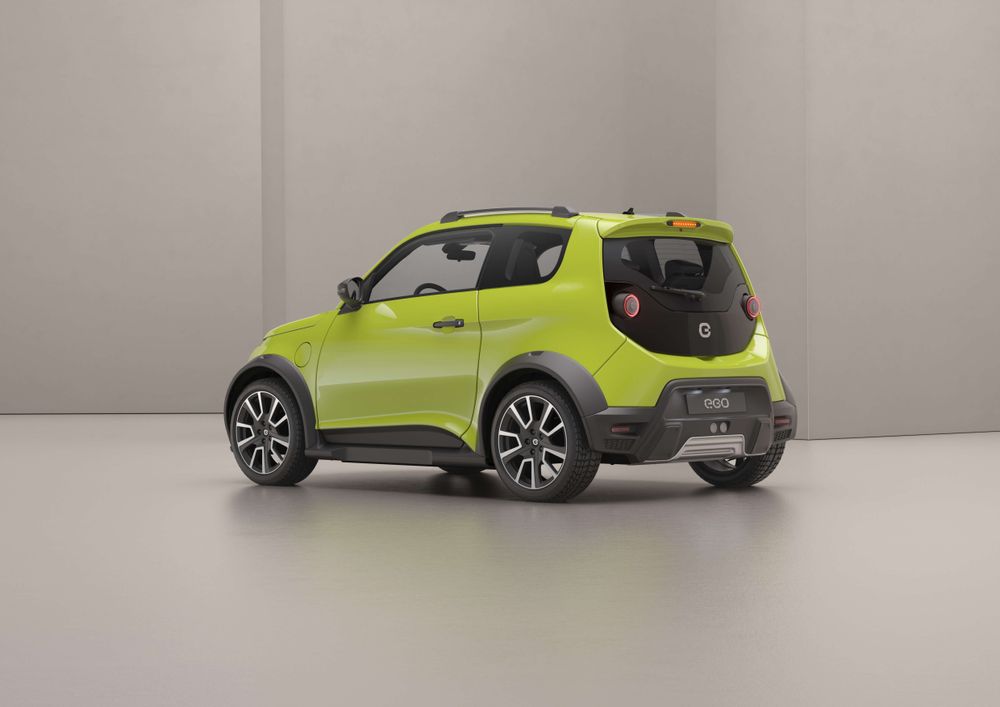
- E.GO e.wave X seen here in yellow via E.GO website.
-
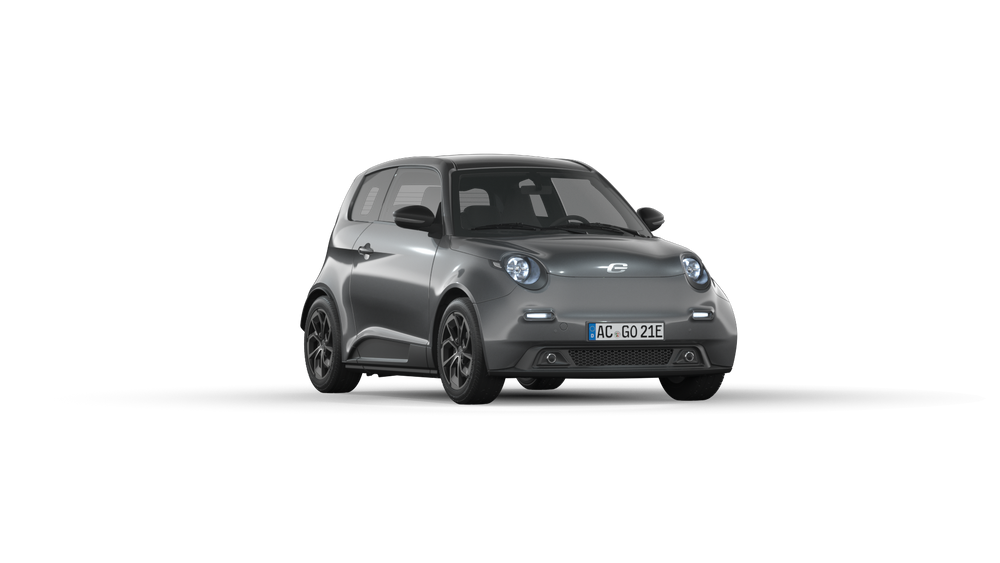
- E.GO Life car via E.Go website
E.GO is an EV startup from Germany looking to bring another small electric hatchback to Europe in the form of their Life and e.wave X models. According to the company’s website, both are available for pre-order. However, it is unclear how competitive their vehicle will be, considering it will have a goal starting price of 25,000 euros. The vehicle features lackluster specs compared to many of the other models shown at Goodwood; charging at only 11kWh, capable of a “city miles” range of 150 miles, and while only using a single motor front-wheel drive 100hp setup. This car will likely have to compete with larger brands by competing on price, but it is unclear at this time if the 25,000 euro price tag is low enough.
Formula E
-
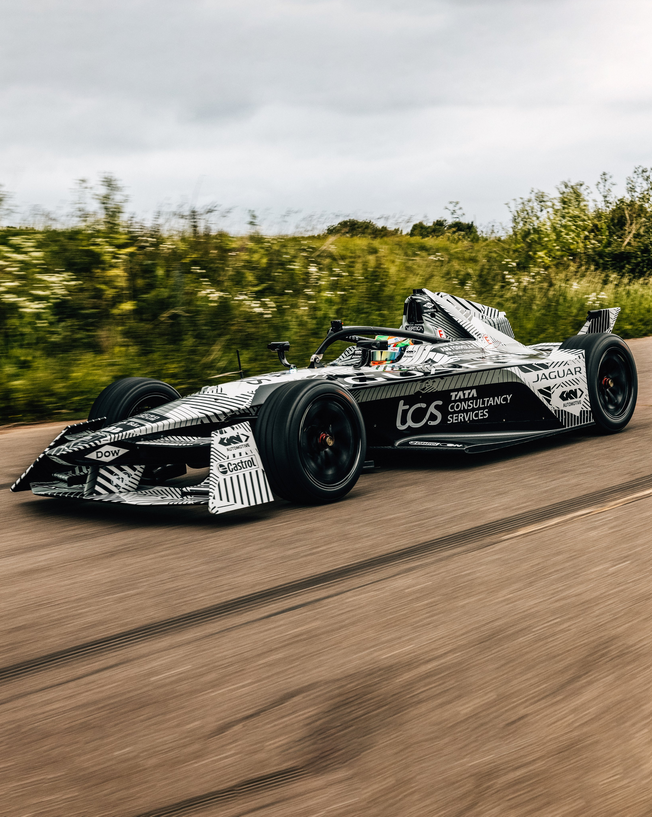
- Next generation formula e jaguar car in testing on track.
-
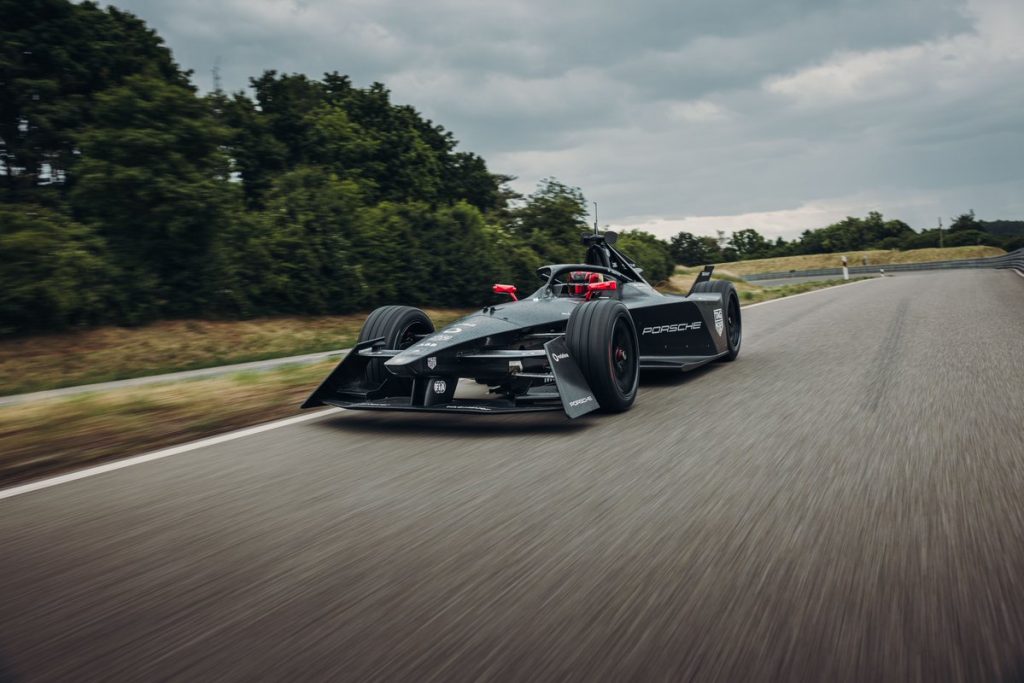
- Porsche’s gen 3 formula e car in testing.
Formula E also made an appearance at the Goodwood hill climb. The Mahindra racing team introduced their new livery and a third-generation racecar that will compete in the upcoming season 8 of Formula E. The Formula E website lists many upgrades coming to the new car; the new open-wheel racer will be capable of 200mph top speeds, will use 40% regenerated energy throughout the race, will ditch rear hydraulic breaks in exchange for a regenerative front and rear motor system, and will feature 600kW hyper-fast charging (allowing for short charging pit stops mid-race). These incredible upgrades over the previous generation may change the sport significantly in the upcoming year.
What do you think of the article? Do you have any comments, questions, or concerns? Shoot me an email at william@teslarati.com. You can also reach me on Twitter @WilliamWritin. If you have news tips, email us at tips@teslarati.com!



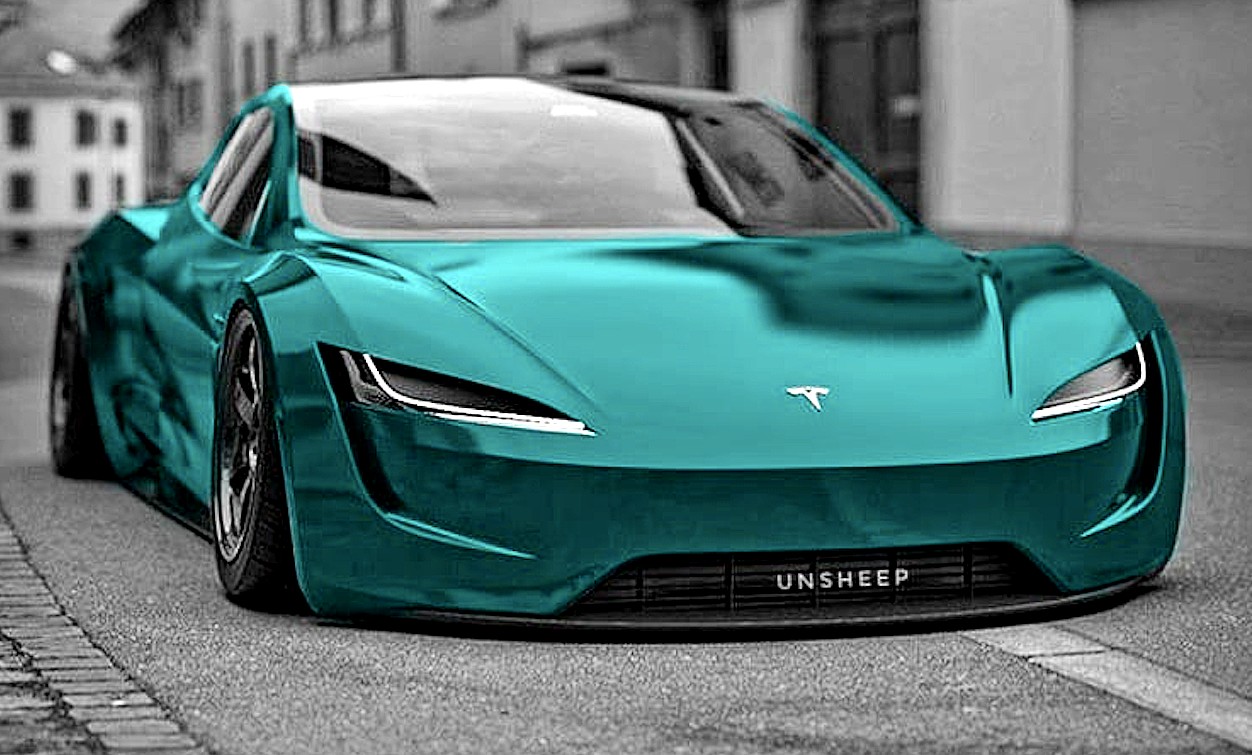
Tesla has reopened reservations for its long-delayed next-generation Roadster, asking buyers for a $50,000 deposit just days before an October 1 reveal event in Waco, Texas. The move revives a reservation process first launched in 2017 and later paused when Tesla pulled pricing from its website in 2021.
The reservation page requires an immediate $5,000 credit-card payment, described as fully refundable, followed by a $45,000 wire transfer due within 10 days, which is identical to what was expected previously. Reservations are not considered final until the wire clears.
The structure matches the 2017 terms Tesla used when it first collected deposits after unveiling a prototype. Tesla has not published a confirmed retail price or production start date on the order page.
Go buy a Roadster pic.twitter.com/n7rhouAmIS
— TESLARATI (@Teslarati) September 21, 2026
The October 1 event is scheduled in Waco, about 90 minutes north of Tesla’s Austin headquarters and near SpaceX’s McGregor rocket test site. Tesla sent invitations to existing reservation holders and posted a “Go for launch” teaser on September 12.
The Federal Aviation Administration (FAA) established a temporary flight restriction over the McGregor area from September 18 through October 2, consistent with plans for a demonstration involving SpaceX-designed cold-gas thrusters. Elon Musk has previously described the optional package as enabling extreme acceleration or brief hovering. Tesla has said the event will include pricing, specifications, and production targets.
The second-generation Roadster was first shown in November 2017 during Tesla’s Semi launch. Musk promised production in 2020, with claimed performance of 0-60 mph in 1.9 seconds, more than 250 mph top speed, and roughly 620 miles of range.
Those targets have slipped repeatedly.
Tesla later pointed to 2022, 2023, 2024, and 2025-2026 before indicating production would not begin until 2027 or 2028 at Gigafactory Texas. Design work has continued, with reports of a sharper, Cybertruck-influenced look replacing the original curvy prototype.
Original reservation holders who paid $50,000 in 2017, or $250,000 for the Founders Series, have waited nearly nine years without a production car. Some high-profile customers canceled. Tesla’s decision to reopen orders now, after previously shutting them down, tests whether new buyers will commit substantial funds before seeing a finalized production vehicle. The October 1 event is intended to answer remaining questions about what those buyers will actually receive and when.

Tesla’s Full Self-Driving (Supervised) is heading to Czechia after the Czech Ministry of Transport recognised the Dutch RDW’s provisional type approval, making the country the seventh EU member state to clear the system for public roads. Tesla Europe announced on 21 September 2026 that “FSD Supervised is now approved in Czechia” and that rollout “will begin soon.”
The decision marks a notable reversal. Earlier in 2026, Prague had declined to automatically recognise the Netherlands’ April approval, citing concerns over speed-limit compliance, traffic-sign recognition and driver-attention monitoring, and arguing that a coordinated EU approach was preferable. Officials said months of expert review, talks with Tesla and other member states, and real-world data from countries already using the system resolved those issues.
🚨 Tesla FSD heading to Czechia 🇨🇿 pic.twitter.com/mkzlM9QjrB
— TESLARATI (@Teslarati) September 21, 2026
“Safety remains the top priority,” the ministry stated.
FSD Supervised remains a Level 2 driver-assistance system: the driver must stay engaged and is legally responsible. Eligible vehicles need AI4, the company’s most up-to-date hardware version. Tesla is expected to push the feature over the air in the coming days, following the pattern seen after earlier national approvals.
Europe’s rollout began when Dutch regulator RDW issued a provisional EU type approval on 10 April 2026 after extensive testing. Mutual recognition then produced a rapid cascade: Lithuania (20 May), Estonia (29 May), Denmark (9 June), Belgium (10 June) and Slovenia (7 September). Czechia now completes that list of seven.
The approvals cover only a modest share of the EU population, but they add political weight ahead of a 6 October vote by the Technical Committee on Motor Vehicles. A qualified majority, at least 15 of 27 member states representing 65 percent of the EU population, could open the remaining markets, including large ones such as Germany, France, Italy and Spain that have so far preferred to wait for a bloc-wide decision.
For Czech Tesla owners, the immediate prize is access to the same supervised highway and city driving already available in the other six countries. For Tesla, each new market generates additional European driving data and strengthens the case that FSD Supervised can operate safely under the continent’s varied road rules. The Czech approval is therefore both a local milestone and another incremental step toward a wider European launch.
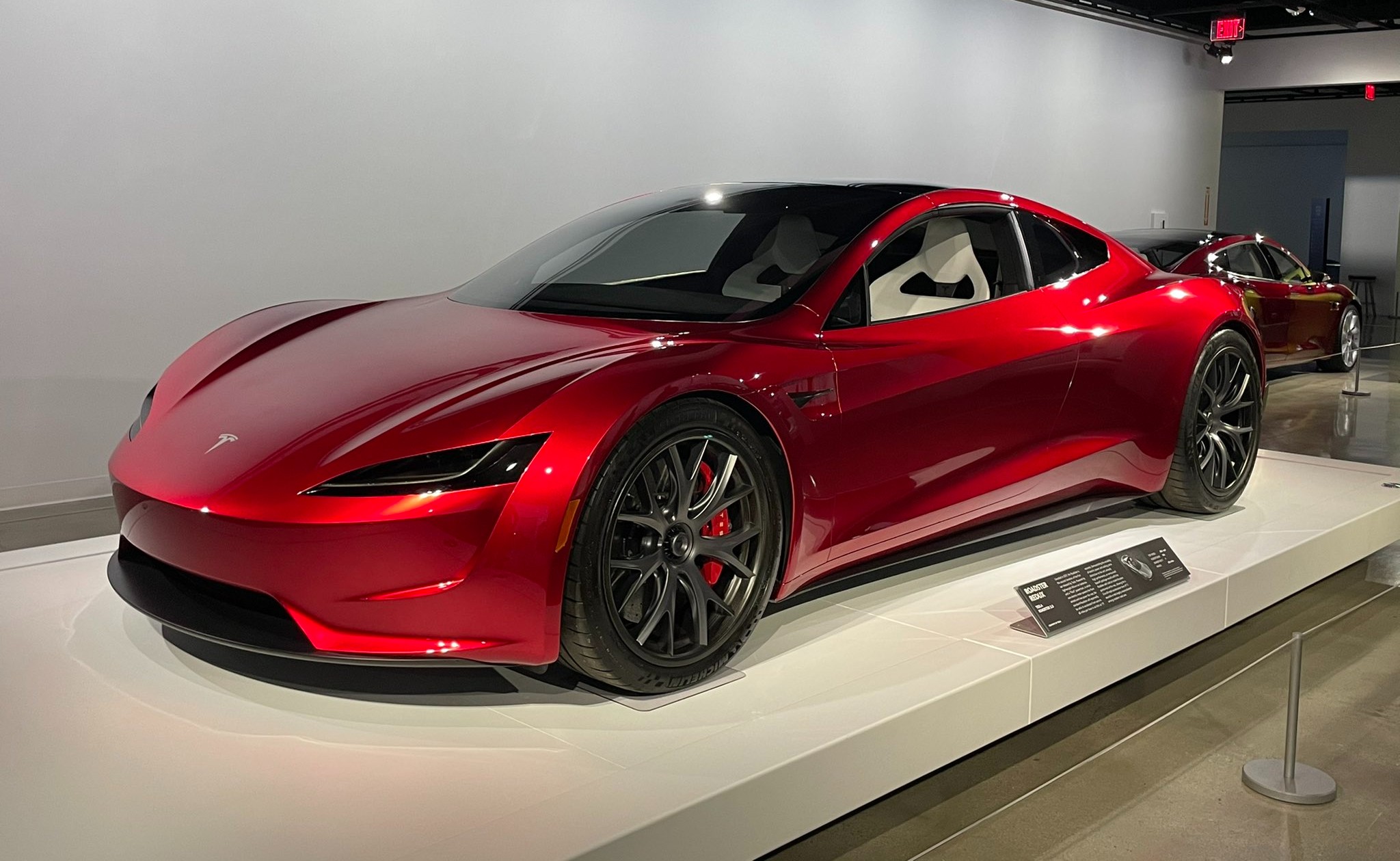
The Federal Aviation Administration (FAA) has established a Temporary Flight Restriction over SpaceX’s McGregor, Texas, rocket development and test facility, a move widely viewed as preparation for Tesla’s October 1 Roadster reveal. The restriction took effect September 18 and runs through October 2.
NOTAM FDC 6/3825 covers a 1.5-nautical-mile radius around the site near Waco and extends from the surface to 10,000 feet above ground level. The FAA cited hazards under 14 CFR 91.137(a)(3) and barred aircraft and drones from the zone. Tesla’s invitation to reservation holders already placed the event in Waco, about 20 minutes from McGregor, making the timing and location more than coincidental.
A TFR has appeared around SpaceX’s McGregor Testing Site up to 10,000ft and runs through until the 2nd of October 👀 pic.twitter.com/rcZ4p4JkLm
— Niall Anderson (@INiallAnderson) September 18, 2026
What stands out is the altitude. Typical recent TFRs at McGregor for engine static fires and component tests have used far lower ceilings, often around 2,000 feet. Raising the limit to 10,000 feet is unusually high even compared with some Starbase restrictions and signals operations that go beyond a standard ground-level engine test.
That extra airspace has fueled speculation about the long-promised SpaceX Package for the Roadster. Elon Musk has described cold-gas thrusters that could deliver sub-one-second 0-60 times and, more dramatically, brief lift-off. Reports earlier this year indicated Tesla planned a remote-controlled demonstration at McGregor in which the car would leave the ground with no one inside; spectators kept hundreds of yards away because of the noise.
The 10,000-foot envelope would give operators a large safety buffer even if the vehicle only hovers a short distance.
Tesla has not confirmed a flight demo. The company has only used the phrase “Go for launch” and posted a teaser image of the car on what looks like a launch pad. The TFR itself mentions only hazards. Still, closing airspace this high and this close to the reveal date strongly suggests the event will include more than a static display.
Whether the Roadster actually hovers on October 1 remains to be seen. What is certain is that the FAA has cleared a large vertical slice of Texas sky for whatever Tesla and SpaceX intend to show. Reservation holders heading to Waco will be among the first to find out if the car can do more than drive.

Tesla Roadster is available for order once again following brief hold

Tesla Full Self-Driving expands to another European country


